
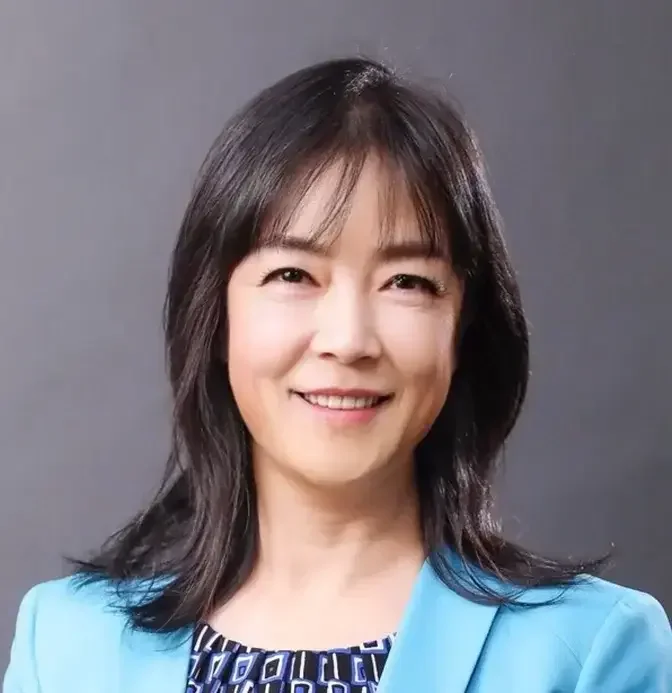

My Experiences and the Predicament of Wenfeng Group
In 2023, Mr. Zheng Yonggang, an entrepreneur from Zhejiang, passed away in Japan, and a memorial hall was set up in Tokyo.
I posted a message on my WeChat Moments.
I called on the government to stop arbitrarily arresting private entrepreneurs.
I said that people like us did not really care that much about how much personal wealth we possessed.
We wanted the country to become a better place.
I called on the government to return to the fundamental national policy of reform and opening up and to further promote political reform.
Otherwise, everyone would ultimately plunge into a bottomless abyss.
The day after I published that post on WeChat Moments, I received phone calls from company personnel and local officials.
They told me that Cai Qi and Li Shulei had each issued instructions concerning the matter, which had been passed down through successive levels to Jiangsu and Nantong. Subsequently, officials from the provincial Party committee's propaganda department led a team to the company.
People at the company told me that, for the sake of the company, I absolutely had to admit that I was wrong.
So I sent my colleagues at the company a message on WeChat admitting my wrongdoing.
Nevertheless, on the third day, my WeChat Moments and group chat functions were still blocked.
At that moment, I was filled with anger and humiliation.
I could not understand why an ordinary citizen expressing concern about the future of his country should be subjected to such treatment.
Later, I invested in and developed decentralized social networking and communications platforms overseas, one of which is called Mosavi.
I hope that one day, no one will ever again be able to arbitrarily block my social media posts, suspend my accounts, or deprive me of my right to express my opinions normally. I also hope that one day, no government will ever again be able to arbitrarily block an ordinary citizen's social media posts or suspend any ordinary citizen's account. All ordinary citizens should have the right to express their opinions normally.
In September 2024, Ren Zhiqiang's daughter told me that she had been unable to visit her father for two months.
Before that, she had been able to visit him regularly every month, and I often selected books for her to take to him.
She told me that his prostate condition was very serious, that he had to go to the bathroom more than ten times every night, and that he also suffered from asthma.
Hearing this made me uneasy.
So I published a post on WeChat Moments, expressing my hope that the relevant authorities would provide Ren Zhiqiang with the medical treatment he deserved and allow him to be released on medical parole.
At the time, I made some very strong remarks.
I said that if Ren Zhiqiang died in prison, I would hold everyone involved in his case accountable, and that even if I had to pursue them to the ends of the earth, I would make them pay blood for blood.
My original intention was to see him receive medical treatment and be reunited with his family.
Later, his daughter also published an open letter to you.
Subsequently, the relevant authorities began investigating me.
Beginning in 2025, the company was also subjected to continuous investigations, while some of my former friends in China were summoned for questioning, one after another, by different government departments in different regions.
By the end of 2025, after nearly a year of continuous investigations, the company's entire management team was living in fear and anxiety.
So we decided to sell the company to an outside buyer.
In addition, the company itself had experienced operational difficulties in recent years. The group's asset-heavy businesses, including its hotels, had been suffering losses since the pandemic and were difficult to sell. Yet the company's daily operations required money every day. We could only raise funds by selling shares to repay bank loans, pay interest, cover employee salaries, and meet various other daily expenses.
Our first attempt to sell a 5% stake in the listed company was obstructed by the Jiangsu Securities Regulatory Bureau and had to be terminated, even though we had already signed an agreement with the buyer.
At the time, Wenfeng Great World, the listed company under the group, had a market capitalization of 5 billion yuan. The company owned nearly 900,000 square meters of commercial real estate in Shanghai and Jiangsu, with total assets of nearly 6 billion yuan, net assets of 4 billion yuan, cash holdings of 1 billion yuan, and interest-bearing liabilities of only tens of millions of yuan.
After the sale was obstructed, the group reported the matter and sent a letter to the Nantong municipal Party committee and municipal government, explaining the company's assets and liabilities. We hoped that the local government could coordinate with the Jiangsu Securities Regulatory Bureau and allow us to sell our equity through a market-based transaction.
The company made it clear that all proceeds from the sale would be used to resolve the issues of concern to the securities regulators and to repay loans from financial institutions. This would prevent losses to financial institutions, prevent employees from losing their jobs, prevent the loss of tax revenue, and allow the company to continue operating normally without disruption. All the funds could be deposited into a dedicated supervised account, and I personally would not take a single penny. If the matter could be resolved through market-based means, I would also be willing to relinquish all the group's remaining assets.
At the same time, I expressed the same views to the Jiangsu Securities Regulatory Bureau.
At the time, there was a buyer willing to pay 1.25 billion yuan for the group's controlling 20% stake in the listed company.
However, after we sent the letter to the local government, a deputy secretary-general of the Nantong municipal Party committee told me over the phone that they did not welcome this buyer.
Having no other choice, the company approached another buyer from Shenzhen with resources in the semiconductor industry. They offered 950 million yuan for the controlling 20% stake. I thought the relevant authorities would approve of this buyer.
However, during this process, from December 2025 to April 2026, the company was subjected to continuous obstruction and regulatory actions by the Jiangsu Securities Regulatory Bureau.
While blocking the sale, the Jiangsu Securities Regulatory Bureau repeatedly summoned and pressured the accounting firm to issue a non-standard audit opinion on the company. At the end of April, the company was placed under an ST (Special Treatment) risk warning, and its share price began to fall.
The company again explained the situation to the local government, but the Jiangsu Securities Regulatory Bureau still refused to approve the sale.
I do not know what other mechanisms were at work behind the scenes.
In short, they would not let us sell.
At the end of April, the buyer changed its terms, requesting to purchase a 15% stake for 750 million yuan and obtain control of the company. We signed the transaction agreement. The buyer paid part of the purchase price, and the Shanghai Stock Exchange also published the announcement of the sale.
That same day, the Jiangsu Securities Regulatory Bureau explicitly conveyed its position to the Shanghai Stock Exchange, demanding that the sale be blocked. The transaction was once again forced to terminate.
At the time, I had already informed the local government, the Jiangsu Securities Regulatory Bureau, and the Shanghai Stock Exchange that their use of administrative measures to prohibit the sale would cause the company to suffer a financial collapse and go bankrupt, and that I would write an open letter to Xi Jinping.
Subsequently, the company's share price continued to fall. The market capitalization of the listed company declined from approximately 5 billion yuan to less than 2 billion yuan today. The relevant financial institutions began filing lawsuits.
Beginning in July, the company was also subjected to further formal investigations. To this day, the company remains under investigation, and the sale of its equity remains restricted.
I cannot understand why such administrative measures are being used to push a company with more than 10 billion yuan in assets and nearly 10,000 employees, step by step, toward financial collapse and bankruptcy liquidation. The proceeds from the equity sale were intended to repay loans from state-owned financial institutions in the first place. Under the current circumstances, the company will be forced into bankruptcy liquidation and judicial auction proceedings. By then, the price may become extremely low, perhaps amounting to only a few hundred million yuan. Compared with the original market-based transaction price, the sale could bring in approximately 800 million to 1 billion yuan less.
Who ultimately benefits from this approach?
Those suffering losses are the state-owned financial institutions.
What is affected is the employment of workers and local tax revenue. Ultimately, someone may acquire the company at a low price through a court auction. But this is not merely taking money from me. It is also taking money from the banks and from the national treasury.
I believe this way of handling the matter is wrong and inappropriate.
Even if the relevant authorities need to take action against me personally, they should not harm the entire company or its ordinary employees. They are innocent. They have no idea what I have said or done overseas. Nor can they determine what I personally say or do. Moreover, I have already been living overseas for nearly five years.
I hope you can instruct the relevant authorities or the local government to handle the affairs of Wenfeng Group properly and in accordance with the law. If you are willing to look into the matter, I also sincerely ask that you not blame any of the officials who have handled it. All I hope is that the company's affairs can be properly resolved.
I was born into an ordinary family and grew up during the era of reform and opening up.
I have always been grateful for that era, which once gave ordinary people the opportunity to change their destinies. I can accept having all my assets in China reduced to zero, with all accounts settled once and for all. But I cannot accept the relevant authorities using administrative measures to drive the company into financial collapse, render it insolvent, and implicate others.
Please Allow Ren Zhiqiang to Receive the Medical Treatment He Deserves
I once again ask you to allow Ren Zhiqiang to be released on medical parole.
Recently, Ren Zhiqiang's daughter told me that her father sometimes finds it difficult even to make a phone call. His physical condition is very unstable, improving at times and deteriorating at others.
Mr. Xi Jinping, you are also the father of a daughter.
Please try to put yourself in their shoes.
Ren Zhiqiang wrote an article in which he made a few critical remarks about you.
The price he has paid for this is already high enough.
As an observer, I read the article criticizing you several times and found nothing particularly remarkable about it. By the following day, I could not even remember its contents.
I once again sincerely ask you to give him the opportunity to be released on medical parole so that he can receive treatment and be reunited with his family.
If this can be done, we will remember this kindness and will certainly repay it should the opportunity arise in the future.
The Risks Facing China's Economy
Next, I would like to talk to you about China's current economic situation.
First, the external situation. Since 2024, the United States has implemented several rounds of tariff adjustments on Chinese goods.
Meanwhile, essential imports such as energy, semiconductors, raw materials, and agricultural products require more U.S. dollars. In the past, China was able to import energy using renminbi through trade with countries such as Iran and Venezuela.
Now, both exports and imports are under pressure.
Of course, the official export figures look extremely impressive. As far as I know, however, the figures do not reflect the actual situation. You need only ask the central bank whether the amount of foreign exchange currently available has increased or decreased compared with the same period last year.
Since the beginning of this year, China's refined petroleum product prices have risen several times, with cumulative increases in gasoline and diesel prices already exceeding 20%.
Recently, a dangerous shortage of diesel supplies has emerged in various parts of the country.
Reuters has reported several times this year that the average operating rate of independent oil refineries in Shandong is only 50%, with crude oil supplies severely insufficient.
Yet crude oil supplies on the international market are stable. Where, then, does the problem lie?
According to industry insiders, China may face extremely serious energy supply problems within the next year.
Now let us turn to the domestic situation. Real estate prices nationwide have fallen by approximately 50% from their peak, with the total value of real estate shrinking by around 200 trillion yuan.
One can imagine what consequences this will have for the entire financial system.
Next, employment and social security.
According to officially published figures, China's employed population stood at 725 million in 2025.
In the first quarter of this year, official figures showed that the number of people in flexible employment had already reached 320 million. Given the current trajectory of the economy, the actual number may already have exceeded 400 million.
Many of these people are essentially no different from those who are unemployed or underemployed. Looking solely at the officially published surveyed urban unemployment rate cannot possibly reflect China's actual employment situation.
According to data from Gelonghui, over the next decade or so, an average of approximately 63,000 people will retire every day. On the other hand, large numbers of people are now ceasing to make social security contributions every day. On one side, more and more people are collecting pensions; on the other, fewer and fewer people are continuing to contribute.
Since the beginning of this year, I have seen scattered reports online indicating that pensions have not been paid on time in northeastern China and even in Shandong.
Recently, human resources and social security authorities have begun stepping up the collection of social security contributions from people in flexible employment. Some localities have even begun collecting past unpaid social security contributions. But compared with the enormous shortfall in social security funds, this is merely a drop in the bucket.
Even more seriously, household debt problems are also continuing to worsen.
Bloomberg reported that the number of people involved in personal loan defaults exceeded 120 million at the beginning of this year. However, according to friends in the financial industry, the actual number is far higher.
Now let us look at local government finances.
The finances of the central government and those of all 31 provincial-level administrative regions across the country are in deficit. If all forms of hidden local government debt are taken into account, the actual situation is far more serious than what publicly available financial statements indicate.
Even in places such as Jiangsu, Zhejiang, and Shanghai, which previously had relatively strong fiscal resources, financial strains have emerged, with some districts and counties experiencing difficulties paying civil servants' salaries. Some counties in northern Jiangsu, whose economies are weaker than those in southern Jiangsu, have even resorted to raising funds from private sources at high interest rates of 12% to 15% to ensure the payment of civil servants' salaries, as their existing financing channels are insufficient. One county alone has raised tens of billions of yuan through such high-interest financing. Compared with the rest of the country, Jiangsu is already among the best-off places.
Unpaid wages are widespread in hospitals, schools, and some grassroots public institutions across the country. China's local government finances are already in an extremely serious predicament, and the situation continues to deteriorate.
Public finances, investment, consumption, real estate, employment, finance, and industrial production are all experiencing serious problems to varying degrees.
I also have doubts about the actual situation behind the export figures.
China's economy is facing a situation in which multiple organ failures are compounding one another.
In private conversations with some entrepreneur friends and economists, we have become increasingly concerned that China's economy is approaching the tipping point of a systemic crisis and could suffer a sudden, catastrophic breakdown within the next year or so.
Of course, only God knows exactly when it will happen and what form it will take.
If the private economy and the real economy continue to shrink, and the number of market participants continues to decline, the entire system will become increasingly difficult to sustain. I once again appeal to you to ask governments at all levels to stop placing private entrepreneurs in supervisory detention and arresting them. Private enterprises are the ballast that keeps employment stable in society, as well as a constructive force for a peaceful social transition.
Furthermore, if local governments continue to obtain financing from the banking system through local state-owned enterprises and local government financing vehicles to sustain their operations, the risks will ultimately overwhelm financial institutions. And behind the banking system are the deposits of millions upon millions of ordinary people and the creditworthiness of the entire country.
There are many local state-owned enterprises across the country like Zhuhai Huafa and Shenzhen Vanke. If serious debt defaults actually occur, they may appear on the surface to be merely Guangdong's problem.
But can the central government simply ignore them?
If the situation reaches breaking point across the country, not only will the central government be unable to stay out of it, but by the time it tries to deal with the situation, it will already be too late.
Of course, my own knowledge and understanding are very limited.
I suggest that you convene a meeting with several people who genuinely understand economics, public finance, and the financial system, and have a serious discussion.
However, you must require the Ministry of Finance, financial regulatory authorities, and relevant institutions to compile all the actual data on local government finances, fiscal shortfalls, the liabilities of local state-owned enterprises, hidden debt, the actual bad debts of financial institutions, and the foreign exchange reserves that the central bank can actually draw upon.
Have them determine, based on real data, when the entire economic system will face serious systemic risks if the current situation continues.
If their conclusions differ from what you are currently being told, or even come close to the concerns I have expressed, then I hope you will seriously consider the following proposal.
Comments