
Colored Pencil Drawing - Smooth Blending - Know the Fundamentals
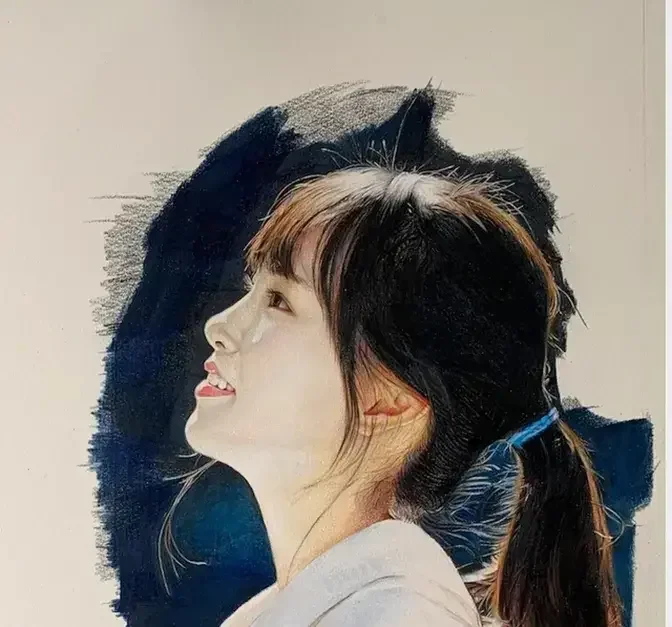
[Fei Meng Art] I shared an essential tip on how to blend colored-pencil along with the time-lapse of one of my artworks. Hope you enjoy it. Real time of the drawing process is on my Patreon: https://www.patreon.com/feimengart
Medium I used: colored pencils on paper, you can get them here:
Colored pencil:
- I use 150 set of prismacolour pencil: https://amzn.to/3sJKRUQ
- 72 set option is here: https://amzn.to/3vbir7W
- 24 skin tone option is also OK: https://amzn.to/2Qihlsn
Paper: https://amzn.to/2QoOgLC
Instagram: https://www.instagram.com/fei_meng_art/
Facebook: https://www.facebook.com/FeiMengArt
Colored Pencil Drawing - Smooth Blending - Know the Fundamentals
#feimengart #feimeng #face #portrait #drawing #coloredpencil #drawing
Hello everyone, welcome to my channel. In this video, I'm going to share with you an essential
tip on color pencil drawing along with a time lapse of the drawing process of a piece of my work.
As you can see, I normally start my portrait drawing from the eyes. The method I'm using is
technically called window shading. Window shading is one of the steps of oil painting in French
academic method in the classical 19th century. They call it that because it is like pulling a
shade down on a window, working in full detail from the top to the bottom of the canvas.
This way of drawing starts from drawing details, but still it needs you to think of the full
picture. And of course, you need a good understanding of the relationship between
forms and light, which I will be talking about in my later videos.
The key point I want to make here is pressure control. At the beginning stage of the coloring,
the strokes should always be loose and gentle. Applying too much pressure too early prevents
you from layering more colors later on. It needs quite a few layers of colors to achieve the subtle
variation of the realistic skin tone. Pressing too hard at the beginning will cause early burnishing
on the paper. The result will be stiff and you will lose the softness of the skin.
There are also stages at which I need to press hard. When I have almost done the tonal value
in a certain area, then it's time to increase the pressure to achieve a smooth blending effect.
You may wonder how many layers I apply when I render the portrait. I have no specific number
to be honest. The time lapse of this artwork shows you how I fill almost all the paper surface
by adjusting the direction and the pressure of the pencil strokes. The secret is you just need
to pin down the colors you want to use in a certain area and then try to fill the surface
completely with them. The percentage of pigment of each color you fill on the paper is related
to the pressure you apply on the pencil of each color. It might sound a bit scientific,
but when you finish one or two pieces of portraits, you will know what I'm talking about.
This pressure control will gradually become a natural ability of your hand.
You don't need to give too much thought to it in the drawing process once you gain the skill
through constant practice. It will also improve the quality of your line drawing immensely.
Different brands of color pencils has varying degrees of hardness and softness. I put the
I use under the video for you to check out. As to the color palette, you can find it on my Patreon.
I put the slow version and the real-time video which is more than three hours long along with
the color palette on screen just in case you are interested in drawing this portrait with me step
by step. When I draw hair, for another example, once the key color are decided, I will normally
use to press hard enough to cover all of the paper surface to make sure the hair has a glossy
and realistic look. Although we all agree that art is a way of conveying emotions, in my view,
it takes a lot of rational thinking at the learning stage. Once you gain the skill, you
will find true freedom in artistic expression. Well, I hope you've enjoyed this video and find
it useful. I will see you in my next video.