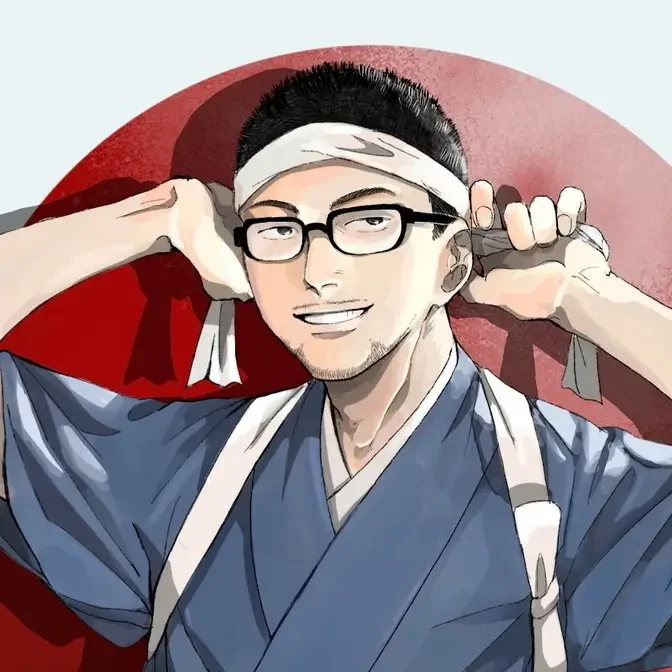
In this video, I am not cooking but instead am showing the special features of a Japanese home.
In my channel, I usually show authentic but alternative Japanese home cooking, which can be made with the ingredients that are available outside of Japan.
Welcome to Taiju's Kitchen. Today, I'm going to show you a Japanese home.
So in the background, what you see is my parents' house where I grew up.
So I'm back in Japan for the summer holiday, but because I travel from overseas,
I have to stay at home for 14 days in a quarantine.
So I decided to make a video on a Japanese home.
But my parents' house, my home, is neither traditional nor a typical Japanese home,
Japanese house, but still has a lot of the common features of a Japanese home.
So I thought it might be interesting to show you those.
And by the way, when you hear this, these are insects called cicada.
They look like this.
This is a very typical thing of a Japanese summer.
When we think of Japanese summer, we think of cicada.
This is all throughout in Japan and perhaps you may have heard in some anime
and wonder what they are.
And also what I'm wearing right now, this is called jinbei.
This is a traditional Japanese summer wear.
And this is kind of like a very easy version of kimono
with thin material and no belt.
And it's tied on the side like this.
So it's very easy and also it's not long.
I'm wearing kind of like pants.
This is a casual wear.
This is easy clothing that a lot of people wear in summer at home.
Then let's get into it and I'm going to show you my home.
Here we have the nameplate.
And next to the nameplate, we have what's called interphone.
I think it's a made-up Japanese English word.
You can push it to call the person inside.
We have a camera in here and we can see the person who's visiting.
I think in the States, it's become more popular.
We have this in Japan for a while now.
And nowadays, I think every household would have some of these.
Then let's get inside and walk through.
Then let's go inside.
So here's probably the first thing of a Japanese house
that is very different from Western houses
is that the door opens to the outside
because we have this special feature.
Here we have what's called genkan,
which can be roughly translated as front entrance.
And this is where we take our shoes off.
So you see a very clear line right here that it goes a little lower.
And here is where you take our shoes off.
Here, even though this is inside of a house,
this is considered kind of outside.
Until this point, you come in with your shoes on.
And then from this point on, you go in without your shoes.
And here's a very clear line of inside to outside.
This is how we keep inside our homes clean.
And I've read this may be one of the reasons
why we never had pests in Japanese history.
Now let's go inside.
One thing you might want to care about
when you happen to visit a Japanese home
is that you want to take your shoes off here in this direction
so that you never step your bare feet or socks on this part
and that you take your shoes off here
and then you step right here in the inside part
and you keep your shoes on the outside.
And a common thing in Japanese modern houses nowadays
is that we have these slippers.
You wear your slippers inside so that your feet also stays clean.
And then there's also something else here
that is common in a Japanese front entrance,
which is called getabako.
It's often in a very different form,
we have like this.
Here's where we store the shoes that we don't use every day.
Let's go inside.
Here we have our kitchen.
So kitchen is not that very different I think from other countries,
but we have a couple features that are quite distinct.
One of those is this kind of mini oven toaster.
We use this mostly for our bread.
I think a lot of households in Japan don't have those regular toaster
that you put in slices
because a lot of the bread in Japan are not necessarily sliced.
We have quite a variation of bread,
so it's quite common in Japan to have these kind of mini toaster oven.
So you can put some bread in here
and it has several different features
like you can bake gratin or baked potatoes,
baked mochi, sweet potato, cookie.
You can even make some pizza and whatnot.
So that is quite common to have these in Japanese homes.
And second is that we have quite a big sink.
I think that is primarily for cooking fish.
You can clean a whole fish in here.
And third feature is usually placed right under a stove
and that is a fish grill.
And you can put in several fish or like a big piece of fish in here
because in Japan one of the most common way to eat fish is to grill it.
Almost any household would have this.
And you can lay the fish here and then the fat will drain to the side.
And this we even have a little window when you start grilling.
You can even see inside how it's grilling.
And here we have a neat feature where you can time how long you want to grill.
Then let's go further.
So I'm gonna go further down.
Here we have our toilets.
Japanese toilets are also quite different from the toilets in other countries.
Let me pick this out.
So the first difference is that these seats are heated.
In the summer right now of course it's not heated
but in the winter you can turn on the heater
and then you don't have to sit on a cold toilet seat.
And it's a very nice feature.
The second thing you can't really see it from here
but we have a special feature called washlet.
So here there are different buttons.
So here it says bottom and what it is that when you press this
then small nozzle will come out here and then start shooting some water.
This feature doesn't work right now.
There's a sensor in the toilet that only works when somebody's sitting on that seat.
You can also change the strongness of it or you can also change the position.
And so it's a quite nice feature that washes your bottom when you do the number two.
So that's that.
And then the third feature is that behind the toilet this is where the water is stored.
I think you can take this out.
You can see water stored.
And then what it is is that when you flush the toilet the water will come here.
I'm gonna try it.
And then the water come here.
So you can wash your hand here and then the washed water will go in here.
It will be stored and then will be used for the next time when it gets flushed.
It's also quite eco-friendly.
Then let's go out.
And here we have our bathroom or bathing room where we bathe or shower.
And then usually the room right before that is our change room here
where we take off our clothes when we bathe.
And here's a little sink for brushing our teeth and a little mirror.
And then and here's our shower room.
And here also the inside of the shower room and the outside of shower room is also
very clearly defined.
And inside here big part of it is this bath.
So in Japan it's very common to have a lid over the bath.
You can take it.
You can kind of roll it like this.
So here we have our bath and it's very common in Japan nowadays that
has here a feature that where you can press here to fill in how much ever water you want.
And there's also a feature here where you can re-heat the water.
Because how we bathe is that we use the same water for everyone.
So how do we take bath in Japan?
So this will be filled with hot water.
And we usually have like a very small chair like this.
And we sit on it.
And we also have a small bucket like this called senmen-ki.
What we do is we take in the water from the bathtub and then we wet ourselves.
And then we wash our body like this of course.
And then take the water again.
And then we wash ourselves before we go into the bathtub.
So that when we go into the bathtub in the hot water we are very clean.
Once we're clean.
So we go into the bathtub with clean body like this and we bathe.
So bathing is very important part of our lives in Japan.
One because we care about the cleanliness.
But also because it is so very humid in Japan.
Especially in the summer.
So a lot of things go bad very fast.
And our bodies start to smell very fast when we don't bathe every day.
And in the winter it gets really cold.
And so like I said almost everybody bathes every day.
But because we clean our body first and then we bathe in.
And we use the same water for the whole family.
It's still very eco-friendly.
So and once you're finished bathing and when you're warmed up you get out.
And then here comes in the lid.
So when you put the lid on then the water stays warm for the next person.
And then you don't go directly outside.
You dry yourself with your towel like here inside this bathing area.
So this is the wet area and when you go outside your body is dry.
There's also a very clear line of wet area and a dry area.
Very similar to the genkan the front entrance.
And usually right outside of the shower room or bathing room.
We have our laundry machine.
So that's another special thing in Japan.
And that is we have a small hose like this.
You can take out this the end of the hose.
And then you take the hose and then what you do with it.
Is that you put this inside the bathtub.
So what you do is that imagine that here is filled with pot water.
And then this goes inside.
And then you can also close this and this stays inside.
And this goes directly to the laundry machine.
And you can reuse the water for the bathtub.
And use it for the washing.
Because one it's warm and but also it's clean.
Because you have washed your body before you go into the bathtub.
And here it says bath water.
You can use that for washing of course.
You can use a regular water as well.
Then let's go to the next room.
So here where the floor is covered with tatami mattress.
And this is called washitsu or Japanese room.
At the moment it is used for the playroom for my nephew.
Usually this is where we sleep.
And if you ever have a chance to be invited to a Japanese home.
You don't want to go on to this tatami mattress with your slippers.
So what you want to do is you want to take your slippers off here.
And here is also a clear line of inside the washitsu.
The Japanese room and outside.
You want to leave your slippers outside.
And then here is the Japanese room.
And here in the corner of the Japanese room there's a Buddhist altar.
So you can open this up.
This is how it looks inside.
And then here we have the name list of our ancestors.
For example here on the fourth of the month.
And here the fifth of the month.
And you see the different names.
On the year they died.
Showa 63rd year and ninth month.
So September 5th.
This is the name of the person of this life.
This is actually my grandfather Kanawaru Wasaburo.
This is the Buddhist name that he received when he died.
And this is the so-called ihai.
And what you do here is you light the candle.
And like I said this is also the room where I sleep.
And for that we have what's called oshire.
You might have seen anime of Doraemon where he sleeps.
Of course normally you don't sleep inside the oshire.
But what's there is that.
These are the mattresses that we use to sleep when we go to bed.
So to lay the futon mattress.
First take away the pillow and the sheets.
You first lay the bottom futon.
And then cover it with sheets as you would normally do.
And then you have the top futon covering like this.
And then you go to sleep like this.
And then when you wake up, when you put this back in oshire,
there's a certain way to fold this.
So for the covering futon, kakebuton, you fold it like this in quarter.
This will fit in oshire perfectly.
And then take away the sheets.
For the sheets I don't think there's a particularly right way to fold this.
And for the bottom futon, since it's narrow,
then fold it like this in third.
This will have the same shape as the quarter folded kakebuton, the covering futon.
As you see like this, they have the same shape now.
And then this fits in oshire perfectly.
And then put the pillow and the sheets right over it.
And then we have an open space again.
This is how we use the room efficiently in Japan.
And then let's go outside.
And here's another special Japanese feature.
I don't know if you can really see it, but this is a net.
Yeah, there you go.
Almost every window would have these kind of nets.
And this is because we have a lot of mosquitoes in the summer.
So we couldn't have a window without a net like this to prevent these mosquitoes coming in.
And then it's quite common to have right outside of the Japanese room,
we have what's called these engawa.
This is kind of a terrace.
But in Japan, we also have this in a traditional home.
They're called engawa.
And this is where the Japanese ambiguity comes in.
So then we have always had a very clear space of inside outside.
Here we have kind of inside, kind of outside.
To here we come in with our bare feet.
And then here we wear outside sandals.
But this is kind of like inside, but also half outside.
And then we go into our garden.
And this is our garden.
Half Western style.
Here we have the persimmon, the kaki tree.
And we have your grass that's very Western.
So that's the end of the tour of my home.
I hope this video was somewhat interesting, somewhat informative.
And hopefully it gave you a little bit of feeling of being invited to a Japanese home.
If you liked what you saw, please hit that like button.
And I'll be so so grateful if you could share my channel and my videos with your friends or family.
And now since I'm back in Japan for a little while, and my quarantine will end soon,
I'm planning to make a couple other videos on modern Japanese culture.
And so please look forward to those videos.
Until then, stay healthy.
Bye.