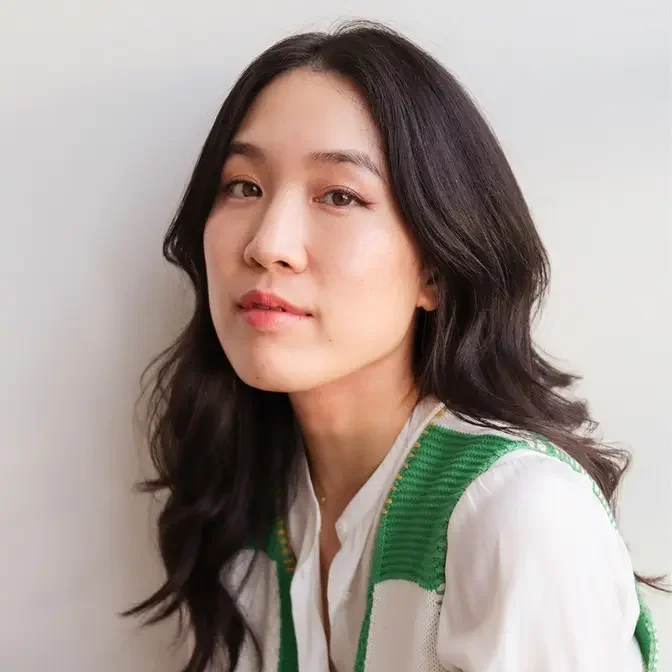
Insecurities. We all have them, but none of us are born with them. If we ever want to develop a healthy relationship with our self-esteem and body image, we have to first learn where our insecurities truly stem from. Over the years, I’ve come to realize, internalize, and re-learn time and time again that our outer world is a reflection of our inner world. This is why prioritizing healthy mindset habits is so important and essential during times when we’re spending more time than ever on social media. Having spent a good chunk of my life valuing my worth based on external validation and how perfect I can appear, I hope this video can help remind us that we’re so much more than our looks. What’s on the outside fades with time, and when it does, what are we left with? If we spend as much time nurturing and tending to our inner world as we’ve done with our outer, magical, magical thing will happen. 😉✨
Insecurities.
We all have them.
The media perpetuates them.
Businesses profit from them.
Let's talk about it.
Hello, sweeties potatoes.
Welcome back.
One of you brilliant souls recommended that I serialize my 7 Mindset Habit videos.
So I've created a playlist and I'm also taking your recommendation
to create 7 Mindset Habits for specific topics.
Today, we're going to start with insecurities and body image.
As we've said in all previous Mindset Habits videos,
as important as it is for us to have healthy daily habits,
making our bed, brushing our teeth, the big and the little things,
it's equally important for us to have good and healthy Mindset Habits
as our external world is a reflection of our internal world.
So how can we develop healthier Mindset Habits
in a world that is hyper-focused on the external
and profiting from our insecurities?
If we want to talk about insecurities,
we need to first understand where insecurities truly stem from.
Remember when we were children,
that sense of wonder and carelessness we had?
Not a care in the world.
And remember how fearless we were?
We legit had less fear because we have yet to be tainted by this world.
We just didn't know how the world worked out.
We didn't know what it meant to be a person and how to be a person.
But of course, as we grow up, what we're taught, what we read, what we consume,
all of that in turn starts to form our worldview, our values, and our identities.
All that to say we aren't born with insecurities.
None of us are born with insecurities.
We are taught, we are told, and we are sold to be insecure.
Just like how social media was designed to exploit human vulnerability
and how news headlines are crafted to exploit our fears,
modern marketing exploits our vulnerabilities for profit.
Let's quickly talk about a man named Edward Bernays.
He's basically the grandfather of modern advertising.
He created the field of public relations.
It's basically a nicer word for propaganda.
So public relations is basically just propaganda.
Edward Bernays learned how to tap into people's insecurities
and appeal to them on an emotional and unconscious level
to get them to do and buy things.
For example, he talked about how cigarettes both smooth the throat and slim the waistline
and that women's right to smoke is linked with liberation
with the Torches of Freedom campaign.
He also convinced the public that disposable Dixie cups are far more sanitary
to increase sales of these disposable cups.
So those were actual campaigns ran by Edward Bernays.
Here's some more modern takes on it that I'm sure you guys have all seen.
Use this mouthwash.
If your breath doesn't smell, people will love you.
Drink this beer.
Drive this car.
Eat this burger that a sexy lady is wearing a bikini on top of a car eating it
and has nothing to do with the actual burger.
But if you eat it, if you drive that car, if you drink that beer...
I forgot for a second.
You will be the bros of bros and people will love you.
Wear this makeup.
Be a size zero.
Wear clothes to nothing.
Then the guy who dreams you've been pinning for will absolutely fall in love with you.
Okay, so Edward Bernays believed that the unconscious and intelligent manipulation
of the organized habit and opinion of the masses
is an important element in democratic society.
This is important as it is the core philosophy of the man who created public relations
which is another word for propaganda.
I just want to make that very, very clear.
And it has influenced modern advertising as well as our collective psyche
because it's just what we've been consuming
whether we were conscious about it or not for our existence.
Bringing this all back to insecurities,
if you're able to poke at people's deepest feelings of inadequacy,
they will buy or do anything you want them to do.
So the formula is make you feel bad about yourself and offer a solution.
If you want to sell more stuff than there are problems,
you have to encourage people to believe there are problems where there are none.
This is a really great article from Mark Manson that I'll link down below.
I think everyone is deserving of a read for everyone.
All of that may have been heavy.
It may have been enlightening.
It may have been eye-opening.
It may have been, I don't know, you may be feeling indifferent.
You may be just like, okay, just tell me what to do.
Thank you for sharing history lessons, Rowena, but what can I do?
So I think it's really important for us to understand that mass media,
that the entertainment industry and that businesses alike
have been poking and prodding our weaknesses and vulnerabilities.
You might be sitting there like, no, not me.
Like I'm not easily influenced.
Regardless of how immune you think you are of not being easily influenced
or manipulated by external forces,
we're all a product of the system that Bernays helped create.
And while that is very scary, do you guys like my pants?
Knowing this, I think is the first step.
Once you're aware of how the system works,
once you're aware that businesses and that companies do this
because they want something from you,
just like they just want your money,
you can start asking yourself,
okay, so everything that I've been taught,
everything that I've been sold,
everything that I've been told my whole life,
how much of that do I actually want to believe in
and how much of that do I want to buy into continually?
With social media being such an integral thing in our lives now,
I feel like these days it's hard to not compare yourself with other people,
even though you may know that it doesn't make sense
to compare your 24 hours to someone's one second of a photo
from their highlight reel of their day that's also 24 hours
and you don't know what happens in those 24 hours,
but you just see that one photo and you're like,
oh, this person looks happy.
They look like they're having so much fun.
How come I'm not happy?
And how come I'm not having fun?
And we forget that a happy looking person
does not always equal a happy person,
as we talked about in last week's video,
the art of being alone but not lonely.
When I was younger, I looked like I was happy,
I think, on the outside,
but I was so far from that on the inside.
When you're scrolling through Instagram
and all you're seeing is happy faces and pretty things
and destinations and travel photos
and all these beautiful things,
you can't help but wonder,
why don't I have those beautiful things
and how come I don't have a beautiful smile
or how come I don't feel as happy as they look?
So why do we do this?
I think it's because it's easier to look externally
than it is to look internally.
It's easier to look outwards,
see what other people are doing,
rather than taking that time and that same energy
to compare yourself to, let's say,
who you were yesterday or the day before that
or the month before that or the year before that.
Even just as a little exercise to be like,
wow, Rowena today came so far from who Rowena was a year ago.
But any matters of the heart and looking inward
and reflecting and being honest with yourself,
even if it's cheering for yourself
and reminding yourself of how far you've come,
I think that's still more uncomfortable
than just scrolling on Instagram
because it doesn't take any thought.
But then there's another layer to it
that we don't really understand
that even though we're not thinking of anything
when we're watching it,
it's affecting and influencing us in ways
that we're not really aware of.
Just be mindful of what you're consuming.
Don't be afraid to go on an unfollowing spree.
Don't be afraid of doing a purge of content
or a purge of accounts you follow.
There's a reason why I mostly follow my friends on Instagram.
I don't really follow girls in bikinis
or celebrities or picture-perfect types
because doing that in the past
has led me down a really dark path
that I'll talk about a little later.
So just be very mindful of the content
that you're allowing into your inner world,
into your looking,
into your eyeballs,
into your ears
because these things that we're consuming,
these things that we're seeing,
these things that we're listening to
actually affects us a lot more than we're aware of.
Trends of any type come and go.
That is the very definition of a trend.
As an example, think of art.
If we want to take it all the way back
to Renaissance, high Renaissance era,
there's the birth of Venus.
When you look at portraits and paintings from the past,
women are curvier.
This was seen as luxury
before modern luxury became a thing
because back then,
food wasn't as available to everyone.
So if you're well-fed,
if you're healthy,
if you're a little curvier,
it was a symbol of wealth.
So back then, it was a great thing.
Now you fast forward to 80s, 90s fashion models.
These fashion models are stick thin.
So that was just to show weight fluctuates.
Like the ideal weight really depends on timing,
really depends on culture.
Another example would be thin eyebrows and thin lips.
And now it's the opposite.
You want the bushy eyebrows,
brows, eyebrows, brows, brows.
You want the plump lips.
You want to look like Kylie Jenner.
And there's just so many Kylie Jenners
now running around the world.
A personal insecurity that I've had
since I was young were my freckles.
I was never so insecure about it
that I wanted to do something about it or cover it
because a part of me cared a lot,
but a part of me was just like,
whatever, this is my face.
And I was more of a tomboy
and I enjoyed being out in the sun and playing sports.
I was like, it's fine.
But I did grow up with my aunts telling me,
you need to finish every single grain of rice
in your rice bowl
because if you leave them behind,
it's going to go onto your face and turn into freckles.
And as I got older,
it was suggested to me from different people that,
oh, maybe you should go and laser your freckles off.
And I thought about it seriously once.
I was like, okay, maybe I'll do it.
But I just couldn't be bothered.
And look at us now.
People are actually putting freckles on their faces.
So with everything in mind,
trends come and go.
Beauty standards are different
depending on who you ask and where you are
and what time period you live in.
It's most important for us to be the anchor of our own ships.
I like to believe that we're all beautiful ships
and we are all floating on an ocean.
And if your anchor is fully anchored
into the sea bottom, the ocean floor,
that might be a really far away.
So maybe we're more shallow waters.
But if your anchor is set,
no matter how hard the wind blows,
no matter how crazy the waters are,
you're still shift around,
but it's in this like contained circumference
that you will be moving.
However, if your anchor is just like halfway in the water
or maybe not even in the water at all,
then if the wind blows,
if the ocean gets a little rocky,
then your boat will just go off into the distance
and you will be so far away from where you started from.
So with all of that, it's taking us back to,
okay, now that we know how the world works,
now that we know to be mindful of what we consume
and that trends come and go,
what do I really care about?
And who do I want to be?
And what do I want to value myself on?
Which brings us to the fourth point.
The way you measure yourself is how you measure others
and how you assume others measure you.
This again is an amazing article by Mark Manson
that also linked down below in the article.
He starts off with a wealthy man
because he measures his life based off of wealth.
When he looks at other people,
he measures them based off of wealth as well.
So if someone is good to him, they want my money.
When someone's bad to him,
oh, they're jealous of my success.
And he gives another example of a beautiful woman
who measures her life based off of beauty and appearance.
And because she's measuring herself
based off of these qualities,
this is how she's also measuring others
and how she assumes other are measuring her as well.
So if people are nice to her, it's because she's pretty.
If people are mean to her,
it's because they're jealous of her looks.
So with all of that, how do you measure your life?
Is it based off of wealth?
Is it based off of status?
Is it based off of fame?
Is it based off of your image?
Is it appearance?
Is it family?
Is it faith?
Is it, what is it?
I look too happy right now.
If you guys watched my video from last week
about the art of being alone and not lonely
and how alone and sad
and probably depressed and anxious I was all the time
when I was going through my darkness reference patch,
it sounds so bad when I say it now
and just like to think it and to say it out loud.
Back then, I would be happy if my girlfriends gained weight
or I would be happy if they like didn't look as good
as they may have looked before or something like that
because there's this quote that I came across.
Everyone wants to see the flaws of another person
because we want to see glimpses
of our own insecurities in them.
We want to know we're not the only ones.
Now within this framework, it all makes sense.
What I valued and what I measured my life and my worth
and my existence on was my appearance
and how I looked and this image I want to uphold
of Rowena being this perfect person
and this perfect human being
when in reality, no one is perfect
and we're going to get into that in a little bit.
But because that's how I measured my life,
I was hyper aware and hyper focused
about that and other people.
Tying it back to points we've already said earlier,
it's always easier to be critical of other people
than it is to be critical of yourself.
We're able to be kinder, more compassionate,
accepting and loving towards ourselves.
We'll be able to be that to other people
and society at large
because if that's what we measure our lives
and ourselves on,
then that's what we'll try to see in other people.
We'll try to see the positives.
We'll try to see the goodness in people
and the goodness in society and humanity.
There's two quotes I want to read
both from Gifts of Imperfection from Brene Brown.
I'm actually making a video
all about perfectionism in the coming video
but I want to read these two
because it's just so good.
Understanding the difference
between healthy striving and perfectionism
is critical to laying down the shield
and picking up your life.
Research shows that perfectionism hampers success.
In fact, it's often the path to depression,
anxiety, addiction, and life paralysis.
So as we just talked about in the previous section,
I went through all of this.
Depression, anxiety, addiction, and life paralysis.
Hi! That was me.
Second quote.
Perfectionism is a self-destructive
and addictive belief system
that fuels this primary thought.
If I look perfect and do everything perfectly,
I can avoid or minimize the painful feelings
of shame, judgment, and blame.
Yeah.
So if you guys have seen my older videos,
you will know that I was a party girl.
I drank a lot, cussed a lot.
I had this facade of a cool girl.
I mean, I think fundamentally
I'm like a pretty chill and cool person
but like I overplayed it
or I just wanted to be like nothing fazed me cool
when in reality, like a lot of things would faze me.
One of the main things that perpetuated all of this,
as silly as it sounds,
was back then I would look at all the people
my boyfriend was following at the time
and most of them just happened to be Instagram girls
in bikinis and influencers.
This was like before influencers was really a thing.
You know, in my head, even though I knew,
I knew this doesn't make sense
but I was like, if I look like them,
if my body looked like that,
if I were that skinny and that toned and that fit,
he would love me more.
But that was what fed into everything.
That was what fed into this already existing desire
for me to be perfect
because I didn't want to feel shame or judgment
or anything of those sorts.
We're all imperfect and beautiful just the way we are
and we really do want to fix something about ourselves.
We can, but if you don't want to go down that path
of getting an operation or a procedure
or plastic surgery or anything like that done,
then instead of focusing on what you can't change,
try to shift your focus on what you can change.
And I think the thing we can change is the inside stuff,
is the internal,
which brings us to our sixth point of gratitude.
Something I've been wondering
is I wonder how many of us spend our days
comparing ourselves to other people,
wishing our lives look more like theirs
and how many of the same people
are comparing their lives to yours
and how we just kind of would go through our days like this.
When you really distill everything down,
comparison, like why does comparison exist?
I think in me, it's some sort of like competition.
Like I don't even know what the competition is,
but like you want to be better than someone else.
You want to feel less alone.
It's like maybe the quote we said earlier,
you want to see flaws in other people
so that you feel better about yourself
or you feel less alone.
There's probably like some sort of jealousy
and the wrapped up in there as well.
One thing that I'm trying to work on myself these days
is realizing that when you see someone happy,
when you see someone succeeding,
when you see someone being successful,
when you see someone doing the things
that you would want to do,
instead of feeling any negative feelings,
instead of comparing yourself to them right away,
instead of feeling smaller or like making it about you,
like I want to make it about them.
Good job. Congratulations.
Like this is amazing. This is awesome.
You worked so hard for it and this is great.
And I think that's when we turn it to ourselves
when we see other people succeed
and you make it about yourself like,
oh, like I can do better or why are they better than me?
Or when you have any of these thoughts,
it's just not good vibes, you know?
And I think it's important to try to surround ourselves
with good vibes.
If we fill our heads with good vibes,
then we will be good vibes.
And I think at the core of all of that
really is just gratitude.
Gratitude is things that we talk about a lot these days,
but I still think it's a very underrated thing,
especially in this context of
if you're able to truly be grateful for your existence
and for you being just the way you are
and for you to be like a beautiful human being
from the inside exuding outward,
then when you look at other people,
you will feel the same way
and you won't feel as judgmental
or you won't be as critical about other people
because you're less critical about yourself.
You're more loving and you're more accepting of yourself,
which then in turn, again,
makes you be more loving and accepting of other people.
So I think it's a lot of in, out, in, out,
but I think it's just, it's a beautiful thing.
I'm pretty sure I talked about this
in my first mindset habits video,
but I think as it pertains to body image,
physical appearance, and insecurities,
when we're 70, 80, 90 years old,
we're going to be a lot wrinklier.
Everything's going to be sagging.
We're going to look nothing like what we look like now.
If that is our future,
and if that's where we're going to be,
what's going to matter then?
When you strip away beauty,
when you strip away physical appearance,
when you strip away everything,
what is left?
And I think this is where inner beauty comes from.
And what is inner beauty?
I really believe inner beauty is your character,
the things that you value,
the way that you measure your life,
the things that are important to you.
I really do believe that our outer appearance
is a manifestation of our inner state.
When I was younger,
even though I was much younger,
like a decade younger,
I feel like I look younger now
than I did in my photos back then.
And that's primarily because the state that I was in,
my mind state,
like everything was just not in a good place.
And I think that shows, right?
Like my eyes were a lot darker,
not like the color of my eyes.
And I don't think it's like something that like...
I just look like a different person.
So if we're able to be more at peace and happy
and lighter now,
imagine how beautiful and glowing and happy
you'll look when you're 80.
I just, I think that's such a beautiful thing.
So think happy thoughts, guys.
Think good vibes.
Be good vibes.
So you can help others around you be all of that.
So with all of that,
thank you guys so much for joining as always.
I didn't give a hug last video
because it was so dark by the time I finished.
So here's a big hug.
This is a big hug.
I'm actually hugging my tripod.
So let me know what other subjects or topics
you'd like me to create a video like this on.
Appreciate you, sweetest, sweetest, sweetest potatoes.
I hope we'll all be as sweet as we are inside
as we look and are outside.
I don't even know what's coming out of my mouth.
Okay, bye!