How to Grow a Brand Photography Business - Every week we'll be chatting with a business owner, helping them to bust through the challenges they are facing with their business in our new "Fix Your Business" series.
This week we cover:
0:00 - How to Grow a Brand Photography Business 3:58 - How do you price a photography service? 6:08 - How do you price a brand photographer? 11:52 - Selling Branding Photography Packages 17:49 - Sales Funnel for a Brand Photography Business 25:29 - How can I sell my photography? 26:09 - How do I start charging for photography?
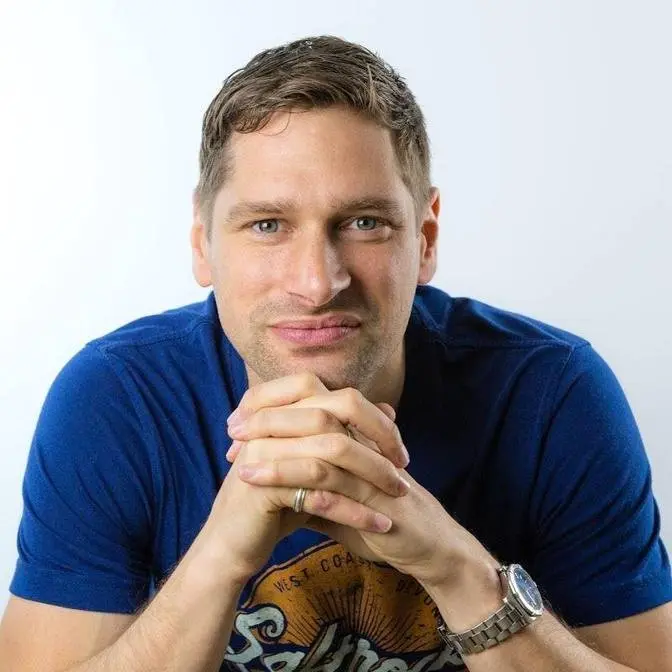
This week's guest is Coralie Hartigan, Founder of Pho. TEE's Clothing and a Brand Photography Business.
The goal is to have a fully tailored platform offering branding solutions for businesses from concept through to completion including consultation, design work, wearable marketing, brand training, editable design resources and personal branding photography.
Pho.TEE's main clientele is currently people working in the creative industry, so a new site to umbrella both core elements is the main focus to offer services to other sectors too.
In this ever changing world don’t just ask yourself who are you as a business, but more importantly who you are as a brand?
Your online visibility and digital footprint means that personal branding is now one of today’s main focuses in small businesses and it is what can set you aside from the next so you stand out from the crowd.
My name is Coralie and I am an Award winning business owner based in the South West of England. My lifetime love of Photography and Graphic Design has led me to follow my creative passion owning two businesses within the creative sector.
I am lucky to have some of the biggest international and UK photographer influencers wearing the Pho.TEE’s brand and we have featured in Canon Magazine as well as winning the 2018 and 2019 Best Accessory award from SWPP – Europe’s biggest photographic convention held by the Societies of Photographers in Hammersmith, London.
2020 hopes to bring the core elements of my businesses - photography and design together, under one platform to offer the ultimate branding experience and service. Wear your Brand. Build your Brand. Be your Brand.
Welcome, everybody. This is the first episode of Fix Your Business with me, Robin Waite,
founder of Fearless Business. So, this is essentially a coaching program. I'm thinking
that maybe even it's the first of its kind, CJ. So, we're kind of breaking new ground here,
which is quite exciting. So, hello, welcome. Let's just kick things off. So, I put a little
bit about your biography in the video notes. So, I want to just dive straight in and focus
on the business side of things. So, can you give everybody just a quick 60-second
bracy of what it is that you do? Yeah. So, I have two creative businesses. I have a photography
studio in the southwest, and I have a clothing brand that works with creatives, which focuses
on putting your personal brand on your clothing in order to maximize impact when you're out working.
So, that started mainly through the photography. So, I have a large amount of UK photographers,
and I also have a big follow of international photographers now. Some really big international
photographers that I'm lucky enough to be able to call my friends as well. They choose to wear
the brand when they go live on all their social medias, which is brilliant. And I'm just in the
process now of trying to pull the two together, working more with brands and businesses in the
photography side, launching personal branding photography. I was lucky enough to work with
a photographer last year who's fantastic up in Leeds. She did some great product shots and
photography shots for Photies, which was brilliant, and quite nerve-wracking as a photographer, being
on the other side of the camera, and I think for her, photographing another photographer. But we had
a fantastic day, and I think that really kind of pulled together and cemented to me the importance
of unbrothering these two businesses now. So, bringing the photography together, the branding,
some training ideas, and, you know, really pulling on my background, which is, I used to work in
London and Bristol as a graphic designer. I've been in teaching. So, bringing it all together
under one umbrella and just building a complete brand service that people can come to me from
consultation to a final delivery. We're going to, let's say for example, you saw all of my
branding out, right, ballpark, make a number up, be brave. How much is that going to cost me?
I don't know. Make it up, just throw a number at me. If I was working on a
personalised photography shoot, if I was looking at your social medias, if I was guiding you with
how your branding could look, then I'm guessing we would probably, based on what my photography
prices would be in a normal shoot, around two, two and a half K. So, second observation,
and this might be a little bit of a, I'm hoping this will be a bit of a moment of realisation for
you. So, let's say for example, if it was two and a half K, in fact, I'm just going to try and share
my screen a second. Hopefully this will work. And then, I mean, can you see this okay? Yeah,
right. That's, that's my notes, basically, as I've been, as we've been going through and you've
been describing your product. So, we've got an idea over here about what turnover you're
getting, what turnover you would like, and as we've kind of, I mean, these are rough notes,
by the way. It's not, it's not an exact science, but you get a picture of where I'm going with this.
If you've got a product at two and a half K, that means you only need to be working with two
clients a month. One business, one product, two clients a month. Okay, now one of the things you
said to me is, well actually, at the moment, I'm currently kind of pushing eight to ten,
I know that includes all the different areas of your business, but eight to ten clients per month.
So, one of the things which I talk a lot about is three ways to grow your business. So,
the first one is, could we do double our turnover, but with the same number of clients?
Could we do the same turnover, but with half the number of clients? Or, best case scenario,
could we double our turnover and half the number of clients we're working with?
Now, in this instance, if you're talking about just two clients per month, which gives you your
five K per month turnover, the goal which you want in terms of your turnover, that's actually
a fifth of the number of clients you're currently working with. Make sense?
Yeah, so you're my eight to ten, excuse me, but our eight to ten there was working on photography.
Yeah.
So, I think this is how they differ, is I can have less photography clients,
with most of them averaging between a 550 and a 750 spend.
Yep.
But then, obviously, the clothing side of it, it's more on volume, but less money.
Yeah, which I totally get. Now, I'm thinking with this branding product,
so I always recommend to people you can have between three and five core products.
So, it could be that actually, so first we could have an audit here, which,
or consultation as you called it, could be free. So, it's like a try before you buy,
and I'm going to go through some slightly different numbers in a minute about how much
business you need to be pushing through in order to kind of make, you know, get,
achieve your goals, basically. So, it could be free. You could also charge for it. So,
it could be that actually you have an audit process that is maybe 500 pounds.
Okay, so that's just for me to review everything that you've got currently,
and to give you a one page summary of where we think that we can make
some progress for your brand. Now, I want you to, if you've got a notepad handy,
I want you to write something down. You need to become a master at working out
the return on investment, the ROI. So, you need to become a master or mistress at working out
the return on investment that your clients are going to get through working with you, okay?
Now, imagine if you go through and rebrand me, or help me to, like, you go through your audit
process. We get some amazing brand photography done. Our social media is totally consistent.
Online, offline, visually, I look awesome, and my program costs 3k, right? So, if you, if through
doing that, somebody comes up and says, look, your branding is brilliant. I'd love to look like you.
Can I work with you? I've just got an ROI on a 2.5k product, okay? So, that's almost like a
no-brainer for somebody to drop 2.5k on the full suite, and it might be that, for example,
shut up, Siri. Stop talking to me. It might be, for example, that actually, if you then do, we've
got the audit consultation process. Next thing, if they've already got branding in place, and they
just need a social media audit to make sure everything's consistent, well, could that be,
I don't know, let's, I'm putting some random numbers here. Pricing, there's no real science
to it. We don't look at the competition. Let's say that package is 800 pounds. If we then add
brand photography on top of it, how much if somebody was to do a photo shoot, did you say?
If all my clients are working with me currently, without them buying any products,
for the digitals, it would be 550.
Now I know.
Yep. So, it might be for social media plus brand photography. Could that be more like,
I don't know, 1,500 quid? So, we've got, what we're building up is like gold, silver, bronze,
or packages A, B, and C, or whatever you want to call it. So, I mean, the difference there is only
700 pounds. That's probably not enough, actually. I'd maybe even bump that to 1,800. And then one
of the things you could do is then, okay, so the social media is kind of your online stuff. So,
that might actually be included there anyway. But then we start to move into the offline stuff,
which is where you then start to talk about t-shirts, bottles, physical stuff. If you've
got clients who go to exhibitions, how can we make your exhibition reflect your brand? Well,
all of that side of it. And then, I mean, that could be for the full package. Actually,
more like 3K, 4K, 5K, doesn't matter. So, what we're doing is we're starting to build up tiers
of products that, this is recorded. You don't need to take screenshots. I'm joking.
My notes now look like this already.
Amazing. So, we're making some progress here, I hope. Is this the sort of thing that hopefully
you were expecting? Is this useful?
Yeah, definitely.
Great.
It's just, I know what I want in my head. But, you know, this is a little bit of a crazy place.
Yeah.
So, being able to just break it down. And I suppose, in a way, trying to justify, like,
I know that my shoot pricing and the structure for that is where it is. I also know that whilst
having put it up, my clientele went down. But that is okay, because my focus is to push products,
because I want my clients to have artwork on the walls of these things. With the T-shirt and the
branding, it's just having, like I said to you, these eight plates spinning. And I know that it
can pull together. But I also know that I'm overcomplicating it an awful lot. And I just,
yeah, I need you and that structure to be able to say, this is what you need to do.
Yeah.
Excellent. So, you can see here, what we're starting to do is build up a suite of products.
And I always recommend three to five core products. It might be that you don't want to go
through and, like, create a massive long list of features for each one of these. It's just got to
be the headline stuff, like I've just done there, basically. So, you have your basic package, like
your starter kit. You have your one where you also then start to work on their photos. And then
your, you know, all of the printed stuff offline. That links nicely, dovetails into boaties in terms
of that side of your business. The next step in terms of one of the things you asked about
the start was recurring. How could you create some more sustainable revenue? Well, it could be that
once you've taken people through having one of these products, you almost loop back on that
audit product. And you have a, what we call a done for you, like monthly audit.
So, what we'll actually do is, as you're putting out content online, doing videos,
as you're blogging, as you're, if we see you at an event, if we see you in a magazine or things
like that, we'll just produce a report for you once a month, which will go through and look at
your brand and give you half a dozen to a dozen pointers on areas maybe where it could either be
better or you've got the branding wrong or it's not consistent. And could that be, I don't know,
let's say, for example, it's £250 a month per client. Okay. Now, all of a sudden,
one of the beautiful things about when you've packaged stuff up, you don't need to put any
of these prices on your website or in brochures or anything like that. When somebody comes through
your initial sort of, I don't want to talk too much about the marketing side of things necessarily,
but when they come through, maybe they see you at a show or want to book in that initial
conversation with you, you know, the conversation up here. And by the time you've done your fact find,
you then, this is another thing which I want to write down, I want you to write down,
which is quite important. The best way to sell anything is using this statement,
which I'm about to give you. So, based on what you put into our assessment
and what we've just discussed during your consultation, the package that I would recommend
for you is package B. I'll give you a chance to write that down. So, based on what you put in
your assessment form and what we've just discussed during your consultation, the package I would
recommend for you would be package B. And these are the reasons why. Now, obviously, if C is the
right package, you recommend that one. They might be going, oh, I just want the cheap and dirty one.
No, no. You've told me that you want to attract clients into your business. You've told me that
you want your turnover to increase next year by £50,000 because of X, Y, and Z. You can't get
that through just making your social media look nice. Everything needs to look nice. If one piece
of your branding breaks, it breaks the sales cycle for your client. You'll lose the client.
That's why I'm recommending package B. The beautiful thing about this is that
you could be doing a consultation now and pitch it at £1,800. If you're feeling confident and
buoyant, you could do another one tomorrow and pitch it at £2,500. So, you can actually validate
a different price point. Make sense? A lot of people, when it comes down to pricing, just get
super stuck on, I can only put my prices up once a year. No, no. We keep on testing and
validating our prices until we hit a point which, A, makes our business stand up economically,
and B, there is a market, there's demand out there for it. The Guinness World Record,
believe it or not, Guinness World Record, the most amount somebody has ever paid for a haircut,
£8,000. What an idiot, but there is somebody out there who paid £8,000. So,
I was in a hair salon. Somebody was talking about the fact that the hairdressers' prices
were too cheap. It's like £25 for a haircut and colour and all sorts of stuff. Way too cheap. I
don't know much about women's hair, but too cheap. And even somebody in the room said,
well, I'd pay £100 for that. Why is it just £25? Oh, well, that's what I would pay. So,
a lot of people price stuff based on what they would pay, not what the market would demand.
And when I said to her, well, look, I quickly Googled, you know, most expensive haircut,
it came up, Google, you know, Guinness World Record. She didn't believe me. I was like,
it's in a book. It's in writing that somebody paid. It's like there's a bandwidth here between
£25 and £8,000. She just could not get it. And actually, you know, she's the sort of person who
will struggle with business, will never quite, you know, she'll never go out there and even test it.
She won't open up a hair salon next week and charge £35 instead of £25. And I remember going
to another client who sold sheds and I would mystery shop their business on behalf of their
clients. So, what I did is I actually pretended to be a salesperson for a morning on their forecourt
because they were really struggling in their business and couldn't work out how to make more
money. Somebody walked up onto their forecourt and said, well, actually, we came here because
we want a new home office, but actually, these are sheds. We're not really sure whether they're
right or not. I was like, if there was a cedar clad studio with bifold doors, is that the sort
of thing you're after? Like, yeah, of course, that's what we want. So, I sold, took a deposit
for them there and then. Went running into Dan and said, Dan, Dan, Dan, you need to knock down
three sheds and build the cedar clad like studio so people can actually see this thing because
you're losing business. You know, and actually, they very quickly shifted. They took a couple of
on top of mine as well. So, I was just about to just wake that up. They took a couple of deposits
on top of mine within the first two months of actually starting to build this garden studio.
So, people have got to see the value. So, great. So, now we've got, and we'll go back to your goal
again. So, we were talking about hitting, so what was it, about four and a half K, four and a half
thousand pound a month's revenue. Let's call it, let's round it up to five K. So, now all of a
sudden, if you, let's say, for example, if you had, I don't know, 10 clients who were on your
monthly audit package and you've got to get those first, obviously, that's probably something for
another day, but then you sold one of your platinum products for three K a month, you're
actually at 5,500 a month. That's irrespective of your family photography, irrespective of how much
merchandise you sell, okay. So, it's one business, one market, three simple products, well, four if you
include the follow-on product, so that's what this is, follow-on product, and you've got your
revenue there. How does that feel? Sounds easy.
Do you want to know where people make the biggest mistake? Yeah, they don't do it.
No, it's not that they don't do it. They do a whole load of stuff that they think is heading in
the right direction, but the biggest mistake that they focus on is sales. Now, I know you're thinking,
that's just dumb, Rob. Every business needs to have sales in order for it to survive. Yes, absolutely,
you need to make money, but the issue with just focusing on sales is that we end up
focusing on the wrong target, okay. Now, if, say, for example, your goal for your business was
actually to get two clients a month, right, and we get to the end of the month, so that says
conversions, by the way, so we get to the end of the month, right, and you've only sold one client,
there's actually nothing you can do at that point to influence that number up or down.
It's called a lag indicator because time has lagged, all the activity before it has lagged,
we're stuck with one client, lest we monumentally make a complete eff up, you know, we can't lose
that client, we're stuck with one client, we can't make any more, but actually imagine if we get,
I don't know, halfway through the month and we've been measuring our lead indicators and I start
this off with something called conversations, a bit like you joining the Facebook group,
for example, and us just jumping into Messenger and saying, I'm doing this crazy thing, do you
want to jump on and, you know, whatever, that's the start of a conversation, albeit not necessarily
as a direct client potential for my business, but it's the start of a conversation. From those 70
conversations, you then want to funnel them down into consultations, so this is the actual sales
part of what you're doing and actually sales is that line there, yeah, it's one small part of it,
but imagine if we get halfway through the month and actually I've only started 20 Messenger
conversations with people, I've only booked three people onto consultations, I know that my lead
indicator is starting to tell me that I'm falling short of hitting my lag indicator, my goal, my
target, so we've got two choices at this point, one is to admit defeat and go, oh well, not going to
make it, I'll just be happy with one client this month, if I'm lucky, or we double down on our
activity, focus on our target market, our audience that we've niched on and getting people booked
into those consultations, we need seven more before the end of the month, can we do that in two weeks?
Probably, I'll just work bloody like Billy-o to do it, if we're distracted by loads of other stuff going
on because we're not terribly organised in our business, we're going to struggle to do that, so I
think it's really important, this is why I'm telling you, like giving you a few clues here about what
you need to focus on, most people focus on the sales because obviously we need money, but it
actually gives us false information and we, it's very binary, we either hit the goal or we don't, we either
get the sales or we don't, and when we don't get them, we tend to beat ourselves up and emotionally, it's a bit
of a drain, whereas actually, if I'm chipping away at the conversations and if I get to the end
of the month and I know that I've done my 70 and my 10 properly, but maybe I still only ended up
with one sale, it doesn't mean I'm a bad salesperson, it just means that like clients are like buses,
sometimes two will come along at once, sometimes none will come along, you know, when you want it
to or when you're expecting it, but I'm content if I know that I've done consultations and
conversations at the top end of it, done the work, didn't work this month, cool, let's reset, start again
next month and off we go again, make sense? I'm probably going to bring it to a close there because
we've gone way over time, we're up to 40 minutes on the live already and probably both of us want
to go and enjoy some sunshine. How do you feel about things now? Yeah, it's just, to be fair,
it's just nice to talk to another creative just to have an outside view of what's going on because
I think it's quite easy that you get so up in it and people around you might just be going like
you're doing too much or you're spreading too wide and you're like no, no I'm not, this is
what I'm doing, but then, you know, once you're not with those people you're like
how am I going to do it, how am I going to break it down, like I've got all these pieces of
paper everywhere, what's going to happen first, like and there's no real plan, you think there's a plan
but the plan doesn't seem to progress to the next stage because you're very aware that
you're not really there yet, so I think just being able to break it down into sections
and instead of trying to look at it again, looking at it as a whole, you just break it down
into different elements and, you know, like you say, it is hard to balance the two, so it's
I love my family and children side of the photography but I know that I have another
business that I can grow and expand so much more, my newborn and photography, I have all my clients
that are existing, I have new ones coming in, there are hard months when, you know, you're not
bringing in and you are doing the marketing and all the things that you should be doing, like
you said, you're doing all that stuff, you're content that you've done it but you don't have
the shoots at the end, it's enjoyable and I love it but I see the branding and the personal
branding side of this, all pulling all my skills together, keeping it very varied for me, so
you know, you're not tiring of one aspect of what you enjoy doing. Yeah, there has to be a repetitive
sort of process as well which you've got to go through because that consistency is ultimately
what gets clients, otherwise, so there's a couple of little tips which I'm going to give you which
I think will be helpful, so this is kind of like your homework, so if that branding
side of things is an area where you want to focus on and let's say for example the next
three to six months and hopefully we'll come through the crisis and things will start to,
the market expands again, one of the things I'd recommend you do is put those 10 consultations
I talked about that's going to get you those two clients, map it, so that's like two to three a week,
map in two empty consultation slots into your weekly diary, so then if you use Google
talent, Google apps or Office 365 but actually put in empty consultation slots, it just tells
the mind I've got empty consultation slots I need to fill, it gamifies it and then you'll be more
incentivized to do it, what a lot of people, the biggest mistake people make in the sales cycle
is they do all of the other stuff first, content creation, client work, delivery and everything else,
then they slot in consultation slots around the rest of it and it feels like we're busy fools
rushing here, there and everywhere, I have get ---- done like periods in my diary where I will
block book four or five consultations back to back, bang, bang, bang, done, of that it's predictable
then, I know that out of some of that I'm going to win some business and at the end of every one
of my get ---- done sessions, I can come out of it going yeah I've got a new client or two,
it's predictable but at the very very beginning you just want to put in two or three empty ones
that you've then got to go out and fill, next challenge is how do you then go and find the
clients then to book into those, now if you've already got a network which it sounds like you
have that's relatively deep, you can tell or start telling people stories about these fantastic new
branding products which you've got and the sorts of return on investment that people can expect to
get from them, so as a coach, coaches who typically go through my branding, my platinum branding
product will on average get an extra client a month, so the average coach that is worth about
£3,000 extra revenue a month, if that's something which you would be interested in, reach out I've
got some consultations available, so we tell a very different story, it's about getting the,
you're into branding, it's about getting your messaging right, telling it up with your audience,
tell them what they want to hear and from there you'll then start to book in those consultations
and then we go into all the nuances around sales like what happens on that consultation,
how do you close a 3k product, that 3k product could easily be a 10k product in 12 months time,
seriously, we test and we validate at a price point you feel comfortable, if 3k feels comfortable
let's start there, in 12 months time trust me we work together, this is a potential opportunity,
I'm not, this isn't a sales pitch but you know or any other coach, there are other coaches out
there not fearless business but we're good at what we do, but in 12 months time that could be a 10k
product, now you need one client, half the clients and you're making double that 5k
and maybe your follow-on product is actually 500 a month not 250 a month, there's tons of
opportunity, it's just being open to that idea now, cool, I'm going to throw it back over to
you, what are your last thoughts about the experience you've just had, albeit it's much
longer than I planned, yeah sorry, it's my fault, it's really good, it's nice to have someone from
the outside looking, I also may or may have missed bits and bobs because this is the first live that
I've done as well, so that's another challenge, a goal kind of ticked off for me, but it shows
that it's feasible, it shows that you aren't, you haven't got your head in the clouds when you're
trying to think but sometimes you just need more clarity and you need a better process with better
time management, which I think just looking at how you can pad it out knowing that you don't
know the businesses is quite reassuring, that it's comforting for me to know that I do have
something that I can work with and I think it's a really good time in the year, not for the world
but for where my business is at the moment, I haven't started this yet, it's something that
I've done 10% in maybe everything and my goal is to bring it all together, so I think talking to
you now is a massive help for how I try and look at it moving forward instead of maybe just using
the next few weeks or god knows how long we're in a pandemic for mumbling along and not knowing
if it's the right direction, so I think this is a massive help and the perfect time
for us to have had this chat, it's been really good. It's a really awesome piece of self-awareness
which you just talked about there, I think that's quite hopefully a big moment of
realisation for you and I think in terms of my summary, I think if you can focus on one
thing and do it really well and be patient with the other areas of your business, they're still
there, they're still going to happen, you're still going to attract family photography in there, you're
still going to be selling merchandise, the t-shirt side of things will still happen but you need to
focus just on one area, the other stuff will just, and you just need to be patient in terms of building
this up and then when it gets you to a point whereby you have that lifestyle element of the
business running and working really well for you, maybe you can pull in other experts to deliver on
that, you can turn your attention back to the real passion projects, the stuff you're deeply
passionate about, the family portraiture, the photography work which you do and things like that,
you know, that's not going away, we're not saying we'll just focus on this and don't do anything
else, it's just about applying your energy in one area primarily and let the other stuff happen
more naturally and you'll be absolutely fine. I think it generally has the last few months where
my mindset's been steering more this way, I think, yeah, I need to keep steering the way that
my heart's going to as well. Brilliant, CJ, it sounds like that's been helpful, it's been helpful.
Definitely, thank you so much, it's been brilliant.