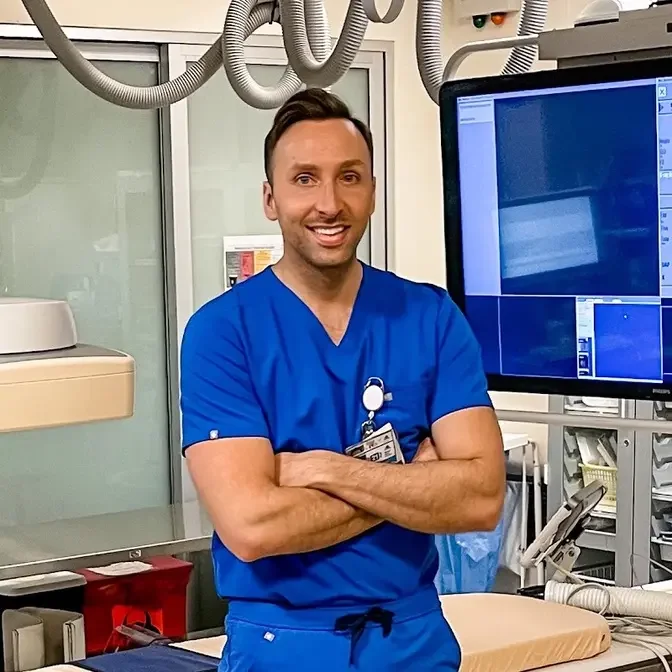
@iJustine was recently hospitalized with an upper extremity blood clot and vlogged the entire journey! Since her diagnosis is something I deal with, and have dealt with, on many occasions, I decided to do a reaction video! I mean...did I really have a choice!? Hope you all learn something about Paget-Schrotter Syndrome and thanks again to @iJustine for the awesome video! Hope you get well soon.
01:04 - @iJustine Justine Explains what happened 05:15 - My summary of her diagnosis 12:44 - Paget-Schrotter Syndrome Explained
*None of this is meant to be construed as investment advice, it's for entertainment purposes only. Links above include affiliate commission or referrals. I'm part of an affiliate network and I receive compensation from partnering websites. The video is accurate as of the posting date but may not be accurate in the future.
See that's what I always want is another creator to have a procedure that we can
like vlog together. How cool is that? All right, I'm probably a dork.
Welcome back to the channel everybody. For those of you who are new around here,
my name is Michael, AKA Dr. Cellini,
and I am a board certified diagnostic and interventional radiologist in New
Jersey.
And that last part is going to pertain to this video because we are going to be
talking about an OG YouTuber, none other than iJustine,
who has been one of my favorite YouTubers for many, many years now.
She actually was in the hospital recently with a blood clot disorder.
And in true iJustine fashion, she vlogged the entire thing and talks about it.
And I started watching the video because I watched all of her videos and I
noticed she started talking a little bit about interventional radiology.
So I stopped the video,
turned on my camera and thought I would react to it because what she had pertains
to what I do every day for a living.
So let's go ahead and watch her video and I'll analyze it slash react to it along
the way. Let's go. So this video is entitled story time,
my emergency hospital visit with a blood clot. So let's start it now.
Really? Two ads. Lovely.
So on Tuesday I told my sister that I thought I had a blood clot in my arm.
I said, I'm just going to take a shower and see if this resolves itself.
How does one know? I guess, you know, you should always listen to the patient.
If they feel like they have a blood clot in their body or their arm,
then maybe they do. Went to the dinner, came home. I was like,
something is wrong.
So you see her right arm there is red and swollen compared to the left or the one
with the ring on her finger, that arm.
Clearly something is amiss with that right arm since the left one looks normal.
So it could be something blocking off the blood flow, like a blood clot,
a lymphatic disorder, which would not come on acutely like this.
So we'll see what's going on.
Instead of going to the doctors,
I went to sleep and just hoped that I woke up in the morning,
which is a very scary thought to fall asleep to.
Please don't do that. That's if you're ever worried,
go to the hospital or go to the emergency department,
especially if you're concerned with a blood clot,
that's not something you want to sleep off.
The veins are starting to break in my shoulder. This arm is so swollen.
So that's kind of what happens when you get a blood clot, like say in your arm,
the superficial or collateral veins start to swell up because they are taking on
that large task of transferring the blood from your arm back to your heart,
but they can't do it through the main deep veins because they're blocked off.
So the other veins get swollen and they're not used to handling that kind of
load, which causes more swelling, more pain, more redness,
all that kind of stuff.
I looked ripped. It looked like I had been to the gym. I was so shredded,
but that was actually just swelling. Yeah.
So it does look like you have a nice pump because like, you know,
when you go to the gym, you get a nice pump on your,
your biceps are swollen and your shoulders are swollen. Same kind of thing,
but not the same.
This is my arm that I do lightsaber training with and I'm mostly right hand
dominant in sports and any type of martial arts stuff. I was like, okay,
this is not right.
What she's doing there, all those aggressive lightsaber training movements,
which is actually pretty good. Might I add,
not that I know anything about that subject, but it looks good to me. However,
multiple repetitive stressors,
especially in the shoulder can lead to stuff like I think what she's going to
have.
My sister races me to the emergency room and there they do an ultrasound.
First step,
if you're concerned with a blood clot or a deep vein thrombosis or a blood clot
of the deep veins of your extremities, arms or legs, you do an ultrasound.
They find a blood clot and from there,
based on this diagram here,
this is just a rudimentary diagram here that they would draw.
Like maybe the sonographer would draw for the physician to basically localize
the clot.
So it looks like she has a clot or a thrombus in her right subclavian vein,
also known as a deep vein thrombosis.
The reason it's deep vein thrombosis is because the subclavian vein is a deep
vein. Who would have thought?
They then say, yes, you definitely have a blood clot.
We're going to have to do a thrombectomy, which is.
That's what I do.
Where they take a catheter and shove it into your vein and pump medicine
into the clot.
That's exactly what I do and what I have done many times in my training.
And I love that she had a venogram portraying that exact procedure.
I don't know if that was her or not, but pretty interesting so far.
She's done a fantastic job of blogging this for someone who has no medical
experience.
So I think the reason she was moving to a bigger facility or probably like a
tertiary care center is because interventional radiologists don't really
specialize in this sort of procedure in the community setting.
So for instance, like my hospital, we wouldn't do too many of these.
I could do them,
but we'd be more equipped to do them at a higher level of care hospital.
So the floor rooms are better.
The interventional radiologist or the vascular surgeons,
whoever's doing the procedure are actually very well trained in doing these
procedures.
They're comfortable doing these procedures and you'll see why in just a minute.
And also the ICU teams that will be taking care of her before and after the
procedures are used to this procedure and know the kind of common side effects,
what happens in this procedure.
They're just prepared to handle anything that happens.
So that's probably why they bumped up her level of care.
They wanted her at a hospital that was used to handling this sort of thing.
The last thing you want to do is have this procedure done at a place that's not
used to handling it.
Something goes wrong and then they can't handle the complication.
Then you have to transfer them out anyways.
So might as well just be all in the same spot.
So basically what it sounds like is she has that right subclavian vein thrombus
or the DVT.
They started her on a heparin drip,
which is common reason they probably started her on a heparin drip is because
they can probably titrate it very easily for her and heparin is very easy to
start up.
And it also has a very short half-life so you can turn it off before the
procedure, 90 minutes,
maybe two hours or so and most of the heparin will be out of her system.
It doesn't matter as much for this case,
but it's easy to kind of switch on and off and strip for the hospital setting.
So I'm here in the operating room trying to understand what this doctor is
telling me and the whole process.
And I have my sister on the phone and then we were also talking to our friend
Chris, who you may know from the YouTube channel, Becky and Chris,
they do incredible like home remodeling.
Dr. Chris Nicholas, my boy. We're not really boys,
but I've talked to him on occasion. Love him.
Super nice guy and he and his wife arguably have the best channel on YouTube.
You should check them out. Becky and Chris, I'll leave a link up here.
They make me kind of like question calling myself a YouTube creator because
they're so good and such on another level of concentration,
videography, cinematography, color grading, aesthetic goals, central.
I mean their channel is amazing.
Just go watch their videos and you'll be like blown away.
I don't know how they do it,
but Chris from Becky and Chris is an interventional radiologist in New York,
I believe still.
So that was really clutch having an interventional radiologist on standby that
you can talk to because you know,
this is a very complicated procedure and it's really hard to describe to people
because it doesn't make any sense unless you're kind of in our field.
It won't really make any sense to you.
It's hard to conceptualize what we're actually doing.
I think the doctor probably should have came up to talk to her.
That's what I would have done. But you know,
like Chris could have been the one to do the surgery. I actually, I wish he was.
I wish that Chris was there and he could have done it.
Cause imagine one incredible YouTube collab.
That would have been dope if like me and Chris were the interventional
radiologist that did her procedure and we just like vlog the whole thing.
That's what you want.
See that's what I always want is another creator to have a procedure that we can
like vlog together. How cool is that? All right. I'm probably a dork.
And of course the side effects of this drug are pretty severe that we're going
to be putting in.
My sister has also had patients who have unfortunately passed away or had a
stroke because of this.
So it sounds like she's on blood thinners now or heparin.
I think I forgot to mention that that is an IV blood thinner that we use in the
hospital.
She will also likely get something called a TPA or tissue plasminogen activator,
which is a very potent protein that basically lysis clots and that specific drug
has its own inherent risks like cerebral bleeding or bleeding in the brain or
maybe in the abdomen or somewhere else in the body.
Because the goal of that drug is to lice or completely dissolve clots anywhere in
your body. For her particular procedure,
they do a local lysis or a local thrombolysis where they try to lice that clot
locally. So it doesn't go as systemically as for instance,
when someone comes into the ER with a stroke and they give them a very large
bolus IV that will dissolve everything and hopefully dissolve the clot in their
brain.
But this is more of a local lysis and the dose isn't as high as for someone who
has a stroke. The risk is still there though, but not as high.
I call Chris. I'm like crying.
I have my own personal diagnostics and interventional radiologists on the line.
I wish I was friends with her. She could have called me.
We go in,
they put the catheter and they decide that they're going to do this drug called
TPA to dissolve it. I didn't know what that was. I was freaking out crying.
I was in the bathroom.
This is actually a shot of me crying in the bathroom and it's like,
this might be the last clip that is ever on my phone.
That's really pathetic and sad.
So basically it sounds like they accessed probably what I would have done in this
case is access the basilic vein or the brachial vein,
but a sheath in put a catheter through that clot and you basically leave,
it's almost like a tiny sprinkler.
Like think of a sprinkler system where it has a hose going in and there's holes
on the sprinkler and it just sprays out fluid or water because it's a sprinkler.
But think of it as the sprinkler was the catheter that's lysing the clot.
So if the clot was like this,
the sprinkler would just be laying through it and just spraying the TPA over the
course of 24 hours.
Usually what we do is we put it in the catheter and we have it lyse the clot or
spray the clot overnight and we usually drip the TPA at a very small dose over
the 24 hours so it can kind of sit and marinate within that clot and dissolve
it. Then we bring the patient back down the next day, do a venogram,
see how it looks and we either balloon it,
suck out some of the clot with a thrombectomy device or maybe do another round
of lysis. It's called catheter directed thrombolysis. So, you know,
it's obviously a confusing term for people who aren't used to hearing it.
So they're using something called ECOS,
which is a thrombolysis catheter made by Boston Scientific, I believe,
not sponsored,
but I've used this catheter and basically it uses ultrasonic waves to
essentially penetrate into the clot and allow that TPA to dissolve the clot
easier than just like a regular catheter.
So it uses TPA plus ultrasonic waves that kind of break up the clot.
No clot gang, here we go. Three, two, one.
Here we are. Third time's a charm.
So it looks like they did another round of TPA probably overnight and they may
have gone in and done something called a thrombectomy or a suction thrombectomy,
which is basically when you insert something like the size of the straw into
the catheter, get it right up next to the clot itself.
And you can basically kind of suck in and break up some of that clot and suck it
out of the actual vein called aspiration thrombectomy, suction thrombectomy.
Those are all synonymous with each other.
And that may be what they did here to kind of completely rid of the clot
altogether.
A blood clot is a very serious issue. Like you could die.
The blood clot could break off into your heart, to your lungs, to your head.
You could have a stroke.
So yes, it could break off and go to the lungs. That's our biggest concern here.
The chance of it going to your brain would be very slim unless there was a
defect in your heart that would allow to bypass from the venous system to the
arterial system. But you know, it's not that common.
The biggest thing we worry about is a pulmonary embolism.
Clot breaks off, goes to the lung, blocks off the blood flow to the lungs.
And I've done another video somewhere about DVTs and PEs.
I'll link up here if you don't know what that is.
Anytime someone has a DVT and they start complaining of chest pain,
shortness of breath, we're immediately worried about a PE.
You need a stat CTA of the chest to see if there's a PE and see if we need to
treat that PE, see how big it is, all that stuff.
So that night at 1.30 AM, they ended up taking me down for a CT scan.
They inject dye into your vein to kind of see the flow.
I could feel when they shot the dye out that some of it like leaked out.
Like I could feel it leaking out,
but the machine tells you to stop breathing and stop moving.
And so I was like yelling, I'm like, I think it's leaking out.
But then the machine goes, stop breathing.
So what she's talked about is maybe some of the contrast that they were
injecting was leaping out of the IV and onto her skin.
That could have also been that she was having an extravasation,
which means the IV actually blew underneath her skin in her vein.
And some of the contrast that was being forcefully injected for this procedure
of the CT angiogram, some of it went into the skin. And if there's a lot of it,
it can cause pressure in that compartment and cause other hosts of issues,
but sounds like it was okay.
I had a pulmonary embolism,
which means a piece of blood clot broke off and went to my lungs.
That's cool, but they're still letting me leave.
So they transitioned her from the heparin drip that was IV blood thinner to a
pill blood thinner.
So it's easier to obviously do that at home than have an IV. Well,
you're not allowed to do IV heparin at home, but all right.
So there is iJustine's story about her blood clot in her arm.
This is also something known as pageant Schroeder syndrome or axillary
subclavian vein thrombosis or effort thrombosis.
The reason they call it effort thrombosis is because it's usually due to
strenuous or repetitive activity of the upper extremities,
which can lead to repetitive trauma of the underlying subclavian vein,
which can lead to thrombus. You see this a lot in young, active people,
maybe like folks that swim, gymnasts, baseball players,
anything that has kind of a hyper abduction extension kind of movement
that's repetitive in nature, like, you know, throwing a ball or whatnot.
Any of that can cause pageant Schroeder syndrome or thrombus in the axillary or
subclavian vein.
It can also be accentuated by any congenital anatomic abnormalities like a
cervical rib or tight junction in your costoclavicular interval between your
first rib and your clavicle,
or you may have some hypertrophied scalene tendons,
which is what the subclavian vein runs through.
So treatment is usually thrombolysis, thrombectomy.
You never want to stent these lesions because if you stent this region,
the stent will probably just get crushed in that small space between your rib
and your clavicle,
which just leads to a consistent thrombus formation and stenosis in that
region. So if there is an anatomic abnormality,
the actual definitive treatment is surgical resection of that abnormality,
whether it be dissection of the scalene muscles that are hypertrophied or even
resection of the first rib in this area that's causing that compression.
So now that you know everything about pageant Schroeder and have seen it in real
life, thank you to iJustine for bringing us into your hospital journey.
It's good as educational.
It's good for people to see happy you are doing well.
And I'm also glad we got to shed light on a very common syndrome that happens in
a lot of young patients, especially who are very active.
And this procedure has a very special place in my heart because it is the very
last procedure I did in my residency training and I will never forget it.
I actually love it so much.
At the time I made a story or a highlight of my stories on my Instagram page
called TOS,
thoracic outlet syndrome in which I treated patient very similar to iJustine.
So on that note,
make sure you smash that subscribe button,
follow me on Instagram and TikTok if you don't already.
And as always, I'll see you all on the next video.
Bye.