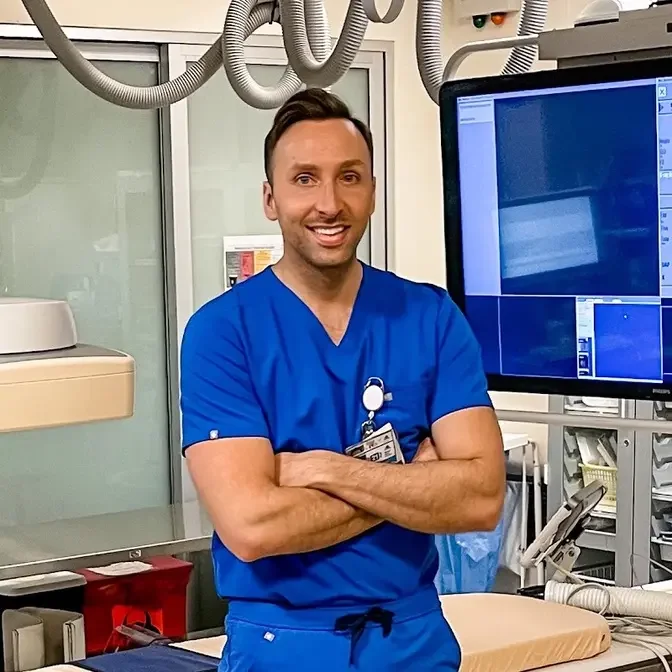
The question I have for you, if you work in healthcare, is would you let your children (or friends and family) go into medicine knowing what you currently know!? That is ultimately the question I pose during this video, and I do a deep dive on different clinicians thoughts on this topic. As we all know, healthcare has changed quite a bit, especially in the last 2 years. My goal of this video is to do a deep dive to see if we would recommend working in the current healthcare environment to someone we love. I think you'll be surprised by the results I go over in this video!
*None of this is meant to be construed as investment advice, it's for entertainment purposes only. Links above include affiliate commission or referrals. I'm part of an affiliate network and I receive compensation from partnering websites. The video is accurate as of the posting date but may not be accurate in the future.
I just gave you all this doom and gloom talk about nobody wanting to recommend health care
to their children, but then all of the younger generation is more interested in medicine.
I don't understand.
Welcome back to the channel, everybody.
For those of you who are new around here, my name is Michael, AKA Dr. Cellini, and I'm
a board certified diagnostic and interventional radiologist in New Jersey.
If you are new to this channel or just always lurking in the background and haven't subscribed
to my channel yet, why don't you go ahead and click that subscribe button before I get
into the video.
I'll wait.
Okay.
Did you know that three out of five clinicians do not want their children to go into medicine?
That's 60%.
Yes, I'm that good at math.
And this is according to a recent poll on Doximity polling over 12,000 clinicians.
And of course, I'll link this below.
Of those 12,000 people who were polled, that didn't just include doctors.
You see, it included pharmacists, med students, physician assistants, nurse practitioners.
Out of all of those people, only 40% actually wanted their children to go into medicine.
So that is a little alarming to me and that's what prompted this video and that's what prompted
me going for a deep dive.
So today we're going to get into just why it is that so many clinicians don't want their
next generation to practice medicine.
Let's go.
I'm having issues again, babe.
Not to start off, the medical profession has always been a noble profession and it has
always been a good profession to go into.
It takes many years of rigorous education and training and an enormous amount of dedication
and sacrifice.
And it is just that, the dedication and sacrifice that has taken the biggest mental toll on
clinicians.
The reason being is that those traits are not compatible with the normal emotional and
social needs of human beings, which leads to more stress, burnout, depression, and sometimes
suicide.
And to start, I think these reasons are just the tip of the iceberg why 60% of clinicians
do not want their children to practice medicine.
And by the way, it hasn't always been this way.
You see, there was a study in 2019, which is about three years ago, that actually showed
50% of physicians who wanted their children to go into medicine.
And of course, I'll link that study below.
So why the 10% plus discrepancy in such a very short period of time?
As always, I think it's multifactorial, but I'm willing to bet the pandemic had a huge
impact, along with diminishing autonomy, more administrative red tape, and of course, anything
else you could possibly think of that would result in burnout, like being overworked or
having a declining income.
Sounds familiar.
So let's do a deep dive into the poll I mentioned earlier.
As I mentioned, it's not just doctors in the poll.
The breakdown is actually quite interesting.
So I'll pull up the chart here so we can look into it in more detail.
As you can see here, it's not just the doctors who share this concern for the next generation
of healthcare workers.
There are doctors, nurse practitioners, physician assistants, and pharmacists who all feel pretty
similarly about definitely not wanting their children to work in medicine, which is the
dark magenta color here, followed by probably not wanting their children to go into medicine.
And I actually think it's interesting here that PAs are amongst the least likely to recommend
their children go into medicine.
Only 35% of PAs would actually recommend their profession, even though it consistently ranks
amongst the hottest jobs out there in the US News and World Report job rankings for healthcare,
for whatever those ranked lists are even worth.
Again, link in the description.
Now let's do a little deeper dive about the discrepancy based on age.
And of course, I'll provide all these links in the description about where I'm getting
these graphics and graphs and all that stuff.
So if you're bored, which you're probably not going to look to these, but if you want
to, they're there.
Otherwise, just watch this video.
So we'll focus on this chart here showing that younger clinicians are least likely to
recommend a career in medicine versus the older generation.
And if you look at my age bracket here, that would be about 30% recommended versus the
boomers of 45 to 55% recommended.
So why is this?
Why is there a discrepancy amongst age classes and generations?
Maybe it's because around the age of 30, you're just finishing residency and starting your
first job as an attending, and maybe they were met with increased demands for that particular
job early on, and they felt a little down from it.
And then maybe as your career kind of continues on, you become happy towards the end because
you're near retirement and you don't have to do that job anymore.
Just as an FYI, the average age for nurse practitioners is 60s and 69 for doctors.
So maybe the good life is influencing these recommendations on this particular study.
But this difference in opinion based on age does make you think, is practicing medicine
becoming more difficult with time?
Or is medicine just more challenging for the younger generation?
Now, I will speak from experience here that it is very difficult to start out as a new
attending physician in your very first job outside of residency.
You just finished residency where you're working yourself all the way up and then you
become fellow and you're at the top of the totem pole.
And then once you finish, you have to basically start all over from the bottom because whatever
practice or academic institution you join, you're essentially bottom of the barrel.
And what happens when you have to go back all the way to the lowest point on the totem
pole again?
Well, you end up taking more call shifts.
You usually get paid less than your senior partners.
And you may take on the less interesting cases because all of the cool cases or interesting
cases get taken by the senior partners or senior academic folks.
Which speaking from experience, this can all be very tough when you're just starting out.
It's kind of eye opening.
You have to essentially start from square one all over again.
You did it once when you started residency, made it to the top, and then you have to go
all the way back down to the bottom.
Another way of looking at things is maybe the differences in opinions based on age groups
is just because of generational discrepancies.
And these are some more good stats I found here.
So the likelihood of these clinicians wanting their children to work in health care were
broken down by generation.
So we have millennials here that range from 29 to 34% who wanted their children to go
into medicine.
That's the age 25 to 40.
Generation X, ages 41 to 56, range from 38 to 45%.
The boomers born in 1946 to 64, ages 57 to 75, 45 to 51% of them recommended children
going into health care.
The silent generation, aka 70 to 93, they were the highest at 60%.
So this is a good breakdown here, but the question is, why is there a discrepancy amongst
these generations?
Maybe the jumps between the millennials and generation X and the boomers and silent generation
are just the product of lifestyle, work ethic, or just overall love for medicine.
I'm not sure how this affects this specific poll, but I think it's worth bringing up.
And while we're getting into the weeds a little bit on data, we might as well touch on the
gender aspect as well, because there was a discrepancy of women recommending children
to go into health care versus men.
A recent study showed that only 36% of women would recommend health care for their children
versus 43% of men.
And I can't help but think that maybe this is fueled by the rampant gender discrimination
and bias in health care.
The craziest part about all this data I just gave to you is that the interest amongst young
people in medicine has actually increased.
Med schools and class sizes hit record highs in 2021 and 2022.
But why is this?
I just gave you all this doom and gloom talk about nobody wanting to recommend health care
to their children, but then all of the younger generation is more interested in medicine.
I don't understand.
Well, for some, this profession actually remains a calling for certain people, as cliche as
it sounds.
And for others, maybe they just keep their eye on the prize because they actually want
to go into health care and they don't listen to all the naysayers along the way.
I cannot tell you how many doctors I met in my pre-med and med school years that told
me I should not go into medicine or I should have not gone to medicine.
And even worse, they told me I should never do radiology.
And I'm glad I didn't listen to them.
I chose to follow what I wanted to do and what aligned with my interests, and ultimately
chose medicine and radiology.
And now that I'm done, I've never been so happy to say I'm glad I didn't listen to them.
So to end this video, I have to answer the question, will I want my children to go into
health care?
My answer is, it depends.
It ultimately depends on what they want to do and what they enjoy.
Medicine is one of the most fascinating and rewarding fields out there, but it's not without
its own set of issues.
But I choose to take the optimistic approach because I've seen both sides, I've worked
in medicine, and I've also worked in the corporate world.
And let me just tell you, the grass isn't always greener on the other side.
And that officially concludes this video.
Thank you all for watching.
If you have any questions, leave them in the comments below.
If you like this video, give it a thumbs up.
Make sure you hit that subscribe button.
Follow me on Instagram and TikTok if you don't already.
And I'll see you on the next video.
Bye.