The Burj Khalifa is currently the tallest skyscraper in the world! But what happened to all the other world record-breaking skyscrapers? In this video, we go over the future of megatall skyscrapers! For more skyscraper & megaproject content be sure to subscribe to Top Luxury. Thanks for watching this video: The End of Mega-Tall Skyscrapers
Check Out These Videos: Size Comparison of World's Tallest Tallest Buildings Size Future Skyscrapers by #construction#megaproject
0:00 Megatall Skyscrapers 0:42 History of the World's Tallest Skyscrapers 2:46 Why do we Build such Tall Buildings? 3:47 Burj Khalifa - The World's Tallest Skyscraper 5:08 How Mega-Tall Skyscrapers are Build 7:21 China's Goal to Build the Next Tallest Skyscraper 8:53 China Bans Mega-Tall Skyscrapers 10:32 Future Mega-Tall Skyscrapers
Contact us: topluxuryinfo[at]gmail.comCredit: Top Luxury
On the 4th of January 2010, the world changed forever as the first megatall building was
opened, the Burj Khalifa. At the time, everyone assumed that in a few years this building would
be dwarfed by another, even taller building, followed by an even bigger one. But 12 years on,
nobody has even come close to taking its throne as the world's tallest building. In fact, Dubai's
closest rival, China, has done a complete U-turn and banned the construction of megatall buildings.
But what's going on? Has humanity's passion to build ever higher into the sky suddenly faded?
Could this be the end of megatall skyscrapers?
The competition to build ever higher, and have the tallest building in the world,
is a relatively recent trend. For thousands of years, the tallest building in the world
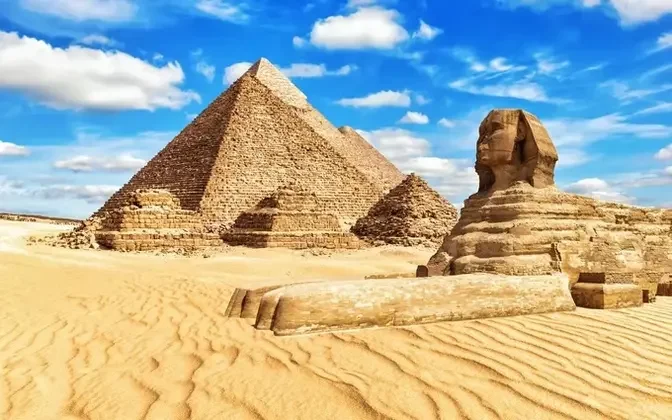
was the Pyramid of Giza. It held this position for 3,800 years and faced no competition whatsoever.
Then, Europe became the leader in building the tallest buildings, mainly cathedrals.
The Pyramid of Giza was eclipsed by the Lincoln Cathedral in England in 1311,
which was outdone in 1439 by the Strasbourg Cathedral in France.
This remained the tallest building for another 400 years. It was only until the 20th century,
after the birth of the skyscraper, that the race for the tallest building intensified.
The first ever skyscraper was the Home Insurance Building in Chicago, which was built in 1884,
and was an achievement that would change our skylines forever.
With just nine floors, the Philadelphia City Hall was the tallest building at the beginning of the
20th century. But as we got closer to the millennium, that number had been surpassed
tenfold with the completion of the Petronas Towers in Kuala Lumpur.
From 1908 to 1999, the world's tallest building was either in New York or Chicago.
But at the turn of the 21st century, the race shifted away from the West and towards Asia
and the Middle East. And the size of these buildings have reached heights we couldn't
ever have dreamt of before. To demonstrate how far we've come,
the Burj Khalifa has 23 times as many floors as Philadelphia City Hall.
While the Burj Khalifa still remains the tallest building in the world today,
its position as the world's only mega-tall building lasted only two years.
A mega-tall building is anything equal to or above 600 meters tall.
The Makkah Royal Tower in Saudi Arabia, which stood at 601 meters high, was fully completed
in 2012. Three years later, Shanghai Tower was erected. And just recently,
Merdeka PNB 118 joined the club of the mega-tall skyscrapers.
But why do we even build such tall buildings?
Skyscrapers were initially built for practical reasons. The higher the building,
the more potential workers or residents you could facilitate.
Skyscrapers also prevent something known as urban sprawl. Cities will continue to spread out further
and further into rural areas if there's not enough space to house everyone and facilitate businesses.
With a skyscraper, you can facilitate the demands for housing and business in a small piece of land
and reduce that spread. But there were also more superficial reasons behind building bigger
buildings. Skyscrapers were more about symbolism and status. Having the biggest building in the
world was more of a reflection of your country's prosperity and position in the world, rather than
an attempt to deal with any housing or office space demands. Buildings constructed in New York
were financed by wealthy businessmen and financiers, but the skyscrapers of the 21st century
were paid for by governments looking to make a statement. But let's take a closer look at the
current record holder. One of the most startling statistics is that nearly a third of the Burj
Khalifa is unoccupiable according to the Council on Tall Buildings and Urban Habitat, or CTBUH.
It is over 200 stories high with only 160 habitable levels. This is why the CTBUH coined
the phrase vanity height. This refers to the height of the building and the actual height of
usable space on the building. When the Petronas Towers eclipsed the Sears Tower in 1998, its roof
was actually 60 meters lower than the Sears Tower. Similarly, the Burj Khalifa is only two meters
taller than the Shanghai Tower in terms of usable space. The CTBUH has said that a building with a
vanity height of 50% or over is ineligible to be ranked as the world's tallest building and is
more of a tower. To be fair to vanity buildings, they do fulfill a practical function in that they
are often popular tourist attractions, particularly the Burj Khalifa. Although having four megatall
buildings in the world seems impressive, this figure is much smaller than anticipated. In 2012,
the CTBUH published a paper called Tallest 20 in 2020, which predicted how many megatall buildings
would be standing in 2020. They estimated that there would be at least eight, when in 2020 there
were actually only three. The reason why megatall buildings are so rare is the level of ingenuity
required to build them. When skyscrapers were first built, all that was needed to build a
skyscraper was a skeletal structure of steel. This became known as the Chicago Skeleton and was how
the Home Insurance Building was constructed in the late 19th century. But building in a
game of Jenga, the higher you go up, the weaker the building gets. You couldn't keep building
bigger and bigger and expect them to withstand heavy winds or earthquake vibrations. The
engineers needed to rethink how buildings were made. During the mid-20th century, a Bangladeshi
American named Fazlur Rahman Khan stepped forward with an idea that would lead him to be called the
Einstein of Structural Engineering. This involved tubular steel beams on each floor, which were
connected to horizontal floor beams. These steel beams were much better at absorbing shock and
resisting heavy winds and could allow us to build further up into the sky. This became the template
for high-rise skyscrapers, and Khan even went on to design the Sears Tower in Chicago. But for the
megatall buildings category, additional tweaks and innovations were made. In 2004, the Tower Palace
3 in South Korea was designed by Skidmore, Owings, and Merrill, which is the same architectural firm
Khan was employed by. This building had a buttressed system that had a central column
and three protruding wings. This hexagonal shape means that each wing's height is carried by the
other two, and the central acts as an additional support. This design was later incorporated into
the Burj Khalifa, and is why it has a Y or hexagonal shape. The Shanghai Tower is actually
nine cylindrical buildings stacked on top of each other and protected by an outer layer of glass.
The Macca Royal Clock Tower is seven buildings on top of one another, with the widest at the
bottom to provide the best support. All of these ingenious systems have provided a template for
more and more megatall buildings to be built. So, it seems like we have the technology and
experience to build even taller. But why were far fewer megatall buildings completed than expected?
To answer this question, we must first look at China. Although China has only one megatall
building, most of the tallest buildings in the world are in China. As of 2021,
10 of the 20 tallest buildings in the world are located in the People's Republic of China.
One is in Hong Kong. China has built more skyscrapers in the past 30 years than New York
did in the 20th century. Because of their love of skyscrapers, it was widely believed that China
would build the next tallest skyscraper. Funnily enough, in 2013, CNN reported that Dubai's 828
meter Burj Khalifa has less than a year left as the world's tallest building.
The proposed Sky City building in Changsha was expected to be 838 meters tall. It would take
just 90 days to construct and 120 days were needed for prefabrication. The report even ended with
it's already difficult to keep track of China's tallest building announcements.
What we now know is that Sky City did not become the world's tallest building.
Construction was halted, delays were reported, and in 2015, the site was repurposed as a fish farm.
In 2014, Phoenix Towers were proposed to be built in Wuhan. One of the buildings was expected to be
one kilometer in height, but any mention of the building after 2014 is hard to find. Nonetheless,
the second tallest building, Shanghai Tower, was completed in 2015, and China looked like
the safest bet when choosing who would construct the world's next tallest building.
But the tide is changing on building big. In 2021, China did a complete U-turn and banned
the construction of any new buildings taller than 500 meters and placed limits on buildings bigger
than 250 meters. The statement claimed that bizarre architecture that is not economical,
functional, aesthetically pleasing, or environmentally friendly will be forbidden.
But why this sudden shift? There are a number of reasons. Firstly, China became notorious for its
strange architecture, particularly copycat buildings, where they would design replicas
of the Eiffel Tower or the White House. The Chinese government now wants buildings that
fit in with the surrounding architecture of the city. The demand for real estate is also slowing
down. According to Nikkei Asia, the vacancy rate for premium office space in Shenzhen
reached 26.4%, and the vacancy rate for Beijing and Shanghai have increased significantly over
the last two years. There are also unoccupied homes, too, known as ghost cities, where there
are endless rows of newly built high residential towers with nobody living inside. According to
Business Insider, there are enough unoccupied residential apartments in China to house the
whole population of France. But one of the most urgent matters was health and safety.
In March 2021, a fire broke out in a high-rise residential building in Xijiazhuang. Then,
another fire broke out in August in a building in the city of Dalian. In May, a 72-story building
in Shenzhen suddenly started shaking and needed to be evacuated. So, with China out, who's left
in the game? The Burj Khalifa's main challenger to its status as the world's tallest building is
Jeddah Tower in Saudi Arabia. If completed, this will stand as the first-ever building that is
one kilometer high. But work on the building has been stopped since January 2018, when one of its
main sponsors was arrested as part of a political purge. The only people who know about the future
of this project are the Saudi government themselves. Malaysia has two buildings in
the running, Tower M and Tradewind Square. A statement in 2018 said that Tower M has not
even started and won't be completed for another decade. If the demand arises, planning is unlikely
to start before the year 2035. As for Tradewind Square, sources from 2020 say that the building
site is empty. Indonesia also proposed the signature tower in Jakarta, but this was
canceled in 2018. SkyMile Tower in Tokyo has also been proposed, but in 10 years, there have been
no tangible developments. Which begs the question, what has happened to the U.S.? Will we see any
mega-tall buildings in New York or Chicago? The simple answer is that nobody wants to build them.
Projects in New York are just much more expensive to build than in the Middle East or China.
And the availability of land in New York City also dramatically increases development costs.
The time it takes to build them means that it could be over a decade before you receive a return
on your investment. Making money from skyscrapers has also been hampered by the COVID-19 pandemic.
As you may have guessed, the COVID-19 pandemic has reduced the demand for office space. Remote
working is becoming more commonplace, and as a result, the demand for commercial real estate
has slowed down. It has also caused a global recession, meaning that there's less money
available to finance these projects. Another important factor is how mega-tall buildings
impact their surroundings. Sure, the view from a mega-tall building is great, but what about the
buildings beside them? Often, these mega-tall skyscrapers block out sunlight for buildings
and don't fit in with the collective aesthetics of the city. Also, would you like to be working
in an office right next to a decade-long construction site? Another more pressing
issue is that the construction process of a skyscraper is ultimately bad for the environment.
According to Tim Snelson of the design consultancy Arup, a typical skyscraper will
have at least double the carbon footprint of a 10-story building of the same floor area.
This is because of the extra effort needed for the foundations and to stop the buildings from swaying.
So, it seems as if the trend to build higher and higher could come to a halt. Proposals for new
mega-tall skyscrapers are being cancelled left and right, and countries like China are even
banning them completely. Could the Burj Khalifa remain the tallest building that humanity has
ever built? Let us know in the comments down below. If you want to see more about similar
projects, you can watch our Size Comparison of the World's Tallest Skyscrapers. Thank you for
watching and we'll see you in the next video.