
Ancient Anomalies In Egypt: Evidence Of Pre-Dynastic Megalithic Remains
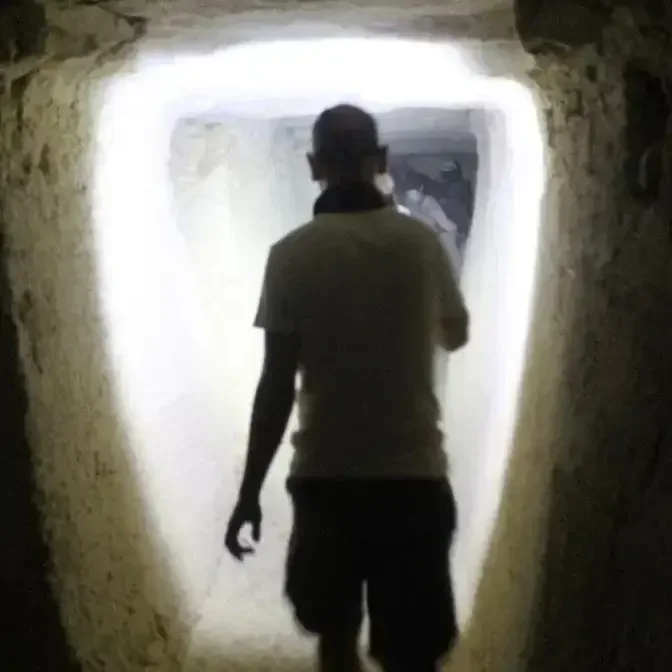
17 Video Views·Dec 5, 2022
My books about ancient Egypt are available here:
https://www.amazon.com/s/ref=nb_sb_noss_2?url=search-alias%3Daps&field-keywords=Brien+Foerster+Egypt
Hi, this is Brian Forrester,
and this is a video actually for those of you
who are recent subscribers to my channel.
It's a review of our exploration in March of 2018
of ancient Egypt.
And what you're looking at is a granite box,
not a sarcophagus necessarily, but a box.
And what you can see is that the lid
was in preparation of being cut from the box itself
when the saw blade, which was circular, broke.
That means that there was ancient technology
in Egypt long in the past.
And then this is what is called the schist disk.
It's amazing that it's actually on display
because of course it too is an example
of lost ancient high technology.
And also these amazing hard stone bowls and plates
that had to have been made on lathes.
Even the description of them say that they are archaic
and made before the time of the potter's wheel,
which is kind of odd.
And as well, we have these boomerangs.
Now the question is,
did Egypt independently create boomerangs
or were they brought back from Australia
from some ancient expedition?
And this very odd object
made out of very hard quartzite stone,
you can see that it's damaged.
I don't know what it was used for during dynastic times,
but it appears also to have been made
using ancient lost high technology
because the dynastic people
could not properly shape quartzite.
It's too hard.
And here we are at the Osirion, which is at Abydos.
This was created underground
and was rediscovered in the 19th century AD.
You can see the size of the granite blocks,
some weighing at least 40 tons.
And the granite came from Aswan,
which is hundreds of miles to the south.
And here we see what are called
the Tombs of the Nobles.
This is at Aswan.
And there are tunnel systems and hallways
carved again into quartzite stone.
And they go on for hundreds of feet into the bedrock.
Now we're at Saqqara.
And there's the famous Djoser Pyramid in the background.
And what we're going to see is something
that not that many visitors see.
And it's one of many massive shafts
carved into the limestone bedrock.
Again, it's not that there is one of them.
There are several of them in the Saqqara area.
And also at Saqqara, the incredible underground complex
known as the Serapeum,
in which there are more than 20 very hard stone boxes
that are positioned in each one in its own niche.
Conventional story is that these were made
to be sarcophagi for apis bowls,
but that is completely nonsensical
as the stone is a type of granite.
And again, the dynastic people with bronze chisels
could not have shaped these huge boxes
that weigh in the neighborhood of 100 tons apiece.
Look at the glossy surface
and also look at the really crappy hieroglyphs
that are carved into the surface of the box.
It's quite clear that whoever made the box
was not the same person or people
who did the really bad hieroglyphic etchings.
And this again shows you the sense of scale,
the crudely, roughly scratched in hieroglyphs.
And then the depression inside the niche here,
that allowed for the lid,
which weighed 30 tons, to pivot on top of the box.
Now, there's no way that you could get a crane
inside one of these tunnels,
a large enough crane to be able to move the box lids.
So how was it done in the distant past?
Because each of these boxes was found with the lid ajar,
except for one, which the archeologists
decided to use gunpowder to blow the side out,
and they found nothing in any of these boxes.
So once again, look at the high polish of the surface.
It's almost like there's a kind of wax
or resin or something on the surface itself.
And the incredible crudeness of the hieroglyphics
that actually were never completed.
Archeologists in general still believe
that the hieroglyphics and the boxes
were made during the same time period,
which is completely ridiculous.
And in the other tunnel,
there are two tunnels in the Serapion.
Here we see a box that was never fully completed
and never moved to its niche.
And that's a great clue on some level
as to the mystery of these.
As we get up close, you can see that the surface
is not finished like the one inside the niche is.
And so clearly the box was in transport to its niche
where supposedly it was going to be completed.
And then there in the background
is the actual lid coming afterwards.
Since the Serapion is pitch black
and there's no sign of soot or anything on the ceiling,
how was it lit in order to move the boxes into place?
Now we're in Northern Egypt,
and this is a site called Tanis or Tenis,
a very mysterious place that not too many people go to.
And what we see are monumental, huge pieces of granite
that each piece of granite here is broken
and also shows possible heat scorching.
It's as though almost like a nuclear device
or something went off at Tanis.
Now here is a quartzite statue.
And as we go up close to it,
you'll see that the surface is not only scorched,
but melted.
Quartzite is very high in quartz crystal.
And so the crystal itself melted.
Then we have pieces of obelisks.
And there were at least 12 massive obelisks at Tanis.
Each one's broken.
And the quarry for the granite, again, is likely Aswan,
which is some 1,000 kilometers to the south.
And if you look in the background,
you see that vertical wall.
That is the result of the excavation.
So almost everything at Tanis was found buried underground.
Again, as if a massive cataclysm had occurred.
And then here we are on the Giza Plateau.
And this is the phenomenal Osiris shaft,
which has only been open since, I believe, 2016.
It had never been open to the public before.
It consists of three levels.
That's looking down into level number one underground.
You can see that it's carved out of the limestone bedrock.
And this is in level one.
And now looking down into level two.
Level one is about 30 feet underground.
Level two is another 100 feet underground.
And here we are in level two.
Again, you can see this quite large chamber
with niches carved into the bedrock itself.
And there are two large stone boxes here.
Not as big as at the Serapion.
But this one's very strange.
You see that black kind of oozy goo material.
I don't know exactly what it is.
It looks organic.
And when I return in April of 2019,
I'm going to take samples of it and have it analyzed.
Some people have said it's hydraulic fluid,
but I don't think so
because we find this strange goo-like sticky liquid
on the outside and also much more on the inside
and as well on the roof.
It's as if the lid blew off sideways
and whatever was inside was turned
into this gooey mass.
Possibly the inhabitant is,
or that's the remains of the original inhabitant.
And that is looking down into level three,
which is a further 60 feet underground.
So in total, the shaft system of the Osiris shaft
goes down about 200 feet.
And here we have my brother Yusuf Awian.
He's standing on top of a box
estimated at 60 to 100 tons with its lid on.
And the water inside there is almost crystal clear.
Very strange.
Of course, there is underground water at the Giza Plateau
and there are huge pumps
that continuously pump the water out.
So here again, we're back on level two.
There's the box on the left with the gooey somewhat
or possibly organic material sticky surface on the outside.
And then here now back up into level one
with Yusuf Awian coming out as well as our guests.
Luckily, there are two ladders.
The ladder on the left is the older one,
which is quite rickety.
The one on the right is much more secure.
And then here we are about to walk through
and go up to the surface level.
What I'm going to do next time in April
is to look for machining marks
because we only had two hours inside.
And so I was preoccupied with filming everything.
Then here, back up to the surface,
you can see this grate, rusty grate, which is still locked.
But we did hire the Osiris shaft for two hours.
Our group of, I believe, 40 people.
It cost in the region of $2,000 to $3,000
for us as a group to rent the shaft.
But it's great that it's actually open.
And then this is the Valley Temple on the Giza Plateau,
all megalithic blocks of granite,
likely from the Aswan Quarry in very Southern Egypt,
massive in scale.
And then coming out of the Valley Temple,
there's the Great Pyramid in the background.
And of course, the Sphinx,
which has now been proven to be a minimum
of 10,000 years old based on water weathering.
You can see the somewhat modern repairs.
The Sphinx has been under repair,
likely since the time of Khufu, so about 4,500 years.
But geologists estimate that the Great Sphinx
is at least twice that old.
And as a final mystery to it,
you can see that there is a grate
that this man is going to put back into place.
And what it shows us is that there is a shaft
inside of the Sphinx, and possibly more than one.
So here are related books at Amazon.com.
Children of the Pharaohs,
A Brief History of the Copts of Egypt.
The Copts are actually the descendants
of the dynastic Egyptians.
And Lost Ancient Technology of Egypt, Volume Two.
Please subscribe, share, and thank you for watching.