
Top 10 Biggest Cities By 2030 Mexico City Beijing Tokyo
120 Video Views·Dec 5, 2022
Top 10 Biggest Cities By 2030. In this video, we go over the top 10 largest cities by 2030. For more future, architecture, and luxury content be sure to subscribe to the channel. Thanks for watching this video: Top 10 Biggest Cities By 2030
Check Out These Videos:
Top 10 Largest Cities by 2030 | The Tallest Buildings Of TheCredit: Top Luxury
Welcome to Top Luxury, an hour video about the top 10 largest cities by 2030.
The total number of humans currently living is now estimated to have reached a congested
7.8 billion.
By 2030, that figure is expected to reach 8.5 billion people.
And the top 10 largest cities in the world will all have to expand even more to accommodate
them.
But with the global population growing so rapidly, the burning question is, where are
they all going to live?
There are more people living in cities now than in any other time in history, and they
are only likely to get bigger as the population increases.
But what will the top 10 largest cities look like in 2030?
Number 10, Mexico City.
The current population of Mexico City metropolitan area is 21.7 million, but it is set to soar
to 23.9 million by 2030.
It is not only the capital of Mexico, it is also the oldest capital city in America.
Due to its immense size, it is one of the most important and productive cultural and
financial centers in the world, generating a vast 15.8% of Mexico's entire GDP.
Back in 2013, its economy was the fifth largest of any country in Latin America, five times
bigger than Costa Rica and roughly the same size as Peru.
But as with many megacities, Mexico City suffers from soaring crime rates, spiraling levels
of air pollution, and a rising population.
More people also means more cars, and more cars means more traffic jams, which worsen
the already poor air quality and exacerbate health risks.
The air pollution problem in greater Mexico City is a major cause of many health issues
for citizens.
Estimates suggest that the wretched air quality causes up to 1,000 deaths and 35,000 hospitalizations
every year.
That sounds tragic, doesn't it?
I guess you just have to wear a mask when you go out.
The reasons for so many traffic jams are the constant roadwork, the construction dust,
and the diesel trucks.
The authorities have tried to counter this trend by planting 10 million trees, forcing
gas stations to sell unleaded fuel, and introducing alternative fuels for government vehicles.
Number 9.
Lagos, Nigeria.
The Lagos metropolitan area has an estimated population of 17.5 million, which is forecast
to rise to 24.2 million in 2030.
As the capital of Nigeria, it is easily the largest city in Nigeria, and even in sub-Saharan
Africa.
Lagos is one of the fastest-growing cities in the world and is home to Africa's most
important financial center.
Its rapid development is all thanks to its seaport, one of the largest and busiest on
the continent.
However, despite this economic growth, Lagos is struggling with overpopulation, poverty,
poor sanitation, pollution, and some of the worst traffic in the world.
Traffic congestion has become a symbol of the country's inability to keep up with its
rapidly growing population.
Studies have found that some people spend close to one-fourth of their whole day stuck
in traffic.
The average commute to and from work is a mind-numbing 3 hours and 55 minutes every
day for a 15-kilometer journey.
This makes it the longest average commute in Africa.
Can you imagine spending so much time in traffic?
You'd need some pretty long music playlists.
Number 8.
Cairo, Egypt.
The Greater Cairo Area is the largest metropolitan area in Africa, the Arab world, and the Middle
East, and the 15th largest in the world.
With a current population of 20 million, the Egyptian capital is set to balloon to 24.5
million by 2030.
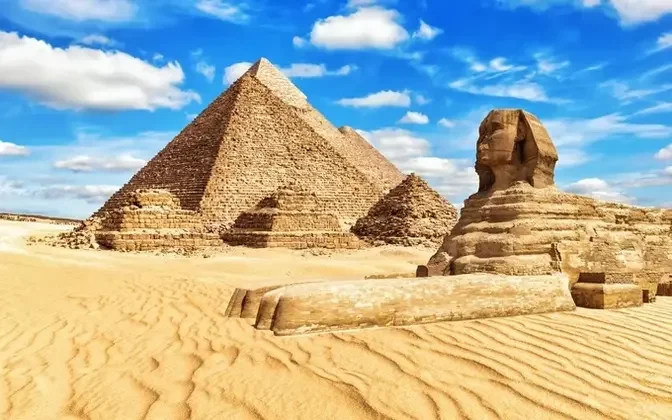
The Greater Cairo Area also includes the Giza Pyramid Complex and the ancient city of Memphis
founded in 969 A.D.
It too has major pollution and traffic problems.
Not surprising, right?
The Cairo Metro is one of only two metro systems in the whole of Africa.
With over 1 billion passenger rides annually, it is among the 15th busiest metro rides in
the world.
Number 7.
Karachi, Pakistan.
With a vast population of 16.1 million people, the Greater Karachi region of Pakistan is
predicted to swell to 24.8 million by 2030.
Karachi is the capital city of the Pakistani province of Sindh and is one of the world's
fastest growing cities.
It is also the largest city in Pakistan and the 7th largest city in the world.
Karachi is Pakistan's most cosmopolitan, most linguistically, ethnically, and religiously
diverse city.
Have you been there?
It sounds like an incredible place to visit.
Considered to be Pakistan's fashion capital, it has hosted the popular Karachi Fashion
Week every year since 2009.
Karachi has the largest economy in Pakistan, collecting over one-third of Pakistan's tax
revenue.
The city generates approximately 20% of Pakistan's GDP.
Sadly, it also has a reputation for high rates of violent crime.
However, after a controversial operation against criminals, recorded crimes fell dramatically.
In 2014, it was the world's 6th most dangerous city, but it now ranks just a lowly 93rd.
Number 6.
Dhaka, Bangladesh.
The population of Dhaka, the capital city of Bangladesh, now stands at 21 million.
This figure is set to expand to 27.4 million by 2030.
There are so many people residing in the greater Dhaka region, it is the 9th largest and 6th
most densely populated city in the world.
It is one of South Asia's major cities and Bangladesh's key economic, political, and
cultural center, accounting for 35% of the country's entire economy.
Number 5.
Beijing, China.
China lays claim to the title of the world's most populous country.
Its present population of 1.3 billion is due to surge to 1.5 billion by 2030.
However, if left unchecked, China's rapidly aging population will begin an unstoppable
decline from 2030.
It is forecast to fall to 1.3 billion by 2050 and possibly to 1.2 billion by 2065.
This could mean a slump in China's workforce by as much as 200 million.
Since China's controversial one-child policy was reversed in October 2015, all couples
can now have two children.
But surprisingly, the birth rate is still shrinking by 3.5% every year.
China's capital city, Beijing, formerly known as Peking, is the world's most populous capital.
It is the second largest city in China by population behind Shanghai and home to 21.5
million inhabitants.
By 2030, this figure is expected to soar to 27.7 million.
The Beijing Capital International Airport has been the second busiest in the world by
passenger traffic for the last 10 years, boasting more than 100 million passengers in 2018.
Have you ever been to or through this airport?
I hear it's just like a bustling city.
Not only is Beijing's subway the longest in the world, it is also the busiest in the world,
with almost 4 billion trips per year and an average of 10 million trips per day.
In 2019, Beijing's subway system set a single-day record of 13.7 million trips.
At 23.6 million dwellers, the Greater Mumbai region of India is a massive megacity.
Projected growth by 2030 will see its population rise to 27.8 million.
Mumbai is the capital city of the Indian state of Maharashtra and, according to the United
Nations, the second most populous city in India after Delhi.
As the financial, commercial, and entertainment capital of India, it generates an impressive
6% of India's GDP.
More millionaires and billionaires prefer to call Mumbai home than any other city in
India.
India's Hindi, or Bollywood, and Marathi cinema industries are also based there.
But the city is not without its problems.
A staggering 22 million vehicles are registered in Mumbai, causing major traffic headaches
and some serious air pollution.
The air quality in Mumbai is so bad that it's the major cause of asthma in children.
Industrial growth, the accelerating number of cars on the road, and the irritating dust
from construction sites are all contributory factors.
Not only that, water pollution is also a primary concern in Mumbai.
Eighty percent of households suffer from poor water quality, which promotes waterborne diseases
like cholera, jaundice, and typhoid.
The mushrooming of Mumbai slums in recent years has been particularly worrying.
These areas notoriously lack clean water and sanitation.
As a result, inhabitants are known to have both poor health and a lack of access to education,
leading to unemployment and crime.
Mumbai's largest slum is the Dharavi slum.
Almost one million people live in an area of just one square mile.
These figures are just mind-blowing, right?
Dharavi has very few water pipes, and the ones it does have are only turned on for two
hours a day by the authorities.
Nevertheless, despite all these issues, the slum does have a good recycling system.
In the UK, a mere 23% of plastic waste gets recycled, whereas in Dharavi, this figure
is closer to 80%, which is also much better than the rest of Mumbai.
Shanghai is currently home to 24.3 million inhabitants.
By 2030, it will have an estimated population of 30.8 million.
Greater Shanghai is the most populous urban area in China, and the second most populous
city in the world.
Originally a fishing village and market town, it blossomed into a wealthy commercial and
financial hub in the 1930s.
That's a remarkable transformation in less than 100 years, isn't it?
Shanghai is the showpiece of China's booming economy, and home to the second tallest building
in the world, the Shanghai Tower, which is a colossal 632 meters tall.
The port of Shanghai is the world's busiest container port, with a world record 42 million
containers processed there in 2018.
In comparison, the Los Angeles port, the biggest port in the United States, only processed
9.8 million containers in 2018.
The population of the Greater Delhi region in India currently stands at a mind-bending
29 million.
By 2030, it will shoot up to 36.1 million.
The region also includes New Delhi, the capital of India.
Delhi is the second wealthiest city in India, after Mumbai, with 18 billionaires and 23,000
millionaires calling it home.
On the other side of the wealth spectrum, around 50% of inhabitants live in slums and
unauthorized colonies.
The majority of these slums have inadequate provisions for basic facilities, and every
fifth slum dweller is forced to defecate in the open.
The smell must be unbearable, don't you think?
Additionally, Delhi is one of the world's most polluted cities.
Air pollution in India is thought to kill an estimated 2 million people every year.
Delhi also claims the world's highest death rate from chronic respiratory diseases and
asthma.
Poor air quality is known to damage the lungs of 50% of all children in Delhi.
The city's air quality index is frequently ranked as severe or hazardous.
In 2017, the Great Smog of Delhi pushed the index up to more than 10 times the safe limit.
Although the Greater Tokyo Area presently has a humongous 38.1 million inhabitants,
this number is predicted to fall by 2030 to 37.2 million.
Despite its size, Tokyo is actually one of the safest cities in Japan.
Originally a small fishing village named Edo, it became a prominent political center under
who made the city his headquarters in 1603.
The Greater Tokyo Area is the largest urban economy and the most populous metropolitan
area in the world.
Around 30% of all Japan's inhabitants live there.
Most of the country's population is very old, and Japan is currently experiencing a decline
in overall population.
Young people migrate to the cities in search of work, further fueling the vicious circle
of a declining population in rural areas.
In Japan as a whole, an average of 340 people live in one square kilometer.
But in Tokyo, this number rockets to 6,200 people.
That represents an 18-fold increase.
Anyways, which of these cities have you visited so far?
And which cities would you like to visit in the future?
Let us know in the comments below.
Also, make sure to leave a like and subscribe to Top Luxury.
This helps the channel to grow.
But for now, thank you for watching, and we'll see you in the next video.