
How Many EXAMS do DOCTORS take??
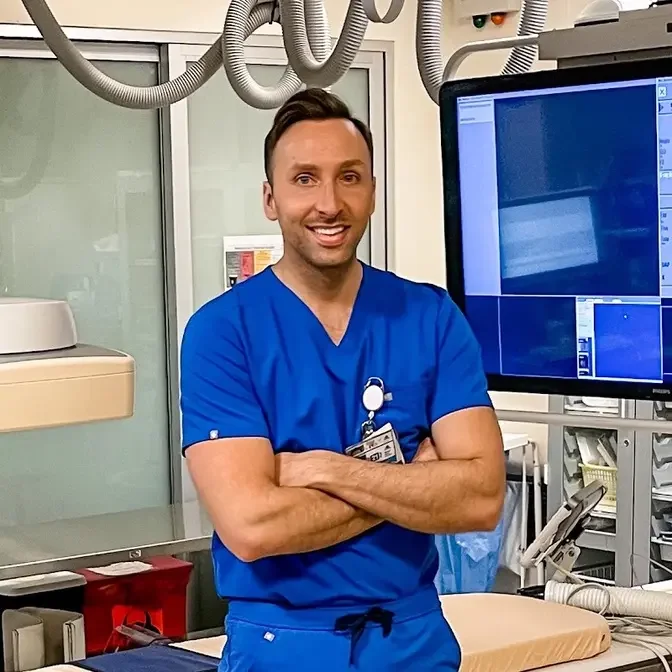
Just how many Exams does a DOCTOR have to take before they become a board certified Doctor?? Well look no further....Hope you enjoy! How to become a DOCTOR - you take tests! :)
Follow me on Instagram: https://www.instagram.com/drcellini/
Email: [email protected]
______
Get $55 off your next AirBNB stay here -- https://www.airbnb.com/c/michaelc54066?currency=USD
Get $$$ off your next Uber by using my code: uf74s
#study #studymotivation #medschool
It's 6 a.m. and I'm going to take yet another exam.
All right guys. So I just arrived at my testing center.
I'm at yet another Prometric, uh, center,
testing center. I don't know how many of these places I've been to.
Today I'm taking my in-service exam for radiology.
We have to take an in-service radiology exam every year.
I guess it's a way to see where everybody's at,
but it's not really that accurate because for instance, during my first year,
you have to take this exam as well and you've only had six months of radiology,
which means you haven't even had all of the subjects that you're actually
tested on. So it's not really that good of an indicator. But anyways,
I'm here and we'll see how it goes, I guess. All right.
So I just finished my ACR in-service exam and it wasn't that bad after all.
So how many exams do you actually have to take to be a doctor and then continue
on as a doctor? So I've been to one of these Prometric locations.
I mean all across the country, I've taken a bajillion tests,
it feels like and it somehow seems to keep going on and on and there's no end
in sight. So for the people who are actually wondering what it takes,
so in med school, actually before you get to med school,
you have to take the MCAT, which is an absolute beast of an exam.
I don't know why you have to take it.
I think it's just a way to weed out people in med school because it actually has
zero relevance to becoming a doctor or how you do as a doctor.
After you do that, also back to the MCAT,
like why is there a verbal section on the MCAT?
Like what does that have to do with becoming a doctor? I don't get it.
Somehow being able to interpret a Charles Dickens excerpt makes you a good
doctor. I don't know. Anyways,
so after you take the MCAT and you get to med school,
assuming you do well or do well enough to get into med school,
you take a bajillion exams during your first two years of med school.
At the end of your two years of med school, you take your first board exam,
which is the United States Medical Licensing Exam or the USMLE Step 1.
This exam is arguably the most important exam of your entire life and future as
a doctor. You basically spend two years learning medicine and then after those
two years you study for three to six months or a year for some people and you
take a eight hour exam and that determines the fate of your entire life as a
doctor.
I have a big problem with this because I think there's more to being a
physician than being able to take one test.
I think it's important to do well on the test and I think it's a good way to
kind of analyze people across the board and a good way to compare med students
about how well they're doing in their studies. However,
you can't put that much emphasis on an exam in order to get into residency.
So for those who don't know,
the step one exam is the most important exam for determining your residency.
So if you don't do well on that,
it really limits your options of which specialties you can go into.
For instance, uh, high end specialties such as dermatology,
interventional radiology, plastic surgery, which are notoriously competitive.
If you don't do well on your first board exam,
you basically have almost 0% chance of matching into that specialty.
So you need to like completely change your career options and completely change
your interests.
After you take that ridiculously hard and anxiety provoking exam,
you have to take your second version of that test,
which is the USMLE step two and that is,
it's a similar exam about eight hours.
I actually had someone who was in this testing center.
One person was taking step one and one person was taking step two.
Made me feel a little old, but I'm glad that I'm not in their shoes anymore.
Anyways. So for step two, it's not as important as step one,
but you still need to do well on it because it residencies do look at this step
score and it's a way also to kind of compare you to the rest of the nation or
the rest of the med students when looking at residency applications.
So that's, like I said, is another eight hour exam. I think it's eight hours.
They probably change it.
Everything's just getting harder and longer these days.
So after you take step two, you can take the clinical portion of step two,
which is where you actually act like a clinical physician and you see,
I think 12 patients, 12 standardized patients, um, examine them,
write notes on them and you are essentially graded on how well you do as a
doctor. I think it has a pretty high success rate.
I think it's high 90% people pass that exam because at that point you should be
pretty good at seeing patients and uh, being a normal person you would think.
So assuming you do well on both or all three of those exams and all of your
million exams in med school, you get accepted to residency.
And then after your first year or second year of residency,
you will take the third portion of the USMLE and that is the step three exam.
This one pretty much doesn't matter at all. Uh,
you really just want to pass this exam.
I took it like three years ago and I honestly don't even remember it,
but I know I passed and I did okay, but I really don't care.
Now it brings me to currently in residency.
You have to take a, an in-service exam every year. Uh,
I think that's pretty unanimous across the board. Surgery takes ab site.
I know anesthesia takes one. Um,
I think internal medicine also take, I don't know. I think most people,
most specialties do take a in-service exam.
It's specialty dependent on who really cares about this exam.
I know surgery uses the ab site to like,
you have to do well on the ab site in order to land a good fellowship for
radiology specifically. I think it's kind of program dependent.
So for me,
this is my third year and I'm taking this exam and then four months later I have
to take the board exam. So this exam is kind of just like a practice run,
I guess. I don't know.
But what's weird is that the fourth years also have to take this examination.
So I saw one of my fourth years in this, uh, testing center with me.
He's already passed his board exam and now he still has to take this in-service
exam. That really means nothing. So it's kind of like a waste of time,
but you got to play the game. That's how it is.
So after your fourth year you take this exam and I think that is almost it for
going to all these testing centers and taking these random standardized exams.
You have to take a, uh, another board exam,
your final like board certification exam in radiology a year or two after you
graduate residency. And then for interventional radiology,
you also have to take a, I do an oral board examination,
which I can imagine is probably tough as well. So yeah,
that is all of these standardized exams we have to take along our medical
journey. This is not a woe is me video.
This is just what you have to do.
I don't necessarily agree with all the testing.
I think it's a good way to kind of compare people,
but I don't think we should put too much weight on these exams. Uh,
it's, I mean, it's pretty stressful as it is in a,
you know, as a medical student and medical resident.
And I think these exams just kind of add to the stress and the anxiety without
too much positivity coming from it. I know it's like a necessary evil,
but I think there's just too much weight placed on it.
I think more weight should be placed on how you are as a physician.
And how you are with your patients. Um,
because there are a lot of good physicians out there who aren't necessarily good
test takers, but are, you would love to go to as your physician.
But anyways, I just want to tell you guys about my experience today.
I'm officially done with this test and it is, what time is it?
It is nine 45 and I'm going to go home and actually
continue to study for my boards. Also,
what's ironic is is I was thinking about how this
isn't a woe is me type video. And you know,
I feel like you had to put in the work for something valuable.
And my uncle Robert used to always say it stuck with me since I was a little
kid. He said, nothing easy is worth a damn.
And all of these tests are worth it in the end. It's just,
they're just milestones. You just have to meet them, pass them, go through it.
And eventually you don't have to worry about it ever again. Um,
and the funny part is, is he actually just texted me right now.
Uncle Robert texted me as I was about to say that exact line.
That's crazy.
Honestly, I don't really even understand the point of this video.
I guess it was kind of like a rant on how many exams we have to take as
physicians and throughout our medical training. Anyways,
if you like this video, leave a comment below. If I liked it,
I'll respond to it. Otherwise smash that like and subscribe button.
And I will see you guys on the next video.