
Giorgio Vasari: The Father of Art History
15 Video Views·Dec 11, 2022
Welcome back to the Accessible Art History YouTube channel. This week,
I'm going to be discussing a figure who played a major role in the development of the discipline.
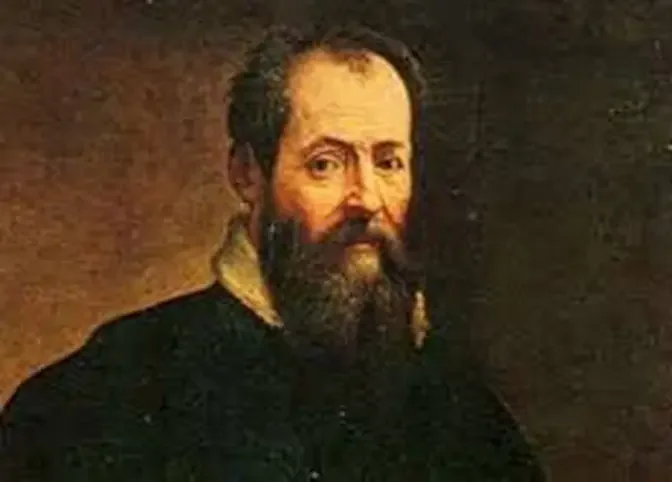
Giorgio Vasari is considered by many to be the father of the study of art history.
Although he had a successful painting and architecture career, his book The Lives of
the Most Excellent Painters, Sculptors, and Architects made his mark on history.
Giorgio Vasari was born on July 30th, 1511. He was from Orezzo in Tuscany,
about 80 miles south of Florence. The name Vasari seems to stem from the word vazio,
Italian for vase. Both his grandfather and father were in the pottery business,
so it's no surprise that they became known by that name.
However, Vasari broke away from tradition and focused on drawing instead.
As a teenager slash young adult, Giorgio Vasari worked in the studio of his great uncle,
Luca Signorelli. His talent for drawing and painting was fostered here, and Vasari became
quite good. He worked with many other artists in the studio, and even became friends with
Michelangelo. These experiences would shape Vasari's style into one with features of the
high Renaissance and Mannerist works. For many years, Vasari traveled around Italy,
working as an artist and architect. In Rome, he met with Raphael and painted some of the frescoes
in the Sala Regina in the Vatican. When in Florence, he worked hard for the Medici family.
Not only did he design the Uffizi Gallery, but he helped make changes for two of the
biggest churches in the city, Santa Maria Novella and Santa Croce. Near his hometown of Arezzo,
he also set up a studio that had about a dozen pupils working under his tutelage.
Despite his relative success as an artist, Giorgio Vasari is most famous for his book,
The Lives of the Most Excellent Painters, Sculptors, and Architects. It was first printed
in 1550, though the second edition from 1568 is the one most quoted today. He dedicated it to
his most important patron, Cosimo de' Medici. In this work, Vasari chronicles the lives of Italian
artists from the Middle Ages until his time. In fact, this is the first time we see the words
Renaissance and Gothic used to describe art. It is important to not categorize this book as a
textbook, though. Vasari is highly biased towards his home region of Tuscany. He attributes the
majority of artistic developments and success to Florentine artists and excludes other regions
like France, Germany, and Venice entirely. The biographies he wrote are less about the facts
and more about creating a narrative. They are more like anecdotes that only contain a kernel
of truth. Vasari divided his book into six sections, moving through time. There are dozens
of artists covered, but I thought I would highlight some of the most popular. Cimabue,
Giotto, the Pisano brothers, Simone Martini, Duccio, Lorenzo Ghiberti, Brunelleschi, Donatello,
Fra Angelico, Fra Filippo Lippi, Botticelli, da Vinci, Raphael, Michelangelo, and Bronzino.
Giorgio Vasari is a fascinating historical figure. Not only did he work on some of the most
important projects in Renaissance Italy, but his book, The Lives of the Most Excellent Painters,
Sculptors, and Architects, created an entirely new field of study. His nickname,
The Father of Art History, is well-deserved.