
[Sheet music] Martin Madan (c.1725-1790) - Sonata (in G) for the Harpsichord (c.1785)
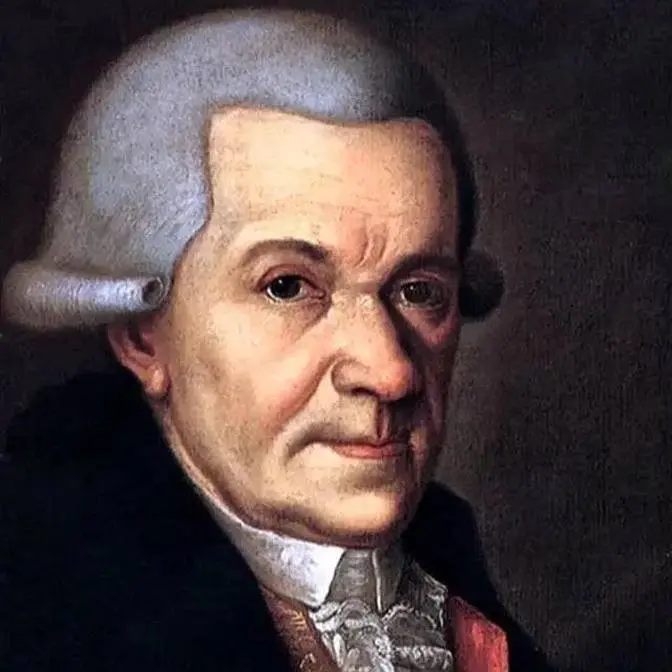
.
Consider to support this project on https://ko-fi.com/michaelhaydn
★ WORLD PREMIERE RECORDINGS ★
♫ Recovery project of sheet music by Johann Michael Haydn (1737-1806) and by other neglected composers ♫
Composer: Martin Madan (c.1725-1790)
Work: Sonata (in G) for the Harpsichord (c.1785)
Software: Sibelius + Instruments samples
World Premiere: Yes
Sheet music (pdf): https://s9.imslp.org/files/imglnks/usimg/5/5a/IMSLP647979-PMLP1039499-madan_g.272.w.-15.-_A_Sonata_for_the_Harpsichord_or_Piano_Forte-_etc_full.pdf
Sheet music (xml): https://www.mediafire.com/file/u8q1ivfnmi8eeqv/MADAN-Sonata.xml/file
Info about sheet music recovering project: https://i.ibb.co/hML4xyJ/HAYDN-M-3.jpg
---
Martin Madan
(Hertingfordbury, c.1725 - Epsom, 2 May 1790)
English writer and composer. He was the son of Colonel Martin Madan (1700-1756), MP and equerry to Frederick, Prince of Wales; he was also a cousin of the poet William Cowper. He was educated at Westminster School and Christ Church, Oxford (BA, 1746): to his father's annoyance, he ‘fiddled and shot partridges’ at Oxford. Called to the Bar in 1748, he led a dissolute life until he was converted in 1750 by hearing John Wesley preach. Under the influence of Selina, Countess of Huntingdon, he later joined the Calvinistic branch of the Methodist/Evangelical movement, and was ordained a deacon of the Church of England in 1758 and a priest in 1759. He acquired a reputation as a preacher, ‘itinerating’ round the country as late as 1768. However, he soon began his life's work of charity, dedicating his gifts as well as his considerable wealth (he had inherited a fortune from his father). Already a governor of the Foundling Hospital, in 1759 he offered to serve without stipend as chaplain to the newly founded Lock Hospital for venereal patients. The offer was eagerly accepted, and he financed the building of a new chapel, completed in 1762. In 1760 he had compiled and published A Collection of Psalms and Hymns, which is regarded as the first comprehensive hymnbook of the Anglican Evangelicals. It was largely based on George Whitefield's Hymns for Social Worship (1753), and included hymns of a kind not then accepted for general Anglican use: of 171 in the first edition, 89 are by Charles Wesley and 44 by Isaac Watts. The book was soon adopted for use in the hospital chapel. It ran to 13 editions, the last in 1794, and was superseded at the hospital only in 1803.
In about 1762 Madan turned his attention to the music, issuing 12-page booklets which were eventually gathered into A Collection of Psalm and Hymn Tunes: to be had at the Lock Hospital (in successive editions, c1766, 1769, 1792, the last completed by Charles Lockhart). All but three of its texts came from Madan's hymnbook. This too was widely adopted and became known as the ‘Lock Hospital Collection'. It was reprinted at Boston, Massachusetts, in 1809, and was enormously influential on Anglo-Saxon church music in general. Madan gave the profits of both his books to the hospital. The tunes were mostly original, and broke new ground by their style and character. Most are duets for equal voices with continuo, in the fashionable galant taste, with trills and other graces and much dynamic variation. They even include examples by Italian opera composers such as Giardini and Alessandri, as well as nine theatrical specimens by Burney, but the largest number (45) are by Madan himself. The hospital patients were hardly capable of forming a choir: they were housed in hidden galleries in the chapel, where they listened in silence. But with the help of the chapel organist, Lockhart, Madan was able to persuade the fashionable congregations to sing this music, and even to attend weekly practices. He also instituted an annual oratorio performance in the chapel. He was involved in more than one controversy. In a work called Thelyphthora; or, A Treatise on Female Ruin (London, 1780), he advocated polygamy as a solution to the appalling social conditions that made the Lock Hospital necessary. The resulting outcry led to his abrupt retirement from his duties at the hospital, though he remained nominally chaplain until his death. His book had much influence on Samuel Wesley. Madan was a skilful composer, and published Six Sonatas for a German Flute & Violin or two Violins (London, c.1780) and A Sonata for Harpsichord or Pianoforte (London, c.1785). #ClassicalMusic