
How did Caesar Augustus transform Rome?
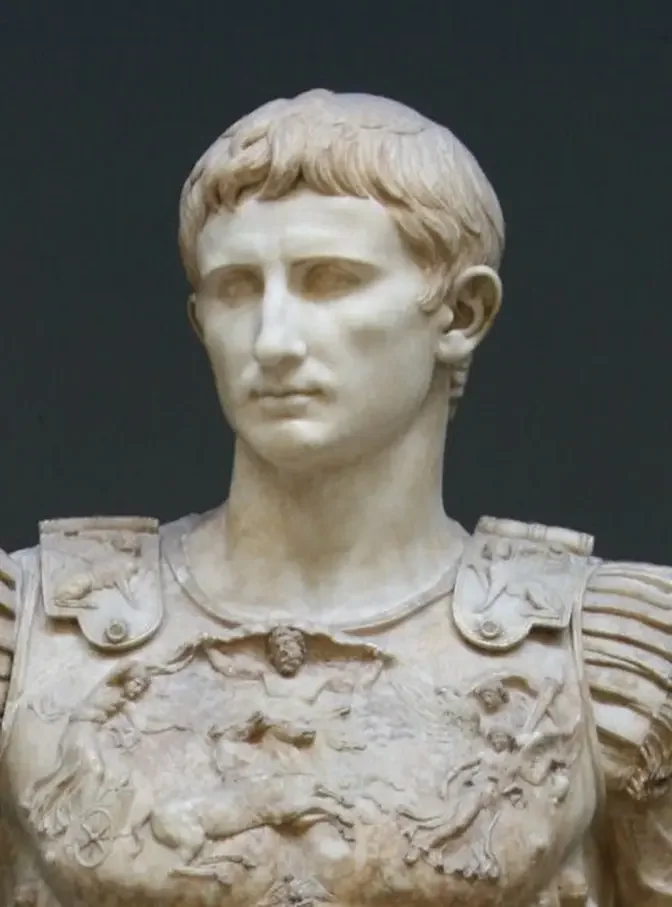
23 Video Views·Dec 24, 2022
Rome. Seen by so many as the foundation for the western world that exists today.
From the era of the Republic, to the magnificent sprawling Roman Empire
that left an incredible legacy over its centuries of existence.
The story of Rome is known far and wide, but what about the man who turned the dying Republic
into a mighty Empire? The first citizen is how he was often addressed. The once young sickly boy
who managed to turn his misery into a fate that so many would envy. Born Gaius Octavius,
the man who became Emperor Augustus, the first emperor of the budding Roman Empire,
changed the face of Rome as everyone knew it.
I recently watched the Combat Obscura about a young man who enlisted in the Marine Corps and
served as combat camera in Afghanistan. His documentary is what the Corps does not want
you to see, a look at the daily life in a war zone told by the Marines themselves.
Before he ruthlessly etched his name into nearly every history book, leaving a Rome once of clay,
now one of marble, Emperor Augustus was born in 63 BC to a fairly well-off Roman family.
His father was a senator and his mother was the daughter of Julius Caesar's sister.
After his father's unfortunate demise in 59 BC, the young boy would end up being
raised in the household of his maternal grandmother, Julia. While this undoubtedly
brought him into closer contact with his revered great-uncle for the next few years,
Caesar was scarcely impressed by the young boy. Octavius wasn't much of the strong,
military leader type by this point and would frequently fall ill, so much so that he would
have appeared to be more of a weak embarrassment than anything else to his great-uncle.
Still, after being elected to the College of Pontiffs in 47 BC, Octavius wished to join
Julius Caesar for his upcoming campaigns in Africa and Hispania. Despite his mother's
initial protests, Octavius was eventually able to gain approval for such a task,
but another bout of illness knocked him off to the sidelines yet again. It's almost as if Caesar
had been right about the boy all along… except he wasn't. And he was quite wrong indeed. Octavius
was determined to prove to not only his great-uncle, but to himself that he was so much more than
anyone had so far estimated. Pulling himself together with every ounce of strength in his
weakened body, Octavius boarded a ship and was on his way to meet Caesar in Hispania.
But despite his valiant efforts, the world had other plans for the boy. As he sailed to the front
and readied for battle, Octavius' ship wrecked, throwing yet another wrench in his nonetheless
admirable plan. By the time he arrived at Caesar's camp, the battle was essentially over. But it was
Caesar himself who noted that his young relative had no way of knowing that this would be the case
at the time he had set sail, and he was significantly impressed by the passion
and strength of Octavius. This would prove to be one of the greatest decisions that the boy
would ever make. It was because of Octavius' bravery in Hispania that Caesar began to develop
a fondness for his grand-nephew. And it was now that Julius Caesar was so remarkably dazzled
that he changed his will in order to adopt the boy and leave him as his sole heir and beneficiary.
When Caesar was assassinated in March of 44 BC, Octavius had been in Apollonia for education and
military training, and he had not been made aware of his place in his great-uncle's will,
although he suspected that he may have been left something, given that Caesar had conceived
no legitimate children. In spite of the plethora of warnings being sent his way to stay out of
Italy and away from possible danger, Octavius courageously returned to Rome, where he found
himself a new rival by the infamous name of Mark Antony. The following years, during which
historians now refer to Caesar's heir as Octavian, were marked by this bitter battle for the murdered
ruler's holdings. The Senate, who had all hoped to see Caesar's ally of Mark Antony meet his own
demise, backed the young challenger. After gathering an army of Caesar's former supporters,
Octavian was gaining continuous support around Rome, which left Antony severely uneasy.
Eventually recognizing his mounting disadvantage, Antony fled for Cisalpine Gaul, where he would
face off and on conflict from the Romans. But, despite Octavian's growing popularity,
the Roman Senate had failed to give him the proper praise and privileges that he felt were earned by
his own efforts against Antony. And suddenly, two warring rivals became unlikely friends
against the Roman state. As Octavian had worked to strong-arm the Senate into complying with his
own wishes, Antony had formed an alliance with yet another supporter of the assassinated Caesar,
Marcus Aemilius Lepidus. It was this duo who, in 43 BC, Octavian would form an unexpected alliance
with, that would shake the Roman Senate to its core. This was the formation of the Second
Triumvirate. By this time, the whole of the Roman Republic was split between the three men,
with Octavian taking the west, Antony the east, and Lepidus Africa. Still, this agreement was
only temporary, and even while it remained intact, the competition between Antony and Octavian
remained like an unwatered weed. And as Antony began to develop a scandalous relationship with
the Egyptian queen Cleopatra, Octavian made one of his first power moves back in Rome,
that would make many reconsider which Caesarian they really preferred.
Octavian, needing to house his war veterans during this time of relative peace, decided that at the
risk of angering many of his citizens, it would be best not to alienate his troops who could
potentially mount a rebellion against him. Thus, he chose to confiscate lands from Roman citizens
to house his veterans and avoid their wrath. One political opponent, Lucius Antonius,
brother of Mark Antony though, tried to take advantage of Octavian's growing disapproval.
Lucius finally mounted his armed opposition in collaboration with Antony's wife,
Fulvia, after Octavian doubled down by divorcing Fulvia's daughter from her first marriage.
This attempted revolt was an utter failure and it ended with the humbling surrender of Lucius
and his allies at the start of 40 BC. Nonetheless, Octavian's decisions within
Rome continued to cause today's equivalent of a disastrous drop in the polls of public opinion.
Yet, unfazed, Octavian came to a miraculous conclusion. He should become the sole ruler
of the Roman Republic. Antony, during this time, had been engaged in his own political affairs,
but it was when he divorced Octavian's sister, in favor of none other than the famed Cleopatra,
that Octavian drew the line in the sand before burying his rival in it.
With Lepidus being ousted from the alliance after the renewal of the triumvirate,
it was now yet again a face-off between the likes of Octavian and Mark Antony.
The result would be disastrous for the latter, and after facing a humiliating defeat at the
hands of Octavian, who had simultaneously been working to mend his reputation back home
by pinning Antony as the more autocratic leader than himself, both Cleopatra and Mark Antony took
their own lives in 30 BC. Hammering the final nail into the coffin, knowing all too well that
two Caesars are one too many, Octavian had the son of Cleopatra and Julius Caesar,
and the eldest by the same woman and Antony, assassinated. Now, one heir to Caesar remained.
One ruler of Rome stood unchallenged. When he first returned to Rome, the once sickly young
boy continued his ingenious plan of painting himself as the humble restorer of the once
great republic. He knew that he couldn't just return and seize all power at once,
so he instead accepted the position of consul alongside his greatest friend and soldier,
Marcus Agrippa, with the intention of inching his way to the status of unofficial emperor from there.
And the plan worked marvelously. After a theatrical show of handing over his power to the
Senate, which predictably prompted the Senators to shortly ask for his return to authority,
the clever heir accepted, though he didn't miss the chance to feign reluctance, and it was after
this that in 27 BC the Senate gave him yet another name, Augustus. It was at this time also that now
Augustus was granted the title of Princeps, which made him more or less the first emperor of Rome
in all but name. And while Augustus was undoubtedly immensely intelligent when it
came to political maneuvering, his attempts to hide his own growing autocratic rule
could only go so far. When the de facto emperor fell ill yet again in 23 BC, he was left in a
difficult-to-navigate situation of somehow naming an heir to his monarchical position
without actually doing so, as to not expose himself and whoever would take his place.
As a result, there was no one named as his technical heir, although he did assert that
his signet ring would be passed down to his unwavering friend and ally, Marcus Agrippa.
This surprised many, but not so much as the fact that Augustus, now 40 years old,
survived the crippling illness and with his full strength restored. Augustus would survive for
nearly another three decades, during which time he truly transformed and molded the whole of Rome
in every way possible. Nearly doubling the size of the former republic, Augustus expanded Rome's
holdings across his own continent and others, while creating diplomatic ties throughout the
expansion that would stretch his power beyond the official territories of the Roman Empire.
He also passed laws to encourage the general morality and religiousness of Rome,
established a taxation and census system in addition to improving infrastructure within
the empire. His reform and stabilization of the Roman Empire and birthing of the Pax Romana
set the stage for the brilliant centuries to follow of great Roman power. Augustus was truly
the father of the Roman Empire and a mastermind behind all that it would bring to the world,
for generations to follow, with names like Nero and Caligula in his family tree. It's clear that
Emperor Augustus left his mark on every last inch of the empire he worked so skillfully to build.
With his death on August 19th 14 AD, ironically in the month he had named after himself,
Augustus left the world with one last message, one that would ring true then and for long after.
Behold, I found Rome of clay, and leave her to you of marble.
As always, we'll see you in the next one.