
George Washington Carver: Bigger than peanuts
100 Video Views·Jan 20, 2023
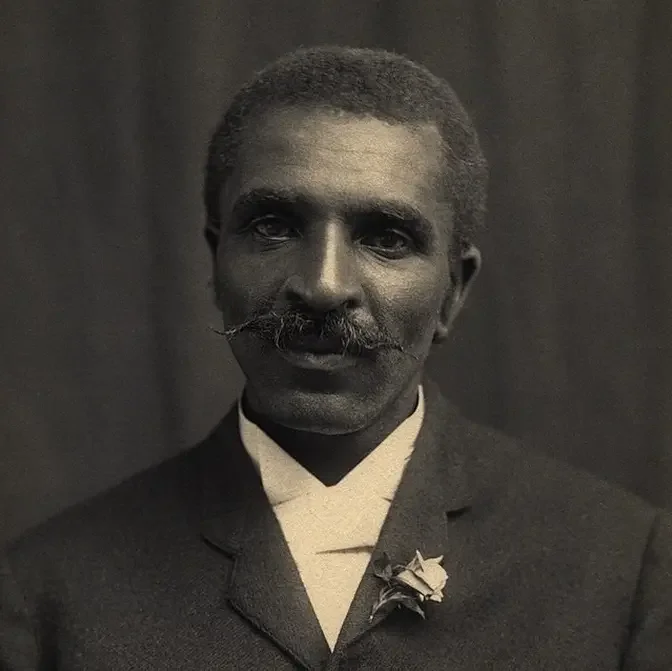
This video is sponsored by Skillshare, and this is George Washington Carver,
one of the most famous food and agricultural scientists of all time,
and certainly the most famous from the American South, where I live. He was born enslaved,
and when he died, he was hailed as one of the greatest scientists of all time.
Both of those bookends on his life were the doing of white elites who sought to exploit Carver
toward their own ends. When I was in elementary school, I think I learned that George Washington
Carver invented peanut butter and single-handedly saved Southern agriculture from the environmental,
social, and economic degradation of cotton farming. None of that is true.
White journalists, politicians, and business magnates absurdly inflated Carver's scientific
achievements during his lifetime, which sounds kind of benevolent, but really it was the worst
kind of tokenism in service of a white supremacist agenda. Then, in the decades after Carver's life,
white historians seemed to take a little too much pleasure in debunking the myth of Carver's
achievements. It is true that Carver was probably not a great food and agricultural scientist,
but he was a great man, and his legacy matters, especially to us Americans,
or really anyone who grows things or eats. George Washington Carver was born in rural Missouri
sometime in the early 1860s. We don't know for sure. This is the house of Moses Carver,
the man who enslaved George. And here's the first place in the story where things get weird.
When Carver was a newborn baby, he, his mother, and his sister were stolen. Some guys just came
in the night and abducted them and took them to Kentucky and sold them as slaves again, just to
make a buck. Moses Carver went after them, but he was only able to recover baby George and not his
mother. So now, Moses Carver and his wife Susan had George, his older brother James, and no one
raised them, so they raised them. After emancipation, this white, formerly slave-owning
couple raised George Washington Carver as their own child. This afforded Carver a very different
kind of childhood than those experienced by most of his black contemporaries in the South.
Even still, when it was time to attend actual school, the closest one that accepted black
students was eight miles away. That's very far in the pre-automobile era. Carver walked there
by himself on foot. He was like 12 years old, and when he got there, it was late. The school
was closed, so he slept in a barn. The barn turned out to be owned by a childless black
couple who discovered the boy and took him in permanently. That story illustrates both how
incredibly dedicated Carver was to his own intellectual curiosity, and at the same time,
how lucky he was, notwithstanding the incredible misfortune of being born who he was when and
where he was. Through his life, both that dedication and that luck would hold.
He was accepted to a college in Kansas, and when he showed up, they said,
oh wait, we didn't know you were black. You can't come here.
So he tried farming and rapidly turned his little homestead plot in Kansas into a botanical garden.
Fruit trees, vegetables, landscaping plants — these are all paintings that he later made.
He got a loan to go to a liberal arts college up north in Iowa, and when his art instructor
there saw these paintings of his, she said, hey, maybe you should go study botany.
George Washington Carver became the first black student at Iowa State Agricultural College,
now known as Iowa State University, and then he became its first black faculty member.
In 1896, Carver was called upon by this guy, Booker T. Washington,
easily the most prominent African-American leader of his age.
Also born into slavery, Washington founded the Tuskegee Institute in Alabama, now Tuskegee
University, a historically black college. Washington recruited Carver to head up the
agriculture department at Tuskegee, and Tuskegee would be his base for the rest of his life.
This is Carver in his real lab at Tuskegee, though of course this footage is from much later, 1937.
But back around when he accepted this position, Carver wrote to Washington that
agricultural education is, quote,
"...the key to unlock the golden door of freedom to our people,"
though he would soon find that his students saw things differently.
Many saw education as a means of escaping the farm, and here it is essential to understand
how terrible it was to be a black farmer in the American South around the turn of the 20th
century — not that long ago. The systems of tenant farming and sharecropping were virtually
slavery under a different name. White people still owned all the land, and they allowed
black people to farm it in exchange for taking much or most of the crop. But wait, that's not all.
Farmers in this part of the country were mostly growing cotton, not so much food to eat.
They would buy a lot of their food and supplies from a store, usually on credit.
This store was often owned by the white landlord, and because monocropping cotton had horribly
depleted the southern soil, crops often failed, and sharecroppers wouldn't be able to pay back
their debts to the store, thus basically rendering them indentured servants to their landlords.
If this wasn't slavery, it was serfdom.
The way out of this for so many African Americans was to get off the land,
to get factory jobs in cities and up north, to get educated and start a business.
George Washington Carver's great vision was to give black farmers ways to improve their lives
on the land. How? Through a concept that was way ahead of its time — sustainability.
Carver tried to encourage and empower black farmers to ditch cotton for food crops like
sweet potatoes and these peanuts. This is a peanut field. Cotton depleted the soil of nitrogen,
peanuts restored nitrogen to the soil, and you could eat them — a great protein and fat source.
Carver said, hey, if you can eat more of your crop, that's less debt that you have to go into
at the store to buy food. And instead of going into debt at the store buying artificial fertilizer,
let me teach you about composting.
Carver's chief published legacy are these bulletins aimed at black southern farmers,
the most famous of which is this one from 1917 that included 105 recipes for peanuts.
Now, historians are unanimous about what I'm about to say. Southern peanut farming was already on a
big upswing before Carver ever began his work. And peanut butter and peanut oil and all these
things that people attribute to Carver had long since been invented previously by other people.
Few, if any, of his novel ideas for agricultural products were ever implemented by anyone.
He left no notes from his lab, no formulas, very little that would have been regarded as
serious scholarship even then. But that was not his gift. He had the gift of the gab.
Now, I'm going to play you a little bit of George Washington Carver's actual speaking voice,
and get ready for it, because reportedly his voice shocked just about everybody he ever met
in his whole life.
"'The chief purpose of scientific training is to find truth. And whenever you find truth,
you find the science. Ye shall know truth, and the truth shall make you free.'"
So yeah, what was up with that? Well, the historian Lyndon McMurray speculates that
his vocal cord development was impaired by various ailments that he had as a child. He was sickly.
And even as an adult, he was hunched. He shuffled when he walked. It was that guy,
with that voice, whom a peanut industry group sent to talk to the U.S. Congress in 1921.
He was there to testify before the House Ways and Means Committee in favor of a bill that would
place tariffs on imported peanuts, thus bolstering American peanut farmers. Now, mind you, this is
right smack dab in the Jim Crow era. He starts his testimony by pulling out all these interesting
peanut-based snacks that he has devised, and a congressman on the committee makes a racist joke.
The congressman says, do you want a watermelon to go along with that? The idea that Black people
all love watermelon was a widespread racist stereotype of the time. That was a Northern
congressman, by the way — John Q. Tilson of Connecticut. As we can see in the transcript,
Carver doesn't let this racist joke throw him. He just says, of course, if you want a dessert,
watermelon comes in very well. But, you know, we can get along pretty well without dessert.
The recent war has taught us that. He's talking about sugar rationing during World War I.
And then he proceeds to just dazzle this committee, talking about how peanuts and
sweet potatoes together form this virtually complete diet, and how we have just barely
tapped the potential of these crops that can save the Southern soil. They were wowed.
George Washington Carver became a celebrity almost overnight. Journalists hungry for a
story wrote ridiculously unsourced pieces saying that he was solely responsible for
the rise of peanut farming, and he was this chemistry wizard and all kinds of stuff that
wasn't true. Some historians have noted that Carver did little to correct the record as
his legend grew. But we know from comments that Carver made to a student of his named
John Sutton that he felt a lot of pressure to keep up the legend, since the Tuskegee
Institute was using it as fodder for fundraising. White elites like Henry Ford struck up friendships
with Carver — people who had an interest in maintaining America's racist social order.
In Carver, they had found a very convenient friend. Sure, he wanted to improve the conditions
of black people, but through farming, white elites liked the idea of keeping black people
on the farm, and they liked that Carver's empowerment rhetoric was about self-help,
not tearing down systems of oppression. Many historians have also noted that Carver's
unimposing physical presence and high voice made him very unthreatening to easily threatened
white people. And Carver himself was accommodationist on matters of racist public policy
and social customs. There are documented instances of Carver dining with white people
and voluntarily getting up and taking his meal by himself in another room. His boss,
Booker T. Washington, had sparked a national scandal in 1901 by simply sitting down to a
meal with President Theodore Roosevelt, and Carver said that he didn't want to ever cause
such a fuss himself. He didn't want to rock the boat. He just wanted to talk about agriculture
and his philosophy of self-improvement and his very devout Christianity.
I'm going to quote now from a 1976 journal article by the historian Barry McIntosh. Just a heads up,
McIntosh uses the word black as a noun rather than an adjective. Using it as a noun is generally
regarded nowadays as pretty offensive because it reduces a human being and all of their complexities
to this one aspect of who they are. Nonetheless, this use of the word as a noun was really common
in language at the time, so here we go. The Carver myth was proclaimed and accepted most
widely in white society. By lavishing praise on a token black, they could deny or atone for
prejudice against blacks as a class. The presence of a black achiever in the South could serve as
testimony that the Southern social order was not oppressive to blacks per se, and, by extension,
that those who failed to achieve had themselves to blame. Now, implicit in McIntosh's probably
accurate observation, there is the assumption that Carver was without merit as a scientist,
that he was all show. Let me leave you with a slightly contrasting view on that subject.
This is from the historian Linda McMurray, who writes in her book,
if Carver had been white, he probably would have made significant contributions in mycology or
hybridization and died in obscurity. Because he was black, he died famous without making any
significant scientific advances. In other words, his identity diverted him from the laboratory to
the spotlight. But let's think about what he did there. He got vast numbers of people to think for
the first time about sustainable farming and living and eating in harmony with nature.
Surely that accomplishment is equal to any he could have made in a laboratory.
Now, I suppose that I have become known for making a clever and cheesy smooth transition
into my sponsor message right about now. Doesn't feel right this time, so I will simply direct you
to this — Creativity with Purpose, a curated list of courses taught by black artists available
right now on Skillshare, the sponsor of this video. Skillshare is an online learning community
where you can pick up all kinds of creative and entrepreneurial skills — everything from
illustration and animation to this amazing essay writing class by Roxane Gay.
In this infomercial — no, I'm just kidding. In this class, I'll be talking about how to write
a good essay, from having a good idea, making sure that you're doing the necessary research,
having a sense of purpose in your writing, and most importantly, how to look both inward by
writing from the personal and looking outward to make sure that people can relate to your story,
no matter what it is. Skillshare is so much more than just a one-way video lecture or a
haphazard YouTube tutorial. These are carefully constructed classes with logical flow, projects
for you to do, and a community where you can get feedback. If you want to learn how to make just
about anything, this is a great and incredibly economical option. Unlimited access to all these
classes is less than $10 a month with an annual membership. And the first thousand of you can
get a free two-month trial of Skillshare Premium by hitting my link in the description.
Thank you, Skillshare, and may we all continue to create things with a purpose.