
The State Funeral of Sir Winston Churchill
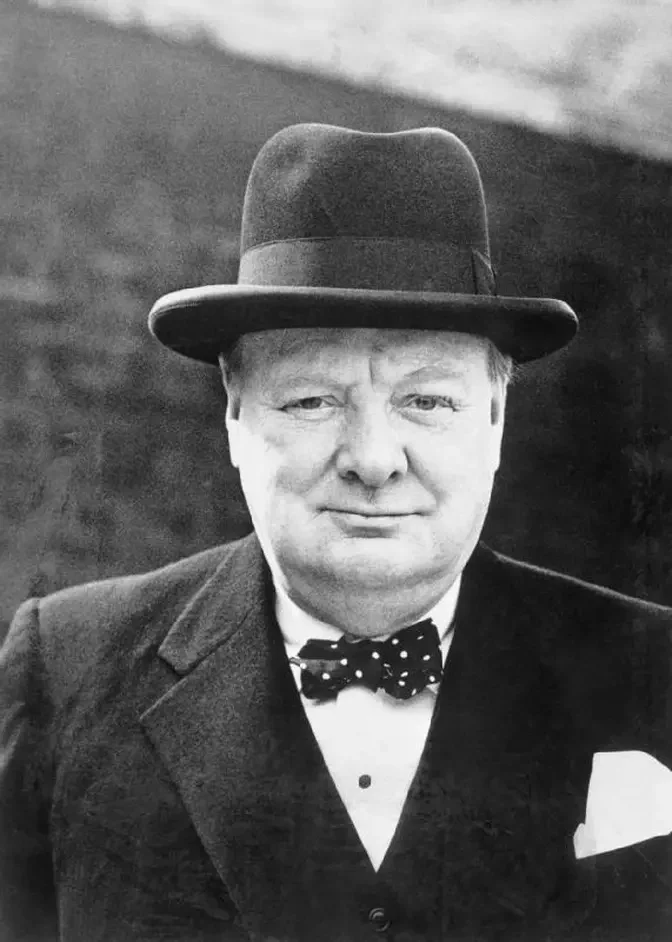
58 Video Views·Apr 7, 2023
This is independent television from London.
Who is the happy warrior? Who is he that every man in arms should wish to be?
It is the generous spirit who, when brought among the tasks of real life,
hath wrought upon the plan that pleased his boyish thought. Who, doomed to go in company with pain
and fear and bloodshed, miserable train, turns his necessity to glorious gain.
Who, if he rise to station of command, rises by open means, and there will stand on honourable
terms, or else retire and in himself possess his own desire. Who comprehends his trust,
and to the same keeps faithful with a singleness of aim, and therefore does
not stoop nor lie in wait for wealth or honours or for worldly state. But who, if he be called
upon to face some awful moment to which heaven has joined great issues, good or bad, for humankind,
is happy as a lover, and attired with sudden brightness like a man inspired.
It is finally the man who, lifted high, conspicuous object in a nation's eye,
prosperous or adverse, to his wish or not, plays in the many games of life that one
where what he most doth value must be won. Who, whether praise of him must walk the earth forever
and to noble deeds give birth, or he must fall to sleep without his fame and leave a dead,
unprofitable name, finds comfort in himself and in his cause, and while the mortal mist is gathering,
draws his breath in confidence of heaven's applause. This is the happy warrior. This is he
that every man in arms should wish to be. And so the day that had to come has come.
We begin it now. This is the day of Winston Churchill's funeral, a notable and memorable
morning in the chronicle of our country. It is a strange thing to say at the opening of a new day
that we must liken it to the setting of the sun. That is to say, something that has much of sadness
and everything of inevitability, yet like the setting of the sun, can resound with dramatic glory.
We shall see. By and by now, Sir Winston Spencer Churchill will be returned to the earth of the
land of which he was so considerable a son, and for which he strove so hard and accomplished so much.
For the next many hours, this nation will be saying its farewell, this nation and many more.
When Winston Churchill dies, we who have to put into words the immeasurable loss of our times,
know how ill we have served ourselves over the years. When Churchill lived, we spoke of him as
this and as that, in dying him with all the virtues. We spoke of him as something past the
measure of ordinary men. Such people do not die. But he died, and we found a different thing,
that indeed we loved him. Then the worn words became empty. There is little left to say.
He was old and full of years. He had served his time of honour and achieved his part of history,
and the salutations that await him in death today, this old man of England,
are greater perhaps than given to any other man of our time, or even any time. They are about to begin.
He was 90 years old. His work done, his duties achieved, his words written, and his victories
secure. It is not a day of grief, though there is grief. It is not a day of sorrow,
though London is heavy with mourning. We begin a day of salutation. All London is now awake,
this enormous city in which he lived and died. All London, where he sustained what he himself
called its finest hours, is assembling for that salutation. For three days now, the body of Sir
Winston Churchill has lain in state in Westminster Hall here, the oldest part of the Palace of
Westminster he loved so well. While more than 300,000 mourning friends bade him grateful farewell.
Soon, new Palace Yard, where these cadets from Harrow School already held the ground,
will start to fill with the mourners and the great officers of state who to accompany the coffin
on its gun carriage through the heart of London. There is indeed the gun carriage,
the same gun carriage which was used at the funerals of Queen Victoria, George V,
and last used at the funeral of George VI at Windsor. It is perhaps with the Navy, after all,
that we most closely associate Sir Winston. Of all the great offices that he has held,
his double tenure at the Admiralty at the beginning of the First Great War
and of the Second World War are the ones that come immediately to mind.
And now indeed, a brief stillness does descend while a private ceremony takes place at the
catafalque in Westminster Hall in the presence of the immediate family. Before his coffin leaves
these precincts for the last time for its journey through London, let us remind ourselves of what
this place meant for him and what he gave to it. I am a child of the House of Commons.
I have lived my life in the House of Commons, having served there for 52 out of the last
54 years of this tumultuous and convulsive century. I have indeed seen all the ups and downs of fate
and fortune there, but I have never ceased to love and honour the Mother of Parliament,
the model of the legislative assemblies of so many lands. On the night of the 10th of May 1940,
I acquired the chief power in the state. I was conscious of a profound sense of relief.
At last I had the authority to give directions over the whole scene. I felt as if I were walking
with destiny and that all my past life had been but a preparation for this hour and for this trial.
I would say to the House, as I said to those who have joined this government,
I have nothing to offer but blood, toil, tears and sweat. We shall not flag or fail.
We shall go on to the end. We shall fight on the seas and oceans. We shall fight with growing
confidence and growing strength in the air. We shall defend our island, whatever the cost may be.
We shall never surrender. I have never accepted what many people have kindly said,
namely that I inspired the nation. Their will was resolute and remorseless and it proved
unconquerable. It fell to me to express it and if I found the right word,
you must remember that I have always earned my living by my pen and my tongue.
It was the nation and the race dwelling all around the globe that had the lion's heart.
I had the luck to be called upon to give the roar. I'm perhaps the only man who has passed
through both the two supreme cataclysms of recorded history and high executive office.
These 30 years of action and advocacy comprise and express my life effort and I am content
to be judged upon them. I am a child of the House of Commons.
Gun crew and all troops have come to attention. The bearer party has already reached the door.
He's passing through that canopy. We should see them at any moment. Earl Marshall, the Duke of
Norfolk at the head, draped in the union flag with the great collar of Sir Winston's Order of the
Garter as its only decoration. Now the preparations are over. All has fallen into place. The crowd's
long wait is nearly over. 9.45, Big Ben will strike the three quarters and then remain silent
for the rest of the day. Major General Nelson will give the order for the procession to slow march
and at the same moment the first minute gun will boom from the Royal Horse Artillery
in St James's Square. And so with the escort changing their reverse into Whitehall,
every inch of which is a memory of Sir Winston's own footsteps past the cenotaph. But Winston Churchill
on VE Day 1945 saluted in his victory speech the countrymen who had fought with him to the end
and whom he had served so well. God bless you all. This is your victory. Everyone, man or woman,
has done their best. Neither the long years nor the dangers or the fierce attacks of the enemy
have in any way weakened the independent resolve of the British nation. God bless you all.
And here in Trafalgar Square we see the foot guards already passing us, the Royal Marines,
from the Drum Horse to the very head of the procession, already well up the strand.
There just ahead of the gun carriage we see the officers of the Queen's Royal Irish Hussars,
successor regiment that Sir Winston joined when he left Santos. And they are carrying
all his medals and decorations, carry his own banner and the Sinkport's banner,
who was also among his Lord Warden of the Sinkports. They're immediately behind the
gun crew, his nephews and Anthony Montague Brown, his private secretary, passing it,
passing its own memorial church, the Royal Air Force detachments, headed by a party of
Battle of Britain pilots. With these men and the church dedicated to their fellows before us,
surely this is the moment to remember the great ringing phrase that Sir Winston Churchill spoke
in those autumn days of 1940, when those men were young and we were all in mortal danger.
The gratitude of every home in our island, in our empire, and indeed throughout the world,
except in the abodes of the guilty, goes out to the British airmen,
who undaunted by odds, unwearied in their constant challenge and mortal danger,
are turning the tide of the world war by their prowess and by their devotion.
Never in the field of human conflict was so much owed by so many to so few.
And here at St Paul's we have reached the point where the acts of homage and affection
are reaching their summit, because there is President de Gaulle of France, and in his company
the heads of state, who have come to pay their respects to this great figure,
forming up now in a procession. There is Prince Bernhard of the Netherlands,
King of Denmark and Belgium, Queen Juliana on the left, King of Norway,
King Constantine of Greece, just behind President de Gaulle.
There, as the gun carriage enters the ancient city of London at Temple Bar,
is perhaps the moment to remember the love Sir Winston had for this great capital.
It was a bombed and shattered place when he spoke these words in 1941,
in tribute to its courageous people. My heart bled for London and Londoners. The courage,
the unconquerable grit and stamina of the Londoners showed itself from the very outset.
If the storm is to be renewed, London will be ready. London will not flinch. London can take it.
Again. And here now on the steps of St Paul's, the Queen is arrived, the Lord Mayor himself
carrying the morning sword. The sword is carried for him, but in the presence of the Queen
he carries the sword himself. Now all the guests are in their places and in 10 minutes time
will themselves arrive in the St Paul's Foucault. And here, walking now out of St Paul's,
12 of Sir Winston's oldest friends and colleagues, the pallbearers,
about to go down the steps into the Foucault to take up their position ready for the arrival of
the gun carriage and its crew. Earl Alexander, who will be joined by Earl Mountbatten when Earl
Mountbatten arrives with the procession. Lord Avon, and the graceful gesture of the frail
and now elderly Earl Attlee, Sir Winston's wartime colleague and peacetime opponent,
come to pay his respects. Field Marshal Lord Slim, Lord Bridges, Lord Norman Brooke,
Field Marshal Sir Gerald Templer, and Mr Harold Macmillan, and Sir Robert Menzies,
the Prime Minister of Australia. Here from the top of St Paul's Dome, we see in Ludgate Hill
the procession slowly nearing by 30 yards, down the point that we can see there on the pavement,
to permit the bearer party to take the coffin off. Then as the gun crew moves forward,
leaving the bearer party standing,
there are the ladies of Sir Winston's family, now coming out of their carriages,
across the Foucault from the other side, nieces, his granddaughters, Duke of Marlborough and Lady
Churchill. With the most solemn moment in today's great ceremony now upon us, as Sir Winston's body
enters the cathedral, which only pays this honour to Britain's greatest men, should we not recall
his own words which provide the very essence of the attitudes he upheld so magnificently in life?
The only guide to a man is his conscience. The only shield to his memory is the rectitude
and sincerity of his actions. It is very imprudent to walk through life without this shield,
because we are so often mocked by the failure of our hopes. But with this shield,
however the fates may play, we march always in the ranks of honour.
And now to mark Sir Winston's honorary American citizenship, the great hymn, the battle hymn of
the Republic, last sung here in this place at the memorial ceremony for President Kennedy.
Let us pray. Grant, O Lord, that as we are baptised into the death of thy blessed Son,
our Saviour Jesus Christ, so by continual mortifying our corrupt affections we may be
buried with him, and that through the grave and gate of death we may pass to our joyful resurrection
for his merits who died and was buried and rose again for us, thy Son, Jesus Christ, our Lord.
The blessing of God Almighty, the Father, the Son, and the Holy Spirit rest upon you.
And remain with you always. While the coffin is replaced on the gun carriage,
Queen, Duke of Edinburgh, Lord Mayor, the other members of the Royal Family, the Queen Mother,
the Prince of Wales, Miss Margaret, Earl Snowden, all the foreign heads of state
will wait at the top of the steps for the procession to slow march on the last stage
of this part of its journey. And the heads of state stay waiting at the top of the steps
until the procession has passed by when they get into their cars and drive back to Buckingham Palace,
to St James's Palace, and to their embassies. Whatever private man, thus honoured, his friends,
his equals, his peers, even his foes, come to pay homage to his memory. And now as the measured
tramp of this great procession makes its way through the very heart of London City to the
final ceremonies at Tower Hill, let us look back for a space at the legacy of this indomitable man.
This was the area of London he loved that suffered most in the Blitz, with countless acres
reduced to smoking rubble. He'd foreseen and warned us against this terrible conflict.
When it came, he led us to survival. With this scene of our regeneration 20 years later before us,
let us look back at his prescience and his courage. For years before the war, it seemed
that Winston Churchill alone among politicians recognised its imminent peril. Endlessly he argued
that the Nazi danger be recognised, and not only recognised but opposed by strength. For years he
spoke unheard. In October 1938, Winston Churchill broadcast from London to the United States.
Alexander the Great remarked that the peoples of Asia were slaves because they had not learned
to pronounce the word no. Let that not be the epitaph of the English-speaking people,
or of parliamentary democracy, or of France, or of the many surviving liberal states of Europe.
There, in one single word, is the resolve which the forces of freedom and progress,
of tolerance and goodwill, there is the resolve which they should take.
The preponderant world forces are upon our side. They have but to be combined, to be obeyed.
We must arm. Britain must arm. America must arm. We shall no doubt arm. People say,
many people, we ought not to allow ourselves to be drawn into a theoretical antagonism
between Nazism and democracy. But the antagonism is here, now. If only we realise what is afoot
and make up our minds in good time. Is this a call to war?
Does anyone pretend that preparations for resistance against aggression
amounts to the unleashing of war? I declare it to be the sole guarantee of peace,
the finest and the surest prospect of peace. And then in May of that fateful year of 1940,
and not a day too soon, Winston Churchill acquired the chief power in the state.
In his first broadcast as prime minister of his majesty's government, he said,
Having received his majesty's commission, I have formed an administration of men and women
of every party and of almost every point of view. We have differed and quarrelled in the past,
but now one bond unites us all, to wage war until victory is won, and never to surrender ourselves
to servitude and shame, whatever the cost and the agony may be. Two months later, France had fallen.
All free Europe had fallen. An immense German army stood in arms across the channel, poised
as we thought, for the final attack. That July, the prime minister told the world the bleak and
defiant truth. And now it has come to us to stand alone in the breach and face the worst that the
Should the invader come to Britain, there will be no placid lying down of the people
in submission before him, as we have seen, alas, in other countries. We shall defend every village,
every town, and every city. The vast mass of London itself, fought street by street,
could easily devour an entire hostile army, and we would rather see London laid in ruins and ashes
than that it should be tamely and abjectly enslaved. The blitz raged on, and London endured.
But the Hitler army grew in mass and force across the channel, and the invasion seemed inevitable.
From a broken and smoking London, Winston Churchill made his famous plea to the United States.
The other day, President Roosevelt gave his opponent in the late presidential election
a letter of introduction to me, and in it he wrote out a verse in his own handwriting
from Longfellow, which he said applies to you people as it does to us.
Here is the verse. Sail on, O ship of state. Sail on, O union strong and great. Humanity,
with all its fears, with all the hopes of future years, is hanging breathless on thy fate.
What is the answer that I shall give in your name to this great man,
the thrice chosen head of a nation of 130 million? Here is the answer which I will give
to President Roosevelt. Put your confidence in us. Give us your faith and your blessing,
and under Providence all will be well. We shall not fail or falter. We shall not weaken or tire.
Neither the sudden shock of battle nor the long-drawn trials of vigilance and exertion
will wear us down. Give us the tools, and we will finish the job. And the tools were given
in great measure, and the job was finished. Not that year, nor the next, nor for three long years
to come, but in the end the task was done. Neither the words nor the deed shall be forgotten.
And there is the town of London, with the Royal Marine Guard of Honour,
the 41st, 43rd Commander, appear at this moment as the nation's public homage nears its end,
and Sir Winston's body is about to be confided to the care of his family.
Here are the words he spoke of the many who died during the war, whose company he now joins.
Only faith in a life after death in a brighter world, where dear ones will meet again.
Only that, and the measured tramp of time, can give consolation. And on the wharf there,
in their own salute, London's dockers are lowering their cranes. Shortly there'll be
a 19-gun salute from the gunners at the tower, the most ever accorded to a commoner.
And then as the launches head out into the river, to join their escorts,
the Trinity House launch nor, two police launches, there will be an RAF flypast
of 16 lightnings from Wattiesham, in salute. The launch, with its precious burden,
heads west on the last stage of Sir Winston's journey to the home of his ancestors. Let us
never forget that not only was he half American himself, but that he enjoyed the unique distinction
of being an honorary American citizen. For him, the bond between the two great nations
on either side of the Atlantic was a living entity to be fostered and prized.
This day, as in so many past days and decades, America joins us in admiration for this joint
son and subject. Over the past week it has been said many times that Sir Winston Churchill was
the greatest Englishman of this age. Of course he was, and no American would wish to deny or
detract from the possessive pride of Englishmen in the greatness of this man. Americans have still
more reasons to feel also possessive about him. His meaning to us is different, of course,
than is his meaning to you. In some ways he was almost more important to us.
We take it for granted now that Americans will feel this way, yet in truth it is remarkable.
Sir Winston is the first foreigner Americans could so respect and trust. The first foreigner
who to us did not seem a foreigner, but even one of us. The first foreigner we have allowed
to help make our national policies, whom we did accept as a leader of us. Older Americans can
remember when such closeness could not have happened, been felt, or expressed. It is different
now. The old distrust belongs to times gone by, to times before Winston Churchill. During the war
and the after war period, the image of Britain in American eyes was transformed. Before the days
of Winston Churchill, many an American saw Britain as a selfish imperial taskmaster, not always
considerate of others. During the Churchill era, that image has been transformed. Today the word
Britain brings up memories of the great Churchill speeches, the bravery and pride of standing alone,
the pledge to fight even in the streets. Thanks more to Winston Churchill than to any one other
man. We Americans who once thought of Britain as rapacious, insolent, and domineering,
now think of Britain as sturdy, brave, and above all, honorable. Americans here with you today are
privileged. We will tell our grandchildren of how we saw with our own eyes, and what does they carry
to the great Winston Churchill up the Thames, to take him to Blaydon Village, there to lay him
beside his American mother. Sir Winston, you belong to us just as much as you belong to your
own British people. We're proud of our share in you. We too salute you. So we come to Waterloo
and very soon now, drawn by a Battle of Britain class engine, its name
Winston Churchill. The railwaymen here call this platform the laughing, crying platform,
because it is the platform at which all the main trains, and the boat trains,
and the great arrivals and departures use. We never have seen a day like this.
There the mourners who have been waiting quietly go into their four Pruman coaches.
More will carry the bearer party, and our closed carriage carrying the coffin.
So Britain's capital in the great world, say farewell to Sir Winston Leonard Spencer Churchill,
Knight of the Garter, Order of Merit, and Companion of Honour. Now that great voice is
stilled. The incomparable services he rendered his country under six reigns for seven decades
become part of the history he wrote. Now he will lie in a little leafy Oxfordshire churchyard,
next to his mother, his father, his brother, and his family. Not far away there stands,
in the park of Blenheim Palace, the home of his great ancestor the Duke of Marlborough,
the column of victory erected in memory of his great forebearer. The inscription at the base
rings across nearly 250 years of surely unequalled endeavour by two members of the same family,
as true of the one as of the other. When exerted the most, rescued the empire from desolation,
a city then confirmed the liberties of Europe. The valiant man, his power is limited by his will,
and he holds it the noblest revenge that he might hurt and doth not. He commands
without tyranny and imperiousness, obeys without servility, and changes not his mind
with his estate. The height of his spirits overlooks all casualties,
and his boldness proceeds neither from ignorance nor senselessness. But first he values evils
and then despises them. He is so balanced with wisdom that he floats steadily in the midst of
tempests, deliberate in his purposes, firm in resolution, bold in enterprising,
unwearied in achieving, and howsoever happy in success. And if ever he be overcome,
his heart yields last the valiant man.