
Confucius Temple - Beijing China
64 Video Views·May 21, 2023
The Confucius Temple is a peaceful alternative to the other more crowded temples of Beijing,
and as you enter through the richly decorated archway, or pilau,
which is one of the last in the city, you step into a gentle place of calm.
The main body of the temple was started in 1302,
and is built around two courtyards which are divided by the Dacheng Gate.
Dacheng means great achievement,
and the gate commemorates Confucius's fine contribution to Chinese culture.
The elegant bell that hangs on one side was rung 108 times
when an emperor came to worship at the temple,
and the drum on the right was beaten 360 times.
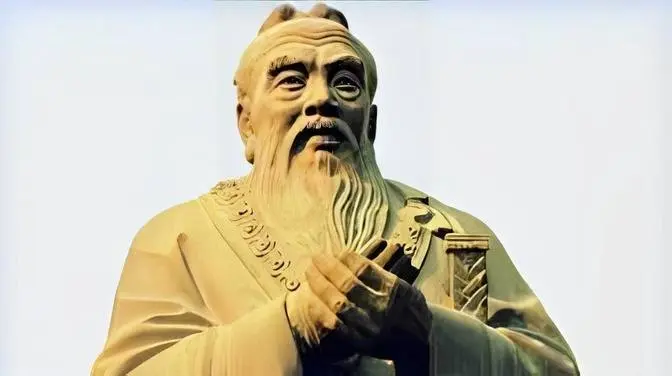
There is a statue of Confucius at the main entrance of the temple.
Confucius was a scholar born in 552 BC,
and as a reaction to the war and troubles surrounding him,
he taught a strict code of moral and social values based on hierarchy and obedience.
Although not overly well known in his lifetime,
Confucius became hugely popular 600 years later during the Han Dynasty,
when his teachings became the state religion.
For thousands of years during the Yuan, Ming and Ying dynasties,
the names of scholars who passed the imperial examination based on Confucius's teachings,
and so they could then become members of state,
would be inscribed on these stone tablets here in the temple.
These 198 stone tablets still stand and record the names,
place of birth and rank of over 50,000 graduates dating back as far as 1313,
and so provide amazing insight into the culture
and politics of the temple over the past 1,000 years.
Walking through the arch you come to the main courtyard.
This is a beautiful harmony of tree and temple.
There are 106 ancient cypress trees,
some over 700 years old,
and dotted amongst them 11 small pavilions that house stone tablets
which rest on pedestals carved in the shape of a tortoise.
In the summer these trees become completely alive with birds,
and in the winter over a hundred owls have been seen in this courtyard.
One particular tree is the evil differentiating cypress,
because in the Yuan Dynasty a sweet dew was found on its leaves,
which is said to be an omen,
and also in the Ming Dynasty its branches pluck the cap of a treacherous prime minister.
The main temple, or Dacheng Hall, was rebuilt in 1906
and houses a memorial tablet to Confucius.
Also some sacrificial vessels,
musical instruments,
and some wonderful carved oxen and pigs
that represent the animals that would have been sacrificed to Confucius.