
J.R.R. Tolkien Biography - John Ronald Reuel Tolkien Bio (THE TRUE STORY) | Goodread Biography
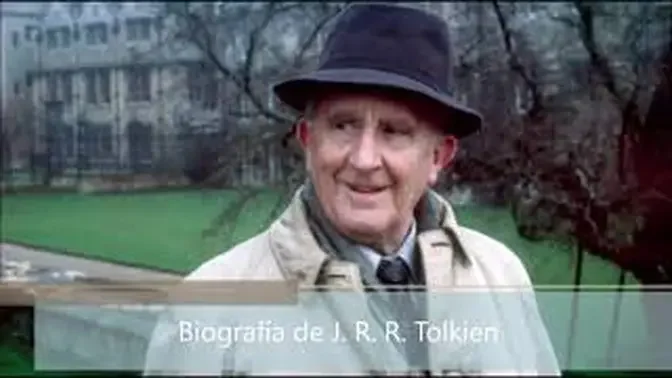
1 Video View·May 25, 2023
John Ronald Reuel Tolkien, born January 3, 1892, was a major scholar of the English language specializing in Old and Middle English.
Twice Professor of Anglo-Saxon, Old English, at the University of Oxford, he also wrote a number of stories, including most famously The Hobbit
1937, and The Lord of the Rings, 1954-1955, which are set in a prehistoric era in an invented version of our world, which he called by the Middle English name of Middle Earth.
This was peopled by men, and women, elves, dwarves, trolls, orcs, or goblins, and of course hobbits.
He has regularly been condemned by the English literature establishment, with honorable exceptions, but loved by literally millions of readers worldwide.
Chapter 2, Who was J.R.R. Tolkien?
J.R.R. Tolkien, also John Ronald Reuel Tolkien, was born in an Afrikaans-speaking area of South Africa in 1892, but his family moved to Britain when he was about three years old.
When Tolkien was eight years old, his mother converted to Catholicism, and he remained a Catholic throughout his life.
Tolkien's parents, Arthur Tolkien and Mabel Suffield, grew up in Birmingham.
Arthur Tolkien's father, a music seller and piano teacher, had moved from London to Birmingham in the early 1840s.
The Suffield family had been in Birmingham since 1810.
Mabel's father John, John Suffield, ran the family drapery and hosiery store in central Birmingham.
From 1826, until it was demolished as part of the Birmingham Improvement Scheme in 1886, the business was in Old Lamb House in Bull Street.
Arthur Tolkien emigrated from Birmingham to South Africa in 1889 to gain promotion at work.
His father had become a bank manager there.
In 1895, when Tolkien was three, his mother brought him and his younger brother Hilary back to visit their grandparents at Ashfield Road, King's Heath, Birmingham.
They never saw their father again, he died of typhoid fever in February 1896.
After Arthur died from complications of rheumatic fever, Mabel settled with four-year-old Tolkien and his younger brother, Hilary, in the country hamlet of Sarehole in Birmingham, England.
Mabel died in 1904, and the Tolkien brothers were sent to live with a relative and in boarding homes, with a Catholic priest assuming guardianship in Birmingham.
Tolkien went on to get his first class degree at Exeter College, specialising in Anglo-Saxon and Germanic languages and classic literature.
The family moved several times in the next few years, 1st to 214 Alcester Road Mosley to be closer to a tram route into the city after Ronald started at King Edward's School, they were not in Mosley for long.
By March 1901 they were living in Westfield Road, King's Heath.
The family moved again in 1902, to a house in Oliver Road, Edgbaston.
This was near the two towers in Edgbaston, Perrott's Folly and the Waterworks Chimney.
Mabel had converted to Catholicism in 1900.
Some of the family disapproved strongly and withdrew financial support to her and the children.
To save money the brothers were enrolled in the Oratory School, St. Philip's.
However with coaching from his mother, and her sister Jane Suffield, Ronald won a scholarship to King Edward's and returned there in 1903.
King Edward's School was then in New Street in the centre of Birmingham.
He played rugby for the school, and was also an enthusiastic member of the school debating society.
With friends, he had a club that met to talk about literature and current affairs after school in the school library, or over lunch in the new café at Barrow's Stores in Corporation Street.
Several of Tolkien's relatives also attended King Edward's School, one younger cousin had a volume of poetry published after his death in the First World War.
Perhaps because of financial stress Mabel developed diabetes in spring 1904.
There was no effective treatment in those days, and in November 1904 she died at Rednall in the Licky Hills.
She had appointed Father Francis Xavier Morgan, a priest of the Birmingham Oratory, to be the boy's guardian.
In December 1904, the boys stayed with a Tolkien uncle and aunt in Kings Norton, Birmingham.
In January 1905 Hilary Tolkien started at King Edward's School.
For the next three years the brothers lived in Stirling Road, Edgbaston, with their aunt Beatrice.
She was the widow of William Suffield, Mabel's younger brother, who had also died in 1904.
From early 1908 the brothers moved a short distance to lodge at the Faulkner's, 37 Duchess Road Edgbaston.
Tolkien commented many years later that the Duchess was rather decayed.
They were close to Edgbaston Canal Reservoir, set in a large park where there were entertainments, and sailing on the lake.
On the way from Duchess Road to the park there are two towers, the Waterworks Chimney and Perrott's Folly.
In Duchess Road Tolkien met his future wife, Edith Bratt, who was also lodging there.
They became fond of each other. Sometimes they would go and have tea and cakes in Birmingham cafes.
One afternoon in late 1909, they cycled out to the Lickies and had tea in Rednall Village.
Father Francis Morgan heard of this meeting.
He disapproved as he considered that Tolkien should be devoting all his attention to his studies,
and forbade him to contact Edith before he had come of age.
Ronald and Hilary Tolkien were moved to different lodgings in Highfield Road in 1910.
At King Edward's School Tolkien gained a scholarship to attend Exeter College, at Oxford University to study classics.
Tolkien left Birmingham for Oxford in October 1911. He returned often to visit family and friends.
Chapter 3, World War I
Tolkien enlisted as a lieutenant in the Lancashire Fusiliers and served in World War I, making sure to continue writing as well.
He fought in the Battle of the Somme, in which there were severe casualties, and was eventually released from duty due to illness.
In the midst of his military service, he married Edith Bratt in 1916.
Continuing his linguistic studies, Tolkien joined the faculty of the University of Leeds in 1920 and a few years later,
became a professor at Oxford University.
While there he started a writing group called The Inklings, which counted among its members C.S. Lewis and Owen Barfield.
It was also at Oxford, while grading a paper that he spontaneously wrote a short line about a hobbit.
Chapter 4, Books, The Hobbit and The Lord of the Rings
The award-winning fantasy novel The Hobbit, about the small, furry-footed Bilbo Baggins and his adventures,
was published in 1937, and was regarded as a children's book, though Tolkien would state the book wasn't originally intended for children.
He also created more than 100 drawings to support the narrative.
Over the years, while working on scholarly publications, Tolkien developed the work that would come to be regarded as his masterpiece,
The Lord of the Rings series, partially inspired by ancient European myths, with its own sets of maps, lore and languages.
Tolkien released part one of the series, The Fellowship of the Ring in 1954, The Two Towers and The Return of the King followed in 1955,
finishing up the trilogy. The books gave readers a rich literary trove populated by elves, goblins, talking trees and all manner of fantastic creatures,
including characters like the wizard Gandalf and the dwarf Gimli.
While Rings had its share of critics, many reviewers and waves upon waves of general readers took to Tolkien's world,
causing the books to become global bestsellers, with fans forming Tolkien Clubs and learning his fictional languages.
Tolkien once described The Lord of the Rings to his friend Robert Murray, an English Jesuit priest,
as a fundamentally religious and Catholic work, unconsciously so at first, but consciously in the revision.
There are many theological themes underlying the narrative including the battle of good versus evil,
the triumph of humility over pride, and the activity of grace. In addition, the saga includes themes which incorporate death and immortality,
mercy and pity, resurrection, salvation, repentance, self-sacrifice, free will, justice, fellowship, authority and healing.
In addition, the Lord's Prayer, and lead us not into temptation, but deliver us from evil,
was reportedly present in Tolkien's mind as he described Frodo's struggles against the power of the One Ring.
Chapter 5, J.R.R. Tolkien Death
Tolkien retired from professorial duties in 1959, going on to publish an essay and poetry collection, Tree and Leaf,
His wife Edith died in 1971, and Tolkien died on September 2, 1973, at the age of 81. He was survived by four children.
In his last interview, two years before his death, he unhesitatingly testified,
Chapter 6, Legacy and New Adaptations
The Hobbit and The Lord of the Rings series are grouped among the most popular books in the world, having sold tens of millions of copies.
The Rings trilogy was also adapted by director Peter Jackson into a highly popular, award-winning trio of films starring Ian McKellen,
Jackson also directed a three-part Hobbit movie adaptation starring Martin Freeman, which was released from 2012 to 2014.
Tolkien's son Christopher has edited several works that weren't completed at the time of his father's death,
including The Silmarillion and The Children of Huron, which were published posthumously.
The Art of the Hobbit was published in 2012, celebrating the novel's 75th anniversary by presenting Tolkien's original illustrations.
Chapter 7, Acquired the TV Rights
Underscoring the enduring popularity of Tolkien's famed fantasy world, in November 2017,
online retail and entertainment behemoth, Amazon, announced that it had acquired the TV rights for the book series.
In its statement, the company revealed plans to explore new storylines preceding Tolkien's The Fellowship of the Ring,
with the potential for a spin-off series, thereby exciting fans with the promise of a prequel to the familiar deeds of Bilbo Baggins, Gandalf and the rest.
Chapter 8, 2019 Feature Tolkien
The author's life was the subject of the 2019 feature Tolkien, a biopic starring Nicholas Hoult and steeped with references to The Lord of the Rings.
Chapter 9, The Titles by J.R.R. Tolkien
These are the titles by J.R.R. Tolkien.
Number 1. Sir Gawain and the Green Knight
Number 2. Sir Gawain and the Green Knight, Pearl, and Sir Orfeo
Number 3. The Monsters and the Critics and Other Essays
Number 4. The Hobbit
Number 5. The Hobbit, Chinese Edition
Number 6. The Hobbit, Polish Edition
Number 7. The Hobbit, Talking Book
Number 8. The Hobbit, Large Print
Number 9. Farmer Giles of Ham
Number 10. The Fellowship of the Ring
Number 11. The Fellowship of the Ring, Chinese Edition
Number 12. The Fellowship of the Ring, Czech Edition
Number 13. The Fellowship of the Ring, Talking Book
Number 14. The Two Towers
Number 15. The Two Towers, Chinese Edition
Number 16. The Two Towers, Large Print
Number 17. The Two Towers, Talking Book
Number 18. The Return of the King
Number 19. The Return of the King, Czech Edition
Number 20. The Return of the King, Chinese Edition
Number 21. The Return of the King, Large Print
Number 22. The Return of the King, Talking Book
Number 23. The Adventures of Tom Bombadil
Number 24. Ankh-Kreni Wyss
Number 25. Tree and Leaf
Number 26. The Road Goes Ever On
Number 27. Bilbo's Last Song
Number 28. The Father Christmas Letters
Number 29. The Silmarillion
Number 30. The Silmarillion, Chinese Edition
Number 31. The Silmarillion, Talking Book
Number 32. Unfinished Tales
Number 33. Letters of J.R.R. Tolkien
Number 34. Mr. Bliss
Number 35. The Old English Exodus
Number 36. Finn and Hengist, The Fragment and the Episode
Number 37. The Book of Lost Tales, Part 1, The History of Middle-Earth, Volume 1
Number 38. The Book of Lost Tales, Part 2, The History of Middle-Earth, Volume 2
Number 39. The Lays of Beleriand, The History of Middle-Earth, Volume 3
Number 40. The Shaping of Middle-Earth, The History of Middle-Earth, Volume 4
Number 41. The Lost Road and Other Writings, The History of Middle-Earth, Volume 5
Number 42. The Return of the Shadow, The History of Middle-Earth, Volume 6
Number 43. The Treason of Isengard, The History of Middle-Earth, Volume 7
Number 44. The War of the Ring, The History of Middle-Earth, Volume 8
Number 45. Sauron Defeated, The History of Middle-Earth, Volume 9
Number 46. Morgotha's Ring, The History of Middle-Earth, Volume 10
Number 47. The War of the Jewels, The History of Middle-Earth, Volume 11
Number 48. The Peoples of Middle-Earth, The History of Middle-Earth, Volume 12
Number 49. Roverandum
Number 50. Roverandum, Large Print
Number 51. The Children of Hurin
Number 52. The Legend of Sigurd and Gudrun
Number 53. Tales from the Perilous Realm
Number 54. The Fall of Arthur
Chapter 10. J.R.R. Tolkien Family
Tolkien married his childhood sweetheart, Edith, and they had four children.
He wrote them letters each year as if from Santa Claus,
and a selection of these was published in 1976 as The Father Christmas Letters.
One of Tolkien's sons became a Catholic priest.
Tolkien was an advisor for the translation of the Jerusalem Bible.
Chapter 11. J.R.R. Tolkien Quick Facts
Number 1. Tolkien's initials stood for John Ronald Ruelle.
As a child he was known as Ronald.
Number 2. He was born in 1892 in Bloemfontein in the Orange Free State, now in South Africa.
Number 3. When he was very young, he was bitten by a baboon spider in his garden
but later said he had no memory of the event and no dislike of spiders.
Number 4. He is the only person to appear on both a 2002 BBC list of the 100 Greatest Britons
and a similar 2004 list of the 100 Greatest South Africans.
Number 5. In 2009 the Forbes list in the U.S. ranked Tolkien as the 5th top earning dead celebrity.
Number 6. The surname Tolkien is an anglicization of the German name Tolkien, meaning foolhardy.
Number 7. The Oxford Dictionary lists eight words brought into English by Tolkien including hobbit and warg.
Number 8. Tolkien was nominated for the Nobel Literature Prize in 1961 by his friend C.S. Lewis.
Number 9. He was rejected, in the words of one juror,
because his style has not in any way measured up to storytelling of the highest quality.
Number 10. Lord of the Rings is the third best-selling work of fiction of all time,
behind Don Quixote and A Tale of Two Cities.
Number 11. In 1916, Tolkien started imagining the worlds which would be the settings for his classic fantasy tales.
He set out the myths and legends of the first age of Middle-earth in the book of Lost Tales.
But it wasn't published until after he died. It came out eventually in 1997 and was called The Silmarillion.
He also started sketching out other ideas and characters. One of them was Bilbo Baggins, the Hobbit.
What eventually became The Hobbit was meant to be bedtime stories for his children about the adventures of a little gnome-like fellow with hairy feet.
But it was published in 1937.
Number 12. The Lord of the Rings is made up of three books.
The Fellowship of the Ring.
The Two Towers.
The Return of the King.
The books follow the magical and dangerous adventures of Frodo Baggins, in whose hands the future of Middle-earth rests.
The books follow on in a way from The Hobbit where we first meet Frodo's elderly cousin, Bilbo Baggins.
He is the first Hobbit to find the powerful One Ring, which had been lost for centuries.
He hands it down to Frodo. But the Ring is capable of evil and whoever has it can be made to do terrible things.
It's Frodo's mission to take it to the fires of Mount Doom and destroy it.
The first two Lord of the Rings books were published in 1954 and The Return of the Ring came out in 1955.
The Lord of the Rings has sold some 100 million copies worldwide since then.
Number 13. Tolkien grew up and joined the army when the First World War started in 1914.
But, like many soldiers, he suffered badly from what was known as shell shock.
This means he was affected by the explosions physically, the thousands of loud bangs from bombs hurt his brain.
But it also hurt him mentally and was upset about what he saw during the fighting.
His best friend died in the war.
He was let out of the army because he was so sick.
He got a job as lecturer in English language at the University of Leeds then professor of Anglo-Saxon at Oxford University.
Thanks for listening to this biography.
Here's to many more years of learning more about your most favorites famous people true stories together.
Subscribe now.
About Goodreadbiography.com
Our mission is to be the world's number one and largest biography reference source to organize,
disseminate the world's famous people biographies, and make them universally accessible and useful.
Why you ought to be a fan of Goodread biography.
Knowledge is power knowledge is priceless.
Discover the true stories of famous people from Africa, Americas, Asia, and Pacific, Europe and Middle East
including the world's most influential, controversial, and richest people in history.
Enjoy listening to their fascinating biographies, autobiographies, memoir books, facts, accomplishments, and much more.
All from the comfort of your desktop and mobile devices.
Here's why you should subscribe to Goodread biography newsletter.
Thanks to all our worldwide fans with the passion to learn more about notable people in history.
If you've already subscribed to our newsletter you'll always be the first to continue receiving all our latest exclusive biographies,
autobiographies, memoirs, and book reviews content.
If you've not subscribed to our newsletter do so now to receive and enjoy all the fascinating true stories
about the people who inspire you. Subscribe now.