
THE LIFE OF HENRY VIII (part 1) | A perfect Prince | Tudor monarchs series | History Calling
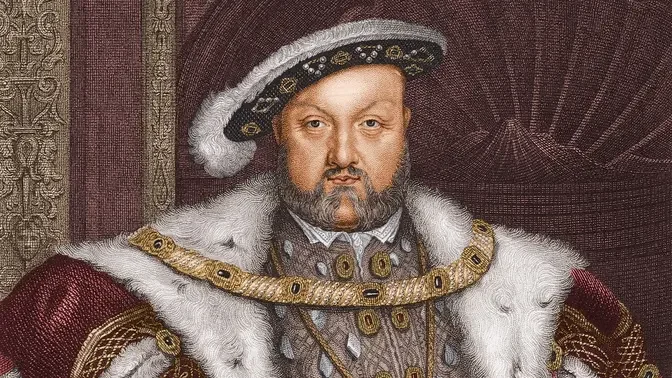
Hi everyone, welcome or welcome back to History Calling, where I bring you new videos every
Friday on all aspects of history. This is the third in my Tudor monarch series and the first
to look at the life of Henry VIII, a man who transformed from the epitome of a perfect prince
to a tyrannical wife-killing monarch. If you want the story of the Tudors from its beginnings,
do check out the earlier videos in this series which look at the life of Henry VII
and at how this unlikeliest of candidates took the English throne, then managed to keep it.
This video will cover Henry VIII's early life, accession to the throne and most of his marriage
to his first wife, Catherine of Aragon. We'll also get a sneak peek at wife number two, Anne Boleyn,
and at the first of Henry's legitimate children, the future Mary I, plus his illegitimate son,
Henry Fitzroy. If you like the Tudors, I would also recommend my series on the six wives of
Henry VIII which I'll leave linked on screen and in the description. The description box also has
lots of suggestions and links for books, TV shows and documentaries on the Tudors if you'd like to
learn more. Lastly, remember to like this video, leave a comment below and subscribe to my channel
with notifications switched on so you never miss new content. Okay then, let's get started!
Prince Henry Tudor was born on the 28th of June 1491 at Greenwich Palace. The second son and third
surviving child of King Henry VII and Elizabeth of York. His father, after spending 14 years in
exile, hunted across France and Brittany by King Edward IV and his brother Richard, had affected
a remarkable reversal of fortune in 1485 by seizing the throne from Richard III at the Battle of
Bosworth. This brought an end to the Wars of the Roses, fought between Henry's seniors Lancastrian
House and the House of York, who were both descendants of Edward III. Henry VII then
married the Yorkist princess Elizabeth, a daughter of Edward IV and niece of King Richard, and their
children inherited the two claims to the throne. Their first son, Arthur, was born in 1486, followed
by Princess Margaret in 1489, then Henry in 1491. Another daughter, Elizabeth, would follow in 1492,
then Mary in 1496 and Edmund in 1499. The new little prince was baptised in the Church of the
Observant Friars at Greenwich by the Bishop of Exeter, Richard Fox. As an infant he was showered
with titles and positions, including being made Lord Warden of the Sink Ports and Constable of
Dover Castle in 1493 and Lord Deputy of Ireland in 1494, though of course there were actual deputies
to do the work involved in these jobs. As the spare rather than the heir, he didn't experience the same
pressure as his older brother Arthur, who was destined to be king. Raised alongside his sisters
under the watchful eye of their mother, much of Henry's early life was spent at Eltham Palace,
where he was given an education fit for a prince. Some, including David Starkey, have suggested,
based on a comparison of their handwriting, that Henry's mother Elizabeth taught him to write,
and the purchase of horses for him in January 1494 shows just how early he began learning to ride.
His tutors included the poet John Skelton, appointed in 1496, and according to the historian
Eric Ives, he was likely taught grammar, poetry, rhetoric, ethics and history. He was also given a
strong grounding in the Catholic faith, so much so that in later years he wrote a book entitled
Assertio Septem Sacramentorum, meaning Defence of the Seven Sacraments, which so impressed the then
Pope that he was granted the title of Defender of the Faith in 1521, a title still in use by
British monarchs to this day, though in view of Henry's later dealings with the Catholic Church
in Rome it now applies to the Anglican faith. The prince was academically gifted and made a
good impression on those who met him. When the famous Dutch humanist Erasmus visited England
in 1499, he met the boy and described him thus. I was staying at Lord Mountjoy's country house
when Thomas Moore came to see me and took me out with him for a walk as far as the next village,
where all the king's children except Prince Arthur were being educated. When we came into the hall,
the attendants not only of the palace but also of Mountjoy's household were all assembled.
In the midst stood Prince Henry, then nine years old, he was actually eight,
and having already something of royalty in his demeanour, in which there was a certain dignity
combined with singular courtesy. This paints a pretty picture of Henry's childhood, but it was
far from a stress-free environment. The young Shooter dynasty was plagued by pretenders to
the throne and in the year of Henry's birth a young man appeared in Ireland claiming to be
his maternal uncle Richard Duke of York, one of the so-called princes in the tower. Henry's father
responded by having his younger son create a Duke of York on the 31st of October 1494,
emphasising that there was only one real royal family. But the pretender, a Flemish man whose
real name was Perkin Warbeck, would continue to be a thorn in the Shooter's side for years to come.
There were other threats too. In June 1497, aged barely six, Henry was forced to flee into the
Tower of London with his mother after an uprising in Cornwall, and it's possible that this was one of
his earliest memories. His father quickly defeated the rebels and when Warbeck invaded England that
same year, his attempt to oust the Shooters failed too. He was captured, imprisoned and eventually
executed in 1499 alongside one of Elizabeth of York's cousins, the 24-year-old Edward Earl of Warwick,
who'd committed no crime other than being born a York and trying to escape the imprisonment which
Henry VII had subjected him to since 1485. The following month the royal family narrowly
avoided being burnt to death when the Palace of Sheen, where they were staying for Christmas,
was consumed by fire on the 21st of December 1497. It would soon be rebuilt as the Palace of Richmond.
Though this disaster was avoided, the royal family still experienced considerable loss during the
1490s. Prince Henry's sister Elizabeth died at the age of three in 1495 and his brother Edmund
lived only 16 months, dying in 1500. The greatest disasters were yet to come however.
After careful and lengthy negotiations, Henry VII had secured the hand of the Spanish princess
Catherine of Aragon for his son Arthur, and the two were wed in a spectacular ceremony in London
in November 1501. The ten-year-old Prince Henry attended the festivities, escorting the woman who
was to have such a monumental effect on his life, first through the city and then to the ceremony
itself. He was recorded as enjoying the later wedding party immensely, throwing off his heavy
golden gown, as it was called, so that he could dance more easily. Soon happiness turned to sorrow
however, for in April 1502 at Ludlow Castle in Shropshire, Arthur died. Henry was now the heir
to the throne and he was created the Duke of Cornwall that October and Prince of Wales in
February 1503. That same month the eleven-year-old boy lost his mother, who died from the effects of
childbirth, in a vain attempt to produce another boy for the Tudor dynasty. Her baby, a girl named
Catherine, died soon after the birth as well, while Henry's 13-year-old sister Margaret was
dispatched to marry the King of Scotland later in the year. We can only speculate as to how young
Henry felt losing so many so fast, however this contemporary image might offer some insight.
It shows the boy weeping over the bed of his mother, while his two remaining sisters sit in
the foreground and Henry VII is nearby on his throne. The Prince was now left with his father,
a grief-stricken and reportedly avaricious and miserly man, who historians feel Prince Henry
did not get along well with. His cousin Reginald de la Pole felt that the King was emotionally
distant from his younger son, and the Spanish diplomat, Fuenzalida, wrote that the Prince was
so subjected that he does not speak a word except in response to what the King asks him.
There is evidence of light-hearted moments between the pair though. Henry won six shillings and eight
pence from his father at cards in 1498, for instance, and as a teenager performed in the
tilt yard at Richmond Palace for him. Henry VII was paranoid lest something happen to his
sole remaining boy, however, and from 1502 onwards Prince Henry's life was much more
restricted than ever before. The episode at the tilt yard is unusual, for contemporaries reported
that most of the time the new Prince of Wales was barely allowed out and kept in his rooms to
protect him from harm. As well as Arthur's titles and claim to the throne, Henry had also inherited
his bride, for in June 1503 he and Catherine of Aragon were formally betrothed to protect the
Anglo-Spanish alliance. Given that they were brother and sister-in-law, they required a
papal dispensation for the marriage to go ahead. This was forthcoming, but as there was some
disagreement between the English and the Spanish as to whether Arthur and Catherine had consummated
their marriage, the dispensation attempted to cover all its bases by saying that it had perhaps,
or as it happens, been consummated. The Latin word the actual document used can be translated
either way. At the time this seemed sensible, but decades later Henry would use this loophole to
help him discard Catherine when he fell in love with Anne Boleyn. If you'd like to learn more
about Arthur and Catherine's relationship, I have a video dedicated to the question of whether or
not they consummated their marriage, and to whether Henry was justified in annulling his
own marriage to Catherine. I'll leave that linked on screen and in the description box, where you'll
find it within my Six Wives of Henry VIII playlist. In the mid-1500s, however, it looked increasingly
unlikely they would ever be married at all. Henry VII was engaged in a lengthy haggling
match with Catherine's parents, Ferdinand of Aragon and Isabella of Castile, over the princess's
dowry, and when Isabella died in 1504, he began to think twice about marrying Prince Henry to her
at all, now that Catherine's sister Joanna and her husband Philip had inherited the Castilian throne,
and Catherine's worth as a bride had diminished. In 1505, the day before his 14th birthday,
Prince Henry was therefore made to renounce his union with Catherine at Richmond Palace,
on the grounds that he had been pre-contracted to marry her whilst below the age of consent.
Henry VII was surely confident that he could marry his son off elsewhere,
not least because Henry was growing up to be a handsome, intelligent and charismatic young man.
In 1507, the Spanish ambassador commented that,
there is no finer youth in the world than the Prince of Wales. He is already taller than his
father and his limbs are of a gigantic size. There was to be no royal wedding during his
father's lifetime, however. In 1509, the founder of the Tudor dynasty finally succumbed to illness
and died at Richmond Palace on the 21st of April. At 17 years and 10 months old,
Prince Henry was now King Henry VIII. Initially, he had the guidance of his
formidable paternal grandmother, Lady Margaret Beaufort, but two months later she was dead too,
and Henry was on his own. His reaction to becoming king was to distance himself from
his father's policies. He had many of the old king's ministers, who had helped him enact his
financial measures, arrested and executed. Then he resurrected the Spanish marriage with
lightning speed, though this was something his father had actually instructed him to do
on his deathbed. Henry and Catherine were married on the 11th of June and crowned together at
Westminster Abbey on the 24th. In stark contrast to the misery which would mark the end of their
union, it began with great happiness. Catherine soon fell pregnant, and though there was a
miscarriage of a daughter on the 31st of January, 1510, followed by an embarrassing error when the
doctors falsely convinced her that she was still pregnant with the second of a set of twins,
she then did fall pregnant for a second time and delivered a baby boy named after his father
on New Year's Day, 1511. The king was ecstatic and threw a celebratory jousting tournament,
but he and Catherine's joy didn't last. The boy died seven weeks later,
leaving both parents grief-stricken. The baby was buried at Westminster Abbey and
foreign ambassadors were told not to present formal letters of condolence to the king or
even to mention the death of his son, for fear they would revive his grief. Though they couldn't
have known it at the time, the royal couple had embarked on a near decade-long train of misery
as they tried to produce living children. For the time being, though, there were other
things to distract Henry from his domestic problems. He actively sought war with France
and set sail from Dover in 1513 to invade the Low Countries, leaving Catherine as his regent
back in England. He and his allies, the Holy Roman Emperor Maximilian I, won the Battle of the Spurs
and captured Therouan, now in modern-day France, in August and Tournai, in modern-day Belgium,
in September. Catherine, meanwhile, oversaw a campaign by the Earl of Surrey against the Scots
at Flodden, after they invaded England in Henry's absence. This led to the death of
whose blood-stained coat Catherine sent to her husband on the Continent to use as his banners.
I thought to send himself unto you, she wrote, meaning James's dead body,
but our English men's hearts would not suffer it.
It was also at around this time that one of Henry's most famous counsellors,
Thomas Wolsey, came to prominence. By 1515 he was the Chancellor, and he would play an
enormous role in helping Henry run the country for over a decade, until the king eventually
turned on him for not securing an annulment for Henry from Catherine of Aragon. More on that
next week, however. The difficulties with France were eventually overcome by a treaty,
made under pressure from the Pope, and Henry had his 18-year-old sister, Princess Mary,
marry the 52-year-old King of France, Louis XII, in October 1514. At this point,
though he didn't know it yet, Henry's present and his future began to collide,
for one of his sisters, ladies-in-waiting in France, was none other than a teenage Anne Boleyn,
newly arrived from the court of Margaret of Austria, where she had been living since the
previous year. See my video on Anne's age for more information on her early life.
These two future sisters-in-law didn't get to spend much time together, however, for King
Louis died on the 1st of January 1515, at which point Mary secretly married her brother's friend
and favourite, Charles Brandon, Duke of Suffolk. This move incensed Henry. Not only was it treason
and a mark of disrespect for her to marry without his knowledge and permission, Mary had also
deprived him of the only pawn he had to play on the international stage. He and Catherine still
had no living children, and though the Battle of Flodden had temporarily made his other sister,
Queen Margaret of Scotland, a widow, she was beyond his reach and had, in any case,
also contracted a speedy and secret second marriage in August 1514 to the Earl of Angus.
This left Henry with no children or siblings he could use to make alliances with other countries.
Mary argued that Henry had promised her that after Louis died she could marry where she liked,
but if this is true, it was a promise Henry likely hadn't intended to stand by.
Nevertheless, after extracting a heavy fine from his sister and his new unwanted brother-in-law
upon their return to England, and forfeiting Mary's French dowry, he forgave them.
Things seem to be looking up the following year. There are conflicting theories as to
how many children and miscarriages Catherine had, but after the loss of their New Year's Day boy
in 1511, she apparently gave birth to a short-lived boy in the autumn of 1513 and a stillborn son in
November 1514. Then, in February 1516, at the age of 30, she finally gave birth to a child who lived.
True, it was a girl named Princess Mary after her rebellious aunt rather than the desperately
sought-after son, but it raised hopes that a boy would follow. It wasn't to be. Catherine's final
recorded pregnancy ended with the birth of a stillborn or very short-lived daughter in November
1518. As it became clear that there would be no more children by Catherine, Henry found himself
in an increasingly nightmarish position. No woman had ever held the English throne, and when Empress
Matilda, daughter of Henry I, had tried to do so in the 1130s, the result was a civil war lasting
nearly 20 years and known as the Anarchy. The strife caused by the Wars of the Roses was also
still fresh in contemporary memories, and Henry himself was a second son who had lost at least
four siblings below the age of 16, and I say at least because there's some uncertainty as to
whether he had a brother named Edward as well as Edmund, or if they were one person. The king knew
better than anyone how important it was to secure the dynasty, yet as it stood all his potential
legitimate heirs were female, being his sisters and his daughter. He also knew that if he didn't
have a son soon, any boy he did produce would likely succeed as a child, paving the way for
a messy and potentially bloody minority. He was, after all, the nephew of the princes in the Tar,
Edward V and Richard, Duke of York, who had most likely been murdered there because they were
His main comfort was the birth of his only acknowledged illegitimate child, a son named
Henry Fitzroy, whose mother, Elizabeth Blunt, was one of Catherine's ladies-in-waiting. Henry seems
to have seriously considered making this child his heir, and he advanced him to great honours
early in life. In June 1525, the boy was made a Knight of the Garder, Earl of Northumberland,
and Duke of both Richmond and Somerset. A double dukedom was astonishing enough,
but we should also take note of what the boy was made Duke of. The choice of Richmond as a title
was of particular importance as this was the traditional Tudor title. Henry VII had been born
Earl of Richmond and ultimately named Richmond Palace after it. The king was doing all he could
to make it clear to the world that the new Duke was his son and very much part of the Tudor royal
family, with a potential claim to the throne. His toying with the idea of legitimising Fitzroy so
that he could succeed over Mary naturally went over very badly with Catherine of Aragon, of course,
but as of yet Henry had not entirely given up on his daughter inheriting the throne either.
After all, though there were no English precedents for such a situation, Mary's own
grandmother, Isabella of Castile, was a Queen Regnant. Indeed, Henry's foreign policy during
Mary's youth can be read as one long attempt to secure a husband for her who would be powerful
enough to make good her claim to the throne against any possible usurper. The princess was
engaged to François Dauphin of France in 1518 and Henry and Catherine made a famous trip to that
country in 1520 where they met the King of France at an event known as the Field of the Cloth of
Gold because of the golden colour of the royal tents. Henry and Francis even engaged in a wrestling
match which Francis won, though only because he used an illegal move, or at least that's what the
English said, to save their King's pride. It's just possible that during this trip Henry also caught
sight of his second wife for the first time, for Anne Boleyn was then serving at the court of
Francis's wife, Queen Claude. In any event, the cosy relationship with France didn't last long.
The proposed marriage between the Dauphin and Princess Mary fell through soon after the two
met, but she was quickly re-engaged in 1521 to her cousin Charles V, the Holy Roman Emperor,
despite him being 16 years older than her and Mary still a child of five. In 1525 she was
dispatched to Ludlow, making her the only woman in history to have been treated as a Princess of
Wales in her own right. Despite his good treatment of his daughter and son though, Henry knew that
neither a legitimate girl or an illegitimate boy were safe options for a successor. What he really
needed was a true-born son. He clearly wasn't going to get this from Catherine however, and he
ceased sleeping with her in 1524. That left him with two paths, wait for her to die and marry
again, or try to get out of his marriage to her and remarry as soon as possible to a younger woman
who could produce the longed-for boy. By the mid-1520s Henry was seriously considering option B
and when his wife's lady-in-waiting Anne Boleyn caught his eye, his determination to be rid of
What followed over the next 10 years would prove to be one of the most turbulent and infamous periods
in English royal history, and one which would change the country forever, bringing about the
English Reformation and ultimately leading to the previously unfathomable idea of executing an
anointed Queen. Make sure you join me again next time for the full story of Henry VIII and Anne
Boleyn, from the beginnings of their love story to its horrific and tragic end. In the meantime,
just a quick reminder to subscribe to the channel, like and share this video,
and leave me a comment below letting me know what you think of the young Henry.
Was he a perfect prince, or do you already see him as a monster in the making?
I look forward to reading what you have to say, and until next time, keep learning.