
The Tudors: Henry VIII - Wolsey and Church Reform - Episode 17
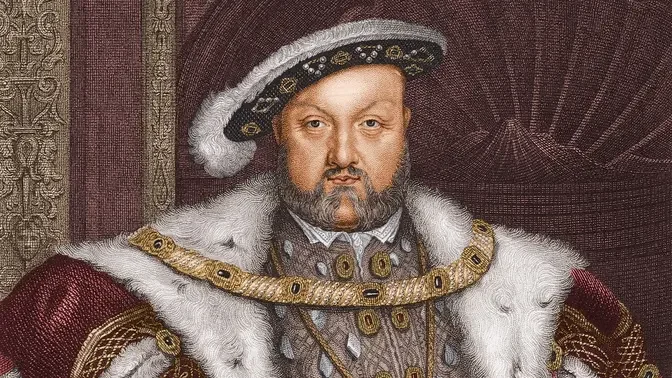
This is Am Stark and in this video we will be looking at Wolsey, Luther and church reform.
So first of all we will look at Wolsey and his role in the church because as Cardinal
of England, Wolsey was the Pope's representative in England. Now Henry VIII also helped Wolsey
put pressure on the Pope for Wolsey to become Papal Legate and in 1524 this was made permanent
and this meant that he received additional powers meaning that he could act on behalf
of the Pope. Now this meant that he could give leadership towards the church in England
and when Henry VIII had come to the throne in 1509 there was an enthusiasm for religious
devotion and the majority of the population did remain loyal to the Catholic church. However
there were many people starting to notice problems with the church and this meant that
there was maybe a requisite for church reform. Now we will now look at some of the problems
which were within the church. Now first of all there was the corruption and with the
invention of printing, many people became aware of the corruptions within the church.
Now these offences including pluralism which is receiving the profits of more than one
post, simony which is the purchase of church offices and non-resident which is receiving
the profits of a post without being present to perform the duties required. Now the extravagance
of the Pope which was where the texts were being sent to was also seen as immoral and
Wolsey himself was a clear example of the shortcomings of the clergy. He had two illegitimate
children born in 1510 and 1512 and he was living with a mistress until 1519. He also
has a range of religious titles including the Bishop of Durham in 1523 and the Bishop
of Winchester in 1529 which both gave him a large income and this is the idea of pluralism.
Now there was also some anti-clericalism in England and anti-clericalism is the opposition
to religious authority in social and political matters and many lawyers in England objected
to the influence of canon law which is the law of the church and the legal privileges
that were given to the clergy. And there were many cases of clerical misconduct and one
of the main ones was the death of Richard Hunn and after a dispute with priests over
his son Mortuaryfee he was imprisoned in the Bishop of London's prison. Now here he was
found dead in a cell and despite claims that he had hanged himself it was clear that he
had been murdered so this severely affected the short term reputation of the church and
it was things like this which affected the reputation of the church and made it necessary
for church reform. Now there was also the decline of monasticism which is the monasteries
and in the 1520s Wolsey secured the dissolution of around 20 monasteries so that he could
fund the establishment of the Cardinal College. Now many people argued that monasteries had
effectively become business with huge amounts of land and resources. Now there were other
monasteries which flourished until the dissolution in 1536 including the Observant Franciscans
and the Bridgetons however they were starting to decline. So next we need to look at Luther
because this was a big part of introducing Protestantism into Europe and in 1517 Martin
Luther became worried about the focus of money onto the church instead of solely religion.
This made it easier for rich people to go to heaven as they could buy their way out
of purgatory which he didn't think was very fair. Therefore he published his 95 Theses
in 1517 which criticised the Catholic Church and many people in Germany which was where
he was from were willing to support him due to their own religious beliefs and because
it could be used as a weapon against Charles V. Now these views had come to England by
the 1520s through merchants and trade and in England these people met at the White Horse
pub in Cambridge where they discussed Luther's theology and they were helped when Tyndale
began to publish parts of the Bible into English and although their numbers were initially
small they started to gain greater control when Henry VIII attempted to gain a divorce.
So finally we will look at the church reform under Wolsey. Now Wolsey did not see church
reforms as a major job of his however he did use his capacity as papal legate to order
English bishops into carrying out their roles more thoroughly. He was also responsible for
the start of the closing in monasteries when in 1528 monasteries were fewer than six inmates
were closed down however he was strongly opposed to Protestant heresy in England and he initiated
public burnings of Luther's text which started in May 1521 by St Paul's. So several people
suspected of any Protestant sympathies were also arrested and punished however nobody
was executed until 1530. So essentially Wolsey didn't do that much in terms of church reform
and once we get to the break of Rome that is where the church is going to completely
change with the introduction of people such as Cranmer and Cromwell. So thank you for
watching this video and see you soon.