
When the French Kings Kidnapped the Pope - Avignon Papacy DOCUMENTARY
4 Video Views·Oct 10, 2023
During the 14th century, the highest Christian authority in Western Europe moved its seat
from Rome to Provence.
This period saw seven consecutive French popes residing for 70 years in the city of Avignon
or its surroundings.
The Papal Curia has often been remembered as subservient to the French monarchy and
as a court of corruption, greed and luxurious spending.
A picture presented by some contemporaries such as the great humanist Francesco Petrarcha.
But was it really so?
Or did the Avignon popes also leave another legacy for their successors?
This and the origins of the Avignon Papacy will be the topic of our video.
Did you know that the total wealth held in art is estimated to be worth 1.7 trillion
dollars and that is expected to grow by another trillion over the next decade?
The fact that contemporary art pieces outpaced the S&P 500 total return by 174% from 1995
to 2020 according to publicly available data means that it might be a better option than
the stock market.
Unfortunately, getting into the art game can be difficult if you are not super rich, as
the costs are prohibitive.
But the sponsor of this video Masterworks is here to help with that!
Masterworks.io has emerged as the only platform taking billionaire art collectors head-on
and lets you access their exclusive investments.
Simply put, you can now invest in the very same art they do, by names like Banksy, Monet,
Basquiat and other iconic artists for just a fraction of the usual cost.
One of the best parts of investing with Masterworks is that they know what they are doing when
it comes to selling art.
In fact, they returned 32% to their investors in 2020 by selling a work by Banksy.
The stock market has been crazy recently.
In fact, nearly every top equity firm is projecting real returns of 5% or less, so
you need to diversify your portfolio and Masterworks is a great choice.
If you want to take advantage and invest in some fine art, there is a waitlist, but you
can skip that waitlist and immediately start investing by clicking our link in the description,
and it also really supports the channel, so go check it out!
We begin our narration in Italy at the end of the 13th century.
The peninsula, a patchwork of small city-states and nobles in near-constant conflict and infighting,
had seen a political shift in the previous 50 years, where imperial authority and gibberline
power declined, which coincided with the disappearance of the Hohenstaufen family.
In their stead, the Guelph faction, historically supporters of the popes, became prominent
under the helm of the powerful Angevin dynasty, who had expanded their dominions into Piedmont
and the Kingdom of Sicily.
The island of Sicily had, however, rebelled in 1282, and a conflict between the Aragonese
and the French had broken out from that.
In this and the previous centuries, the power of the papacy had increased, both through
their conflicts against the Holy Roman Emperors and the unifying spirit of the Crusades, with
some popes pushing for a policy of universal authority over all the Christian world, a
concept called universitas.
This gave the popes greater control over the internal affairs of other Christian kingdoms,
such as in moral and religious matters, the curriculums of the first universities, and
the tithe, the taxation for religious conquest, thus placing them in a prime position to arbitrate
both in internal and international politics.
The two most prominent representatives of this policy were Innocent III and Boniface
VIII, who would be the last pontiff to pursue this policy.
But on the internal side, a number of popes had difficulties navigating the infamous intrigues
of Rome, having to also balance the strong families of Latium and the mood of the citizens
of the Erbe, and it was not rare that they would take residence outside of the capital,
such as in Viterbo or Vieto or Rieti.
Using now laying the political background, we find the origins of the events that led
to the Avignon Papacy with the election of the Holy See of Boniface VIII in 1294, an
ambitious nobleman from Latium of the noble Caetani family.
He aimed to create a so-called Papal Monarchy over all the other Christian rulers, as he
presented in the Papal Bull, Bunam Sanctam.
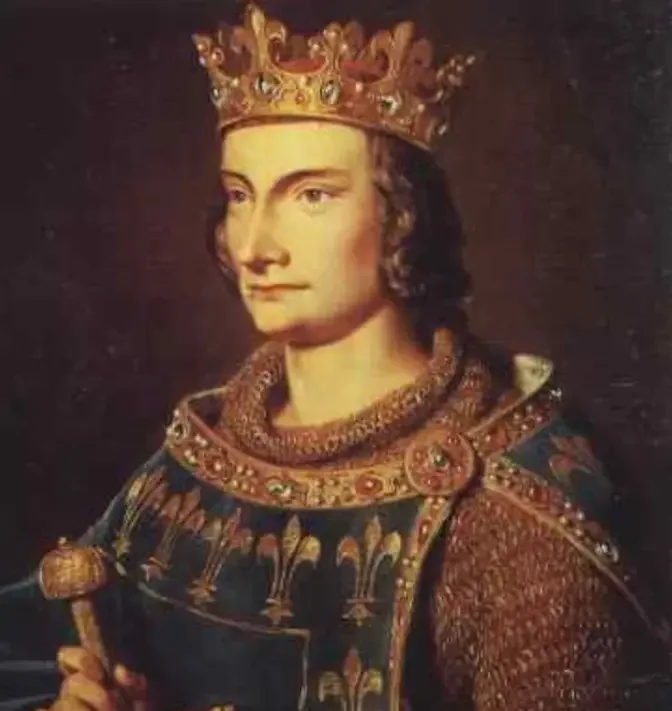
His ideals came into conflict with the ambitious and arrogant King of France, Philip the Fair.
Being at war against England, as one does, the French monarch began to tax the clergy
without permission of the Pope, something that prompted Boniface to publish a bull banning
these taxations, which began a diplomatic and legal skirmish between the two that culminated
in 1303 with the Outrage of Agnani, or Schiavo di Agnani, where the Pope was captured and
mistreated by the French-supported Colonna family and held captive in Agnani, and a few
days later he died in shock.
Boniface was succeeded by Benedict XI, who tried to balance the relations with France
with the need to punish internal rebels, but he died after just 8 months of rule, possibly
by poison.
The subsequent election was marred by factionalism between the French and the Italian Cardinals,
headed respectively by the Colonna and the Orsini families.
It took nearly a year to find a candidate they could agree on, the Archbishop of Bordeaux,
Bertrand de Gotte, who took the name Clement V.
He was in Lusignan when he received the news, and began to journey to Lyon, where he would
be crowned.
He is the first of the Avignon Popes.
Clement is often remembered as a puppet of the French King, a reputation that was present
among his contemporaries, however, these claims are considered exaggerated by modern historians.
He was a good diplomat and managed to keep everyone content, although being a reserved
and timid man.
He spent the first years of his papacy travelling in his homeland, trying to broker a peace
between the French and English Kings.
He chose not to travel to Rome, as the city was afflicted by brutal factionalism between
rival families, making it unsafe to move back.
He instead remained in France, especially near Vienne and Avignon, which were part of
the Duchy of Provence and thus not directly controlled by France, and neighboured the
Papal Territory of Comte de Venison, which had been gifted to them the previous century.
Here he surrounded himself with English and French councillors and cardinals, especially
his family members.
One outcome of these new nominations was that the Italian cardinals lost their majority,
which would have a profound effect on the subsequent elections, as the next seven popes
would all come from France.
The dissolution of the Templar Order would be the most controversial event of his reign.
Philip IV needed funds to repay his debts, and he hoped to capitalise on the weakness
of the Holy Order following the fall of the last Christian holdings in the Levant.
To do so, he had a number of false claims fabricated against the Order to have it dissolved
and their members arrested, much like he attempted with Boniface VIII when he was feuding with
him.
Clement attempted to save the Order by temporising, but in the end he de facto traded the rehabilitation
of the legacy of his predecessor Boniface, which France wanted to condemn, with the survival
of the Templar Order.
He would show his ability at temporising during Emperor Henry VII's descent into Italy,
where he had to defend papal aspirations against imperial and Angevin ambitions, all contoured
by the quagmire of medieval Italian politics.
Clement died in 1314, before he could return to Rome as he wished, since the city was still
marred by infighting, so he was succeeded over two years later by the old Pope John
XXII, as the two factions couldn't agree on a successor.
Initially elected with the idea that he could be easily manipulated by the other cardinals,
Pope John would soon show himself to be very pragmatic and a brilliant and efficient organiser,
very active both in Italian and in internal politics, while also dealing with some of
the most important theological questions of his time which had spawned in the various
monastic orders.
But peculiarly, he was also terrified of magic and being poisoned, possibly laying
the bedrock for the witch-hunt that would take place in later centuries.
Pope John managed to rule up until December 1334, leaving behind a rich treasury attesting
to his stewardship abilities.
He had managed to centralise the Church and its administration, which would be passed
to his successors, and he is considered by some scholars as the symbol of the Avignon
Papacy.
The successor was Pope Benedict XII, who had been an inquisitor and advisor to the previous
Pope.
A sober man, he focused his attention on splitting up the many privileges held by a few by appointing
new bishops.
He was also a brilliant theological mind, and reformed some monastic orders, such as
the Cistercians and the Benedictines, but he had little interest in international politics.
He intended to return to Rome and send envoys to prepare for his travel, but the political
situation in the peninsula once again did not permit such a transfer.
During his reign, the One Hundred Years' War sparked.
Pope Benedict had attempted to persuade the two parties to not initiate hostilities, but
was ineffective, and became himself entangled in the conflict when the English King Edward
III allied himself with the Emperor, who still harboured ambitions in Italy.
Following his death, in 1342 Clement VI was swiftly elected.
Considered a brilliant politician and diplomat, he was elected for his abilities as a statesman.
He was also what we might call a humanist, and he invested many resources into Avignon,
the city that he acquired in 1348 from Joanna of Naples, Duchess of Provence, adorning it
to elevate the city up to an acceptable standard for a papal residence.
Clement promulgated the Jubilee year of 1350 in Rome, with the goal of helping the city's
economy, and he defined the doctrine on indulgences, the possibility to pay one's sins forgiveness,
which would become one of the major points of Martin Luther's criticism of the Catholic
Church.
Clement also staunchly defended the independence of the papacy, and the infallibility of the
Pope, seeing the passage of the imperial throne from Louis of Bavaria, who had for twenty
years butted heads with the papal state, to the more amicable Charles IV of Luxembourg,
with whom the Pope already had a great relationship.
Having resolved the conflicts with the Empire, he could concentrate on the Franco-English
War, which he had already attempted to mediate before the conflict started.
This would be an arduous task, especially because his detractors depicted him being
in the pockets of the French Valois kings, having been the Chancellor of France and creating
a number of new French Cardinals.
Still, although this did not help with his reputation among the English, a truce was
brokered after the Battle of Crecy, which was followed by the catastrophic Black Death.
The plague in fact arrived in Avignon during Clement's reign in 1348, which killed half
of the city's population, much like in the rest of Europe.
The Pope had to handle another volatile situation, where he published a bull to protect the Jewish
population from being scapegoated for the plague.
Clement died in 1352.
Innocent VI came to the throne a few days later, a man similar in character to his predecessor,
but he did not have the same disposable resources for lavish projects that his predecessor had
access to.
Like all the Avignon Popes, he attempted and failed to bring an end to the Hundred Years
War, which had begun to take its toll also on Provence, where unemployed mercenary bands
had begun raiding to survive.
He is the first Pope in a generation who seriously intended to return to Italy, sending the Spanish
Cardinal Albinoth to reconquer the state of St. Peter.
The year before his death in 1362, another wave of Black Death hit Europe, the repercussions
of which exhausted the old Pope, bringing him to his death.
His successor was Pope Urban V, who was a candidate that was a compromise between the
different factions in the conclave, as he was not part of the higher echelons of the
Papal Curia and had been in Italy to handle his predecessor's affairs.
Quite a frugal person, he supported education with Papal resources.
He was also very meticulous, not delegating much of his work, and valued the quality of
his clergy over their origins, alienating some of the other Cardinals.
On the foreign policy front, like his predecessor, he favoured a crusade, to put a stop on the
expansion of the Ottomans, to bring unity to the Christian world, and to get rid of
the many bands of mercenaries that were roaming France, but the expedition failed to materialize.
The destruction caused by the bands, and a series of unfortunate bad weather events had
left the lands of Provence barren, and Pope Urban began to seriously consider a return
to Rome.
With a truce between France and England, and the Italian peninsula pacified, Pope Urban
travelled to Rome in 1367, in contrast with much of the Papal Curia.
His most important goal there was to unify the Eastern and Western Christian Churches,
which he theoretically managed in 1369, when East Roman Emperor John V submitted to the
Pope.
His success was overshadowed by his hasty return to Avignon, as the situation in central
Italy became chaotic again, and his attention was needed on the Hundred Years' War which
had flared up.
He fell sick on his arrival, and died in December 1370.
The last Avignon Pope, Gregory XI, was elected unanimously.
He was the nephew of Clement VI, and had spent much time in Italy before his election.
Diplomatically cunning like his uncles, he is well remembered for being the Pope that
returned to Italy in 1376, which we will cover another time.
Having described the highlights of the reigns of each Pope, let us delve into the court
and the politics that they shared.
It was important for the French Popes to legitimize the city of Avignon as a location fit to be
the highest seat of Western Christianity, and to reach this goal, many resources were
poured into the construction of the Papal Residence of Avignon, both to house the administration
and to show the splendour of its inhabitants.
Some of the pontiffs were patrons of the arts and sciences, and housed many artists and
humanists such as Petrarcha, and many European universities were founded in this century.
The shift of the court also meant the movement of many Italian merchant families to the city,
strengthening trade between southern France and Italy.
In fact, although the higher echelons of the administration and most of the cardinals were
French, much of the court and financial managers were Italians.
A number of the Popes were lawyers before being elected to office, and they left their
mark on the Papal administration for centuries.
Their goals were the bureaucratization and centralization of the Church and its finances,
which allowed them to act more like temporal princes.
Some elements that were changed were the way the Church taxes were collected.
Instead of letting nobles or kings collect them and then send them to the Pope, the curia
sent public officials, sometimes the local bishops, to collect Church taxes, thus having
more control over them.
The increase in revenue was prominent, and allowed the Popes to manage their budget as
they pleased, without having to make use of loans that could come with diplomatic strings
attached to them.
They also appropriated from other Church members the right to appoint many benefices, titles,
lands, and revenue to men they considered worthy.
This gave the Popes a better connection to the territories, without having to go through
the cardinals.
The Avignon Papacy has been depicted as riddled with nepotism, but taking a closer look, the
claim does not hold when considering that the practice was already present before and
after, and for some pontiffs, it was crucial to have friends or next of kin in higher positions
that they could trust.
The pontiffs began to surround themselves with excellent administrative counsellors
and financial aides.
The Apostolic Chamber, in charge of the court finances, became more professional and managed
which went mainly to building Avignon, to fund wars in Italy, to restructure churches
and charity.
Also, the Chancery, the papal archive, was expanded with more records being kept, and
to this day we have detailed accounts of these expenditures.
Probably the biggest failure of the Avignon Papacy was in foreign policy, especially in
the relations between England and France.
Although some serious attempts were made to avoid conflict, and some truces did hold,
in the end, they were seen as too close to the French court to be considered honest brokers
in the eyes of the English.
The hopes of concentrating the war's resources on a crusade, which nearly every Pope called
for, were in vain.
The Popes were also very active in Spain, where they meddled in the Castilian Civil
War, and in Italy.
The reputation of the Avignon Papacy has often been one of subservience to the French
monarchs, of corruption and of nepotism, which can be traced back to Italian writers and
religious figures who desired the head of the Christian Church to reside once again
in Rome, especially Petrarcha.
But more modern studies have disagreed with this vision, seeing a period of strengthening
of the papal administration which would allow it to become a temporal protagonist in the
following centuries.
We have more videos on the aftermath of the Avignon Papacy, on their dealings in Italy
and on the Middle Ages on the way, so make sure you are subscribed and have pressed the
bell button to see the next video in the series.
Please consider liking, commenting, and sharing – it helps immensely.
Our videos would be impossible without our kind patrons and youtube channel members,
whose ranks you can join via the links in the description to know our schedule, get
early access to our videos, access our discord, and much more.
This is the Kings and Generals channel, and we will catch you on the next one.