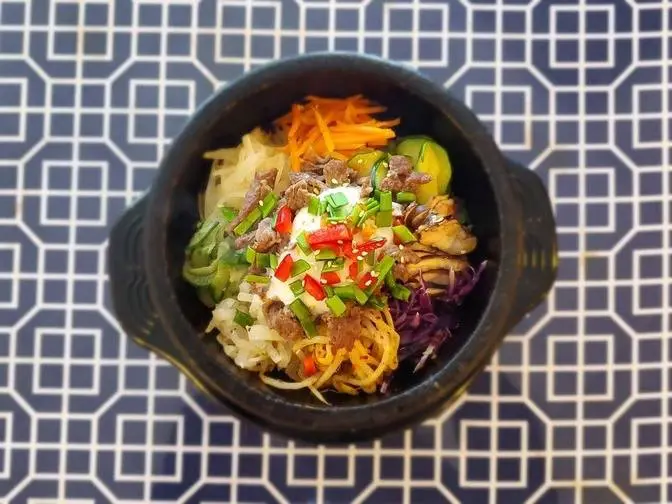
When Koreans are preparing for a big event or have just completed the feat, they replenish their energy with meat. The most popular types of meat are beef, pork, and chicken, and each has a special place in the Korean cuisine. Beef has always been considered a precious food. Cattle symbolized strength and endurance, and in agricultural societies, they were the most important asset of a family. Hence, beef was only served to important guests or at important events. Even to this day, beef is considered to be of a higher quality than other varieties of meat. The most popular Korean beef dishes are wanggalbi and bulgogi, which are now equally well-known abroad. Both dishes involve marinating the beef in fruit-based sauces that flavor and soften the meat before grilling it to perfection. Statistics show that Koreans have pork approximately once every three days. The most popular pork dish is samgyeopsal, the go-to food to alleviate fatigue. Samgyeopsal rids the body of toxins and strengthens the immune system, which is why it is most often sought after in spring when the yellow dust level is high in the air and in the exhausting heat of summer. Samgyeopsal has also established itself as a health food because of the custom of having meat wrapped in vegetables, or ssam.
Sizzling sounds that make the mouth water.
No Korean can resist the temptation of meat.
Every slice restores energy.
Since the past, Koreans have eaten meat before and after a big event to replenish their energy.
This time, we set off to explore the story of tasty and nutritious meat.
For Koreans, beef is considered the most precious kind of meat.
In the past, cattle were a family's most valuable asset and a symbol of productivity.
Strong, sturdy, and dependable, cattle were the most prized livestock.
Koreans believed that taking care of their cattle as they would their children would
bring them good fortune.
Barns were built close to the family and checked upon day and night.
Even markets specializing in cattle trade emerged.
Koreans have always shown extensive attention to everything concerning the cattle.
When it comes to the deboning process, the ribs get the most attention because this is
the cut that's served at the most important occasions.
One of the most prized delicacies in Korea, hwanggalbi, juicy meat steeped in a rich marinade.
Compared with other types of meat, galbi requires much more time and care to prepare.
It's a more expensive cut, too, and symbolized wealth in the past.
But as Koreans say, meat is the best when it's grilled and ripped apart with teeth,
and galbi meets all of those conditions.
In Korea, the best beef galbi is suwon galbi, which has a history dating back to the Joseon
dynasty.
The galbi that was served for breakfast to King Jeongjo, who built the fortress in Suwon,
was the beginning of today's hwanggalbi.
There are numerous theories about why suwon galbi came to be known as hwanggalbi.
Many Joseon kings after King Jeongjo came to enjoy the galbi, so some believe that the
hwang in hwanggalbi denotes a king.
Others argue that the hwang means large because the ribs in hwanggalbi are more than double
the size of regular galbi.
Normally, meat attached to bones is tough because of the tendons, but Korean galbi meat
is surprisingly soft.
The secret lies in the knife marks.
When preparing suwon hwanggalbi, an important step is to slash through the tendons.
Flavor is added with sauce.
To emphasize the essence of the meat, suwon hwanggalbi uses a marinade based on salt and
sesame oil.
Galbi is marinated in the slightly sweet sauce for a day to get that tender, flavorful taste.
Suwon has long been home to the largest beef market in Korea, so locals would serve their
guests a generous amount of galbi.
The beef is seasoned with salt, so it has a clean taste.
You can enjoy the original taste of beef galbi.
In the 1980s, when Korea was experiencing fast economic growth, galbi restaurants with
a large garden started to appear in Suwon.
That's when suwon galbi began to change into a more popular food.
Koreans believe that the flavor of hwanggalbi depends on the quality of the charcoal used.
Pork and chicken taste better when grilled over an ordinary fire, but beef galbi requires
a charcoal fire to really bring out its flavor.
This is why galbi restaurants invest considerable effort into finding good charcoal that will
preserve the meat's juicy flavor and infuse a smoky aroma.
Charcoal can also remove unpleasant gamey odor, and its far-infrared rays make the meat
more tender.
The gentle heat also prevents the meat from becoming tough.
Hwanggalbi is now a widely enjoyed food.
To Koreans, it's the taste of fine dining.
But there's another marinated beef dish in Korean cuisine that is just as popular, if
not more.
The food that comes to mind when talking about Korean meat dishes is bulgogi.
Its sweet, delicate taste is enough to satisfy even those who are new to Korean cuisine.
It's been praised by noted figures around the world, and the successful bulgogi restaurants
abroad attest to its fame as an icon of Korean cuisine.
But this kind of global popularity is nothing new.
In fact, it began over a thousand years ago.
During the Goryeo era, when envoys were sent to China, a bulgogi chef was always part of
the delegation.
The royal court of China prized the taste of bulgogi above the value of gold and silver.
Korean aristocrats also made sure to serve bulgogi at feasts and to important guests.
What fired this extensive popularity of meat was the brassiere.
The big container for the charcoal and the grill were easily portable, making it convenient
to cook meat anywhere.
How is it?
It's really good. It's juicy, tender, really sweet too. I'm really enjoying it. It's really
good.
So people all around the world enjoy bulgogi, and it's something that every Korean grows
up with. But we kind of take it for granted. We don't really realize that there's nothing
else around the world quite like it. Tender texture and that sweet, balanced flavor that
makes it something really special.
With layers of flavor, bulgogi is easy to eat and digest, even for young children. It
can stand alone as a main meal and be prepared easily at home.
In Korea, bulgogi is a common, readily available dish for everyone.
The light texture of the meat is not characteristic of the particular cuts used, but rather a
result of its method of preparation. Bulgogi is made with thinly sliced loin or tenderloin.
The marinade is made by mixing soy sauce with sesame oil, sugar, and fruit. This is where
the secret to the taste of bulgogi lies.
The fruit used in the sauce is acidic, which softens the meat by breaking down the muscle
tissues. The meat is marinated at low temperatures for over 12 hours to enrich the taste.
In Korea, seasoning is usually used on tough meat. Ground or juiced fruits like pears,
kiwi, and pineapples boost enzyme activity and soften the meat.
There are many ways to enjoy bulgogi. It can be grilled, braised, or boiled. The most popular
method is to cook it in a big pot so that it can be shared with others.
Initially, bulgogi was grilled, but the preparation method began to diverge in the Joseon dynasty.
The introduction of wide stew pots made it easy to boil a variety of ingredients together.
Unlike grilled bulgogi, which quickly becomes dry, serving bulgogi in a stew keeps the meat
moist and juicy.
As the stew form developed, the ingredients became much more diverse. Glass noodles, green
onions, and other vegetables were added to the stew, changing the overall taste of the
dish. Depending on the ingredients used, bulgogi can take a different flavor, a whole different
style.
With their weighty girth and strength, pigs have long been considered harbingers of health
and wealth in Korea. With just one pig, an entire village could have a hearty feast.
It was a generous source of energy.
Pork is the most readily available meat in Korea. Thanks to its low cost and high versatility,
it can be prepared by using any of the typical Korean cooking methods. It wouldn't be wrong
to say that pork dishes embody all the characteristics of Korean cuisine.
So in Korea, when you think of pork, Koreans automatically think of samgyeopsal. This is
pork belly. Now, 60% of all the pork consumed in this country is in the form of samgyeopsal,
and it's the perfect meat for any occasion, whether it be at a restaurant, cooking at
home, even on a trip, on the beach, at a picnic. But here's the thing, samgyeopsal was first
enjoyed in a very unexpected place.
Sizzling sounds of samgyeopsal and a shot of soju. This is a typical scene after work,
when Koreans recharge their energy with golden brown samgyeopsal and long chats with their
friends. Today, samgyeopsal is common all across Korea, but its history is less than
30 years old. Composed of alternating layers of meat and fat, samgyeopsal first emerged
in the coal mining towns of Gangwon province.
The miners in the 1960s were often seen holding a bundle of pork. As the cheapest meat, pork
was their solace and happiness after a long day of hard labor. They believed that well-cooked
pork would wash away the dirt piled up inside their bodies.
The pork belly enjoyed by the coal miners spread across Korea as samgyeopsal. It fast
became a national favorite, because along with its savory taste, the non-saturated fat
in samgyeopsal is known to lower cholesterol levels and clear the arteries.
Samgyeopsal tastes best when you have a balance between lean meat and fat. This kind of samgyeopsal
is soft and not too greasy, making it popular among Koreans.
Korea's pork comes from pigs that are six months old and weigh about 120 kilograms.
About 20 to 30 kilograms of samgyeopsal is obtained from one pig. Statistics show that,
on average, Koreans have samgyeopsal about once every three days. That amounts to 280,000
tons in total per year.
And the way to eat samgyeopsal is to wrap it in vegetables. A piece of samgyeopsal,
raw garlic, chopped chili peppers and ssamjang sauce, all wrapped together in a big piece
of lettuce. Of all the meat dishes, samgyeopsal is most commonly eaten in this way.
The layer of fat in samgyeopsal melts over time. But because the meat part can become
dry, Koreans began to eat samgyeopsal with vegetables to make up for the loss of moisture.
Moreover, vegetables provide fiber and vitamins that are lacking in meat, making samgyeopsal
and vegetables a perfect combination.
Samgyeopsal is a social food. It's a meal you gather around to unwind and to recharge
at the end of a long day. In general, Koreans tend to ascribe certain foods to certain moods
and situations. And what began this custom was none other than meat.
Four sturdy trotters supporting the heavy body. They are considered a source of strength
and are cooked into various dishes around the world.
Korea too has its dish of pig's trotters, tteokbal.
Koreans often enjoy pig's trotters as a night snack. Low in calories and beneficial for
the liver and the immune system, tteokbal is known for its ability to replenish the
body's energy.
In the 1960s, Koreans fell in love with tteokbal when restaurants began to offer it cooked
North Korean style. Now, tteokbal is a go-to night snack.
The pig's feet are cleaned, then marinated for half a day in a sauce made with various
medicinal ingredients and fruits.
What's interesting is that there is no one way to prepare tteokbal. Each restaurant has
its own secret sauce.
The juice from pig's feet adds to the rich flavor. The meat is sliced thin and the fat
thick.
The combination of soft, flavorful meat and a chewy fat layer holds the key to the taste.
The best condiment for tteokbal is pickled shrimp, which breaks down the protein and
makes tteokbal easier to digest and complements the chewy texture of the fat.
In Korea, tteokbal restaurants pay close attention to their pickled shrimp, so much that they
will choose to make their own.
It's hard to get tired of jokbal. High in protein and low in calories, it's the perfect
comfort food for Koreans.
Filled with a savory aroma, a samgyetang restaurant is first on the list when Koreans feel that
they need a boost of energy.
Made with strong broth, plenty of rice, and a whole chicken, samgyetang is enjoyed all
year round as a restorative food. Every spoonful is packed with nutrition and flavor.
A three-month-old chicken is boiled in chicken feet broth. Samgyetang is a relatively simple
dish that does not use any particular seasonings or techniques. The only rule is to cook it
for a long time.
This is to make the meat tender and the broth thick and rich. Samgyetang is particularly
popular in summer, when the heat saps everyone's energy. Koreans believe that a bowl of hot
samgyetang is enough to bring strength back.
Samgyetang is often called a symbol of mother's love, because Koreans believe that it's fit
to be served to an important, but rather difficult guest, the family's son-in-law.
From long ago, Korean women would make samgyetang with their strongest hen for their son's in-law.
Samgyetang was a dish that could be made, from start to finish, at home.
A bowl of samgyetang, made with the best ingredients in the house, symbolized a mother's wish for
her daughter's happy marriage, and her concern for her son-in-law's health. The mother-in-law
cuts off the best part of the chicken for her son-in-law. This is a mother's love, and
the reason that samgyetang is synonymous with healthy, hearty food.
Korea has always been a culture that's appreciated the culinary power of meat. Nothing else quite
sticks to the ribs in the same way, nothing else quite has that same satiety. To gather
around a table full of sizzling meat or bubbling broth is to feed the body and the soul.
Full of life and energy, meat, once so precious, has long remained Koreans' favorite for replenishing
the soul. Having meat is a full sensory experience, complete with sizzling sounds, mouth-watering
aromas, and golden flavors. Locked in every piece of meat is the strength to live today.
Meat gets Koreans back on their feet day after day. It is the tasty source of energy that
gives the nation its powerful driving force.