
Foco na Arte- Norman Rockwell
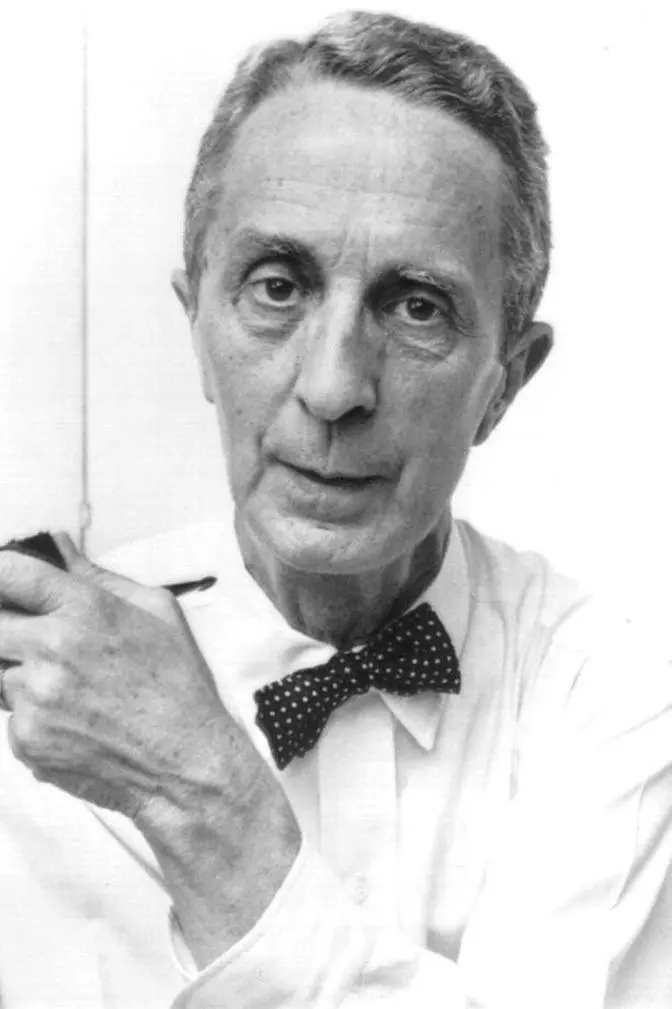
Hi guys, I'm Simone Silvério and this is Foco no Que Interessa.
Today the focus is on art and we're going to talk about Norman Rockwell.
For those who don't know, Norman Rockwell is an illustrator.
In fact, he is a painter who makes illustrations.
Illustration was a very common thing in the early 20th century,
especially in the United States, where Norman came from.
The illustrators illustrated articles and magazine covers.
Norman Rockwell is probably the most famous of these illustrators
and he had a very interesting characteristic
and that's why I chose Norman Rockwell to make our first video here on Foco na Arte.
He used photography to compose the illustrations.
The use of photography in art is very old.
In fact, the photographic devices, the dark camera,
were already used since the Renaissance.
Now, Norman Rockwell used it in a very interesting way.
First, he composed the image he wanted,
he made a sketch, a very fast sketch, with charcoal,
and then he went after the scene objects he wanted,
the locations and the models.
Norman never drew.
He was an exquisite artist, an exquisite painter,
but he never drew from his head.
He always needed something in the front.
So, at first, he worked with live models
and then he realized that the models got tired,
spending a lot of time making an expression of smile,
an expression of astonishment,
keeping the position,
it gets tiring, hard.
When he accepted the task of illustrating Tom Sawyer's adventures,
written by Mark Twain, a classic of American literature,
he traveled to a place to take pictures of the landscapes
and bring them back to put in the illustrations.
And then, back at the studio,
he hired a model to pose for him in the situations he wanted.
From this work, he realized that his illustrations
became much more dynamic,
the expressions of the most true models,
he was able to capture quickly,
the expressions were always fresh.
And then he saw that this was the way to renew his work.
He himself had a lot of prejudice,
just like many other art critics.
This was a very frequent debate.
Do you want to be an artist or a photographer?
Because the photographer at that time was not seen as an artist.
Photographing to draw later, to transform into a painting,
was seen as cheating, as cheating.
And Norman Rockwell himself had this conception too.
So he resisted a lot.
And for a long time, he was ashamed to speak and show
that this was how he worked.
On the other hand, this made a lot of difference in his work.
And he ended up transforming himself,
not into a photographer,
because he himself never photographed, never clicked,
but he turned into a very talented director.
All the models who worked with him comment on this.
The way he knew exactly what he wanted,
he knew the pose, he built,
and he knew the expression he wanted.
So he himself made the scenes,
he made jokes, he made jokes to get it.
He photographed a lot of children to get the expressions.
He had a very dynamic way of directing the models on the set.
He told the photographer that, in fact,
he himself had trained how he wanted that scene,
what was the framing, where the light should come from,
what was the feeling, the face that scene should have.
The technical part of the photography,
the photometry, the focus,
that was what the photographer did.
And then he directed,
and when he thought that the model was with the exact expression he wanted,
he would say to the photographer,
now, click, click.
He would direct the model and the photographer.
So in his studio, he had, in addition to the studio,
the cameras, the equipment, the laboratory, the chemists, everything.
And then the photographer would take the films to the laboratory,
he would do all the tests.
But the next day, Norman would choose what he wanted,
and then the photographer would enlarge it
to put it, to transform it in the prints.
He would even take 200 photos for one print.
In fact, he photographed all the elements separately.
The people, he hardly photographed two or three people together.
He photographed the people in the poses he wanted,
the scenery, the objects.
And then, with the projection equipment,
he used the equipment to throw on the screen,
in real size, the elements
according to that first draft he had made.
From this projection of the pieces,
he drew and then he painted.
It is very interesting that all the photographs were made in black and white.
And then he had the freedom to add the color palette he wanted
to give the signature, his face.
I am sure that many of these images that you are seeing are already known.
Norman Rockwell had a characteristic,
practically a chronicler of the American way of life.
He actually helped to build the image of what this American way of living is.
He tried to portray the scenes of everyday life,
but he always had a political message,
an ideological bias in the images he created.
For many years, he made the covers of the weekly magazine Saturday Evening Post.
This was one of the main magazines
that had a lot of circulation at that time,
during the 20s, 30s, 40s, even 50s.
And the covers were all illustrated by him.
He had the freedom to make the engraving he wanted,
with the theme he wanted,
which did not necessarily have to be linked to the magazine's content.
Many times, he was commissioned to make an illustration
on a specific subject to illustrate an article.
He was hired by companies, he did a lot of advertising,
the main American companies,
cars, soup, Campbell's,
the images he made for Campbell's are very famous,
he made a lot of scenes to illustrate the advertisements of these companies.
With this, Norman's work is very significant
in the life of the American family in this period,
which goes from the beginning of the 20th century,
more or less from the 10s, 20s, until the 70s,
which was the time he was really active.
So, just to give an example,
I want to highlight an image that shows his commitment
to the issues of society that were happening.
This image you are seeing
is called The Problems We All Live With.
This little girl is Ruby Bridges.
She was the first black girl, the first black child,
to attend a school, typically white, of whites,
as soon as the law that prohibited segregation in schools was passed.
This scene, this image, shows the girl going to school,
escorted by four police officers, four sheriffs,
to protect her because she had received many threats of violence.
Her life was in danger because it was an affront
to the attendants and the segregationists in that school
that a black girl attended.
This image was the cover of one of these magazines
and was later exposed in Congress for more than 50 years.
It was even exposed in Congress
when, in 2011, Ruby was received by Barack Obama.
These images of Norman are part of the American imagination,
but they are also very important from an artistic point of view
to show how photography and illustration are connected.
I find it fascinating how Norman brought photography to painting
and, in fact, how his painting is practically a photograph,
an edited photograph, a photomontage
transformed by his artistic talent into paintings.
Well, if you are interested in this subject,
I recommend that you take a look at this book,
Norman Rockwell, Behind the Camera.
This book shows his entire creative process,
how he did it, how he photographed the models
creating this infinite background, a white background,
all the process he used with the photographers.
Anyway, for those who like photography and art,
it is very interesting to see the work, the description of his work.
This book is American, but it is on sale here in Brazil.
There are several good bookstores that sell it.
You can buy it in person and online.
It is worth it. I highly recommend it.
Well, we are finishing here.
Today's focus was on art.
If you are new here, you can see that last week
we recorded a super cool interview with Daniel Freitas,
who is a family photographer.
We made a fun game where you can find out a lot about me and him.
If you liked this video, if you want to support our channel,
subscribe, like it, leave a comment below,
tell us what you think.
And remember that there is a new video here every week,
so stay tuned.
Next week there will be more.
You can activate the notifications on the bell
to receive a warning when a new video appears.
And that's it, guys.
Kisses, see you next time.
Are you recording?
Are you okay?
What?
Are you recording?
Is my clothes good?
Yes.
Is my look good?
Very good.
As he told me.
Hi guys, where are you going?
Here is good.
Here is good?
You want the palm, right?