
What Happened to the Brother of Louis XVI?
On the 22nd of July 1746, Louis Dauphin of France, the son of King Louis XV, lost his
dear wife, Maria Teresa Raffaella of Spain.
Three days before, to the couple's joy, their only child, a daughter, had been born
at Versailles.
But now the Dauphin was in mourning, and it was with great difficulty that the king
managed to take his son away from the deathbed of his wife, to whom he had been very strongly
attached.
As political matters were more important than how the Dauphin was feeling at the time,
it was dictated that he should marry again, and secure in this way the succession to the
French crown.
The Spanish court had wished to replace the deceased Infanta by her sister, but six months
later, Louis Dauphin of France was married to Maria Josepha, a daughter of Augustus III,
Elector of Saxony and King of Poland.
The architect of the Saxon marriage, as it was called, was the Minister for Foreign Affairs,
the Marquis d'Argenson.
According to Voltaire, this far-sighted statesman was worthy of being Secretary of State in
the Republic of Plato.
Although Madame de Pompadour, the mistress of King Louis XV, was one of the people who
helped bring about this marriage, she did not hesitate to play a part in the downfall
of d'Argenson.
The explanation given was that the Spanish court resented the marriage to such an extent
that only the dismissal of the French Minister of Foreign Affairs would satisfy it.
The court of Versailles was a hotbed of intrigue and machinations, where courtiers and ministers
lived and worked only to secure their own interests.
In a letter to her brother, Madame de Pompadour described the court by saying,
Everywhere where there are human beings you will find deceit and every vice of which mortals
are capable.
One must endure them, along with their faults, and pretend not to notice them.
But the Dauphin and his second wife noticed them, and did not like what they saw, so they
chose to live in their own apartments, away from the amusements and court entertainments
as much as they could.
The Dauphin was a very moral man who preferred to dedicate his time to intellectual and religious
interests.
It took some time for the Dauphin to warm up to his second wife, but when that happened
the couple became devoted to each other.
A year after their marriage, Maria Josepha delivered a stillborn son.
Although suffering after such an experience, she proved to be a strong lady and supported
her husband, who was deeply affected by the death of his two-year-old daughter by his
previous wife.
The following year, in 1749, Maria Josepha delivered another stillborn son.
It was in August, a year later, that the couple rejoiced when they had a child who lived.
But the court was not enthusiastic about the news, and Madame de Pompadour wrote from
Chazy to her brother, saying,
I am aware of the article about your marriage.
It has appeared in several gazettes.
It is, however, a very small grievance.
A real one is that Madame la Dauphine has given birth to a daughter, but, as this is
the eleventh day, and she is in excellent health, she will give us a prince next year.
We must console ourselves with that hope, and not think, if we can, of the little Madame.
I have seen her today for the first time.
I could not make up my mind to do so before.
She is very delicate, I doubt if she will live.
The following year, in September 1751, Madame la Dauphine gave birth to the long-awaited
prince, Louis-Joseph Xavier.
The news that an heir to the French crown was born was celebrated in Paris, where the
bells of the churches started to ring.
At Versailles, the terrace of the palace was decorated with illuminations, and many people
watched the fireworks, which were set off for the special occasion.
His grandfather, the king, gave Louis-Joseph the title of Duke of Burgundy, and his care
was entrusted to Marie-Isabelle de Roran, Duchess of Talar, a granddaughter of Madame
de Ventadour.
Madame de Talar was responsible for the protection and care of the Duke of Burgundy for
two years, and when she gave up her position, her niece, Madame de Morson, took up the role.
The little Duke of Burgundy spent his first years of life in the company of his sister,
Marie-Zéphirine, but she died when she was only five years old.
By that time, the Dauphin and his wife had had another son, Louis-Auguste, Duke de Berry,
who was three years younger than the Duke of Burgundy.
Although the Duke of Burgundy used to tease the Duke de Berry by imagining sins for him
to confess, the two brothers would develop a strong bond of affection.
They would later be joined by their two younger brothers, Louis-Stanislas Javier, Count of
Provence, and Charles-Philippe, Count of Artois, and a sister, Marie Clotilde.
But the parents lavished all their attention and affection on the Duke of Burgundy, who
became their favorite child.
His mother affectionately called him Chou d'Amour.
The Duke of Burgundy was not only the heir to the throne, but he was also a very intelligent
child who possessed from a young age the qualities of a perfect monarch.
As he was approaching his seventh birthday, the Duke of Burgundy was passed over to men.
In the 18th century France, tradition dictated that boys of royal blood and of the nobility
had to be educated by a governor.
So the little Duke was separated from his governors and his education was entrusted
to the Duke de la Vauguillon, a severe and authoritarian man.
The Duke de Berry suffered greatly from the sudden departure of his brother, who had been
his best playmate.
The Duke of Burgundy loved studying and very quickly developed a sense of responsibility
and strength of character despite his tender years.
According to his tutors, he was by far the most promising of the princes.
Adored by his parents and loved by his siblings, the Duke of Burgundy was happily enjoying
his childhood.
But one day things changed suddenly.
The Duke of Burgundy had a wooden horse on wheels on which one of his attendants drew
him about in the apartments at Versailles.
When the prince urged his conductor to excessive speed, in turning a corner he went against
a door which stood open and the prince was badly hurt in his hip joint.
Another account of how this accident happened was that one of his playmates pushed him and
the prince fell off his wooden horse.
For fear that his playmate would be punished, the prince promised he would not say anything
about it.
How this unfortunate event occurred was not exactly established, but what happened after
the accident is known for certain.
The Duke of Burgundy started to limp and on examination the doctors discovered that
a tumour had grown on his femur.
When discussing how to proceed further, the surgeons disagreed and shared their contradictory
opinions with a dauphin who said,
Gentlemen, I shall understand you better if you speak one at a time and divide yourselves.
You who say the joint is dislocated pass on this side, you who say the contrary take
the other.
Eventually the surgeons decided to remove the tumour by performing a surgery.
Before the procedure the Duke of Burgundy wanted to see the instruments that would be
used.
He handled them with admirable coolness and then abandoned himself to the preparations
of such a difficult operation.
The Duke, who was fully awake during the operation, showed great courage by enduring the very
painful procedure without complaining, only uttering one or two cries.
After the surgery the Prince did not lose courage and sat up in bed as if he only had
a slight indisposition.
But soon he became wheelchair-bound and his studies were interrupted.
The rudimentary medicine at the time was not enough to improve the Duke's condition.
The infected instruments that had been used to operate on his leg caused injuries to the
bone and tuberculosis that had initially affected the bone of his leg spread to the lungs.
For the following months the Duke of Burgundy lived in agony and painful discomfort.
The Duke de Berry, whose own passage to Maine had been brought forward by a year, kept his
suffering brother company and tried to comfort him as much as he could.
But soon the Duke de Berry was seized by fever and, to his sadness, he was not able to stay
with the Duke of Burgundy, who was dying.
His mother attended her adored son on his death-bed.
After his passing, Madame La Dauphine, who was barely able to announce the death of the
Duke of Burgundy to the rest of the royal family, fainted in the King's arms.
The scene was heartbreaking.
The little princes, the Count of Provence and the Count of Artois, burst into tears.
Madame La Dauphine was leaning back in an armchair, with his head resting on the shoulder
of the Duke de la Vauguillon, who was pale and speechless.
And the King and Queen were barely able to comfort their children.
On the 22nd of March 1761, the royal family lost their dearly loved prince, who was not
yet ten years old, and France lost the heir to the throne.
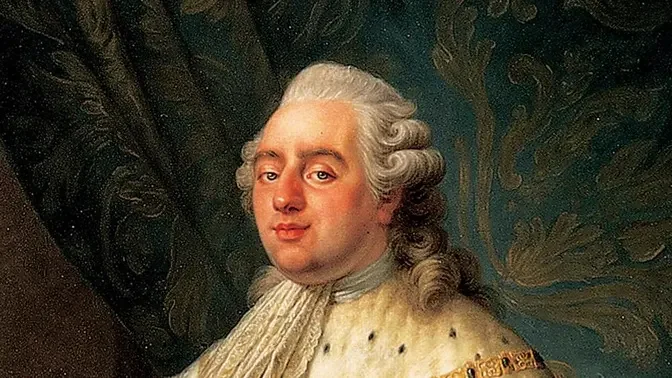
After his father, the Duke de Berry would be next in line to the throne.
His education of becoming a monarch started at the tender age of seven.
He was twenty years old when he was crowned King of France as Louis XVI.
The death of his brother had a lasting effect on him.
And in remembrance of Louis-Joseph Xavier, the King named his first son after him.
One is tempted to ask the question, if Louis-Joseph, Duke of Burgundy, had not died so young, would
history have been different?