
Norman Rockwell's "Black" Art
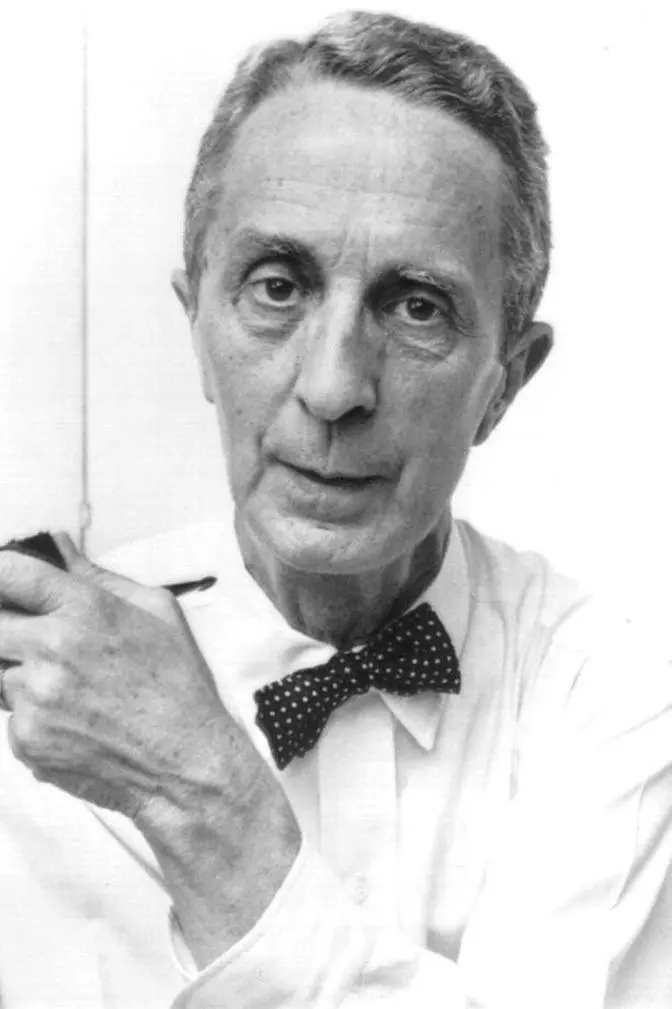
Norman Rockwell.
When the gifted artist illustrated for the Saturday Evening Post, he was told by George
Horace Lorimer, his employer, never to show colored people except his servants.
What could he do?
Rockwell had to do just that.
Why?
Steven Spielberg stated, Rockwell painted the American Dream better than anyone.
The Post did not want to offend white readers by including colored people in their American
Dream.
Black Americans found their way onto Rockwell Post covers in minor roles.
Some subjects did not even face viewers and could be easily overlooked.
The first cover with a black person was in 1934 with That-A-Way, depicting a young black
boy pointing in the direction taken by a thrown rider's horse.
The full treatment cover appeared in 1940, depicting a wealthy man attended by a barber,
manicurist, and a black shoeshine boy on his knees facing backward.
The cover, Boy in Dining Car, in 1946, shows a youth pondering the menu with person hand.
Looking on is the black waiter.
Red Block, 1949, depicts a transport van locked by a small dog in a narrow urban alley.
It showed several onlookers, including black children.
Rockwell found opportunities with other publications to show dignified blacks, beginning in the
mid-1920s through the mid-1940s.
The Banjo Player was created for a Pratt and Lambert advertisement that appeared inside
the Saturday Evening Post in 1926.
Perhaps one of the earliest examples of Rockwell's acknowledgment of black Americans appeared
in American Magazine in 1936.
Commissioned to illustrate Kenneth Perkins' love of Wonka, he painted a beautiful, stylish
young black woman in a church scene, sitting with working-class blacks, coarsely dressed,
observing her.
It was written that Rockwell was a compassionate man, and this simple phrase reflected his
philosophy.
Quote, I've been reading up on comparative religion.
The thing is that all major religions have the golden rule in common, do unto others
as you would have them do unto you.
Not always the same words, but the same meaning.
End quote.
Norman Rockwell was a progressive thinker, even while creating covers for the Post, so
it comes as no surprise that the same man who captured American dream images, values,
and ideals would believe in justice and equality.
After employment at the Post in 1963, having produced 321 cover paintings, his career was
not over.
The next 10 years, Rockwell came into his political and artistic own.
In 1961, he married his third wife, retired English teacher, Mary Levy Mollie Henderson.
His biography notes that she was the impetus behind his social and political energy, used
to produce much of his civil rights art.
Rockwell created covers for Look magazine and was encouraged to explore social issues
in his illustrations.
The problem we all live with appeared in Look, January 1964.
It shows U.S. Marshals escorting student Ruby Bridges on her first day integrating a white
school.
KKK is painted on the wall.
Social justice, also known as murder in Mississippi, appeared in 1965 in response to the murder
of three civil rights workers in Mississippi the prior year.
In 1966, Rockwell commemorated the 50th anniversary of the Peace Corps, featuring John F. Kennedy,
who hoped that the program would promote understanding between nations.
The New Kids in the Neighborhood, 1967, depicting black and white children confronting each
other with anticipation and hope for a better America together.
It addressed the tensions of racial integration.
Throughout Rockwell's career, he supported Boy Scouts of America and was employed to
illustrate in their magazine, Boy's Life.
During his 60-plus years with them, he produced 51 original illustrations.
This inclusion of a black scout suggests his imaginings of a revised American dream.
Rockwell is pictured before a painting that appears to be of a young black girl seated.
I wonder if this was finished and made public.