
The Almost Universally Misinterpreted Poem "The Road Not Taken" and the Fascinating Story Behind It
5.
The Big Bang Theory
5.
The Big Bang Theory
5.
The Big Bang Theory
5.
The Big Bang Theory
5.
The Big Bang Theory
5.
The Big Bang Theory
5.
The Big Bang Theory
5.
The Big Bang Theory
5.
The Big Bang Theory
5.
The Big Bang Theory
5.
The Big Bang Theory
5.
The Big Bang Theory
5.
The Big Bang Theory
5.
The Big Bang Theory
5.
The Big Bang Theory
5.
The Big Bang Theory
5.
The Big Bang Theory
5.
The Big Bang Theory
5.
The Big Bang Theory
5.
The Big Bang Theory
5.
The Big Bang Theory
5.
The Big Bang Theory
5.
The Big Bang Theory
5.
The Big Bang Theory
5.
The Big Bang Theory
5.
The Big Bang Theory
5.
The Big Bang Theory
5.
The Big Bang Theory
5.
The Big Bang Theory
5.
The Big Bang Theory
5.
The Big Bang Theory
5.
The Big Bang Theory
5.
The Big Bang Theory
5.
The Big Bang Theory
5.
The Big Bang Theory
5.
The Big Bang Theory
5.
The Big Bang Theory
5.
The Big Bang Theory
5.
The Big Bang Theory
5.
The Big Bang Theory
5.
The Big Bang Theory
5.
The Big Bang Theory
5.
The Big Bang Theory
5.
The Big Bang Theory
5.
The Big Bang Theory
5.
The Big Bang Theory
5.
The Big Bang Theory
5.
The Big Bang Theory
5.
The Big Bang Theory
5.
The Big Bang Theory
5.
The Big Bang Theory
5.
The Big Bang Theory
5.
The Big Bang Theory
5.
The Big Bang Theory
5.
The Big Bang Theory
5.
The Big Bang Theory
5.
The Big Bang Theory
5.
The Big Bang Theory
5.
The Big Bang Theory
5.
The Big Bang Theory
5.
The Big Bang Theory
5.
The Big Bang Theory
5.
The Big Bang Theory
5.
The Big Bang Theory
5.
The Big Bang Theory
5.
The Big Bang Theory
5.
The Big Bang Theory
5.
The Big Bang Theory
5.
The Big Bang Theory
5.
The Big Bang Theory
5.
The Big Bang Theory
5.
The Big Bang Theory
5.
The Big Bang Theory
5.
The Big Bang Theory
5.
The Big Bang Theory
5.
The Big Bang Theory
5.
The Big Bang Theory
5.
The Big Bang Theory
5.
The Big Bang Theory
5.
The Big Bang Theory
5.
The Big Bang Theory
5.
The Big Bang Theory
5.
The Big Bang Theory
5.
The Big Bang Theory
5.
The Big Bang Theory
5.
The Big Bang Theory
5.
The Big Bang Theory
5.
The Big Bang Theory
5.
The Big Bang Theory
5.
The Big Bang Theory
5.
The Big Bang Theory
5.
The Big Bang Theory
5.
The Big Bang Theory
5.
The Big Bang Theory
5.
The Big Bang Theory
5.
The Big Bang Theory
5.
The Big Bang Theory
5.
The Big Bang Theory
5.
The Big Bang Theory
5.
The Big Bang Theory
5.
The Big Bang Theory
5.
The Big Bang Theory
5.
The Big Bang Theory
5.
The Big Bang Theory
5.
The Big Bang Theory
5.
The Big Bang Theory
5.
The Big Bang Theory
5.
The Big Bang Theory
5.
The Big Bang Theory
5.
The Big Bang Theory
5.
The Big Bang Theory
5.
The Big Bang Theory
5.
The Big Bang Theory
5.
The Big Bang Theory
5.
The Big Bang Theory
5.
The Big Bang Theory
5.
The Big Bang Theory
5.
The Big Bang Theory
5.
The Big Bang Theory
5.
The Big Bang Theory
5.
The Big Bang Theory
5.
The Big Bang Theory
5.
The Big Bang Theory
5.
The Big Bang Theory
5.
The Big Bang Theory
5.
The Big Bang Theory
5.
The Big Bang Theory
5.
The Big Bang Theory
5.
The Big Bang Theory
5.
The Big Bang Theory
5.
The Big Bang Theory
5.
The Big Bang Theory
5.
The Big Bang Theory
5.
The Big Bang Theory
5.
The Big Bang Theory
5.
The Big Bang Theory
5.
The Big Bang Theory
5.
The Big Bang Theory
5.
The Big Bang Theory
5.
The Big Bang Theory
5.
The Big Bang Theory
5.
The Big Bang Theory
5.
The Big Bang Theory
5.
The Big Bang Theory
5.
The Big Bang Theory
5.
The Big Bang Theory
5.
The Big Bang Theory
5.
The Big Bang Theory
5.
The Big Bang Theory
5.
The Big Bang Theory
5.
The Big Bang Theory
5.
The Big Bang Theory
5.
The Big Bang Theory
5.
The Big Bang Theory
5.
The Big Bang Theory
5.
The Big Bang Theory
5.
The Big Bang Theory
5.
The Big Bang Theory
5.
The Big Bang Theory
5.
The Big Bang Theory
5.
The Big Bang Theory
5.
The Big Bang Theory
5.
The Big Bang Theory
5.
The Big Bang Theory
5.
The Big Bang Theory
5.
The Big Bang Theory
5.
The Big Bang Theory
5.
The Big Bang Theory
5.
The Big Bang Theory
5.
The Big Bang Theory
5.
The Big Bang Theory
5.
The Big Bang Theory
5.
The Big Bang Theory
5.
The Big Bang Theory
Frost began sharing it, with everyone taking the poem pretty seriously, as he noted after
reading to a group of college students.
He also later stated that this was despite the fact that he had been
Doing my best to make it obvious by my manner that I was fooling, Mayor Culper.
To delve further into the mystery, we must look into the interesting origin of the poem.
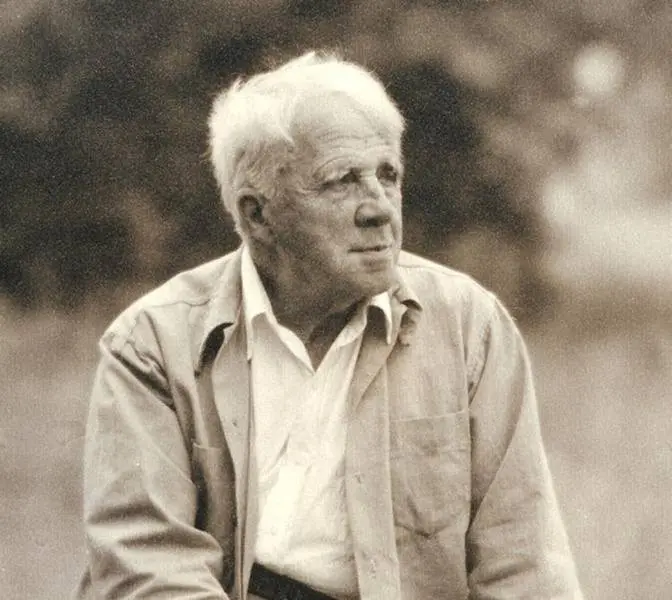
According to Frost, the poem was about his very close friend Edward Thomas, a fellow
writer and eventual poet in his last years, who Frost got to know very well during his
time in England in the early 20th century.
Frost later noted in a letter that he wrote to Amy Lau that
The closest I ever came in friendship to anyone in England or anywhere else in the world,
I think, was with Edward Thomas.
During their time together, Frost and Thomas took to frequently taking talks-walking, walked
through the English countryside to look for wildflowers and spot birds, and most importantly,
discuss all manner of topics from politics and the war to poetry and their wives and
everything in between.
Frost later noted that during their random walking about, frequently a choice had to
be made over which path to take.
Inevitably, one would be chosen for one reason or another, and after their walks Thomas would
sometimes kick himself for not taking the other path if their walk failed to result
in the sighting of anything interesting.
This ultimately caused Frost to quip that Thomas was
A person who, whichever road he went, would be sorry he didn't go the other.
When he returned to America, Frost penned the poem as a friendly, humorous jab about
Thomas' indecisiveness, sending an early draft to Thomas titled Two Roads in the Early
Summer of 1915.
Thomas reportedly misinterpreted it.
Frost then explained the poem's actual meaning, even going so far as saying that the sigh
was a mock sigh, hypocritical for the fun of the thing.
In response, Thomas noted that he felt that Frost had carried himself and his ironies
too subtly, and that
I doubt if you can get anybody to see the fun of the thing without showing them and
advising them which kind of laugh they are to turn on.
Nonetheless, the poem had an effect on Thomas, and not long after reading it, as you'll
soon see, he decided to enlist in the army.
This is something of a surprise move, as Thomas was not noted for being particularly patriotic,
at least in terms of caring one way or another about the politics of the conflict resulting
in World War I.
Indeed, he was noted as being an anti-nationalist who despised the propaganda and blatant racism
against Germans being thrown about in the British media at the time.
He even went so far as to state that his real countrymen were not Englishmen, but the birds.
However, during the pair's walks, two things occurred to begin making Thomas seriously
consider what he'd do if the war was brought to him.
Would he flee for safer shores, or stand and defend his country?
One of the events occurred shortly after the start of World War I.
Thomas noted in his journal,
A sky of dark, rough, horizontal masses in NW with a third moon bright and almost orange
low down clear of cloud and I thought of men eastward seeing it at the same moment.
It seems foolish to have loved England up to now without knowing it could perhaps be
ravaged and I could and perhaps would do nothing to prevent it.
He later noted,
Something, I felt, had to be done before I could look again composedly at English landscape.
So while up to this point he had been indifferent to the politics behind the war, he now began
to consider that it really didn't matter what the war was being fought over, if the
land and all that was on it was directly threatened, it needed defending if it was
to be preserved.
The second event that influenced his decision was something he often lamented after in letters.
This concerned a matter of what he perceived to be cowardice on his part, though most of
us might consider that he was being the only reasonable one in the ordeal.
During one of Frost and Thomas' walks in 1914, they were confronted with a shotgun-wielding
gamekeeper who told them to leave the area.
Frost felt he was fully in his right to walk the land in question and wasn't inclined
to bugger off, never mind the gun pointed at him.
Frost even nearly decided to bring his fists to the gunfight, but put them down after observing
Thomas backing away as Frost was escalating the situation.
A few more choice words later and the pair parted ways with the gamekeeper, but this
wasn't the end of it.
Frost decided to go find the gamekeeper's home, and after banging on the door, the gamekeeper
answered.
At this point, Frost, no doubt using eloquence befitting a wordsmith of his stature, told
the gamekeeper off again, explaining what would happen if said gamekeeper ever chose
to threaten the pair again while they walked.
With that said, Frost and Thomas turned to leave.
As they were leaving, the gamekeeper grabbed his shotgun and chose his first target as
Thomas.
Once again, Thomas reasonably reacted by trying to exit the situation rapidly without provoking
the person who had gun-trained on him.
In the end, the pair left unharmed.
However, Thomas couldn't help but dwell on the fact that his friend had not backed down
to a shotgun in the face, while he himself reacted the opposite way.
He became woefully ashamed of what he perceived as cowardice in the matter.
It also wasn't lost on him that at that very moment, some of his other friends were
off demonstrating their bravery fighting in the war while he was safely at home.
Frost later attributed this feeling Thomas had of his perceived cowardice as the core
reason he went to war.
Essentially, Frost felt Thomas wanted a do-over and was making another attempt at testing
his mettle, this time in France.
This brings us back to the poem and the decision Thomas had been long agonizing over.
He had strong thoughts of emigrating to America to come live near Frost, stating,
I'm thinking about America as my only chance, apart from paradise, but that he also felt
drawn to the war.
Frankly, I do not want to go, but hardly a day passes without my thinking I should.
With no call, the problem is endless.
Then the poem arrived on his doorstep in early summer 1915.
And so it was that shortly thereafter, in early July of that year, he wrote to Frost
telling him of his final decision on the road he'd take.
Last week, I had screwed myself up to the point of believing I should come out to America,
but I have altered my mind.
I'm going to enlist on Wednesday, if the doctor will pass me.
Today, the poem and its thought-provoking lines are generally regarded as being the
final straw that made Thomas decide to stop brooding over what to do and finally pick
a road, finding his courage and enlisting.
This came as a surprise to virtually everyone in Thomas' life due to the fact that he
was a 37-year-old married father of three who, as noted, was staunchly anti-nationalist
and otherwise was not required to enlist.
The decision cost him his life.
On April 9, 1917, during the Battle of Arras in France, he was shot in the chest and killed
— a death that was seemingly premature.
Of course, had he taken the other road, perhaps instead of a bullet through the chest, he
may have met with a watery grave if his ship to the States had been sunk.
Or perhaps he would have spent many years writing incredible poetry that was the hallmark
of the last couple of years of his life, happily living and working next to his great friend,
Robert Frost.