
Nature that inspired Robert Frost
If walls could talk, Bennington streets would be buzzing with the stories kept inside its classic old homes.
Just over the town line in Shaftesbury, a modest stone house dates back to the 1700s.
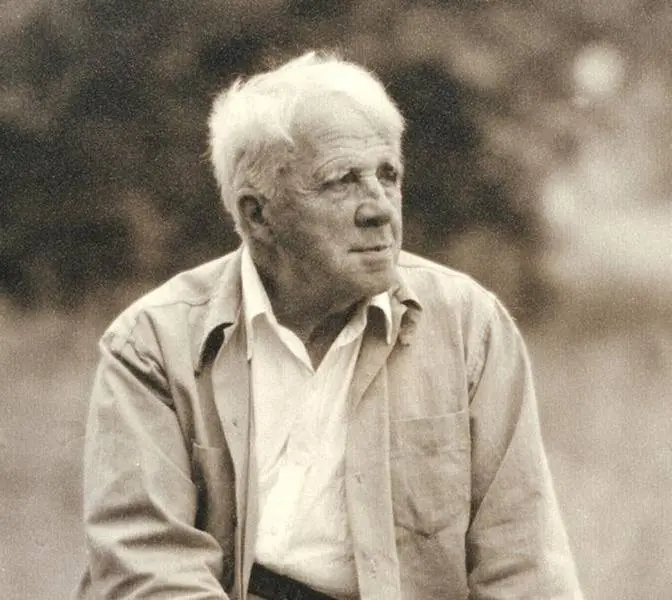
For nearly a decade, it was home to one Robert Frost.
He really, in my opinion, stepped into his prime as a poet in the Stone House.
The house is now a museum and community space owned by Bennington College.
Megan Mayhew Bergman says that in 1920, Frost moved to this seven-acre property to farm apples.
Here, he wrote his most iconic poem, Stopping by Woods on a Snowy Evening.
The great story behind that is that he wrote it after staying up all night and walking the woods on a June morning in 1922.
He said it came to him as almost a hallucination.
I mean, it was almost a fully formed poem, and I've seen the rough draft of it, and it really has minor adjustments.
And he said it contained all he ever knew of poetry, and I think he knew when he wrote that poem that he'd written his legacy.
Frost, who was a household name during his lifetime, won four Pulitzer Prizes for his poetry.
People don't think of Frost as being a modernist, but he was.
He was leaving this era of flowery, ornate language, and he was moving toward plain-spoken speech, the voice of the everyman.
And that in itself is really profound.
His work often explored nature and rural life, and so do the poems of another best-selling Pulitzer winner, former Bennington College professor Mary Oliver.
One of the interesting things about Oliver that is similar to Frost is that they get painted as these sort of soft, benign, nature-writing poets
when really, if you write about the natural world, you understand that there are savage elements.
Mayhew Bergman knows that well herself.
She's a fiction writer and journalist who reports on the American South and climate change for The Guardian.
I think you can't live in Vermont and ignore the natural world.
It's pressing in on you from every angle, and you ignore it at your own peril, I think, and your own, you know, the impoverishment of your imagination.
As far as we know, no one has yet written a spooky thriller about Bennington, but maybe someone should.
Behind us here is the enormous Glastonbury Wilderness.
Rumors abound about nearby Glastonbury Mountain, so much so that the area has been casually dubbed the Bennington Triangle.
Tyler Resch is a former journalist turned librarian.
He's also the author of several books about the region, including one about the ghost town of Glastonbury.
The town of Glastonbury is very high elevation.
The land is not good for agriculture, so the only business that can be conducted up there has to do with timbering.
A whole series of trenchant families who came and went.
Glastonbury declined so much that it was unincorporated by the state in 1937.
Between 1945 and 1950, at least five people disappeared in the deep woods around the mountain.
The first was in 1945.
A gentleman named Mitty Rivers, who lived in Woodford, disappeared while hunting and was never seen.
Paula Weldon was in December 1946.
Bennington College student.
He started up the long trail and was never seen again.
Never. No evidence of any kind.
Your speculation is as good as anybody else's.
Wild speculation includes something paranormal or a serial killer.
Maybe even a mountain cat?
You don't buy into any foul play?
No, I don't. Also, there hasn't been any for a long time.
Would you have any reservations about hiking all over Glastonbury Mountain now?
No, I might get lost.
Tyler Rush says that two of the disappearances are mysterious.
The two that he mentioned, the Bennington College student and the hunter.
As for the Bennington Triangle, well, that myth still persists.
Back to the Frost Stonehouse Museum.
They're open May to October.
In addition to the academic work they do there, they have readings and workshops and even concerts on the lawn as well.
So, a lot going on there.
Next, pottery puts Bennington on the map.