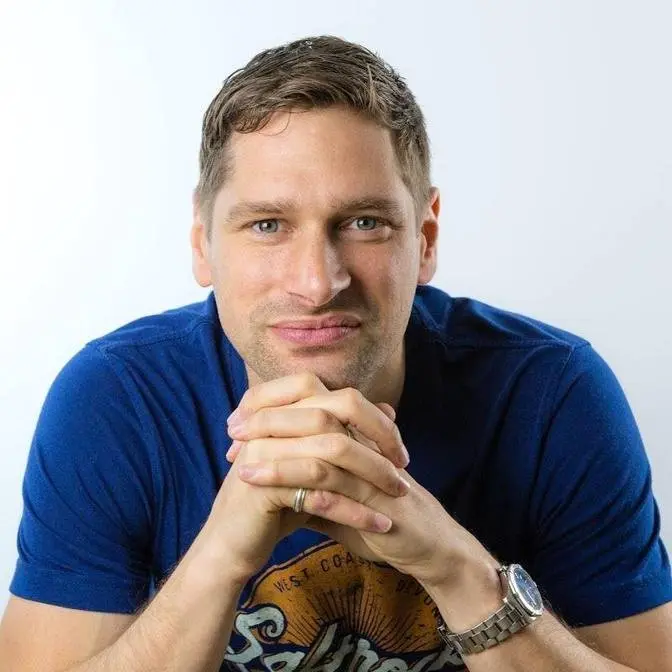
In this episode of the Fearless Business Podcast, Rob Moore - @RobMooreDisruptors - joins seasoned business coach Robin Waite to talk about entrepreneurship and money mastery.
Rob Moore is the acclaimed author of bestsellers like "LIFE LEVERAGE" and "MONEY" and serves as the host of the widely followed DISRUPTIVE ENTREPRENEUR podcast.
And check out Rob Moore's amazing community at: ► https://rob.team
SUMMARY OF VIDEO
***
Rob is a self-made property investor, entrepreneur, accomplished author, record-breaking individual, dynamic speaker, skilled pilot, and proud father. He holds co-ownership in seven companies specialising in property, lettings, and finance. Rob has forged partnerships with some of the most prominent names in the business and household spheres. He has made appearances as a business mentor on prime-time TV shows, including those on Living, Channel 4, the BBC, The Independent, and The Business Channel. Moreover, Rob is dedicated to mentoring individuals striving for success, helping them attain greater financial prosperity and recognition in both business and life.
In the world of entrepreneurship, there are those who play it safe, and then there are those who embrace the challenges with a fearless attitude. Rob Moore, a renowned entrepreneur, author, and coach, undoubtedly falls into the latter category. In this insightful interview, we had the privilege of delving into Rob's world, exploring his journey, mindset, and the secrets behind his remarkable success.
What We Discussed With Rob Moore On The Fearless Business Podcast Fearless Entrepreneurship:
1. Rob Moore's journey from art to entrepreneurship highlights the importance of embracing change and making data-driven decisions in the world of business.
2. Role of Mentorship: Mentorship plays a crucial role in accelerating entrepreneurial growth by providing valuable insights and guidance to avoid common pitfalls.
3. Data-Driven Decision-Making: Rob Moore's success is built on data-driven decision-making, using available information and market insights to make strategic choices.
4. Harnessing Fear: Fear can be a motivator for entrepreneurs, driving them to make better decisions and confront challenges head-on.
5. Money Mastery: Rob Moore is an expert in money mastery, with a focus on helping others understand financial management through books like "Money Matrix" and "Money Loves You."
6. Rob.team: Rob's platform, https://rob.team, empowers entrepreneurs with a wealth of resources, courses, and a supportive community to help them succeed.
7. Community Support: Being part of a supportive community is vital for entrepreneurs, allowing them to share challenges, seek advice, and celebrate successes together.
8. Future Impact: Rob Moore's fearless approach and commitment to empowering entrepreneurs make him a leader in the field, with a growing impact on the world of entrepreneurship.
00:00 - How To Master Your Money Mindset With Rob Moore 02:19 - The Concept of Fair Exchange 11:20 - Pricing to Attract Quality Clients 29:43 - The Importance of Coaching and Mentoring 33:29 - How to Tell the Good Coaches from the Rubbish Ones 37:15 - Impact of Growth on Customer Service 54:08 - How to Delegate Low Priority Tasks
Hey folks, I'm really excited to be outside the offices of Rob Moore, founder of Progressive
Property, the host of the Disruptive Entrepreneur podcast, who has been in the top 10 podcast for a
number of years, and also the author of bestselling books, Life Leverage and Money. And today we're
going inside to interview Rob. Rob's going to be interviewing us for the Fearless Business podcast
and also for his channel. Super excited. Let's go. It's a real privilege and an honor to be sat
alongside Disruptive Entrepreneur, Mr. Rob Moore, who has several bestselling books and actually
very little known fact, this was one of the first self-development books, Life Leverage, which I read,
which started me out on my journey as an entrepreneur and got me into the coaching
space, which is hopefully something that we're going to be talking about a bit later on. So
appreciate you taking the time out of your busy schedule to meet up with me today, Rob.
Pleasure. That's nice to hear. And my books are making a difference.
It is. Massive difference. And money as well, completely changed my mindset around money.
But these are here for a bit of shameless self-promotion for you, obviously, for the podcast
and your massive logo that's behind us as well, Rob. We're going to get to know you,
hopefully, on the podcast, but I wanted to get started with talking about something which is a
topic that a lot of business owners and especially startups really struggle with, and that's pricing,
which obviously is linked to money. So I wanted to get your view on that. Why do you think it is
that people just starting out really struggle with setting prices for their products and services
and generally have a problem with their money mindset? When you start something new,
you naturally don't have self-worth in that area. And there's a few variables to pricing,
such as market forces, the value that you offer, what you actually put in your package. But if you
don't have high self-worth in the area of the thing that you're selling, you're never going to
price accordingly. I read a book called I'm Worth More, and I argued in that book that your
self-worth is linked to your net worth. If you don't believe you deserve money, you will never
price highly enough to make a fair and sustainable profit. Now, there's two sides to this, because
some people charge too much and some people don't charge enough. And fair exchange, which is part of
the wealth formula that I wrote in the book Money, is where I charge a fee that's fair to you,
you feel like you receive good value, i.e. if I charged you £10 or $1, you felt like you got at
least £10 or $1 worth of value. If you got $15 worth of value, you feel like it's a bargain.
But if you got $5 worth of value, you'd feel ripped off. And then if I charge you £10 or $1,
and I can make a 2% or 3% net margin, I think that's fair. But if I lose £2 or £3, I think
that's unfair. So what a lot of people do when they start out, because they haven't got self-worth
in the area of their pricing, of the thing that they're selling, is they undercharge.
And they'll justify it by saying things like, well, I'm just trying to get case studies or I'm
just starting my business, I haven't been in the industry long. And you do have to earn your way
into an industry. For example, you and I couldn't set up a new telephone company and charge £1,600
like Apple does for their new, you know, Apple 417.2 gigapro max, 28 terabyte, because they've
obviously been in it a long time. But we still need to charge enough to make a profit. So if
people want to increase their prices, it depends on the stage that you're at. If you've been doing
business 15 years versus if you've been doing business 15 minutes, it's different. But let's
assume someone's starting out. I think that you should have an ideal price where you'd like to be.
And you might make that your retail price or your office price. And then you're going to have a
starting price at where you're at. And that might be your discounted price. And so for example,
I have a one to one mentoring with me, which is 50,000 a year. But that's because I've done over
200 million in sales in the last one and a half decades. And that's because I, you know, I've
written 18 books. And because I've, you know, I'm sort of like a mentor to millionaires. But when I
started 15 years ago, it was 2000 for the year. So it's gone up as I've been able to add more
value. So when I started, I might think, Oh, one day, I'd like it to be 50,000. But now it's going
to be 2000. So what people should do is think about the price where they'd like it to be where
they're going to work towards, and then charge a lower rate. Now, that lower rate still has to be
enough to cover overhead. Because if you can't cover overhead, the more you sell, the more you
lose, when you've got like a reverse Ponzi scheme that you've done yourself. And, and also here's
something that a lot of people, they sort of resent and don't really like their customers.
And it's not that they don't like their customers. It's just that they're like, well,
you're hardly paying me any money. And so if you're under charging, you'll end up resenting
your clients. If you're overcharging, you'll end up feeling guilt. If you fairly charge, you'll feel
gratitude. So if you think like everyone watching and listening now think, you know, when I do
business, do I feel guilt? I am overcharging and I'm having it away. Do I resent, which means I'm
undercharging? Or do I feel gratitude? And it's the same. If you underpay for something from me,
there'll be guilt. If you overpay, there'll be resentment. And if you get fair value,
there'll be gratitude. And what you fair exchange is gratitude from the buyer and gratitude from
the seller. Now, if you're struggling with your self worth, what you have to remember is
you have your whole life worth of experience. So you know, when I started my business
as an entrepreneur in 2007, or I had no business experience, but I have my life experience.
And you know, I was the best artist in the country. I got 100% of GCSE art. I got two years
ahead in the first team at cricket. I was very good at avoiding conflict and resolving conflict
and getting on with different groups of people. I could turn my hand to most things. I'm not bragging.
I'm just saying there were things about me that were transmutable as credibility into my business,
just like anyone starting out if you're good at chess, or you're good at communication. And if
you bring that in, they'll make you feel a bit more, Oh, yeah, actually, I've got some skills,
and then you'll be able to just nudge that price up enough for it to be fair. And then,
if your price is x, and your ideal price is 2x, what you do is you say to people, you know,
my ideal or my office price is 2x, but I'm going to charge you x and you have to justify why.
Like, if I give you a 50% discount, without justifying why, you're going to be like,
well, why would he do that? So you might say, Hey, look, I want to work with 10 people and get
you as a case study. So I'm prepared to offer an exchange of a 50% discount, or I'm celebrating the
launch of my business. And so my first 10 clients, I'm going to give them a 50% discount. And then
what you do over time is you add in more value. So you might give more one to one support,
or you might offer a bigger amount or, or, for example, I have rob.team, which is my
membership site. And I mean, it's only £5 plus VAT. And it's now got hundreds of hours of content
from pre lockdown. And I recently put it up to eight, still nothing. But when I did that,
I made sure that I added more value. And what that was is we built a whole new platform.
So you know, the platform is much more intuitive. You've got search function you never had.
And there's all sorts of features on there that my old platform didn't have.
So even though it's only five to eight, you could still say, well, that's a big jump.
You know, what is that, you know, three out of five, three fifths of a jump,
you know, nearly 70% jump. So I, so I didn't just bang up the price because of inflation.
Well, there could have been a chance that you were kind of underselling it in the first place
undervaluing it in the first place. Actually, there was a natural, you know, there will be a
natural ceiling of where you start to price yourself into a different range or different
type of customer. And then that might be sort of the cutoff point.
Yeah. I mean, if you want to, we can talk about natural ceiling in a minute, but, you know,
I removed the friction of starting out by charging a lower price. And then, of course,
once you've got people in and captive, then you can up your price.
Yeah. Yeah. Well, it's their signalling their interest that you've got something of value.
And they always say, don't they? You know, price is what you pay, but value is what you get.
And quite often I see a lot of small business owners who went, I call it the sales cycle of
doom, where they've undersold themselves. So they just end up in this cycle of sell,
deliver, sell, deliver, sell, deliver. They never capture any of those testimonials or
reviews or whatever because they're too busy in client fulfilment and trying then to find
the next client. And it's not until you start to increase the prices where all of a sudden it's
like the universe is opening up a little bit to them where the world slows down and they've got
more time to deliver a better quality product or service because they're getting paid more.
So they get a little bit more money on the back end. Like you said, you stack some value in there
as well. We don't just put the prices up without justifying it, but put the prices up and stack
the value in there so you then get better results for those clients, which then makes you much more
referable as well in the future, which then gets you better quality. So it's a much more sort of
virtuous cycle of affairs. But when you see, why do you think people, you know, because we always
say it all the time, you know, these offers on Facebook, you know, like buy one, get one free
or discounts, you know, to try and attract people in. Do you think that attracts the wrong sorts of
clients into a business potentially? It could do. I don't think there's anything wrong with
making special offers as long as you justify why. So then people understand. And, you know,
you might need to clear stock, or you might, if you've got a bit of a cash flow issue, you might
need to take some short term cash flow. So I'm not completely against it. A lot of people are
scared to put their prices up, because they're worried they might lose clients. But you talked
about the universe, you know, they say if you pay peanuts, you get monkeys. And so if you
undercharge for what you do, you get the lower quality clients. If you have a high price, you get
the higher quality clients. So certainly, if you want a high margin, and a more enjoyable business,
you're probably wise to go for the higher end market. I mean, it's not necessarily scalable.
So you have to think about that. This is I mean, I could have charged 50 a month for rob.team.
And I would have got a good quality of client who's got a business. But you know, I want rob.team
to help, you know, a million or a billion people, you know, with my vision. So I decided to keep it
under that 10 threshold where because under the 10 threshold, there's no real decision to make
for people. It's obvious. And if I charged 50, I would attract a higher quality client. So yeah,
you're worried about increasing your prices in case you lose clients. But you might just end up
losing the clients that you don't want. Because to me, there's probably two extremes of client,
you got the client that wants a tenner for a fiver. And they want everything off you,
they complain all the time, they're demanding, and they got a discount anyway. And you lose
money on them. And there are the clients who would pay 20 pounds for the 10 pounds,
and will just use you when they need to use you. And they can see the value because they know that
just one thing that you do would be valuable to them. And they're the two extremes. When you
undercharge, you get the clients that want a tenner for a fiver. And when you over not overcharge,
but you charge highly, you have the clients that would pay 20 foot for 10 pounds. So it's worth
thinking about this when you increase your prices. Or if your prices have been low for a long time,
that a price increase could be a natural way of filtering because you don't really want to have
to phone your client up and say, sorry, I don't want to work with you anymore. But a natural
cleanse of your client base and to lose because you know, the 80 20 rule, we all know that,
well, 80% of your clients, you know, they are going to bring you 20% of your revenue,
but going to drain 80% of your resources and 20% of your clients are going to bring in 80%
of your revenue and, and only use 20% of your resources. I have some clients who,
you know, joined to my lifetime mentoring programme, they've paid really good handsome
money, they're very grateful, and they might only use it two or three times a year. That's,
that's all they need. I've had other clients that have put down about a 12 pence deposit,
you know, on a 50,000 pound programme and pitch outside my house and you know, want to want my
Lamborghini and my wife for free, you know, on top. And you know, if I if I get a little bit
of a sense that I've got that kind of client, I'll just let them go. Yeah. And I've just done
that recently. I'm not scared to let the wrong client go. But your pricing attracts that kind
of client. So if you chart, you know, this is like my publisher every now and again,
they will sell my books for a pound on Kindle. And it pisses me off. Because it attracts a load
of the wrong kind of buyers of my book, and they give you the one star review, and they'll refund
it. And they're like, but we saw 6000 copies in a day. I'm like, yeah, but to 6000. I'll try and
be polite here won't say what the word is I'm thinking in my head. So you've got to think about
that balance. Yeah, price reducing discount can, you know, you could they would argue with 6000
more people have bought your first book and they know about you. So then they might buy your second
and your third and your 10th. And that is a good point. I've got to think about that. But then also
I might, you know, attract all the kind of people that think I should be giving my books away for
free and don't even want to pay a pound. But you're also very savvy, you kind of you you've
been in business for long enough to be able to kind of figure out the time wasters and the
tie kickers from the genuine business people who kind of get your get your value, you know,
and aren't going to necessarily waste your time. I think that's something which comes with experience.
Yeah, I think and also when you're small, you're able to work that out. See what I used to do,
I had this scarcity mindset. So I wouldn't ever want to lose a lead turn into a client. And I'd
always try and cut a deal. Because I thought, well, you know, business is hard, and I might
not make money. And why ended up used to do is I used to, you know, pull my pants down a bit too
much and offer either too low a price or too high an expectation. I've stopped doing that now. So
if someone's trying to take too much off of me and always haggling, I'll just say I don't think
it's for you. And I'll let them go. Yeah. Because, you know, a poor, low paying, high
time consuming client can get in the way of a high paying, low time consuming client.
Absolutely. There was something interesting, which you mentioned earlier on about discounts.
And I think this is really important to say as well, a lot of people kind of,
they don't understand the numbers in their business. And they certainly don't understand
the economics of discounts in business either. So most people assume, oh, if I offer a 10%
discount, I've only got to enroll 10% more clients into my business. But actually, by the time the
money trickles down through the profit and loss accounts and gets eaten up, there's this compounding
effect, which happens with overheads and expenses. So, you know, if your business is only doing a 10%
net profit as well, and it's remarkable how few business owners pay attention to their numbers in
this level, and we're only talking three numbers, turnover, you know, cost of sales and net profit,
you know, those are the three most important metrics. But a 10% discount immediately erodes
all of your profit if you've only got a 10% net profit. Well, it depends. Because if you're selling
to existing clients who you don't have to pay more marketing spend to, you actually might be
able to give a 10% discount and still make a 10% net profit on that client because there was a
lower cost of sale. Okay, I see. So I do very much agree with you. If you've got a 10% profit,
and you offer a 10% discount, and you're paying the same marketing cost to acquire the client,
you're right, you've got the client for nothing. And so if you only have one product, that's dumb.
But it might not be. So number one, if you can go to an existing client and offer them 10% for an
upsell, and your cost of sale is 20%, you're actually making 20% net margin on that client.
Because one thing you got to be good at, which at times we're good at and at times we're bad at is
selling more to existing clients. So the benefit of that is you don't have the cost of sale attached
to it. Now, if your business has a high cost of sale, which essentially means we call it maximum
acquisition cost. So you know, I know there's a maximum acquisition cost that I can pay for a
client. And I know what that is as a percentage of margin. So if you know what that is, then
you know what you're saving by selling to an existing client. That's number one. Now, let's
say I'd offer, let's say I make 10% net margin on my book money. And I discounted by 10%. And
I make no money. From what you said that you could think, well, that's stupid. But then they're going
to go and buy all 17 of my other books, of which there is a margin on. So if you only have one
product, that's stupid to discount by the net profit margin. But if you have 17 products or
15 products, getting someone in at a net zero could actually end up, you know, I don't like
loss leader. I think it's dangerous to get people in at a negative unless you've got a proven
back-end model. But I'm quite happy to get people in at net zero because I've got many other
products. They read the books, they sign up for rob.team. You know, you've already got, even if
that's cost neutral to get them into rob.team, you know, you've then got £70 a year coming in
sort of lifetime value. Well, that's it. So, you know, I'm quite happy. If I know,
let's say the average membership on rob.team is a year. And so I get what, eight, but then you've
got to take the VAT off. Let's just call it around seven quid. So, you know, we're at, what is that,
£84 a year. And let's say the net margin on that is 50% because it's just online. So I'm quite
happy to pay my year's profit because number one, okay, that on average, that's a net zero
client, but rob.team members buy all my books, come to all my courses and everything else.
So I hear you. A lot of people don't know their numbers and discounting can be dangerous,
but it can also be smart. Yeah. I went to a networking meeting and it was run by this amazing
80 year old woman who used to have a very successful business in design down in London.
She moved to the Cotswolds and I went to speak at one of her events and I was giving away copies
of my book and she came running over to me and she literally put her hand on mine. She said,
stop giving those books away. And I was like, why? What's the problem? And she was like, well,
you know, if you sold each one of those books for £10 and there was about 80 people,
he's like, you could have made £800. I was like, well, first and foremost,
not everybody would have bought one of those books because I've only just met many of them
for the first time. So you're overcoming trust and value and all of those different things.
And I said, also there, I did a study and we worked out that 40%, they kind of need to see
what you're all about before they actually invest their first pound in you. So by giving the books
away, I'm giving that 40% who otherwise wouldn't buy the opportunity to test the water and try it
out. And the thing which got, she was kind of still arguing with me, I said in the end, I said,
I'm not going to waste my time chasing tenors when I know that on the back end of it, I've got
higher value products to work with people, you know, with on the coaching side of things,
on the training side of things. So it's much easier for me just to give those books away and
give them the opportunity to experience me and what I'm about. And then they can make up their
own mind from there. There was another question which I had as well, which is about something
that she said, which was about the, it was an assumption which people make. They say,
when I put my prices up, people won't buy from me. What do you think that's based on?
Because it's not always true, is it? No, it's fear of loss. They worry that if
they put the prices up, their clients will complain or their clients will leave. What
about inflation at more than 10% a year over the last three years? So if you haven't put your price
up 10% a year in the last three years, you're actually making a third less than you were.
You know, I got a hard lesson in business quite recently, actually, which I've had a few times,
but I seem to be a bit of a sucker for this. So it's a weakness of mine. But when you get
something for free, it can end up being very expensive down the line. Because people might
be like, right, well, you owe me now. I've done this for you for nothing. You know, you owe me.
And that was quite a harsh lesson. I felt a bit brutalised over that. So if you don't put your
prices up, then you risk being in that scenario where you're going to go into negative margin.
Is there an attachment there? Is it more of a mindset thing? Is there a way you
could have potentially protected yourself? Well, yeah. I mean, for example, in the property world,
you know, we have tenants that have been with us 10 years, and they're really nice,
and they've looked after the property. So it's hard to put the rents up for them.
But if interest rates have gone up from 0.25% to 5%, we have to put the rents up because our
mortgages are much more money. So yeah, if you get too close to your clients, and you don't really
see business, you know, you're too emotional and not transactional, then yeah, you may worry about
putting your prices up. But Rolex put their prices up about 8% a year. I mean, I bought a
Richard Mille RM11, let's say six years ago, for 75 grand. And now a new smaller model, the RM72,
is 255 grand. So in five years, they've put up their price 180 grand. Sorry, this is going to be
a complete pivot in the conversation here. I know you get, I've seen it on social media, people knock
you for talking about some of the investments in terms of like things like watches and...
Couldn't give a fuck.
Good.
They can say what they want.
But you've just highlighted there that that is an investment. Again,
is that that's driven by their own value system or maybe lack of value system?
Yeah. Yeah. Like, I am me. And it's taken, it probably took me 35 years, I'm 44 now.
But it's probably fair to say it took me for 35 years to really understand who I am. And if
anyone's listening and they're in their 40s, you can probably relate that you don't really know
who you are in your 20s. And you're spending all your 20s trying to impress people. Of course,
not everyone, but many people.
Mostly girls. I made many failed attempts.
Well, there you go. Impressing girls or starting a business and trying to impress people
with your bling or pressing people on social media. And then in your 30s,
you start to get a bit more comfortable with who you are. And in your 40s,
like that 30 to 40 transition. So my point is this. I know who I am. I know who I'm not. I
know what I am. I know what I'm not. All the people that judge me online don't know who I
am and don't know what I'm not. You know, I've had a few people interview me recently and they're
like, Rob, I wasn't going to interview you. Because, you know, one person, oh, he's really
arrogant, was one lady who interviewed me. She told her friends that she was interviewing me.
Oh, yeah, that guy's really arrogant. And I had someone, you know, that guy's really flashy.
Oh, that guy's a misogynist because I just because I interviewed Andrew Tate once.
And so people, there's people always judge. But here's the thing. People will judge you anyway.
So if I was broke and pipsqueaky humble, they would judge, oh, well, Rob's failure. He's got
no money and he's got no confidence. They would judge me for being broke. They would judge me for
being rich. They would judge me for being a show off. They would judge me for being humble.
So the way I see it is be yourself. Everyone else is taken. Be yourself and embrace who you are.
And hopefully also try and do meaningful work. And so, yeah, because I'm known for money,
I'm to be, you know, I wrote the book Money. I'm just writing Money Matrix. My goal is by 50 to
be the go to specialist on money in the world. And I'm not far off. And I'm going to get there
by age 50. You can't be broke. And that is the irony. All these economists and people who teach
money at university are broke. I kid you not. I met a broke money coach. Yeah. Not too long ago.
And I had to pinch myself because I asked an honest question. What's your net worth? If you're
a money coach, I need to like this is important. Yeah. She wanted to join my program. And because
of the fact she built no notable wealth as a money coach, I felt it was very incongruent to
let her come into the program to work with her. Yeah. So exactly. So what you know, I have
eight cars, seven of them, six and a half of them supercars. So I talk about that and people think
I'm a materialist and I'm bragging. I have a big watch collection. I have a load of properties,
340. But that's not a brag. That's just a fact. That's a fact. This is a CV. But every one of my
properties is an asset. I think only two of those cars have gone down in value and none of my
watches have gone down in value. So they're also an asset for me. So yeah, people can say what they
want as long as you know who you are and you know what your vision is. It's very easy to get
distracted by all that. Yeah. Like the only person I would listen to who criticizes me is someone
that knows me as well as myself. Yeah. And then I would be arrogant not to listen to them. So if
my business partner or my wife or my mum or Harry, my producer who knows me really well, goes, Rob,
you know, you need to take that back. That was, you know, that was arrogant or you were wrong
about that. I would listen. Yeah. But some troll on social media who doesn't even know me, who's
judged me from a 30 second TikTok, you know, why am I going to even listen to that? Yeah.
Why do people listen to it, especially in a startup space when you're kind of not used to
people that kind of negative thing? Really easy this one. If you do not know who you are,
you will listen to the opinions of others. If you know who you are, you will listen to the
opinion of yourself. Yeah. The main person you need to impress is yourself. Of course,
the people that you love, that's important too. But, you know, my job isn't to impress anyone.
My job is to help them make more money. And sometimes helping people make more money means
some cold, hard truths which might make me come across insensitive or not understanding. It's
actually, you know, sometimes the kindest thing you can do is some radical honesty with someone.
If you keep spending more than you earn, if you keep gambling, if you are addicted to A, B and C,
you will always be broke. Nothing will change until you do. And this is common with people.
Funny enough, Darren and I were talking about this this morning over breakfast and talking
about the fact that, like, again, it's rife in the coaching space that most coaches try and
placate their clients and are too kind to them and try and be their friend. And I actually believe
that occasionally you need to punch your clients on the nose a little bit, not just your client,
people around you, sometimes friends, you know, family, tell them those hard truths.
And I liken it to, imagine you've got a, I don't know, charity boxing match in eight weeks time,
so you start training for it. And then every time you get in the ring to do your sparring with
somebody, the coach comes up to you and he gives you a great big hug. No sparring, just a hug. And
then you get into the ring in eight weeks time and you get punched in the nose for the first time,
it's going to come as a little bit of a shock. And I think sometimes you can do it in a nice way,
but you do have to punch people in the face to help them to realise the error of their ways sometimes.
Yeah, I agree. I want to kind of pivot the conversation because I mentioned before we
started recording about sort of the coaching space. So I'm just curious, so you mentioned
there about understanding yourself better. Did you have anybody help you to sort of
see that side of yourself and then help understand you better?
Yeah. What got you here won't get you there. So if you're at a place in your life where
things aren't going well for you, then that's what you know and you're at your level. And if
you want to go to a higher level, you need someone who's been at that higher level so
they can help you change because what got you here won't get you there. So, you know,
I used to be broke and I had a really poor mindset around money. And then I read a lot of books,
thousands of books I've read. I've read most of the money books out there.
Is there one which really stands out?
Yeah. Money by Rob Moore.
Of course. Yeah.
And Think and Grow Rich was my breakthrough book. The first one I read in 2006, I think.
And so, you know, then you get millionaires to help you with money and billionaires and
mentors. And for me, it's always important that they've been where I want to go.
So, yeah, you know, I've invested in many coaching and mentoring and mastermind programmes.
And of course, now I have my own. And I think that's really important. You know,
if you want to get fit, you go to a personal trainer who's fit.
If you want to get in the ring, you go to someone who's been in the ring.
If you want to make money, you go to someone who's made money. Yeah.
Like in America, it's very normal. All parents have loads of coaches for their kids outside of
school. But in England, we seem to have this belligerent attitude of, well, I just need to
struggle and suffer and do it yourself. But there are people out there that have done it that can
show you the way. Yeah, absolutely. And it's what's interesting as well about the coaching
space. I know a lot of people struggle to understand because we have got that belligerent,
we'll do it ourselves. But then and we don't believe in coaching, I think, as a culture in
Britain, English people. What sort of advice would you give to somebody in terms of taking that first
step to maybe go and get a bit of help with somebody, whether it's money, business,
relationships, whatever it might be, mental health even? Yeah. So I think the first thing
you've got to do is be self-aware. I know quite a lot of people who are doing all right, but
they're really not self-aware, whether they're really emotional and they think they're not
or whatever. So the first thing is you've got to be self-aware. And self-awareness is
knowing what you're good at and knowing what you're not and being okay with both. I'm terrible
at admin. I'm not very good at research. I'm not patient. And these are attributes that have an
upside opposite benefit to me. I work faster than anyone I know. I make shit happen. I'm good at
strategy and vision and big picture stuff. So you need to firstly sit down and maybe just get a
piece of paper or your computer and just put a line down the middle and go strengths and weaknesses.
And you've got to be self-aware because most people aren't. They're delusional. Once you're
self-aware, and if you need to ask, ask a friend and a family member. You might get a bit of a
shock, but you want honesty. And then when you know where you're strong and weak, you're going
to either get mentors who are stronger than where you're strong or stronger than where you're weak
just to help you strengthen those up. It's as simple as that really. So if you're strong at
sales, but you want to be stronger, you get someone who's stronger at sales. If you're weak at sales
and you want to be strong, then you find someone who's strong at sales. Or if you're weak at sales
and you hate sales, you find someone to sell for you. You know, you hire a salesperson.
So the training space is completely unregulated.
Well, it depends what industry.
Very, yeah, it depends. Anything sort of mind, body and spirit obviously requires some kind of
certification. But when it comes to sort of growing your business, especially, you know,
I think I think there's a lot of charlatans in the industry. And how would you discern
like the good ones from the bad ones?
Yeah, so this is an interesting phenomenon, because we had an ex-FBI agent that we interviewed.
And he said that even members of the Taliban who cut off someone's head
believe they're doing the right thing and justify to themselves, you know, that it's
in the name of family and freedom. So in that regard, no charlatan thinks they're a charlatan.
Yeah.
And everyone else thinks that they're, well, most people, not all, some think they're worse
than others. But a lot of people, I meet so many people in the industry of property investing who
think they're the best and everyone else is shit. And I can clearly see that that's not the case.
So first off, there's a bit of delusion in an industry where everyone thinks everyone else is
a charlatan, but not themselves. But yeah, depending on the industry, the less regulation
that there is, the easier it is for someone with no qualifications or low or no morals to get into
that industry. But if the property industry was highly regulated, I wouldn't have been able to
get into it. So I'm quite grateful that it wasn't highly regulated. So I think most, if you're
interviewing a martial artist, oh yeah, 80% of martial arts coaches are charlatans. So I think
this is a relatively standard thing most people would think in their industry. So that doesn't
matter to me. What matters is, am I good? Am I doing the right thing? Do I care? Because the cream
always rises to the top. The charlatans get found out in the end and the ones that are good always
rise to the top. So it's very easy to focus on everyone else. And the more you focus on everyone
else, the less you can focus on yourself. You could almost see yourself as a Robin Hood of
your industry. If you really are convinced there are a lot of charlatans in the space,
then be good and do good and see yourself as someone who's saving people from going to these
charlatans. And that's a great way to dominate your industry. There was a very well-known
organisation that made it onto the BBC, a very big organisation in the States and then
they've come over to the UK. And the way that they treat their clients, they're ruining people
essentially, and yet they're one of the biggest brands out there. I put a post out about them and
then immediately I got a bunch of online bullies basically trying to get me to take that post down.
And it's really interesting that they've done so well and they're using their clout for bad,
whereas I always liken it to... It's like those scammers. There's people who probably have fake
Rob Moore accounts who are going out selling shitcoin and stuff like that through fake
accounts. If they actually took that energy and put it into something useful and good,
they could probably make a lot more money through it. Well, sometimes what happens is
they don't start out that way. Often people start out... Politics, right? I bet there's plenty of
people who start out with good intentions to change the world and then the system depraves
them. I'm sure every cyclist starts out thinking that they're not going to take drugs and Lance
Armstrong proved that if you want to compete, that's what you have to do. So companies like
this didn't necessarily start that way. But when you get really big, customer service can go down.
I know, we've grown to... At one point we had nearly 150 staff and it's really fucking hard
to keep everyone happy when you get that big and you become a bit more too corporate. And then if
you have some... Lockdown, for example. Lockdown made many businesses go under and sometimes just
to survive, you've just got to shut the doors and no refunds. So there's often other things at play.
But again, that doesn't have to impact... In a way, that's a good thing. So
there's a couple of companies in our industry that didn't start out that way, but in the end
have probably screwed over clients. And it's good because then they all come to our company
when they want helping and they actually make for really good clients. So it's not all bad.
Yeah, I've got actually a case in point on that. It's a bit left field. It's not necessarily the
property space. Actually in medical aesthetics, I had a client who they were giving their prices
away too early on Messenger and WhatsApp and things like that. And because they were at the
more expensive end of the market, their prospective buyers were going to essentially a backstreet
injector, who had a room in a holistic health center, who was cleaning her own room down between
sort of seeing patients. And lo and behold, they were having these horrible adverse reactions
to the Botox and needles and things like that. And the moment we stopped, we started to protect
the clients by stopping giving them the prices and giving them a better customer experience,
i.e. get them into their clinic so they could see how professional it was. And they had the
professional cleaners in there and things like that. And essentially it came down to good customer
service and client care. Immediately the adverse reactions that came from the backstreet
injector went from 18 one year down to just two the following year. And lo and behold, they actually
went out of business. So where you're talking about that Robin Hood thing, I firmly believe that
if you're a little bit more expensive and you can deliver that better quality product or service
to clients and then keep them, you are saving their lives. And there's an extra, Darren knows
this, there's a very extreme example which I use about the bleeding neck scenario. So imagine
Rob, you're a doctor in an A&E and a patient comes in with a bleeding neck. Ordinarily, what would
you do with them? Probably get a surgeon immediately or just immediately try and stop the bleeding.
Yeah, but this time what we're going to, yeah, take them up to the operating theater, you know,
anaesthetize them and stitch it up and do a proper job of it. But this time you've been doing a 24
hour shift, you're a bit tired, the room's a bit messy and so you think, you know, I'm just
going to let that client make up their own mind. And ordinarily the client would go, you know,
I want the simplest, fastest solution. I'll just put a sticky plaster over it and then they go out
and bleed to death on the streets. And I do genuinely believe as influential business owners,
I count myself within this, I'm still growing my business, but definitely you, we're in this place
of significance where we can save people's lives, stop those necks from bleeding, but also we can
run highly profitable businesses as a result of that. What's your view? Yeah, yeah, if you're,
if you focus on what you're good at and learn from the mistakes of your competitors,
the things that they do badly, and also acknowledge the things that they do well
and endeavour to be good at those, then you can really help a lot of people, yeah.
Anything you do differently? Do you mean in my life or in business?
Well, either, you choose. No regrets because I am me, but no one wants to hear that answer.
You know, sometimes I think, well, I've done no more than 200 million, why would I change anything?
I trust people sometimes a bit too quick and therefore I can think of three examples,
one very recently where I feel like I've been a bit used. So, I mean, that's why my business
partner, my MD and my wife, they're much more wily and sceptical than me. You know, in my position,
a lot of people throw themselves at me and, you know, shower me with things, but I've learned
that those things come at a cost down the line and people use those as leverage against me later on.
Yeah. And then, like,
that makes me feel uncomfortable, which is a bit of a shame because now it makes me think
I don't want to take anything from anyone. That's a bit of a harsh lesson.
But then equally, if you weren't, if you didn't have that element of trust to your personality,
to your character, you may not have been able to help the number of people you have been able to
help. So actually, if you've been too guarded too soon, you may not be where you are today.
Yeah, I don't think necessarily I'm going to change that. And I quite like that about myself,
that I'm not guarded and sceptical and everything else. But yeah, that's definitely an area.
I think in a parallel universe, again, maybe I wouldn't do this, but in a parallel universe,
there are a couple of things I'd have done different with my companies.
Number one is I'd have taken external equity, debt or equity, probably equity, so that we could
have had a big injection of cash so we could have grown much faster. And then number two,
I'd have gone to America and other English speaking companies like 10 years ago and set up
our branches there. And if I'd have done that, instead of being at 20, 23 million a year in
sales would be 100 to 150 million in sales. But maybe I might only have five or 10% of the
company. So you got to weigh that up. But in a parallel universe, I might do that.
But again, I'm really pleased with what we've got. And I own 50% of my business partner owns 50%.
And, you know, we have 340 property units where our company manages it and only charges us 5%.
Mark and I own five cars within the company where we can write off all the tax. So
there's benefits. We've done it our way. But in a parallel universe, I just try a bit differently.
But equally, there's a learning which kind of comes with that, that now you know that
you can actually adapt the business and sort of grow towards that.
Yeah, well, maybe if I ever did sell or exit from this company, and I had a product and a
brand that I thought was globally scalable, that's probably what I'd do. I'd get over to America,
where everyone's at. We'd be five times as big if we're in America, just by default of the size.
Yeah.
And yeah, go raise money so we can grow faster and grow our billion dollar unicorn.
If it was a different type of business model. Yeah.
What's, this is a slightly left field question. Imagine if we jumped into the fearless business
time machine, and there was a specific moment in your past, like sliding doors, or
I can't think of another example of it. And you had to pivot at that point. When was it?
And what do you think, what direction do you think you might have taken?
If you could pinpoint it to a specific moment. I think a lot of, and I'll rationalise this while
you think of that. I think a lot of small business owners really struggle with making decisions
in the moment. And so they kind of try and solve things intellectually when maybe they should have
actually just trusted in their intuition and followed their heart a little bit more. And I
just wonder whether you were in that space of head versus heart when you were thinking about that
pivot you just talked about.
Yeah. So on the intuition front, I think, I don't actually agree with, I think intuition is way
overrated. And here's why. If you've been in business for 40 years, you should trust your
intuition in business decisions. But if you've been in business six months, you have no experience,
therefore nothing to lean on that's intuition. So I think you have to be really careful.
Intuition only works when you have experience in the thing you're deciding. Now on a human level,
we have instinctual intuition on threat and raising parents and things like that.
But you don't have any, maybe you have some instinctual intuition on people if you get a
bad feeling about them. But business decisions, if you've got no experience, your intuition is
probably wrong. I think intuition is overrated. And I try and get people to look at the data
instead of the intuition, unless you've got a lot of experience. Like in marketing now,
you know, I've got 17 years experience, I've got intuition on what will work and what won't,
but I still look at the data because I've got to be careful. So there were a few crossroads
of things I might have done differently. Number one was when I actually started property because
I was an artist. And you know, if I'd have not been going into property and I'd have carried on
art, I'd have gone down a very different road, I'd have either gone bust or I might have become
a successful artist. So that was one. And then we bought a personal development and business company
in 2008. And then that grew to 10 million in sales, I think in 2013. But now that's really
dropped off. And I wonder, I thought that was good, because we were diversifying and growing
the business. But maybe now if we'd have just focused on property, we might have been a 50
million business or we might have been a 15. I don't know. But that that was another crossroads.
And then I think lockdown, you know, that was that was a forced crossroads, which I don't think
should have happened. And I think that that was bordering on a crime against humanity what they
did. But yeah, that was another forced crossroads where we had to make some strong decisions. But
I feel we handled that really well. Can you go into that just
very briefly? How do you think you handled it? What did you do?
Well, I mean, we made some hard decisions to let some people go immediately. We slashed the
overhead. We stopped all the direct debits. We reacted immediately. Within one week,
one our first main face to face course was online and we built one a week and we replaced all of our
courses with online courses within 12 weeks. Then when furlough came in, we brought all those people
back and they all still had a job. And, you know, we preserved the cash mark and I stopped taking
drawings or any money from the company for six months. And we did what had to be done to navigate
the business through. And, you know, most people don't know that about me. And that's a lot of
credit that I'm not given. How did you feel through that process?
Well, initially I was scared, but I wasn't really scared, scared. I was scared because
everyone else was scared. If everyone else is scared, you know, maybe I should be scared.
Oh, OK, I'm scared because those things don't really flap me. And actually what I learned and
a mistake I made is I got very much involved operationally and I got very much drawn into
the mass fear that was created by the propaganda in the media and all the people around me. And
actually, I wasn't scared and I knew that we could navigate this and I knew that there would
be an upside opportunity. So, for example, everyone I knew was like, oh, no, that's it.
Live events are over. We're done. And a lot of them shut down or went online. I said, no,
as soon as we as soon as they open the doors, we're doing live events again.
And that proved to be a really good decision because I had intuition that people would want
to come back because I've been in business 17 years. And if no one else is doing it, well,
then surely we can just gobble up the entire market. So, yeah, that was that was hard. But
my lesson from that is I'm pretty good in a crisis now. And even today, I've had to deal
with two things that other people are making a great big crisis, which in the grand scheme
of the world isn't one. I'm just like, let's just get it done and deal with it. So, yeah.
And that gives you if you're good in a crisis, your competitors are probably not.
Yeah. So I think that gives you a good advantage.
The two I always say to to my audience is like there's only two things that really can go wrong
in business. It's not like, you know, we're not on the plains of Africa having to walk down to the
river 10 miles and we could get eaten by hippos and crocodiles. Those are like genuine things to
be afraid of. Whereas actually in business, the only two things that can happen are you look a
bit dumb or you lose a bit of money and actually both can be mitigated and neither are that bad.
And most people, because they're so busy next week, they'll have forgotten about it.
So it's better to actually just make a decision and do something
and then pivot if necessary sort of later on. In terms of, so you can choose your time zone for
this, but past, present or future, what would you say has been or is or might be your greatest fear
in life? Well, my greatest fear is my family get kidnapped by the Taliban and have their heads cut
off on TV. You know, like maybe you mean more in context with business, but you know, there's not
many days that go by where I don't get scared that something might happen to my children. You know,
look at these bloody Excel bully dogs that just are on the rampage chewing up kids at the moment.
Imagine if you're a nine-year-old, like if my night light, it just doesn't even bear thinking
about. So that would be, you know, my life's one. In terms of business, you know, probably my
greatest fear is going bust because like you said, you know, you would lose money and look dumb
and I wouldn't want to do either. And I'm really proud of it. You know, in America, it's normal,
but I've never gone down with anyone's money. And no, I don't owe anyone any money. I owe the
banks a fuckload of money, which I like because that's all in real estate. But I don't owe any,
I don't owe any individual any money. And I've never gone bust in 17 years and taken anyone's
money down with me. And I'm proud of that. And I would say in terms of business itself,
that would probably be a greatest fear. I mean, if there was a smear campaign against me,
that wouldn't be nice, but I know I could deal with that. I just, you know, yeah, I know that
I could and it would probably make me stronger. So yeah, that would be my fears. Yeah, it's
interesting. There was an interview I was listening to the other day where a guy had 600
million dollars of assets and yet he was still worried every day that he would go bankrupt,
you know. So it's a justifiable and it's a real thing to be afraid of. But yeah, what came across
to me there, if it's okay to offer a reflection, was the fact that you, I feel your experience has
meant that those little things that a lot of business owners starting out really struggle
with. So the reason why Fearless came about, just so you know, is it's not about being reckless and
a lot of people make that mistake. It's actually about just fearing the little things in business
and life ever so slightly less. So you move towards achieving your goals and ambitions.
And I see small business owners get really hung up on things like doing a YouTube video or starting
a podcast or going out and doing a 60 second pitch at a networking meeting. But it does go
to show that with 15 or 20 years experience in business, those things just get eroded at any
moments where you kind of feel a little bit nervous about stuff. No, not really. I mean,
you know, if I'm doing something really new, like I'm going and sparring with someone who's a lot
more experienced than me in boxing, of course I would feel nervous. Fears are good, nerves are
good. The fact that I fear going bust means I'll look after people. Someone just recently has asked
for a refund. He's completely not entitled to it. It's nonsense what he's saying. But I've decided
to help him get that money just, you know, probably because that's driven by that fear of
going bust. So, you know, the fears are very useful and people forget that. But no, in the general
world of business, you know, over and above what we've just said, no, no, bring it on. I'm very
confident in my abilities, especially in dealing with a crisis and especially in making good,
big picture decisions. I think I'm, I mean, I'm one of the worst I know at admin. I'm one of the
best I know at crisis and big decisions. Yeah. My wife would agree with me that I'm the worst
at admin as well. Definitely. Well, I mean, I think, I think a successful entrepreneur should
be delegating low priority and low value tasks. We'll find people who are better than you at
everything, basically. Yeah. But, you know, admin is a £10 an hour task. Vision is a £5,000. That's
what I wrote a lot about in the book Life Leverage. So, you know, as an entrepreneur and a leader,
you want to be finding those $5,000 tasks and outsourcing those $20 an hour tasks.
Yeah. Couldn't agree more. Couldn't agree more. Awesome. I think that's a good note to wrap up on,
if that's okay. It's been an absolutely fascinating conversation and interview. And thank you for
kind of opening up about a few things there. Pleasure. I know you've got rob.team and money,
but please do tell the Fearless crew how they can sort of get more involved with what you're doing.
Yeah. I mean, if you search my name, Rob Moore, on any platform, books, podcasts, YouTube, you'll
find all my stuff. I think for your audience specifically thinking about, you know, what they
are, coaches and entrepreneurs, rob.team is probably the best place to go. So it's for start
and scale up entrepreneurs, for people who want to make, manage and multiply more money. There's
hundreds of hours of courses, resources and masterclasses going back years. In fact, there's
a 10 week money mastermind university I'm giving away free for people if they just go to rob.team,
which is R-O-B dot T-E-A-M. That's where it goes. It's 22 pence a day. I need to put the price up.
Definitely. We can have a conversation about that afterwards.
Yeah. It's got to go up to at least nine. I mean, I'm worth it.
I couldn't agree more. I'm actually a member myself as well, and there's tons of amazing
value in there. So absolutely, I'd recommend it. Final question. What's coming up for the future?
Well, I've just finished my new book, Money Matrix, and I'm partway through my book after
that, Money Loves You. So when they come out, they're going to make a really big noise.
So I'm doing that. I want to get our training business over the 25 million in sales a year.
That seems to be our ceiling, 25 million in sales. We just can't quite hit that.
So I definitely want to do that. And then just keep putting the content out there. I've got
more than a couple of million followers across my socials. And like I said, my goal is by age 50 to
be the top specialist on the subject of money. So I'm just going to continue to put content out there
and give people value and hopefully grow that. So they're the things that I'm really clear about.
Awesome. More than achievable. Rob, thank you so much.
All right. Pleasure. Thank you.
Fabulous. So we're just wrapping up here at Progressive Properties. We've just finished
the interview with Rob Moore. It was absolutely epic. We talked about all sorts of things around
pricing and money mindset. We talked about the coaching industry and personal and self-development
space and what's going on there as well. I'm going to be starting my journey home now in
three hours down the motorway. But I'm super pumped having done that interview.
Please do go and check out the shorts as well and let us know who you'd like us to interview next.