
Assisi
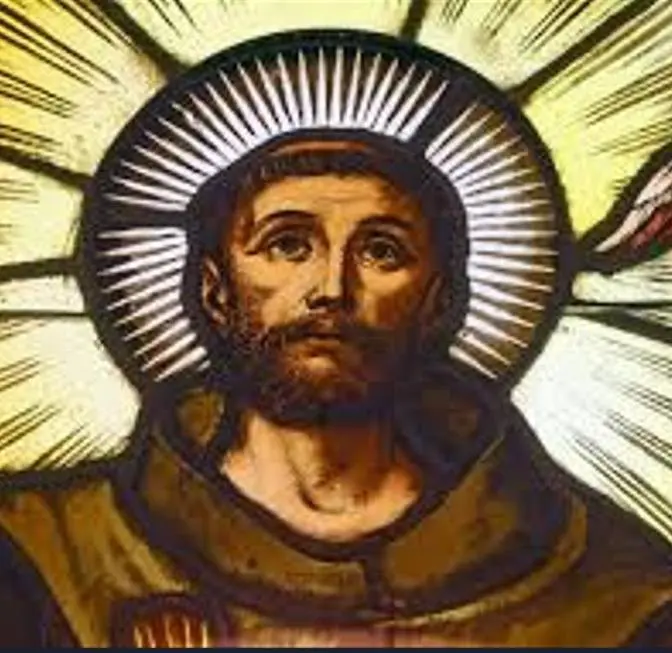
An hour's drive to the east
takes us to the neighboring state of Umbria,
famous for the town of Assisi
and its beloved Saint Francis,
who had a huge impact on the medieval church.
The story of medieval Europe is the story of hard lives
and a very religious world where people struggled
and stressed about their relationship with God.
Many thoughtful people entered monasteries
and lived lives of quiet prayer and solitude
in retreats like this.
Around the year 1200,
Francis, a simple friar from Assisi,
was one such person.
He retreated to this hermitage for the solitude,
and it survives to this day
with a handful of Franciscan friars
living out his mission.
Behind a little chapel, you'll find the tiny, dank cell
where Francis himself would retire for private prayer.
In this beautiful setting,
you can almost imagine the much-loved saint
preaching to the birds.
Francis lived in the hill town of Assisi,
while the Basilica of Saint Francis,
where he's buried, dominates the town.
We'll visit that later.
His story starts here, in the valley below,
in the Church of Saint Mary of the Angels.
It's a grandiose Baroque church,
but stepping inside,
you realize it's built around a humble little chapel.
As a young man, Francis was living
in a way that attracted followers.
He went to the Vatican in Rome,
asked for the pope's blessing
to continue his work, and got it.
Back in Assisi, he was given this fixer-upper chapel.
This is the actual chapel
that Francis and his first followers rebuilt,
and it was here, in 1209,
that he established the Franciscan Order.
Inside the chapel, pilgrims remember the very spot
where Francis lived, worked, and died,
and how, as it turned out,
fixing up that little chapel
was a metaphor for a church in need of reform.
This chapel, so dwarfed by this enormous church,
reflects the monumental impact this simple friar,
a reformer well ahead of his time,
had on Christendom.
With his teaching, Francis challenged
the decadence of church government.
He took Jesus' message
of non-materialism and simplicity seriously,
challenging the wealthy and powerful around him.
His slow-down-and-smell-God's-roses teaching
drew a huge following.
Francis drove to be Christlike.
He taught by example.
He lived without worldly goods and loved all of creation.
A huge religious order grew out of his teachings,
which were gradually embraced by the church.
In 1939, Italy made Francis one of its patron saints,
and in 2013, the newly elected pope took his name,
the first ever Pope Francis.