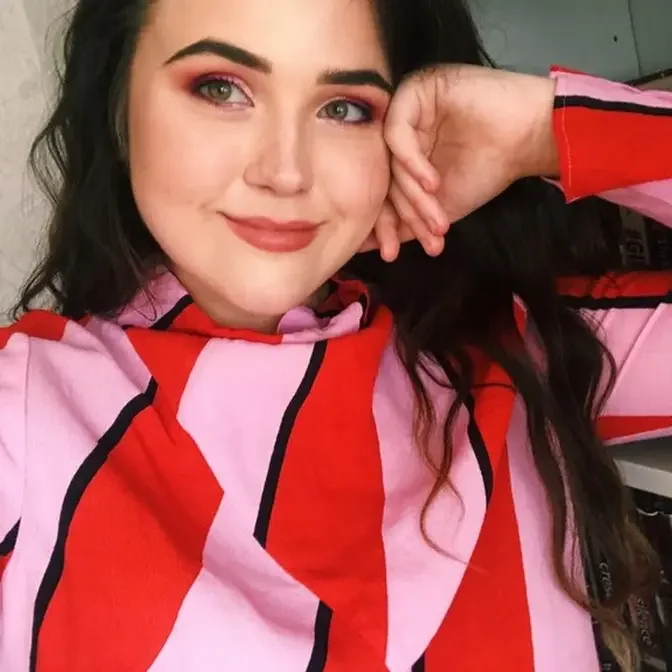
Hello friends! Welcome back to my channel. How are you guys doing? It is time...
please don't. That's quite rude. She was very f***ing rude, weren't ya? It is time for episode
three of Wrapped Up Retro where I have wrapped up the 50 oldest books on my TBR and we unwrap one
and read it in each episode. So far, no spoilers if you haven't seen the other episodes, I will
link them down below, but so far, hmm, yeah, we haven't had the best luck in terms of ratings
and I just feel like I want a book to come along that it's taken me ages to read that, like,
shocks me and I'm like, oh my goodness, why have I taken so long to read that? So today's gonna
be the day that we get that. I'm feeling like a hardcover. What one do I want to go for?
What one do I want to go for? Guys, I don't know. I don't know what book to get. Okay,
okay, okay, okay. Oh my god. Oh my god. Okay, let's pick one. I'm going for a hardback. There's one
down here, maybe? I know I wanted to go for a hardback this time. This is a strange hardback,
though. I don't know if I want to read- no, I don't want to read that. It feels strange.
It's very strange. This one? Maybe this book. Oh god, that's not a hardback. Um, this one?
This one? This one. Ignore that. It feels- it feels right in my soul. Okay, are we ready?
I'm gonna start unwrapping it. I'm not looking. Can you see what it is yet? Can you see what it is?
Okay, guys. It is Biased, this new science of race inequality by Dylan Eberhardt. Again,
one of the oldest books in my TBR. Again, one of the only ones that was on my TBR when I started
my channel, just like last week's. This is non-fiction. Okie dokie. I have wanted to read
this for so long. I've heard so many good things about it. It is basically about internal biases,
unconscious bias, but I'm sure we'll learn more about that as the book goes on. I'm excited to
get educated at the end of the year. Okay, this is- this is like the epitome, like last week's,
of what doing this series is about because it's making me read books that I should have read
all for a long time ago. And this is one that's been basically a five-star prediction. I think
I'm going to love it. Very exciting. I think I'll get the audiobook for this as well because that
always helps me with non-fiction, but I'm- I feel like this is the right time. I'm glad that this is
the one I chose and that this came up. Woohoo! Okay, fun. Hey cuties, I am about 100 pages into
Biased and I'm really enjoying it. I don't even know how to begin to discuss this book. So
basically it is what it says on the tin. This is a non-fiction book about unconscious biases,
but particularly from a doctor's point of view. What is her specialism? I don't want to get it
wrong. Oppressive psychology. And she's going into all the different ways in which our brains
are biased and how we're socialized to be biased from the get-go. And it's particularly focused on
biases against Black people because that is where I think a lot of the strongest biases lie.
And it's also, I think, what a lot of her research and personal experience is in. But it's really
going into the ways- all the ways in which humans are biased. And like, I don't even- I- I wanted to
like- I wanted to sit you down and talk to you about the key points of this book. Key things
that I'm finding interesting, that I'm thinking are really valuable. But then I'd literally be
telling you everything she's written. The album's amazing. Song to song, I can't stress it enough.
I don't even know where to begin. These- these- this book is so layered. We're making so many
points. Some non-fiction I struggle with sometimes because it feels like they had maybe eight points
that they wanted to make. Each of them are a chapter and they spend so long and they over and
over, you know, overwork a point and- but really don't go into any depth. Whereas this, I feel like
we're constantly like pinballing back and forth between like different elements of biases that
she is highlighting and making. And it's insane. Am I not in focus? I have- how long have I not
been in focus? The camera- I'm actually- I'm actually scared there's a ghost in my room
because sometimes I focus and there's like a little face that it's focusing on. It's absolutely
wonderfully researched and it's my kind of favourite non-fiction where she makes a point
then backs up with this research that she's done. Like I don't even know where to begin. I want to
give you an example but my brain is just like overflowing. She's done like a lot of stuff to
do with brains. Like, oh, so they had one group that was exposed to crime words such as apprehend,
arrest, capture, shoot, and then a control group that was just subjected to random letters, I think.
And then they were showed two faces. They found that those in the control group had not been
to think of the crime, looked at the white face. However, as predicted, those in the crime
condition looked more at the black face. This is just the beginning. There's stuff to do also with
how we- how we recognize. So like as- as from babies, we are taught to better recognize races,
our own race, right? So like if you're a white baby, if you're around white people,
you're going to recognize white faces better. And talking about how like our neurological
synapses, I don't know, like our brain lights up more when we see faces that we can pick apart the
individualities of better. Whereas when a white person, this is generalizing, when a white person
sees a black person's face, it's just seen as a black person's face rather than unpicking all
the intricacies that make up a face like they would with a white person. It's fascinating,
guys. But yeah, like I was saying, it's my favorite kind of nonfiction where it makes a
point, backs up with research, but then also has a personal element to it. I find not many
nonfiction books, surprisingly, have all those three. And that's what I really enjoy. Some,
it's just making a point and then just kind of extrapolating on personal experience and not
really getting into the research. Research is like- is taken from other places and maybe used
not quite in a right way. Whereas a lot of this is her research. And so the research is incredible,
but then talking about personal experiences like her son, her black son pointing at a black man
on a plane saying he looks like daddy and then saying, I hope he doesn't rob the plane.
And just the way from kids, from kids, we are taught these insidious biases that like she
wouldn't- she's like, where, where would he get that from? Where would he have uncovered that?
And it's so insidious. It's through every part of our society. And unpacking that is just,
you know, incredibly difficult. Like I wouldn't say that this is surprising,
the, the, the idea of this, because I'm well aware with the idea of unconscious bias,
but the extent of her research and the extent to which this, these biases are so ingrained from
in us from the moment that we start to socialise and unpacking that is just insane. It's,
it's so well done. I cannot believe it's taken me this long to read this. So yeah,
I'm just going to carry on reading this and I'm probably going to finish it quite quickly because
I am just fascinated by every element of this. I thought I was going to struggle to speak to you
because I'm quite tired. I've been, I've been chatting. You haven't been able to shut me up.
Anyways, I'm going to go have a bath and then I'm going to, yeah, carry on reading this tonight and
hopefully get another good chunk of the way through it.
Have this handsome face.
Oh, definitely not. No hellos. No hellos, Miss Lexie.
Hello, friends. I am 200 pages into Bias and still very much enjoying it. It's fascinating.
We've had in this last 100 pages, I mean, like I said, I keep seeing so much information,
which is a plus point of the book for me. But in the last 100 pages, we've had a lot about
the history, particularly through an American lens of how the end of slavery and then how Black
populations kind of migrated and moved across America, which isn't something I knew a ton
about. And I found that very interesting. And then just in the last part, we've had some kind
of like tech based biases, how it comes through in like data and statistics on websites where
like neighborhood apps, where you like, you report, I've seen a suspicious person, how much
more likely it is that that's a person of color. Sorry, you're tilted a bit. She got too excited
by Lux. Yeah. How based on the data, it's so much more likely to be a person of color and like the
steps that that organization, Miko, the door is shut. Just give me two seconds, my guy.
Yeah. How that organization has kind of put things in place to try and prevent that bias from
seeping in. That's been very interesting. And one thing that I've been thinking about is how this
book is making the point that we are all biased. We are socially conditioned to be biased, regardless
of your skin color. There's a lot of examples of Black people being biased against Black people.
There's an example early on of a Black police officer tailing someone he thinks is a suspicious
person that he thinks, I've got a bad vibe about this guy, only to then realize it's him
in a mirrored kind of windows. And I think with a book like that, you could end up feeling like
it is acting as an excuse. Right. You could end up feeling like, oh, well, it's saying,
you know, racism doesn't exist. And we're all just unconsciously biased and it's none of our fault.
And I don't think that's what it's saying. It's it's imploring society and everyone to...
Miko. One sec. It's imploring everyone to rise above that and to become conscious of their
biases. Lux, I'm not letting you out as well. Oh, you're going up there. OK. Scans are causing
havoc. It's trying to make everyone aware of that and trying to want to create a society where we
all become aware of these biases and work to unpack them and work so that these biases don't
have to exist for the entirety of time. Right. They don't have to exist in hundreds of years.
And also, I do think it is doing a good job of really highlighting specific examples that are
examples of biases and not just racism. They are two different things. I'd see it as like a Venn
diagram. Right. You have unconscious bias, you have racism and you have areas where they meet
in the middle, where there's examples where people have given into their unconscious biases
in a racist way. So I think it does a really good job of the examples that it gives either being
just examples of unconscious bias. Unconscious bias is very big. Or I mean, the Venn diagram
is a big, big, big bit in the middle or examples of unconscious bias, which then turns into racism.
Right. It's finding ways to to show them as two separate things, but also showing how often
they do intersect. I just think I I think it's handling that very well. I don't think I've
explained that well, that I think it's handling that very well. So I'm just going to go ahead
and finish this tonight. I'm very excited to finish it. And I'll let you know what my thoughts
are once I have. But I cannot believe it's taken me like four years to read this book. I've owned
it for so long. My mum loved it. But I'm finally getting round to it. So I'll let you know what I
that I have finally read this, you guys. It's taken me so long to read it. And I'm just I'm
so glad that I finally finished it. I don't have much more thoughts. But this book is really just
a wonderful look at systemic racism and how it is entrenched in us and our thought patterns and
everyone in society's thought patterns and teaching us how to try and pick that. But that is a conscious
choice that you have to make the rest of your lifetime. It's not a one time decision. It this
is something you have to be conscious of for your entire life. I would say this book is more hopeful
than perhaps I sometimes feel. I mean, this was written in 2019. It was published in and I just
feel like particularly even in maybe in the UK, I feel like racial attitudes are in many ways even
worse than they were in 2019. Particularly in the UK with our whole context around refugees and the
racialized aspect of that. I just feel I haven't been feeling very hopeful about like humanity
and like being able to move into a society where we don't have these negative beliefs and,
you know, approaches that I think are so harmful. But this is, I think, quite hopeful that change
will be able to happen. And it really does set out ways in which individuals in which corporations
in which countries even can kind of make those those changes to try and get rid of systemic
racism. But so it's equally I'd say that this book is equally angering at those, you know,
entrenched views existing. But it's also hopeful that change can come. It was great. It was great.
I think this is a book that everyone should read. I cannot recommend it enough. I really think it
should be like required reading in truly I mean, like the amount of information this book gives
on just how entrenched racism is in all in in every single thing and every single decision
that people make because of the way that our entire world is set up. I think it just opens
up a whole other level of understanding that everyone would benefit from. So I cannot recommend
this to you guys enough. I really, really would recommend picking it up. And God, I am just so
happy I finally read this book. I was talking to my patrons and one of them pointed out all three
books that we've read and wrapped up so far have been on that video where I was like books I have
to read in a year on haul. What? Olivia Wilde none. At the end of the day, right? Olivia Wilde none.
What are the chances? I can't believe it. It's absolutely crazy. What? What are the chances
that like zero? I don't know how it's happened. But um, you know, this is one of the oldest books
again on my TBR that I've owned long amount of time and I frankly cannot believe it took me this
long to get to it. But me and nonfiction, I just take 10 years to get to nonfiction apparently.
Thank you guys for watching this video. There's nothing else to say. I need to go get to sleep.
But I will see you all in another video soon. I hope you have a good rest of your day.
And I'll see you in another video soon. Bye!