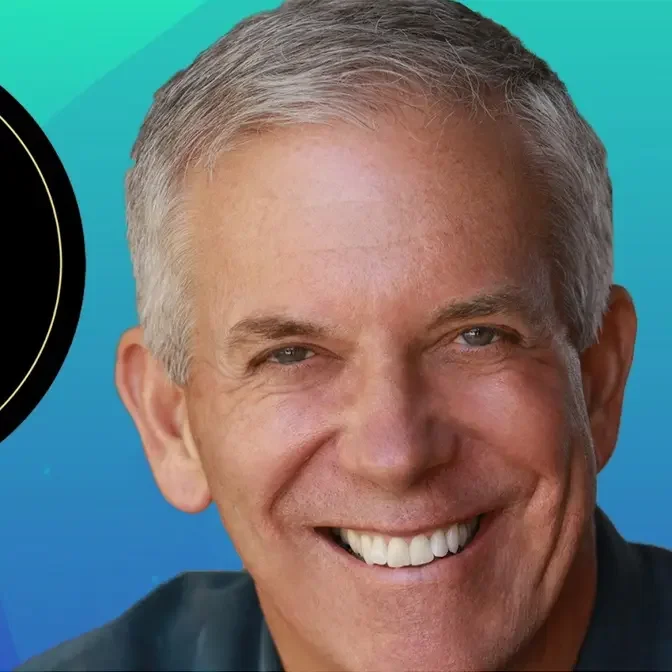
Visit these favorites in Southern and Central California! #california places to visit. We visit Camarillo and the CAF So Cal Air Museum, Santa Maria and the Riverbench Winery, Dewlson Family Farm and Oso Flaco Lake. We also stop at some favorite eating spots in the region. Plan your trip in this area with your family, we loved it!
“The Best of California with Pat Pattison” is a fast-paced half hour TV show that explores the natural wonder, people, history and mysteries of the California Lifestyle. California native and TV Host Pat Pattison explores the state’s nooks and crannies from the historic backlots of Hollywood, famous California Cuisine all the way to the mansions of the Gold Rush and Silicon Valley.
Watch us in: Los Angeles Sundays 7:30am Ch. 54 MeTV
San Luis Obispo, Santa Barbara, Santa Maria on the Central Coast CW 5 Sundays 12:30pm Palm Spring on the CW5 Sundays 12 noon Bakersfield CW12 Saturdays 6:30am Watch us in San Francisco, Las Vegas, Salt Lake City, Detroit, Philadelphia and Orlando on Fun Roads TV. Check local listings at:
Welcome to Pat Patterson's Best of California. I'm in Camarillo and I get to go up in the air.
This is incredible. I'm at the Commemorative Air Force Aviation Museum, SoCal Wing.
I'm Pat Patterson and I love California. So here in Camarillo and we are at the
Commemorative Air Force Museum. This place is unbelievable and I'm nice enough to have
Ron Fleischman here with us, one of the volunteers, All Volunteer Museum.
Wow and what you've created here and I know primarily people come to see what's behind us.
Tell me about these planes. The silver airplane is a Navion. It's a this is built by the North
American people. Once upon a time there were a lot of people there but now there is no more North
American Air Air Airplane Company. So we've restored it to look like an airplane as this
as an air base it was based here. I got you. The marking on the tail is from the 414 fighter
interceptor. You said one of these yeah was that Tora Tora Tora. Yeah the green airplane behind us
is a replica Kate. When they made Tora Tora Tora there were no real Japanese airplanes.
General MacArthur when he took over Japan he didn't want any crazy kamikazes to get in one
of the airplanes and do something. Well he rendered it inoperative and then he said destroy them all.
So the bad problem was when they made the movie they needed a Japanese fleet to attack Pearl
Harbor. So they took PT-19s and PT-17s and AT-6 old trainer airplanes right flew them down the
Long Beach and there was a company that spliced them cut them and welded them all together.
Voila instant Japanese fleet. Great well Ron Fleischman thank you so much for doing this work.
Thank you for coming. We appreciate you being here. This is amazing so commemorative Air Force
museum here in Camarillo. You gotta check it out. I'm with Sean Broadhead and Sean what do you run
here at the museum? I run the cadet program the commemorative Air Force SoCal wing cadet program.
And I was so excited to hear about that. So you're working with young people to do what? Yes we are
to educate them inspire them and to honor World War II and all veterans but mostly to inspire
these youth into aviation either careers private pilots or manufacture or maintenance thereof.
So this could be the beginning of a job for them. It very well could be for example last weekend we
talked about lift theory in aviation and so all Bernoulli's equation and how the you know stem
is behind it. Yeah it's the Bernoulli's equation with the stems behind it. I mean why would they
need to learn that? I mean all of us already know that. Because if they're if they're fixing to be a pilot or a mechanic
they need to know how an aircraft is going to lift. And then we took them over to a simulator
and we modified the pressure density variables. The pressure density variables you gotta
you gotta love this guy. Hold off on the science that's that's what I'll leave it to other people.
That's what we keep the high school guys sharp for. As a pilot you know it's important to
understand these things. Because I am glad that the man that's taking me up in a plane
knows all that stuff. You are correct. You are correct. At our show we had a World War II veteran
sitting right there as part of the show. He was here as a visitor and I point out to him
that this museum is about him. Yeah. And every veteran that's ever been a veteran for us. Keep
that memory alive. We keep that going. But the easy part for me with the cadets program
is the resources I have here. Isn't that great? I mean I've got I've got people I literally have rocket
scientists. I literally have pilots all over the place. I have people that have their own aircraft.
I have people that built their own aircraft. I have people that have history that have forgotten
more about some of the history than I'll ever know in my life. There we go. Some of our docents
around here and they know more about all these aircraft and everything about World War II. And
all volunteers. And all volunteers. That's so so wonderful. I'm here with Jack Luder and Jack is
the uniform expert. And and a weird thing happened is he and I were talking and we figured out we
were both in a movie together. What was the movie? Angels and Demons directed by Ron Howard.
Hollywood brings us together. Yes. Because what's behind us? This is a tank display. The tank from
the Ronald Reagan Museum. The Ronald Reagan Museum. Mr. Hollywood himself who who played a lot of
officers. And he was. And he was yeah. And and and Jack you are in what uniform? What is this uniform?
This is basic working khakis for well god it must be 80 95 in this place right now. Right. This would
be the same as as it was when this was the airport. What what branch is this? This is army
air force. Army air force. There we go. This was an air force base during World War II. Even more fun
here at the museum. I'm with Steve Rider and we're going to go up in a plane. Tell me about this
plane. This Fairchild PT-19 it's a World War II trainer and it's the primary trainer. But we're
going to have fun today. Yeah we are going to have fun. But this is a nice gentle airplane and it's
made to train someone that has no flying experience whatsoever. Wow. What's your background as a pilot?
I'm a naval aviator. Okay. And so my first takeoffs and landings were in the navy and
got over 200 carrier landings. And so I did a fleet tour anti-submarine warfare and a new
Lockheed S3 Viking at the time. And then flight instructor Pensacola for naval flight officers
that would go in the F-14 or the A6 or the S3. Well first of all thank you for your service.
Yeah that's incredible. And is it my understanding the general public can come do this? Oh absolutely.
Oh my gosh. This is a flying experience museum you know. Yeah. That's exactly what it's for.
So that was exciting. Steve Rider got me up and down. What an experience here at the
CAF SoCal Museum. You've got to check this place out. Thank you Steve. Thank you for coming. It
was incredible. Check this place out. More to Camarillo than I could have imagined. Talk to you soon.
Welcome to Pat Patterson's Best in California. Today, Santa Maria Valley. Liza and I are set
on our ATVs. We're going to take off, show you a winery, show you an incredible family farm,
incredible places to eat here in Santa Maria Valley. So let's bring our helmets on and let's get going.
I'm Pat Patterson and I love California.
I'm so excited. We're in Santa Maria Valley and I'm here with Judy Polson
and Ron Dewey and they have this incredible family farm here that you can take a tour of,
right? You can do appointment tours. And Ron, tell me how this gets started. Well after I retired,
we bought 20 acres of land just right up over the hill over there and we planted lemons. That
sounded like a good idea, except the first year they all froze and we lost a thousand trees. So
we replanted and then we bought another 20. So let's double up and catch up. Yeah, that was
really, that was really bad. Let's do it again. Yeah, so now we have 40 acres of lemons. That's
our cash crop, allegedly, but that's our cash crop. And then Judy wanted to do something else.
It wasn't good enough just to have 40 acres, 6,000 lemon trees. We got it, we got to expand. I know
you're both retired Navy. And Judy, what happened next? Next is when we bought this acreage, I wanted
a couple spots where we could do something different and went to a couple of small farm
conferences and discovered coffee and tea. And I know the big deal here is wine country. I love my
coffee. So I'm looking forward to tasting all these different exciting things. So you ready to
give us a tour? Absolutely. Let's go. Let's head out. So Judy, tell me where we're going now.
So we're going to go up and we're going to take a tour of where we grow coffee, our coffee
plantation, and where we grow our tea, our tea plantation. That sounds so cool, coffee plantation.
I know. It's not easy to grow here, but it's fun to grow here. Why is that? Well, because it doesn't
like the wind. It doesn't like to be cold. It doesn't like... Everything that happens here.
Everything that happens here. But I just loved the idea of growing coffee. We have five varieties
of coffee. So they're all Arabica, which is the better species of coffee. So I've been saying
that wrong all these years. How do you say it? I think I'm saying Arabica. Oh, I don't recognize that.
You're saying that wrong. Arabica. So the Arabica. Tell me about that. So Arabica
is the better species in coffee. It's known to be less acidic and a little sweeter.
There's not as much production. The other one that people know about is called Robusta.
And Robusta is the coffee you see in instant coffee. No, I always thought that was Robusta.
No, I'm kidding. That's like tomato, tomato. I could accept that. I could accept that one.
I see Geisha over there. Geisha, yes. So Geisha is spelled like the Japanese Geisha girl.
So for the spelling, people get confused as if that was from Japan. And it's really spelled G-E-S-H-A
from the Geisha Valley in Indonesia. So that's where it's from. It continues to be the most
expensive coffee in the world. So we're pretty proud of this coffee. So tell me about, because I
know nothing about growing coffee. So this is a coffee plant. So what, there's going to be beans
on here somehow, right? Tell me how the beans happen. So this is a good example of the growth
pattern and the life cycle of a coffee plant. So you start out with a bud. It becomes a flower
that looks like a jasmine. And then a green bean will come like you see here. And then eventually
this is a red cherry. So this is a fruit and you know it's ready when you can just twist it and it
comes off pretty easy. So a lot like a fruit on a tree. It is a lot like a fruit on a tree. And then
you squeeze it and there are your coffee beans. Oh my gosh, I didn't know that. Yeah, so there's your
coffee beans. So can I eat one of those? You can eat the cherry. The cherry is what I eat. The cherry is what you
should eat. So this. These are too hard. Yes, the cherry. And the Geisha cherries are really good.
They're really sweet. And then what I do is I throw the beans down. Oh my gosh. Because every
once in a while I get a volunteer that just starts growing up, comes up. Wow, that's incredible.
So but first we got to settle one thing. Yeah. Is it arabica or is it arabica? I call it arabica.
I call it arabica. One of those. This is so humiliating. This is so humiliating. Okay, but that's that's all
something else. This is part of the tour. This is what this is. So this is every tour. We have three
tours and one of them is the coffee tasting. So every tour includes a tour of the coffee plantation,
how we grow coffee, how we process coffee, the coffee tasting, and they take home fruit.
So Judy and Ron. Yes. First of all, I'm highly caffeinated. That's good. That was good. That's
good. That's good. So so the next meal will be very quick. And thank you so much for mainly
creating a family environment, having something that people can come to and enjoy farm life. I
we think we have. It's our it's our little paradise.
Ron and Judy, thank you so much. Thank you so much, Pat. Thank you. Yeah.
So I'm excited. I'm at my place and I get an incredible avocado toast. This is a cowboy.
It's got spinach. It's got cheese. It's got all sorts of incredible stuff. And
I use a knife and fork. Don't use a knife and fork. Do this. I love that.
Oh, so Flacco Lake, incredible hidden gem in the state park system. Oh, so Flacco, meaning
skinny bear. Casper Day Portola's guys came here, ate a skinny bear and got very sick.
The reason they got sick is the local Indians fed the bears tainted meat
so that the bears would die and not compete for food. So it was a bit of a chain reaction.
There's a causeway that goes out to the ocean and a walkway.
We're going to go check it out and see where that ocean is. Come on.
Little uneven sidewalk here, which is fine. Obviously, this is here to protect the dunes
because they're very fragile. The snowy plover is protected here. It used to be that ATVs could
run all over the place. They still can. They're still protected areas. We're going to check out
an ATV. But this is all preserved like only the California state parks know how to do.
We love the state parks. Wow. And this is the pre dunes, which is just the part of the dunes
before the ocean. Most of California had these dunes before they were developed.
Amazing to come here and see what it used to be like.
So we're getting fog. We're getting shade. We're getting sunshine. This is incredible.
What an amazing natural resource we have here.
And we are getting very close to the ocean and I am fine. It's not a very far walk.
Oh, my gosh. Look at that. The Pacific Ocean, my favorite. Pristine, beautiful dunes.
Level walkway all the way out. 1.5 miles. Easy access. You got to come up here. Santa
Maria Valley. This is how the beachfront of California used to look before it got developed.
And these dunes were everywhere. And if this part has been preserved, it goes down quite a ways.
Guadalupe to the south of us. You can see all of San Luis Bay. This is San Luis Bay going out
to the point out there. Beautiful, beautiful. Santa Maria Valley. You got to check this place
out. Hi, this is Liza with the Best of California. I'm here at River Bench Winery with Grant Harmsen.
He is the tasting room director. Now, tell me about that awesome job. Absolutely. Glad to have
you guys. Thanks for coming by today. I get the privilege of sharing all the great wines that we
craft here at River Bench with our guests. And what is one of your favorite wines, kind of the
wine you push towards people that are coming out of the country? Absolutely. So great question. We
actually have a really unique variety in the vineyard called Pinot Meunier. And we were the
first winery to plant that here in Santa Barbara County back in 2014. And so that's something I
love to share with guests because you can't find it everywhere. In 1988, the decision was made to
convert this section to Chardonnay. And so rather than rip up all of the vines and lose that nice
established rootstock, the owners at that time came in and they did a process called head grafting.
So they basically, yeah, not so great for people, but awesome for vines. And they just come in and
kind of lop the top parts off and then stuck in little baby Chardonnay vines. And then the two
became one. And now we have this beautiful sort of old vine Chardonnay that produces some of our
best still Chardonnay and also sparkling wines. Now tell me a little bit about this wine. Yeah.
So here at River Bench, we produce a number of different wines, but I've pulled out three of
our most popular today. Starting with what's in your glass. That's our One Palm Pinot. Far and
All clone 667, but really fruit forward, classic Santa Maria Valley style, big cherry,
a little bit of spice in there as well. Now tell me a little bit about this beautiful
little bubbly. Yeah. So I've got a little sparkling wine here for myself.
This is a style of wine that we're really known for here at River Bench. And we produce all of
our sparkling wines in the same style as champagne, the traditional production method.
This specific bottle is our cork jumper conveyance. I like to call this our homage
to champagne. It's an equal blend of Chardonnay, Pinot Noir and Pinot Meunier,
which are the three main grapes used in champagne frames. Cheers. Thank you so much for having us.
You're welcome. Looking forward to having you anytime. And to all of you watching,
we look forward to seeing you at River Bench soon. Cheers.
So in your Santa Maria Valley, you got to try Shaw's Steakhouse. Incredible tri-tip,
Santa Maria style barbecue. They raise it up and down over the Oak Fire,
Shaw's Steakhouse. Check it out when you're in Santa Maria Valley.
Are you ready for a more creative and fulfilling second act? I know I was. So I wrote a book about
it. Creative U-Turn, nine steps to your new creative life and career. That outlines my
journey of leaving corporate America at age 55 to become a TV host, actor and a senior model.
It's an easy to follow plan that can get you where you want to go. Creative U-Turn. It's
available on Amazon, Barnes and Noble, Balboa Press and other places, or go to my website,
patpatterson.net and sign up for our free monthly workshops based on the book. So join me,
make your creative U-Turn now. Order your book today and join Pat Patterson
by registering at patpatterson.net for his free monthly workshop.
What are you trying to get accomplished here? Oh, just getting this off the show.
Oh, okay. Ah, great. Thank you.
Off the show. Well, that's good.
Here. Thank you. Don't worry. It's fine. It's just...
Grant just gave me this really unique idea, Dad.
I guess you're here to stay.