
Stigmata of St. Francis of Assisi (17 September): The Contemplation of the Suffering of Jesus Christ
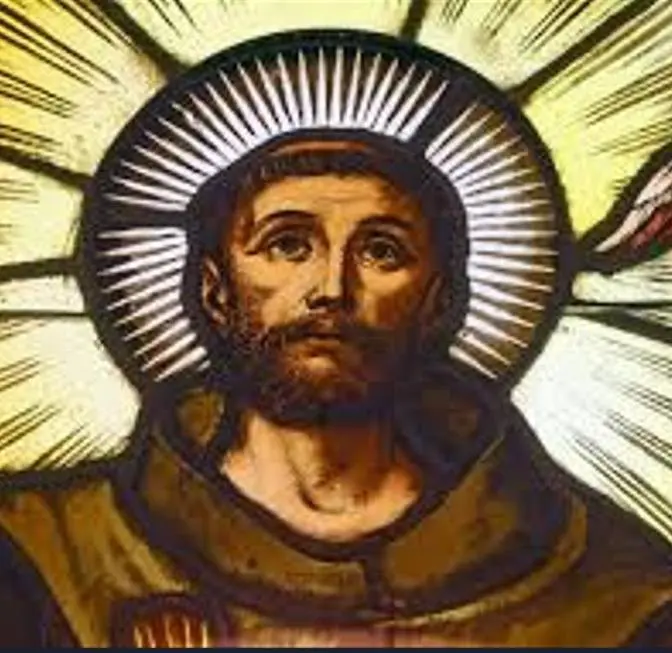
May the holy names of Jesus, Mary, and Joseph be blessed, now and forever, in the name of
the Father, and of the Son, and of the Holy Spirit. Amen.
And he said to all, if any man will come after me, let him deny himself, and take up his cross daily, and follow me.
Dear brothers and sisters in Christ, who is the real St. Francis?
We ask this question today on this wonderful feast of the stigmata of our Seraphic Father, St. Francis.
St. Francis, according to the world, the lover of ecology, the lover of animals, but is this correct?
Today we learn that he, our Father, St. Francis, is he who was most conformed to Jesus Christ,
in full imitation of Christ, as revealed also in a vision to St. Mary Margaret Alarcock in the 17th century.
He, the saint who most was conformed to Jesus Christ in his sacred heart, our Seraphic Father,
in a burning love of Jesus Christ, crucified, who became crucified with him on Mount Alverno, in this stigmata.
Although very few saints have been granted this stigmata, those like St. Francis, St. Catherine of Siena,
St. Padre Pio, they have known the sufferings of the Lord.
While the stigmata may intrigue us in the world, the sign itself and those who bear it,
should inspire us to seek a closer union with our Lord Jesus Christ,
through frequent confession and reception of the Holy Eucharist.
The Catholic Church then today has this great feast of the stigmata of St. Francis,
going back to the medieval times.
We know that this is when the height of Christendom, when we turn back to Christ
and reflect it on the humanity of our Lord on the cross.
Bringing into a new feast also Corpus Christi, and to encourage the contemplation of the physical sufferings of Christ.
In this period also, we know religious painters responded by depicting the crucifixion explicitly for the first time.
Portraying Jesus who was plainly in agony from wounds and dripping with blood.
What about this phenomenon or reality of stigmata?
Stigmata from the Greek word generally points to a brand or a mark.
It is the common word to describe the branding of cattle.
In the Christian context though, it refers to the bodily marks resembling the wounds of crucified Christ.
St. Francis was the first person historically recorded to bore the marks of crucified Christ in his hands, in his feet and in his side.
The stigmata then is the spontaneous appearance of the wounds of our crucified Lord on a person's body.
These marks include the nail wounds at the feet and at the hands,
the lance wound at the side and even the head wounds from the crown of thorns and even the scourge marks over the entire body, particularly on the back.
A stigmatic may have one, several or all of these wounds.
They may even be visible or invisible and they may be permanent, periodic or even temporary in appearance.
The Catholic Church strives first to ascertain that the origin is not of natural causes but looks towards the supernatural,
for evidence to prove that the stigmata is truly a sign from Almighty God.
Accordingly, since the stigmata is a sign of union with our crucified Lord,
as St. Francis reached this transforming union, this mystical marriage, the apex of this mystical marriage,
this genuine stigmata must have lived a life of heroic virtue,
have endured physical and moral suffering and have almost always achieved this last level of ecstatic union with our Lord in prayer.
The genuine stigmata conforms to the wounds of our Lord and perhaps bleeds,
especially on days when our Lord's passion is remembered, such as Fridays and Good Friday.
Remember, Our Lady gave me the grace before I came on Friday to meet this lady from Ireland
who had the stigmata, had the wounds, who suffered the bleeding in her wounds every second Friday of the month,
a holy soul who couldn't speak except through a hole in her throat.
She suffered very badly.
The genuine stigmata emits clean and pure blood.
The blood flow from the genuine stigmata can be great at times but without harm to the person.
The genuine stigmata cannot be healed through medication or other treatments.
The genuine stigmata appears in fact suddenly.
Finally, this genuine stigmata, these have been surprised at the appearance of the wounds of Christ themselves.
This sign is not something for which most of them have prayed moreover.
In humility they have often tried, St. Francis, to conceal these wounds as to not cause attention, to draw attention to themselves.
What about St. Francis?
The first certified stigmatic, St. Francis, in August year 1224,
he and several Franciscans journeyed to Mount Alvernia in Umbria near Sici to pray.
Here Francis begged to share in the sufferings of Christ.
On the feast of the Holy Cross, September the 14th, St. Francis had a vision of being embraced by our crucified Lord.
The agony of the first Good Friday poured into his being and he received the stigmata.
He tried to conceal this sign of divine favor from others by covering his hands with his habit and wearing shoes and socks on his feet.
Eventually his brothers noticed the change in St. Francis' clothing and physical suffering and his stigmata became known.
Eventually, upon the advice of the brothers, he revealed the stigmata publicly.
St. Francis said these words,
Nothing gives me so much consolation as to think of the life and passion of our Lord.
Were I to live to the end of the world, I should stand in need of no other food.
We say always this is the wisdom to gaze on Christ crucified.
St. Bonaventure tells us that it was the custom of St. Francis to never rest from lifting himself up in prayer.
He was always found in prayer, seeking the solitude of the quiet.
He made himself available to God by his own desire to be transformed into Christ.
He prayed out a perfect joy and perfect love.
Because of this, the very marks of Christ, his wounds were engraved in him.
The Seraphic doctor wrote this beautiful descriptive event, he said, of St. Francis in the legend of St. Bonaventure.
The sweetness of heavenly contemplation was poured out on him more abundantly than usual.
Till burning with the flame of celestial desires, he began to feel an increasing overflow of divine favours.
While the Seraphic ardour of his desires thus raised him to God,
and the tenderness of his love and compassion was transforming him into Christ,
the crucified victim of excessive love,
one morning about on the feast of the exaltation of the Holy Cross,
he was praying on a mountainside.
He saw what appeared to be a Seraph with six shining and fiery wings coming down from heaven.
The vision flew swiftly through the air and approached the man of God,
who then perceived that it was not only winged but also crucified.
For the hands and feet were stretched out and fastened to a cross,
while the wings were arranged in a wondrous manner,
two being raised above the head, two outstretched in flight,
and the remaining two crossed over unveiling their whole body.
As he gazed, St. Francis then was much astonished,
and his soul was filled and mingled with joy and sorrow.
The gracious aspect of him who appeared in so wonderful and loving a manner
rejoiced him exceedingly, while the sight of his cruel crucifixion
pierced his heart with a sword of sorrowing compassion.
He who appeared outwardly to St. Francis taught him inwardly
that although weakness and suffering are incompatible with the immortal life of a Seraph,
yet this vision has been shown to him to the end that he, a friend of Christ,
might learn how his whole being was to be transformed into a living image of Christ crucified,
not by martyrdom of the flesh but by the burning ardour of his soul.
He concludes, and after a mysterious and familiar conversation, the vision disappeared,
leaving the saint's mind burning with Seraphic ardour,
and his flesh impressed with an exact image of the crucified,
as though after the melting power of that fire it had next been stamped with a seal.
For immediately the marks of the nails began to appear in his hands and feet,
their heads showing in the palms of his hands and in the upper part of his feet,
and their points visible on the other side.
There was also a red scar on his right side, as if it had been wounded by a lance,
and from which blood often flowed, staining his tunic and underclothing.
The cross, then, is what the Lord wants for us.
The cross for us is where we can encounter God's love.
It points us to the resurrection and the truth that even the most horrific and excruciating of deaths,
God can still triumph.
The example of the cross which we have had this week, remember, we celebrated this week
the exaltation of the cross and the sorrows of Our Lady, now today the Stigmata of Saint Francis.
The example of the cross teaches us that despite death, chaos and violence,
there is in fact glory, grace and peace in the cross.
The cross always reminds us that Jesus Christ is near to us.
Saint Bonaventure writes,
Christ on the cross bows his head waiting for you, that he may kiss you.
His arms are outstretched, that he might embrace you.
His hands are open, that he may enrich you.
His body spread out, that he may give himself totally.
His feet nailed, that he may stay there.
His side open for you, that he may let you enter there.
Why then, today, dear brothers and sisters of Christ, not ask Our Lady,
the Queen of all Stigmatists, the Blessed Virgin Mary,
who stood with Christ crucified at the birth of the cross,
to ask for this grace of the invisible Stigmata,
to save countless souls on their way to eternal damnation.
We have a great saint of the 17th century, Saint Veronica Giuliani,
who was the beautiful saint who was the female version of Padre Pio,
because she suffered the Stigmata of Our Lady.
Remember, the Lord will always give you the grace necessary to carry your cross,
if you ask for this special grace today.
Ask Mary then and Saint Francis for this wonderful grace,
for the impression of the five wounds of Christ
to be imprinted into your very being,
the wounds that will emit light for all eternity. Amen.
May the holy name of Jesus Mary and Joseph be blessed now and forever.
In the name of the Father, and of the Son, and of the Holy Spirit. Amen.