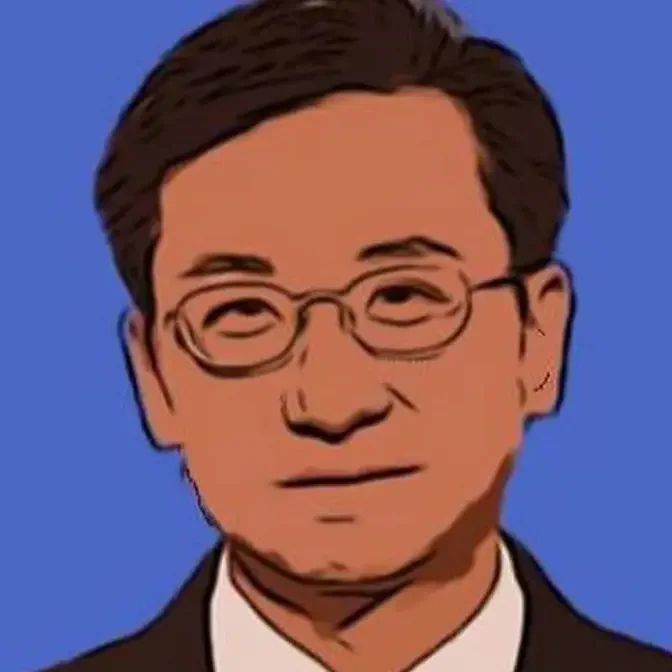
The former Japanese ambassador to China, Hideo Tarumi, has revealed significant insights about Xi Jinping in his recent memoir. Tarumi's encounters with Xi Jinping portray him as humble in 2009 but transformed into a heavily guarded figure by 2015. Tarumi discloses that Xi Jinping has chosen Mao Zedong's authoritarian route, prioritizing national security, despite contradictions with China's economic model. Furthermore, Tarumi describes Xi Jinping's control over Politburo Standing Committee members, emphasizing meticulous monitoring and scrutiny. Tarumi's assessment that Xi Jinping has replaced one-party rule with a personalized dictatorship is considered a major insight into China's current political landscape, challenging the notion of Xi Jinping's authoritarianism remaining within the CCP framework. Connect with me: Email: [email protected] Telegram Group: https://t.me/DC2021301
Hi, thank you for watching Digging to China. I'm Dong Xiong. If you have not done so already,
please subscribe to my channel. Thank you very much. I want to share with you a piece of news
that has created quite a stir in the international community, a rather sensational development.
The former Japanese ambassador to China, Hideo Talumi, has recently published the second part
of his memoir. In his latest article, he unexpectedly unveiled some significant
revelations about Xi Jinping. Having had several close encounters with Xi Jinping,
Talumi drew upon his personal experiences to disclose information about the Chinese leader.
This revelation has sparked considerable attention in public discourse. In his article,
Hideo Talumi highlights that Deng Xiaoping's approach focused on high economic development
has reached its limits. Faced with the decision to either continue Deng Xiaoping's economic
development path or adopt Mao Zedong's authoritarian route, Xi Jinping has chosen
the latter. Consequently, Xi Jinping prioritizes national security. Despite the inconsistency
between his vigorously promoted national security policy and the Chinese economic model, Xi Jinping
remains steadfast in its implementation, leaving foreign ambassadors perplexed. The article
continues to narrate that Hideo Talumi's initial encounter with Xi Jinping took place in 2009,
leaving him with the impression of Xi Jinping being remarkably humble. According to the account,
during Xi Jinping's visit to Japan as the vice president of China, he expressed a wish to meet
the Japanese emperor. Hideo Talumi, serving as the head of Chinese affairs at the time,
was tasked with coordinating Xi Jinping's participation in a dinner at the prime
minister's residence. During the dinner, Xi Jinping took the time to personally greet
each of the 70 guests. Hideo Talumi guided him through the tables, and despite the event running
slightly over time, Xi Jinping remained extraordinarily courteous and patient,
without displaying any hint of displeasure. Therefore, at the time, Hideo Talumi perceived
Xi Jinping as remarkably modest, displaying both humility and generosity. However, six years later
in 2015, Hideo Talumi had a second close encounter with Xi Jinping when he accompanied
the prominent secretary-general of the ruling party, Toshihiro Nikkei, on a visit to China with
a personal letter from former Japanese Prime Minister Shinzo Abe. He noted that by 2015,
Xi Jinping had transformed into a completely different person, unrecognizable. The security
measures around Xi Jinping had intensified significantly, with numerous bodyguards
providing protection. The security precautions were notably higher compared to the previous
president Hu Jintao, making it challenging to have close interaction with him. Upon assuming the role
of Japan's ambassador to China in 2020, Hideo Talumi noted that the situation became even more
pronounced. He indicated that while the political structure of the Chinese Communist Party
remains unchanged, there has been a considerable shift in practical terms. Formerly operating under
a one-party authoritarian system, it can now be characterized as a system dominated by Xi Jinping's
personal rule. In this context, the security measures around Mr. Xi Jinping have tightened
significantly. Years before taking office, Talumi was already aware that members of the
Politburo Standing Committee were required to submit reports to the General Secretary. The use
of special trains or planes by committee members also underwent strict scrutiny by the General
Secretary's office. In essence, members of the Politburo Standing Committee are seen as subordinates
to Xi Jinping. Hideo Talumi pointed out that Deng Xiaoping's highly economic development-oriented
path has reached its limits. Currently, aside from issues of corruption, China is facing a severe
unemployment rate. Xi Jinping is at a crossroads with two choices, either to continue Deng Xiaoping's
path of rapid economic growth, or to revert to Mao Zedong's authoritarian approach. In the end,
Xi Jinping's actions have confirmed his choice of the latter. Preserving the Chinese Communist
Party's legitimacy through a highly centralized power structure. Here are my takeaways. To begin
with, Hideo Talumi is an acknowledged China expert in Japan, possessing an in-depth understanding of
Chinese politics and a close familiarity with leaders of the CCP. With his substantial experience
managing Japan-China relations in the Japanese Ministry of Foreign Affairs, he has engaged with
multiple CCP General Secretaries. Drawing from his extensive observations, he reaches a decisive
conclusion. Whereas China formerly adhered to a one-party authoritarian structure, it has now
evolved into Xi Jinping's singular authoritarian regime. This assessment stands out as one of the
most incisive analyses in international discussions on China's current political landscape,
suggesting that Xi Jinping is steering towards a form of dictatorship, possibly even a lifelong
rule. While many contend that Xi Jinping's authoritarianism remains within the CCP
framework, Hideo Talumi takes it a step further, asserting that Xi Jinping has essentially
redefined the CCP's one-party dominance into a personalized dictatorship. I completely agree with
this perspective. If we examine the development post the 20th National Congress of the CCP,
a subtle transformation in the relationship between Xi Jinping and the Chinese Communist
Party becomes apparent. Prior to the 20th Congress, Xi Jinping actively utilized the platform of the
CCP. However, after the 20th Congress, all key positions in the CCP were filled with his trusted
allies. With absolute control over the CCP, he no longer prioritized the party as a significant
platform. Instead, he sees the country as his own, positioning himself at the core of the nation's
management structure. The third plenum of the Central Committee occupies a distinctive position
within the Chinese Communist Party. And if Xi Jinping decides not to convene it, they won't,
without providing any specific reasons. It's noteworthy that despite the pandemic,
meetings of the Central Committee continued without interruption. However, for some
undisclosed reasons, the third plenum remains unheld. Consequently, I view Talumi's conclusion
as a noteworthy development in comprehending Xi Jinping and exploring issues within China.
While many might hesitate to express certain thoughts, Talumi's conclusion holds substantial
meaning. Xi Jinping has essentially substituted one-party rule with personal dictatorship.
Secondly, in this article, Hideo Talumi provided detailed insights into how Xi Jinping exercises
control over the members of the Politburo Standing Committee, revealing intriguing information.
This disclosure is likely attributed to Japan's intelligence system,
given Talumi's role as ambassador in an embassy with intelligence-gathering functions.
It marks the first time we have gained public insight through the media into Xi Jinping's
methods of managing these key committee members. Alongside the annual requirement for committee
members to submit reports, Talumi reveals that their use of special trains or planes
undergoes rigorous scrutiny by the General Secretary's office. Every detail from the type
of transportation used, the timing and destination of travel, the conversations during the journey
to the presence of other individuals in the vehicle is meticulously monitored under Xi Jinping's
oversight. Xi Jinping demonstrates remarkable specificity and strictness in monitoring those
his inner circle, while traditionally such responsibilities might be handled by the
central office or related protocol departments. Xi Jinping personally takes charge, dedicating
substantial effort to these control measures. Thirdly, according to Hideo Talumi, Xi Jinping
is faced with two potential paths, either following Deng Xiaoping's route of rapid
economic development or embracing Mao Zedong's approach of dictatorship.
Talumi's conclusion based on Xi Jinping's current actions is that he is more inclined towards
Mao Zedong's authoritarian path. However, I hold a somewhat different perspective on this
conclusion. Xi Jinping is not merely mimicking Deng Xiaoping or Mao Zedong. He brings his own
unique qualities to the leadership. These distinct aspects are rooted in his background
and long-standing values. In contrast to the first-generation CCP leaders like Mao Zedong
and Deng Xiaoping, Xi Jinping as a princeling and second-generation red may not fully share the same
ideals and thoughts. Particularly noteworthy is the perception that Xi Jinping possesses a
remarkable ability to adapt. Unlike Mao Zedong, who was known for his unwavering commitment to
certain theories and paths, Mao Zedong was characterized by his firmness in sticking to
his beliefs. In contrast, Xi Jinping is often seen as more flexible, capable of adjusting his
approach without hesitation or embarrassment. This adaptability, often described as being
comfortable with adjusting, implies a lack of inhibitions. Consequently, it is improbable
for him to revert to the rigid approach of Mao Zedong, and he lacks the capacity to achieve the
same level of authority as Mao. For example, his publicized act of eating a bun to appear
relatable has been the subject of ridicule for over a decade. In my perspective, Xi Jinping
inherits a form of absolute authority, whether influenced by Mao Zedong or Deng Xiaoping.
Both leaders wielded unquestionable authority, and even after Deng Xiaoping's retirement,
he retained significant influence. His sudden tour statement, asserting that those opposing
reform would be ousted, showcased his authoritarian stance. While Deng Xiaoping employed
authoritarianism to drive economic reforms, Mao Zedong's authoritarianism was geared more towards
pursuing an idealized form of politics. Xi Jinping's approach goes beyond a simple
preference for either Deng Xiaoping or Mao Zedong. He actively studies and incorporates
various authoritarian and dictatorial governance styles present within the CCP. Combining these
with his personal traits as a princely second-generation official and a red descendant,
marked by a high-handed approach and audacious actions, Xi Jinping can aptly be described as
embodying a rogue version of dictatorship. This version is distinct from the spiritual
dictatorships of figures like Saddam Hussein, Gaddafi, or Mao Zedong. Xi Jinping does not
rigidly adhere to ideologies but prioritizes power. When his authority is challenged,
he can exhibit a ruthlessness akin to historical figures or alternatively project an adaptable and
self-deprecating demeanor, showcasing a kind of rogue dictatorship. Thank you for watching. Please
leave a comment and subscribe to my channel. Just click the subscribe button right here.
I'll see you again shortly. Until then, be well.