
New Discoveries At An Italian Town Change Everything We Knew About The Roman Empire
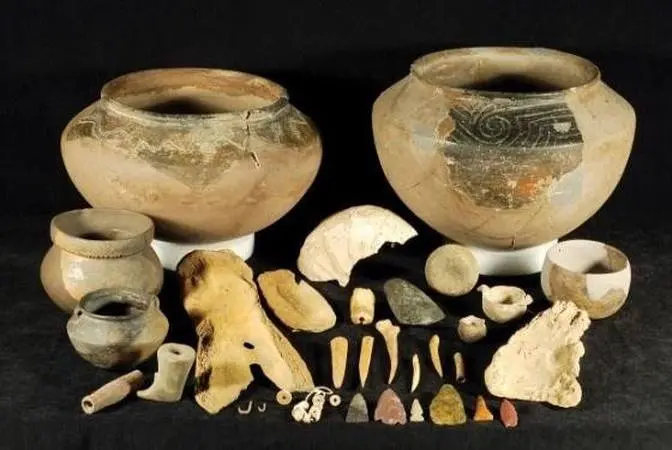
New Discoveries At An Italian Town Change Everything We Knew About The Roman Empire
#Archaeology#archaeological artifacts
Imagine a town that was once a bustling hub of trade, culture and politics in ancient Rome,
but now lies buried under the fields of modern Italy. A town that survived wars,
invasions and natural disasters for centuries, but was eventually abandoned by its inhabitants.
A town that was so obscure that no one bothered to excavate it, until recently.
This is the story of Interamna Laurinas, the hidden gem of Roman history.
Interamna Laurinas was founded in 312 BC as a colony of Latin settlers on the border with
the Samnite people who were fierce enemies of Rome. The town played a crucial role in the
Samnite Wars, a series of conflicts that lasted for over 50 years and shaped the destiny of Rome.
Interamna Laurinas was attacked and destroyed by the Samnites in 294 BC,
but was quickly rebuilt by the Romans. It also faced the wrath of Hannibal,
the Carthaginian general who invaded Italy in 218 BC and threatened to overthrow Rome.
Hannibal sacked the town in 212 BC and the town's inhabitants were forced to pay a heavy
tribute to Carthage after the war. Despite these hardships, Interamna Laurinas prospered and grew
in size and importance. It became a municipium, a self-governing town with full Roman citizenship
in about 88 BC, following the Social War, a rebellion of Rome's allies who demanded equal
rights. It also received the patronage of Julius Caesar, the most powerful man in Rome who used
the town as a base during the civil wars of the 1st century BC. Caesar granted the town special
privileges and settled some of his veterans there. Interamna Laurinas was not a provincial
backwater as some scholars have assumed but a vibrant and wealthy town that boasted impressive
public buildings and amenities. A team of archaeologists from Cambridge University has
uncovered the remains of a roofed theatre, a rare and luxurious feature that could accommodate
1,500 spectators. The theatre was faced with exotic marbles from the eastern Mediterranean
and displayed the town's status and ambition. The theatre also contained a remarkable discovery,
an inscribed sundial, a device that measured time using the shadow of the sun.
The archaeologists have also revealed the presence of a large warehouse,
a temple and a bath complex near the river Liri which indicate that the town had a flourishing
river port that facilitated trade and commerce. Interamna Laurinas was a resilient and adaptable
town that resisted the decline that affected many other parts of Roman Italy in the late
imperial period. The analysis of the pottery found at the site has shown that the town maintained its
vitality and prosperity until the later part of the 3rd century AD, about 300 years later than
previously thought. The town's inhabitants continued to enjoy the benefits of urban life
such as public entertainment, bathing and religion, even as the empire faced political
and military crises. However, the town's fate changed dramatically in the 4th and 5th centuries
AD when the Roman Empire was invaded by various barbarian tribes such as the Goths, the Huns and
the Vandals. The town's location, which was once an advantage became a liability as it lay on the
path of the invaders who marched towards Rome. The town's residents, fearing for their lives
and property decided to abandon the town and seek refuge elsewhere. The town was never rebuilt
and was gradually forgotten by history. Interamna Laurinas remained hidden under the soil for
centuries until a team of archaeologists decided to explore it several years ago.
Using advanced techniques such as magnetic and ground penetrating radar surveys,
they have mapped the extent and layout of the town which covers about 60 acres or 24 hectares.
They have also conducted a series of excavations that have brought to light the town's remarkable
history and culture. Their findings challenge the conventional view of Roman Italy as a monolithic
and homogeneous entity and reveal the diversity and dynamism of its urban landscape. The discoveries
at Interamna Laurinas show the resilience and adaptability of the Roman people who created and
sustained a complex and sophisticated civilization for centuries. It is a window into the past and
a mirror of the present. Thank you for watching this video about Interamna Laurinas, the hidden
gem of Roman history. We hope you enjoyed learning about this fascinating town and its remarkable
discoveries. If you liked this video, please give it a thumbs up and share it with your friends.
And don't forget to subscribe to our channel for more videos about archaeology,
history and culture. See you next time.