
"Unveiling the Legend: Yu the Great - Architect of Ancient China's Destiny"
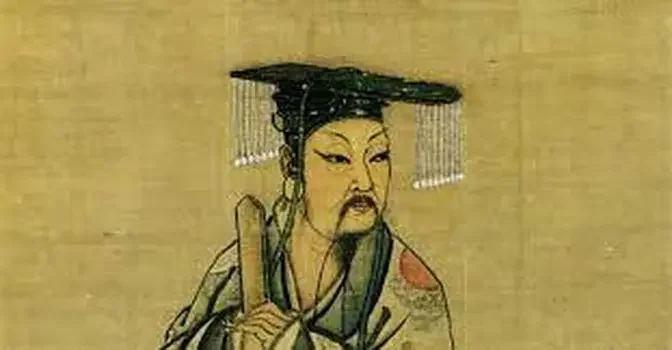
Yu the Great, also known simply as Yu, was a legendary figure in ancient Chinese history.
He is primarily remembered for his role in controlling the devastating floods that plagued
the early Chinese civilization. Born into a world where nature's fury threatened the very existence
of civilization, Yu rose to prominence with a mission that would define his legacy for
centuries to come. With the waters tamed and the land reclaimed, Yu emerged as a hero, revered by
his people as the savior of China. His legacy transcended mere mortal achievements, becoming
a symbol of resilience, wisdom, and the triumph of the human spirit over adversity. During the reign
of Emperor Yao in ancient China, the heartland faced relentless floods that hindered economic
and social progress. Emperor Yao entrusted Yu's father Gunn with the task of controlling these
floods. Gunn dedicated over nine years to constructing dikes and dams along the riverbanks,
using special self-expanding soil. Despite his immense efforts, the floods persisted,
baffling all attempts at control. When Yu reached adulthood, he inherited his father's mission and
embarked on a thorough study of the river systems. He sought to uncover why his father's extensive
efforts had failed. Through meticulous observation and analysis, Yu discovered the complexity of the
river networks and the limitations of his father's approach. He realized that a deeper understanding
of the natural forces at play was necessary to devise a more effective solution. Collaborating
with the semi-mythical agricultural master Hou Ji, Yu embarked on a transformative endeavor
that would shape the destiny of the Chinese heartland. Instead of relying solely on
conventional methods like building dikes and dams, Yu adopted a revolutionary approach to
flood control. Instead of directly damming the river's flow, Yu made a system of irrigation
canals, which relieved flood water into fields, as well as spending great effort dredging the
riverbeds. Despite facing immense challenges and dangers, Yu successfully managed to harness the
floods. For thirteen years, Yu dedicated himself wholeheartedly to the arduous work, eating,
sleeping, with the common workers, and spent most of his time personally assisting the work
of dredging the silty beds of the rivers. Yu's efforts in flood control earned him the admiration
of his people. He is revered as a hero and a symbol of determination, wisdom, and the triumph
of human ingenuity over nature's forces. Emperor Shun's admiration for Yu's remarkable engineering
feats and unwavering diligence led to a significant turning point in ancient Chinese history.
Despite being next in line for the throne, Emperor Shun chose to pass the mantle of leadership to
Yu is said to have initially declined the throne. However, his popularity among local lords and
chiefs coupled with their fervent support eventually convinced him to assume the role
of emperor at the age of fifty-three. This pivotal moment marked the establishment of the Xia
dynasty, widely regarded as China's first dynasty, with Yu as its founding ruler. Under Yu's wise
and judicious leadership, the Xia dynasty flourished for forty-five years, ushering in an
era of stability and prosperity. His visionary governance laid the groundwork for the consolidation
of power and the development of a centralized state, setting a precedent for future dynasties
to follow. Upon his passing from illness, Yu's legacy endured, and his contributions to Chinese
civilization were immortalized through various means of commemoration. The Yu Mausoleum, first
constructed in the 6th century AD during the Southern and Northern Dynasties period, stands as
a testament to his enduring influence and revered status. Upon his passing from illness, Yu's legacy
endured, and his contributions to Chinese civilization were immortalized through various
means of commemoration. The Yu Mausoleum, first constructed in the 6th century AD during the
Southern and Northern Dynasties period, stands as a testament to his enduring influence and revered
status.