
At Christminster Again, Chapter 4 Jude the Obscure
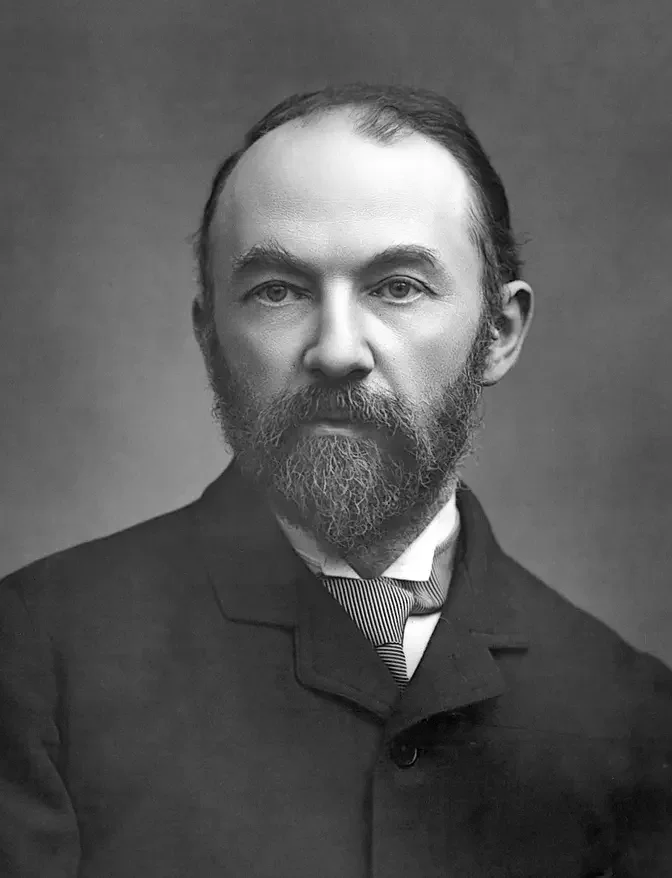
Part VI. Chapter IV of Jude the Obscure by Thomas Hardy
The man whom Sue, in her mental vault-fass, was now regarding as her
inseparable husband, lived still at Mary Green. On the day before the
tragedy of the children, Phillitson had seen both her and Jude as they
stood in the rain at Christminster watching the procession to the
theatre, but he had said nothing of it at the moment to his companion
Jillingham, who, being an old friend, was staying with him at the
village aforesaid, and had indeed suggested the day's trip to
Christminster.
"'What are you thinking of?' said Jillingham, as they went home.
"'The university degree you never obtained.'
"'Oh, no,' said Phillitson, gruffly. "'Of somebody I saw today.'"
In a moment he added, "'Susanna. I saw her, too. You said nothing.'
"'I didn't wish to draw your attention to her. But, as you did see
her, you should have said. How do you do, dear, that was?'
"'Ah, well, I might have. But what do you think of this? I have good
reason for supposing that she was innocent when I divorced her, that
I was all wrong. Yes, indeed. Awkward, isn't it? She has taken care to
set you right since, anyhow, apparently. Ah, that's a cheap sneer. I
should have thought to have waited unquestionably.'"
At the end of the week, when Jillingham had gone back to his school
near Shaston, Phillitson, as was his custom, went to Alfredston Market,
ruminating again on Arabella's intelligence as he walked down the
long hill which he had known before Jude knew it, though his history
had not beaten so intensely upon its incline.
Arrived in the town he bought his usual weekly local paper and when he
had sat down in an inn to refresh himself for the five miles' walk
back he pulled the paper from his pocket and read a while. The account
of the strange suicide of a stonemason's children met his eye.
Unimpassioned as he was, it impressed him painfully and puzzled him
not a little, for he could not understand the age of the elder child
being what it was stated to be. However, there was no doubt that the
newspaper report was in some way true.
"'Their cup of sorrow is now full,' he said, and thought and thought
of Sue and what she had gained by leaving him.
Arabella, having made her home at Alfredston, and the schoolmaster
coming to Market there every Saturday, it was not wonderful that in a
few weeks they met again, the precise time being just after her return
from Christminster, where she had stayed much longer than she had first
intended, keeping an interested eye on Jude, though Jude had seen no
more of her.
Phillitson was on his way homeward when he encountered Arabella and
she was approaching the town.
"'You like walking out this way, Mrs. Cartlet?' he said.
"'I've just begun to again,' she replied. "'It is where I lived as a
maid and wife, and all the past things of my life that are interesting
to my feelings are mixed up with this road, and they have been stirred
up in me too lately, for I've been visiting at Christminster.
Yes, I've seen Jude.'"
"'Ah?
How do they bear their terrible affliction?'
"'In a very strange way, very strange.
She don't live with them any longer.
I only heard of it as a certainty just before I left, though I had
thought things were drifting that way from their manner when I called on
them.'
"'Not live with her husband?
Why, I should have thought it would have united them more.'
"'He's not her husband, after all.
She has never really married him, although they have passed as man and
wife so long, and now, instead of this sad event making him hurry up
and get the thing legally done, she's took in a queer religious way,
just as I was in my affliction at losing Cartlet.
Only hers is of a more hysterical sort than mine.
And she says, so I was told, that she's your wife in the eyes of Heaven
and the Church, yours only, and can't be anybody else's by any act of
man.'
"'Ah!
Indeed!
Separated, have they?
You see, the eldest boy was mine.'
"'Ah!
Yours?'
"'Yes, poor little fellow, born in lawful wedlock, thank God.
And perhaps she feels, over and above other things, that I ought to have
been in her place.
I can't say.
However, as for me, I am soon off from here.
I've got father to look after now, and we can't live in such a humdrum
place as this.
I hope soon to be in a bar at Chrysminster or some other big town."
They parted.
When Phillitson had ascended the hill a few steps he stopped, hastened
back and called her.
"'What is or was their address?'
Arabella gave it.
"'Thank you.
Good afternoon.'
Arabella smiled grimly as she resumed her way and practised dimple-making
all along the road from where the pollard willows began to the old
almhouses in the first street of the town.
Meanwhile Phillitson ascended to Mary Green, and for the first time
during a lengthened period he lived with a forward eye.
On crossing under the large trees of the green to the humble schoolhouse
to which he had been reduced he stood a moment and pictured Sue coming
out of the door to meet him.
No man had ever suffered more inconvenience from his own charity,
Christian or heathen, than Phillitson had done in letting Sue go.
He had been knocked about from pillar to post at the hands of the
virtuous almost beyond endurance.
He had been nearly starved and was now dependent entirely upon the very
small stipend from the school of this village where the parson had got
ill-spoken of for befriending him.
He had often thought of Arabella's remarks, that he should have been
more severe with Sue, that her recalcitrant spirit would soon have been
broken.
Yet such was his obstinate and illogical disregard of opinion and of
the principles in which he had been trained that his convictions on the
rightness of his course with his wife had not been disturbed.
Principles which could be subverted by feeling in one direction were
liable to the same catastrophe in another.
The instincts which had allowed him to give Sue her liberty now enabled
him to regard her as none the worse for her life with Jude.
He wished for her still in his curious way if he did not love her and,
apart from policy, soon felt that he would be gratified to have her
again as his, always provided that she came willingly.
But artifice was necessary, he had found, for stemming the cold and
inhumane blast of the world's contempt.
And here were the materials ready-made.
By getting Sue back and remarrying her on the respectable plea of having
entertained erroneous views of her and gained his divorce wrongfully,
he might acquire some comfort, resume his old courses, perhaps return
to the Shaston school, if not even to the church as a licentiate.
He thought he would write to Gillingham to inquire his views, at what
he thought of his, Phillipson's, sending a letter to her.
Gillingham replied, naturally, that now she was gone it were best to
let her be, and considered that if she were anybody's wife she was the
wife of the man to whom she had borne three children and owed such
tragical adventures.
Probably as his attachment to her seemed unusually strong, the singular
pair would make their union legal in course of time and all would be
well and decent and in order.
But they won't.
Sue won't," exclaimed Phillipson to himself.
"'Gillingham is so matter-of-fact.
She's affected by Christminster's sentiment and teaching.
I can see her views on the indissolubility of marriage well enough, and I know
where she got them.
They are not mine, but I shall make use of them to further mine.'
He wrote a brief reply to Gillingham.
"'I know I am entirely wrong, but I don't agree with you.
As to her having lived with and had three children by him, my feeling
is, though I can advance no logical or moral defence of it, on the old
lines, that it has done little more than finish her education.
I shall write to her, and learn whether what that woman said is true
or no.'
As he had made up his mind to do this before he had written to his
friend, there had not been much reason for writing to the latter at
all.
However, it was Phillipson's way to act thus.
He accordingly addressed a carefully considered epistle to Sue, and,
knowing her emotional temperament, threw a radimantine strictness into
the lines here and there, carefully hiding his heterodox feelings not
to frighten her.
He stated that, having come to his knowledge that her views had
considerably changed, he felt compelled to say that his own, too, were
largely modified by events subsequent to their parting.
He would not conceal from her that passionate love had little to do
with his communication.
It arose from a wish to make their lives, if not a success,
at least no such disastrous failure as they threatened to become,
through his acting on what he had considered at the time a principle
of justice, charity and reason.
To indulge one's instinctive and uncontrolled sense of justice and
right was not, he had found, permitted with impunity in an old
civilization like ours.
It was necessary to act under an acquired and cultivated sense of the
same, if you wished to enjoy an average share of comfort and honour,
and to let crude loving-kindness take care of itself.
He suggested that she should come to him there at Mary Green.
On second thoughts he took out the last paragraph but one, and, having
rewritten the letter, he dispatched it immediately, and in some
excitement awaited the issue.
A few days after a figure moved through the white fog which enveloped
the Beersheba suburb of Christminster towards the quarter in which
Jude Foley had taken up his lodging since his division from Sue, a
timid knock sounded upon the door of his abode.
It was evening, so he was at home, and by a species of divination he
jumped up and rushed to the door himself.
Will you come out with me?
I would rather not come in.
I want to... to talk to you and to go with you to the cemetery.
It had been in the trembling accents of Sue that these words came.
Jude put on his hat.
It is dreary for you to be out, he said, but if you prefer not to come
in I don't mind.
Yes, I do.
I shall not keep you long.
Jude was too much affected to go on talking at first.
She too was now such a mere cluster of nerves that all initiatory
power seemed to have left her, and they proceeded through the fog like
agorantic shades for a while, without sound or gesture.
I want to tell you, she presently said, her voice now quick, now slow,
so that you may not hear of it by chance.
I am going back to Richard.
He has so magnanimously agreed to forgive all.
Going back?
How can you go?
He is going to marry me again.
That is, for form's sake and to satisfy the world, which does not see
things as they are.
But of course I am his wife already.
Nothing has changed that.
He turned upon her with an anguish that was well nigh fierce.
But you are my wife.
Yes, you are.
You know it.
I have always regretted that feint of ours in going away and
pretending to come back legally married, to save appearances.
I loved you, and you loved me, and we closed with each other, and that
made the marriage.
We still love.
You as well as I know it, Sue.
Therefore our marriage is not cancelled.
Yes, I know how you see it, she answered with despairing self-suppression.
But I am going to marry him again, as it will be called by you.
Strictly speaking, you too.
Don't mind my saying it, Jude.
You should take back Arabella.
I should.
Good God, what next?
But how, if you and I had married legally, as we were on the point of
doing?
I should have felt just the same, that ours was not a marriage, and I
would go back to Richard without repeating the sacrament if he asked
me.
But the world and its ways have a certain worth, I suppose.
Therefore I concede a repetition of the ceremony.
Don't crush all the life out of me by satire and argument.
I implore you.
I was strongest once, I know, and perhaps I treated you cruelly.
But, Jude, return good for evil.
I am the weaker now.
Don't retaliate upon me, but be kind.
Oh, be kind to me, you poor wicked woman who is trying to mend!"
He shook his head hopelessly, his eyes wet.
The blow of her bereavement seemed to have destroyed her reasoning
faculty.
The once keen vision was dimmed.
All wrong, all wrong, he said huskily.
Error, perversity, it drives me out of my senses.
Do you care for him?
Do you love him?
You know you don't.
It will be a fanatic prostitution.
God forgive me.
Yes, that's what it will be.
I don't love him.
I must, must own it, in deepest remorse.
But I shall try to learn to love him by obeying him.
Jude argued, urged, implored.
But her conviction was proof against all.
It seemed to be the one thing on earth on which she was firm, and that
her firmness in this had left her tottering in every other impulse and
wish she possessed.
I have been considerate enough to let you know the whole truth, and to
tell it you myself, she said in cut tones, that you might not consider
yourself slighted by hearing of it at second hand.
I have even owned the extreme fact that I do not love him.
I did not think you would be so rough with me for doing so.
I was going to ask you.
To give you away?
No, to send my boxes to me, if you would.
But I suppose you won't.
Why?
Of course I will.
What?
Isn't he coming to fetch you?
To marry you from here?
He won't condescend to do that.
No, I won't let him.
I go to him voluntarily, just as I went away from him.
We are to be married at his little church at Mary Green.
She was so sadly sweet in what he called her wrong-headedness that Jude
could not help being moved to tears more than once for pity of her.
I never knew such a woman for doing impulsive penances as you, Sue.
No sooner does one expect you to go straight on, as the one rational
proceeding, than you double round the corner.
Ah, well, let it go.
Jude, I must say good-bye, but I wanted you to go to the cemetery with
me.
Let our farewell be there, beside the graves of those who died to
bring home to me the error of my views.
They turned in the direction of the place and the gate was open to
them on application.
Sue had been there often and she knew the way to the spot in the dark.
They reached it and stood still.
It is here I should like to part, said she.
So be it.
Don't think me hard because I have acted on conviction.
Your generous devotion to me is unparalleled, Jude.
Your worldly failure, if you have failed, is to your credit rather than
to your blame.
Remember that the best and greatest among mankind are those who do
themselves no worldly good.
Every successful man is more or less a selfish man.
The devoted fail.
Charity seeketh not her own.
In that chapter we are at one, ever-beloved darling, and on it we'll
part friends.
Its verses will stand fast when all the rest that you call religion has
passed away.
Well, don't discuss it.
Goodbye, Jude, my fellow sinner and kindest friend.
Goodbye, my mistaken wife.
Goodbye.
End of chapter four.