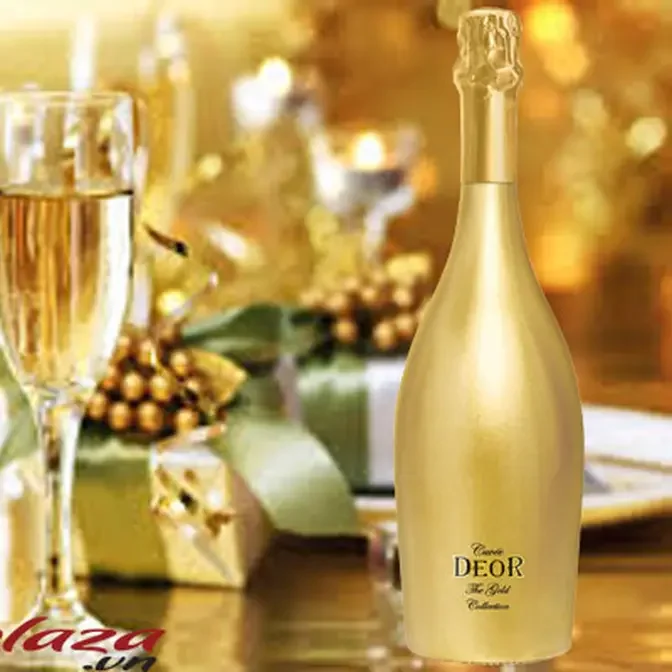
Exploring the World of Sparkling Wines: Champagne and More!
Napolean Bonaparte famously said: Champagne! In victory one deserves it, in defeat, one needs it! Sparkling wines, as vino lovers know, are the epitome of celebration and elegance, and have captivated the senses and imagination of connoisseurs and casual drinkers alike. From the sun-drenched hills of Champagne to the picturesque landscapes of Prosecco, sparkling wines come in a mesmerizing array of styles and flavors. Whether it's the crisp, delicate notes of a Brut or the rich, fruity undertones of a Demi-Sec, these wines are not just beverages but a dance of aromas and flavors in every glass. Let us take you on a journey through the most popular Sparkling wines in the world. Wine enthusiasts are going to love this!
In today's video we look at Exploring the World of Sparkling Wines: Champagne and More!
Subscribe for wine education, wine learning, and wine courses. Inspired by Konstantin Baum, Wine Folly, and V is for Vino Show.
Inspired by Why Real Champagne Is So Expensive | So Expensive
Inspired by Pop the Bubbly! How Champagne is Made!
Inspired by Sommelier Tries 12 Sparkling Wines ($17 to $550) | World Of Wine
Napoleon Bonaparte famously said,
Champagne, in victory one deserves it,
in defeat one needs it.
Sparkling wines,
the epitome of celebration and elegance,
have captivated the senses and imagination
of connoisseurs and casual drinkers alike.
From the sun-drenched hills of Champagne
to the picturesque landscapes of Prosecco,
sparkling wines come in a mesmerizing array
of styles and flavors.
Whether it's the crisp, delicate notes of a Brut,
or the rich, fruity undertones of a Demisec,
These wines are not just beverages,
but a dance of aromas and flavors in every glass.
Let us take you on a journey
through the most popular sparkling wines in the world.
Welcome to Wine Basics by Filippino,
where we create wine education videos
for beginners and wine lovers.
Champagne, the pinnacle of sparkling wine luxury
and renowned for being among the most prestigious
in the world,
boasts a unique and captivating history.
The birth of Champagne bubbles was not a deliberate act,
but rather the serendipitous outcome
of a natural phenomena
within the chili-chalk cellars of the Champagne region.
There, the cold temperatures often stopped fermentation
mid-process,
but with the arrival of spring,
the warming cellars reawakened the dormant yeasts,
triggering a secondary fermentation
that magically infused the wine
with its signature carbon dioxide bubbles.
The influential cellar master, Dom Perignon,
played a pivotal role in Champagne's evolution.
Intrigued by the unexpected bubbles in his wine,
Dom Perignon sought wisdom from his peers in Les Meux,
where sparkling wine techniques had been honed since 1531.
The Champagne region is situated
a mere 80 miles northeast of Paris.
Records suggest that the first Champagne was crafted
around 1663,
marking the beginning of a legacy
that continues to symbolize refinement
and celebration worldwide.
To meet some of the strictest appellation rules in France,
the grapes must be grown, fermented, and bottled
in Champagne.
Champagne's cool continental climate
and white chalk soils,
marine microorganisms,
and limestone subsoil
are perfect for growing the Chardonnay,
Pinot Noir,
and Pinot Meunier varietals
that make up 99.7% of the vineyards.
These are the stars of the famous Champagne blend.
Champagne must be made
using the méthode Champenoise,
or traditional method,
where second fermentation occurs in the bottle
before it's disgorged to remove the sediment.
Some rules require a Champagne label
to have an elegant presentation.
Non-vintage Champagnes
must age in a bottle
for a minimum of 15 months,
while vintage Champagnes
must age for a minimum
of three years before release.
There are currently about 260 Champagne houses.
A decent bottle starts at around $40,
but the sky's the limit.
The most expensive bottle of Champagne,
a unique collector's edition,
recently sold for $2.5 million at auction.
Prosecco is arguably
the most popular sparkling wine category
after Champagne.
Prosecco can only be made
in the northern Italian provinces
of Veneto and Friuli Venezia Giulia.
Prosecco was first made in the 1700s.
The terroir of ancient glaciers
composed of sand, clay, large pebbles,
and calcareous marl,
along with a mild microclimate
that has generous sunshine and rain,
is ideal for the production of the glera grape,
the varietal used in Prosecco.
Similar to Champagne,
Prosecco is named after the village of Prosecco.
Prosecco is made using the charmat,
or tank method,
where second fermentation occurs
in a pressure-sealed tank,
holding in carbon dioxide.
Once the second fermentation is complete,
the wine is bottled
and immediately released on the market.
Prosecco only achieved worldwide popularity
in the late 21st century
as it was an excellent alternative
to notoriously expensive Champagne.
Another major contrast to Champagne
is that Prosecco,
DOCG,
is made only using white wine.
With prices starting from around $15,
this marvelously made sparkling wine
is a very tasty value for the money.
It's also a popular choice
when making mimosas.
Cava
Spain's answer to the world of sparkling wines
is a delightful blend of tradition
and vivacious character.
Originating primarily
from the Panades region of Catalonia,
Cava is crafted using the métode traditionnel,
the same method used in Champagne,
which endows it with its characteristic
effervescence and depth.
What sets Cava apart
with its unique blend of native grape varieties,
Macabeo,
Peralada,
and Zarello,
which impart a distinctive fresh and fruity profile,
often interlaced with hints of citrus,
green apple,
and almond.
Ranging from the light and approachable
to the rich and complex,
Cava is not just a symbol of celebration,
but also a testament
to Spain's rich viticulture heritage.
Cava wines must bottle age
for a minimum of nine months,
while Cava Reserve must stay in the cellar
for 15 months before they can be released for sale.
A bottle of this fantastic Cava
can cost as little as $11.
Clément from France
has eight different appellations.
In Alsace,
Lemieux,
Jura,
the Loire Valley,
Bordeaux,
Burgundy,
Savoie,
and the Rhône Valley.
Depending on which region it comes from,
Clément can be made from a variety of different grapes
and is made using the traditional method,
the same process that is used in Champagne.
Clément has very fine bubbles
and an outstanding complexity,
is available in a white and rosé,
and is a very good alternative to Champagne.
Sekt,
the sparkling treasure of Germany and Austria,
is predominantly produced from Riesling,
Pinot Blanc,
and Pinot Noir grapes.
The majority of Sekt
is made using the Charmat method,
also known as the Tank method,
which allows for the preservation of the grapes'
offering a more approachable
and light profile.
However,
the finest Sekts
are produced using the traditional method,
yielding wines with greater complexity and depth.
These premium Sekts
often showcase intricate notes of green apple,
citrus,
and a crisp minerality,
reflecting the cool climaté oise of Germany and Austria.
Sekt's versatility ranges from dry to sweet,
catering to a spectrum of palates.
Franciacorta,
Italy's hidden gem in the world of sparkling wines,
stands out as a symbol of refinement and excellence.
Nestled in the heart of Lombardy,
near the shores of Lake Iseo,
this region is renowned for producing
some of Italy's most prestigious sparkling wines.
Crafted using the traditional method
of secondary fermentation in a bottle,
similar to Champagne,
Franciacorta wines are known for their elegance,
complexity,
and exquisite balance.
These wines are characterized by subtle notes of ripe fruit,
toasted bread,
and almonds.
Non-vintage Franciacorta cannot be released
until at least 25 months after harvest,
of which 18 months must be on its lease in the bottle.
Lambrusco,
a unique and spirited sparkling red wine from Italy,
offers a delightful contrast
to the more commonly known white sparklers.
Hailing from the Emilia-Romagna region,
this effervescent wine is renowned for its vibrant ruby color,
refreshing fizz,
and jovial character.
Made primarily from the Lambrusco grape,
this wine comes in various styles,
bursting with lively flavors of red berries,
cherries,
and hints of floral and earthly undertones.
The fresante style,
or lightly sparkling nature of Lambrusco,
is achieved through the trimat method
the majority of the time,
the same method used in Prosecco.
Once overshadowed by its sweeter commercial versions,
today's Lambrusco has undergone a renaissance,
reclaiming its status as a quality wine
that encapsulates the joyous spirit of Italian dining.
Asti Spumante is a style of bubbly wine
that hails from the picturesque hills
of the Asti province in Piedmont.
This sweet aromatic wine,
primarily made from the Moscato Bianco grape,
is celebrated for its light,
frothy character
and enhancing floral and fruity notes.
Unlike other sparkling wines,
Asti Spumante is produced using a single fermentation process
in pressurized tanks,
which preserves the grape's natural sweetness
and fresh, grapey flavors.
This results in a lower alcohol content
and a delightful effervescence
that tickles the palate.
The wine's signature flavors include peach,
apricot and hints of citrus,
with a delicate bouquet
often reminiscent of acacia and rose petals.
Asti Spumante's sweetness and lively mousse
make it a popular choice for beginner wine drinkers.
Pitti on Natarelle, affectionately known as Petna,
represents the raw, unadulterated expression
of sparkling wine.
This ancient method,
also known as Metode Ancestrale,
predates the more controlled processes used in Champagne.
Petna is made by bottling wine
before the first fermentation is complete,
without the addition of extra yeasts or sugars.
This natural process
allows the fermentation to finish in the bottle,
trapping carbon dioxide
and creating a gentle,
often cloudy, effervescence.
The result is a wine that is delightfully unpredictable.
Varied in its flavors and textures,
Petna can be made from almost any grape variety,
leading to a wide spectrum of flavors,
from bright and fruity to complex and earthy.
These wines are typically lower in alcohol,
unfiltered and often have no added sulfites,
appealing to those seeking a more organic
and artisanal wine experience.
Petna's spontaneous nature
captures the essence of the terroir
and the winemaker's art,
offering a refreshing, rustic alternative
to more polished sparkling wines.
And there's your list of sparkling wines to try!
Let us know in the comments
Sparkling wines are not just about the celebration.
They are a celebration in themselves,
a joyful expression of the land,
the climate,
and the people who craft them.