
Master of Wine Leads a Blind Tasting Master Class of French White Wines
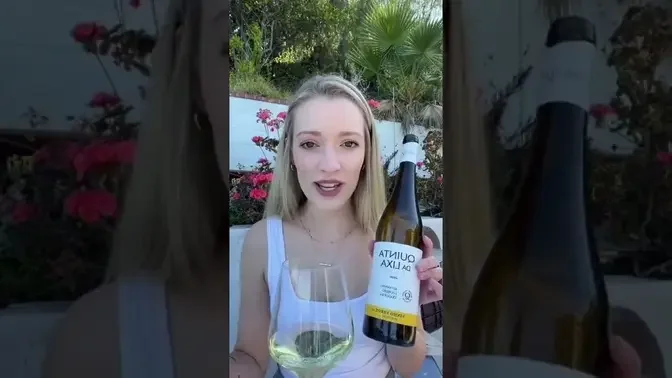
So we got it right. So you see, so the exercise, sit down, sit down, not going anywhere yet.
Okay.
Hello.
Hi, my name is Elle, wine newbie.
And I'm Patrick Farrell, master of wine.
Some of the viewers had raised the question, how one goes about learning how to do blind tasting.
And the answer is you need experience.
And the way we gain that experience is by open label tasting.
I happen to have a group of four wines that we're going to taste together open label.
And then we're going to put them in bags and you're going to taste some blind.
I'll taste some blind and play with you as well.
Wish I can get all.
It'll be fun.
There's usually some rhyme or reason why I'm picking out the group of wines.
It could be same variety from different countries.
It could be wines all coming from the same region.
In which case, phrasing this as we would on a master of wine examination,
we have four wines from one country.
Each wine is a single variety wine.
And there are four different varieties represented.
Okay, so one country, four different varieties.
We have a Graverse du Miner from Alsace.
Chardonnay from Burgundy.
A Sauvignon Blanc from the Loire Valley.
And we have a Chenin Blanc from the Loire Valley.
And so even with this, let's talk about what order we want to taste the wines.
The order that I would suggest that we taste the wines,
Graverse du Miner can be very powerful.
That will probably be our last wine.
I would go with the Sauvignon Blanc first,
the Chardonnay second,
the Chenin Blanc third.
In France, folks would be going nuts.
Yes, calling the Graverse du Miner a Graverse du Miner,
but Chenin Blanc is a Vouvray,
the Burgundy Chardonnay is a Saint-Veron,
and the Sauvignon Blanc is a Pouilly-Fumé.
So let's just do them one at a time.
Being served by a bottle of wine.
I'm using two hands because the bottles are cold
and the outside of the bottles are very wet.
Last thing I want to do is just have a punt and then drop it.
Let's take a look at the wine.
So we've poured our first wine,
which is the Sauvignon Blanc Pouilly-Fumé.
Light in color.
I got some green apple,
some green, slight vegetative characteristic as well,
and some mineral.
What is vegetative?
Vegetative would be tasting like some vegetables.
Sauvignon Blanc, more so from New Zealand,
can taste like, can have asparagus,
could have green bean,
could have cat pee,
but here we're getting the green apples,
maybe some slight herbal note,
and similar flavors.
Oh, you should say something.
I just swallowed it.
That's okay.
I couldn't help it.
It's called a normal.
That's what you normally do.
So for me, this is medium bodied.
It's got crisp acidity.
The alcohol is about 13.
On the label it's 12.5%.
I don't have any tannins here.
I don't get any buttery, malolactic notes.
And the finish is good.
So it's a very fresh style of Sauvignon Blanc
with crisp acidity, reasonably long finish.
A nice wine.
And the key is, let's taste it again,
because when we come back,
we're going to taste the wines blind.
Okay.
Now you have to focus.
I focused.
And the key note is that green note.
That's what we're going to be looking for
on the aroma and on the palate
when we come back to it.
So the Sauvignon Blanc's key note was the green note.
The green note and the crisp acidity.
Now we have the Burgundy made from Chardonnay.
And the color's just a hint,
a hint deeper in color, right?
Let's see what we smell here.
And it's not as expressive.
There's not as much aroma there.
So it's fairly, I get some neutral fruit.
There's fruit there, but it's hard for me to put a name on it.
Maybe a hint of oak, I'm not sure.
On the palate, this is a little fuller embodied.
Maybe medium plus embodied.
The acidity's not as good as the previous wine.
I think the alcohol's a little higher.
And this is a tiny bit higher.
13%.
I get some slight tannin on the finish.
I get a creaminess on the palate.
And that creaminess is from stirring the leaves.
And also I get a slight buttery characteristic.
Where does this butteriness come from?
The butter comes from a malolactic fermentation.
So it's a second fermentation.
That first fermentation is a yeast fermentation
that converts sugar to alcohol.
And the malolactic fermentation is a bacterial fermentation
that converts malic acid,
which there's a lot of malic acid in apples.
It's the acid that one finds in apples,
and converts that to lactic acid,
which is a less strong acid,
which is the acid one finds in dairy products.
And one of the side effects or a side reaction
is forming this compound called diacetyl.
And diacetyl, in small amounts,
can have a buttery characteristic.
And if it's in small amounts,
that can be a positive thing in wine.
If, on the other hand, you have a wine that's much riper,
instead of forming compounds that taste like butter,
they form compounds that taste like popcorn
that has artificial butter on it,
or butterscotch, or rancid butter.
And you don't want that.
Which is great for the popcorn lover.
Great for the popcorn lovers,
but not for the wine lovers.
So now let's do the third one.
So now we've got this Vouvray.
And again, similar color,
maybe a hint more color,
but very close to the other wines.
And so the nose here,
I have two characteristics,
or maybe three.
There's a slight floral note to it.
There's a slight wet wool.
Wet wool or wet dog.
And a slight characteristic of hay.
Is that hay?
Hay, yes.
What is hay?
Hay!
Hay, hay!
Hay, you!
Get off of my cloud!
So what is hay?
Hay is fed to dried grass
that's fed to horses,
fed to cattle.
So I'm going to take a taste.
So I get similar taste,
but I also get apple.
Now if I was a real pro,
I'd be able to tell you what type of apple,
but it just tastes like apple to me.
Green apple.
Very good.
Very nice acidity.
The alcohol level,
I think again,
we're in that same 12.5-13%
Park, let's see what they've got on their label.
12.5%.
Pretty low.
I don't have any malolactic notes.
I don't have any taste of wood,
but I do get a slight astringency on the finish.
So it has some tannin,
and it's probably either tannin from an old wooden vessel
or tannin from some skin contact.
One of the two.
But in either case,
also good length,
first three,
very nice wines,
but representative of what they are.
Not only the variety,
but the place.
First wine does taste like
Sauvignon Blanc from the Loire Valley.
Second wine tastes like
Chardonnay from Burgundy.
And the third wine tastes like
Chenin Blanc from the Loire Valley.
Vouvray is an interesting region
in that sometimes the wines are dry.
This is pretty dry.
At other times,
they can be slightly sweet
or they can be very sweet.
So you can get from Vouvray
a whole range of sweetness,
from dry, medium sweet, very sweet.
Ready for the Gewürztraminer?
OK.
And you may notice that the bottle
is shaped differently, right?
It's shaped more like the bottles
that we find from Germany.
And in fact, Alsace has at times been French,
at times has been German.
I just came back from a wine trip to Alsace
and it's wonderful.
The wines are spectacular.
How was your trip?
It was wonderful.
I was in Alsace for a week.
It was a master wine trip.
So I was with friends of mine
who are all smart and they love wine
and we had wonderful seminars
and tastings and meals.
It was fantastic.
I want to join with you next time.
But you have to be a master of wine.
To go on a master of wine trip
you have to be a master of wine.
OK, so our fourth wine
has the most color, right?
It's a deeper yellow color.
The legs are a little bit more pronounced.
It's just a thicker wine.
So let's take a smell.
And what I get,
this is a classic Gewürztraminer smell.
So when you're tasting wine,
you want to have one of the wines on the test
because this is what the Brits call a banker,
something you can take to the bank.
And so the classic aromas for Gewürztraminer
are roses, and I get roses here,
and you can either pronounce it
leachies or lychees,
but leachies as well.
And that's here in spades.
And so this has a little residual sugar,
some slight sweetness,
very vibrant fruit.
It's the least acidic of the four wines,
but still balanced.
It's the fullest body of the four wines.
It has the highest alcohol.
It's 14%.
It's got a very nice length.
I felt a little bitterness.
You got some bitterness.
And it's true.
It has some slight bitterness.
And actually, that's from some slight tannin.
Gewürztraminer grapes are not green grapes.
They're pink grapes.
So they have more tannin in their skins.
And so Gewürztraminer can have some slight tannin on it.
I did a good job.
You did a very good job.
So let's think about it again.
So the first wine, Sauvignon Blanc from the Loire Valley,
Boudifume.
And that wine has the characteristics,
had some green notes, slight vegetal notes,
mineral, very crisp acidity,
were the defining characteristics of it.
No malolactic, no oak.
Second wine, Chardonnay, the burgundy,
having more of a neutral smell and flavors,
some slight oak on that,
as well as butteriness
and creaminess from the malolactic fermentation.
A little fuller bodied.
Slightly fuller bodied still is the Vouvray,
the Chenin Blanc,
and that had the wet wool,
slightly floral,
apple,
slight amount of hay.
And the last wine was the fullest bodied of all four wines.
Had the highest alcohol,
deeper color,
and that's the Gewürztraminer,
which had classic lychees and roses.
So you and I are going to take a walk away.
OK.
And Min,
you're going to switch our glasses around
just a little bit.
OK.
I like to do it.
So now we're back
and the order of our glasses has been changed.
We don't know how it's been changed.
This was the order that we tasted in,
but that's probably not the order now.
So let's take a look.
The colors are still pretty close,
though I think that the first wine,
I'll ask you,
which do you think is the darkest of the wines now?
For me, those are all the same.
All the same.
The fourth one is lighter.
Right.
Those are about the same.
I think the first one for me was the darkest wine.
Let's just take a sniff of the wines without tasting.
Let's do the first one together.
And what does that smell like to you?
And you're saying I'm not sure is also OK.
Give me one more second, please.
It's not Sauvignon Blanc.
It's not Sauvignon Blanc?
Let's do this. Let's take a taste.
I've got to try number two first.
What you need, though,
you need to take a sip of water,
because otherwise you'll be carrying
the characteristics of this wine over to this one.
It's harder than I thought.
Lychee?
I thought I smelled lychees as well.
And there's a little bit of tannin,
a little bitterness on the finish.
And the only other wine by color
that could be the Gewürztraminer
would be the second wine.
So let's take a look at the second wine.
So we think this could be the Gewürztraminer,
but we want to taste the second wine,
and that will give us some more confidence, OK?
And so this wine...
I'll let you do the talking.
How is this wine different?
It has more acid.
More acid, absolutely.
This is the first one,
and I think it has one sip more.
She's swallowing it.
Apple?
She's swallowing it.
That's OK, that's OK.
I'm enjoying it.
Apple?
Uh-huh, green apple, yep.
I thought it also had some wet wool and some hay.
Wet wool means Chenin Blanc.
It could be the Chenin Blanc, yes.
But that's our first takeaway.
You know, usually you go back and you retaste things.
Let's try the third wine.
I don't really smell a lot.
Am I drunk?
No.
It's the least expressive on the nose.
OK.
So it's a bit muted.
It's a bit muted.
On my first go around,
I said that this had some neutral fruit
and maybe a hint of oak.
Chardonnay.
On the palate, it's got some buttery notes.
On the finish, not as crisp as the Chenin Blanc.
I feel less butteriness than the first time.
The butteriness, I find, it's not happened up front.
I'm getting it just now.
So it takes a little while sometimes.
If it's a more subtle butteriness.
A little bit of butter in the wine is fine for me.
It's a quality white wine.
A lot of it is something I find to be revolting.
Now, some people love it.
And for people who love it,
I mean, there are people who love to buy cheap popcorn with artificial butter.
I don't.
You don't.
I don't.
Now, I actually had a Sauvignon Blanc class with Peter.
So you should be able to find Sauvignon Blanc in here.
Which one is it?
This one.
OK, I'll try.
This one.
It's weird because I smell Gochujang.
Do you know what Gochujang is?
It's red pepper.
So again, for both Cabernet Sauvignon and Sauvignon Blanc,
even though one's red and one's white,
first off, they're relatives.
Capsicum, which is bell pepper,
is a taste characteristic, can be, of either one.
And then variants thereof.
Oh, you got it then.
Yeah.
So we thought that the first one was the Gewürztraminer.
The second one was the Chenin Blanc.
The third, the Chardonnay.
And the fourth one, the Sauvignon Blanc.
They did it the smart way.
They just reversed the order.
Exactly, so we can remember.
You got it.
So we got it right.
So the exercise, sit down.
Sit down.
Not going anywhere yet.
OK.
What we did is that we open label tasted four single variety wines
from different classic regions in France.
They were all nice wines.
And talked about the aroma, color, structure, flavors of the wines.
Wrote those down.
And then we went back and the wines were mixed around for us.
So now we're tasting it blind.
So now we have the blind tasting.
And we are looking for those characteristics.
And we found them.
That's how you learn how to blind taste.
The additional thing would be tonight when you get home,
for you to read a little bit about Chenin Blanc,
Gewürztraminer, Sauvignon Blanc, Chardonnay and the regions.
And so by doing that, it reinforces what you learned.
And then you start carrying around in your memory
what the taste characteristics are of those varieties.
So what we did is that we had an open label tasting of four wines.
Then we blind tasted the four as well with the order being mixed up.
We showed that it's a good learning exercise.
It's fun.
And in Elle's case, she got to drink the wine.
So it's all a good thing.
So have fun.
Try this with your friends.
And give us a like and subscribe.
And hopefully we'll see you soon.
See you soon!
Cheers!
Bye! Cheers!
What we'd like to ask the viewers
is whether they thought that this was at a beginner's level
or at an intermediate level.
Was it a useful way to learn about wine?
They like our choices in the wines.
Hopefully many of these wines may be available in Korea.
These are available in many parts of the United States.
Certainly available in Europe.
So give us some feedback.
Tell us if you liked it.
Give us some comments.
Comments are always good.
One, two, three.