
The Mysteries of the Turin Papyrus: Forgotten Secrets from the Age of the Pharaohs
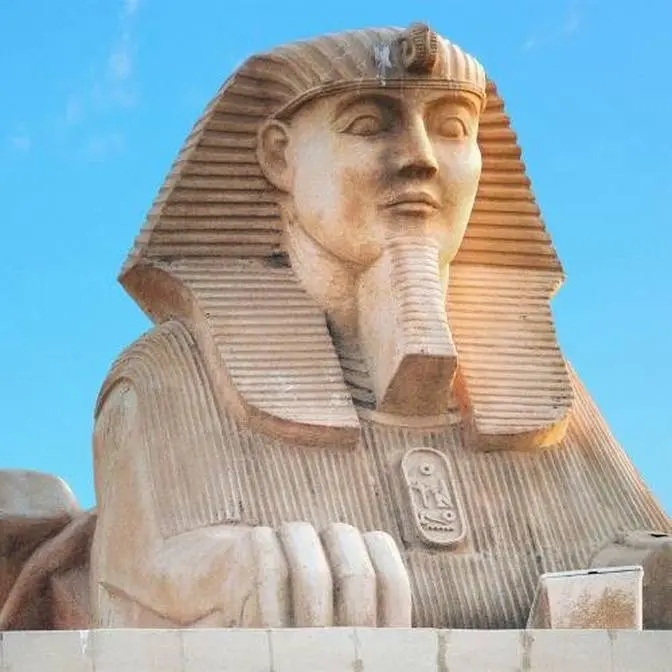
Deep within museum vaults, ancient texts whisper tales of long-lost worlds.
These fragile papyrus fragments unlock ancient mysteries.
The Westcar Papyrus, a captivating and enigmatic document.
It offers a glimpse into ancient Egypt's magic and mystery.
Imagine stepping back to King Khufu's court over 4,500 years ago.
The air, thick with incense, music, and laughter.
Here, the tales of the Westcar Papyrus unfold.
These stories reveal the beliefs and practices of ancient Egyptians.
The Westcar Papyrus is a cultural treasure trove.
Its pages offer insights into their religious and social life.
From magical spells to tales of kings, it fascinates us today.
The Westcar Papyrus transports us to the Old Kingdom of Egypt,
a time of immense cultural and technological advancement.
The pyramids, those enduring symbols of Egyptian ingenuity,
were already ancient wonders when the tales of the Westcar Papyrus were first recorded.
It is a time when the pharaohs ruled as gods on earth,
their power absolute, their word law.
Life in ancient Egypt was a tapestry woven with threads of religion, mythology, and magic.
The Egyptians believed in a pantheon of gods and goddesses,
each with their own unique powers and domains.
Magic was an integral part of their worldview,
a force that permeated every aspect of their lives.
The Nile River, the lifeblood of Egypt, flowed through the heart of this civilization.
Its annual floods brought fertility to the land, sustaining the people and their crops.
The Egyptians viewed the Nile as both a blessing and a source of mystery,
its depths teeming with creatures both real and imagined.
The stories within the Westcar Papyrus reflect these beliefs and realities,
weaving together the mundane and the magical, the historical and the mythical.
Through these tales, we gain a deeper understanding of the ancient Egyptian psyche,
their hopes and fears, their beliefs and values.
The Westcar Papyrus takes us to the court of King Khufu,
the pharaoh who commissioned the construction of the Great Pyramid of Giza.
Khufu's reign is shrouded in mystery, his true nature a subject of much debate among historians.
Was he a ruthless tyrant, as some accounts suggest, or a wise and just ruler?
The stories within the Westcar Papyrus offer tantalizing glimpses into Khufu's court
and the characters who inhabited it.
We encounter magicians and priests, princes and courtiers,
all caught within the web of intrigue that surrounded the pharaoh.
The Papyrus presents Khufu as a ruler both powerful and vulnerable,
a man fascinated by the mysteries of magic and the promise of eternal life.
The tales unfold against the backdrop of Khufu's reign,
a time of immense ambition and architectural achievement.
The construction of the Great Pyramid was a monumental undertaking,
requiring the labor of thousands and the ingenuity of Egypt's finest architects and engineers.
The stories in the Westcar Papyrus, with their blend of magic and realism,
provide a unique perspective on this pivotal period in Egyptian history.
Our story takes us to the heart of the 19th century,
a time when the sands of Egypt were yielding their secrets to intrepid explorers.
Among those drawn to the ancient land was Henry Westcar,
a British adventurer with a passion for antiquities.
Westcar's travels took him deep into the Egyptian countryside,
far from the well-trodden paths of tourists and treasure hunters.
He ventured into forgotten tombs, explored crumbling temples,
and bargained with local merchants for artifacts.
Driven by an insatiable curiosity,
Westcar was determined to unearth treasures that would illuminate the past.
He possessed a keen eye for detail and a sharp mind for deciphering ancient scripts.
His reputation as a skilled explorer spread, attracting collectors and scholars.
Westcar's travels were not without their perils.
The Egyptian desert could be harsh and unforgiving, testing human endurance.
He faced dangers from wild animals, treacherous terrain, and bandits.
Yet, undeterred, Westcar pressed on, his thirst for discovery outweighing the risks.
The year was 1824, and Westcar found himself in the ancient city of Thebes,
a place steeped in history and legend.
Thebes, with its towering temples and colossal statues,
had once been the capital of Upper Egypt,
a testament to the power and grandeur of the New Kingdom pharaohs.
Now, it lay in ruins, its former glory buried beneath centuries of sand and debris.
While exploring the labyrinthine passages of a lesser-known tomb near the Valley of the Kings,
Westcar stumbled upon a group of local men engaged in a clandestine activity.
They were huddled around a small fire, their faces illuminated by the flickering flames,
their voices hushed as they examined something hidden beneath a tattered cloth.
Intrigued and sensing an opportunity, Westcar approached cautiously,
his hand resting on the revolver tucked into his belt.
As he drew closer, he overheard snippets of their conversation.
Words like papyrus, ancient and valuable, piqued his interest.
The men, sensing his presence, quickly extinguished their fire and scattered,
leaving behind the object of their clandestine meeting.
Westcar, his pulse quickening with anticipation,
approached the discarded cloth and carefully lifted it,
revealing a roll of papyrus covered in faded hieroglyphs.
The papyrus, fragile with age, seemed to hum with an energy that sent shivers down Westcar's spine.
He recognized the hieroglyphs as being considerably older than the more common
finds from the New Kingdom. These intricate symbols hinted at a time when the pyramids
were still young and the pharaoh Khufu ruled Egypt. Westcar secured the papyrus determined
to have it translated by skilled Egyptologists.
News of Westcar's discovery reached Carl Richard Lepsius, a rising star in Egyptology.
Lepsius, captivated by the text, contacted Westcar, eager to examine the papyrus.
The circumstances surrounding Lepsius's acquisition remained shrouded in mystery.
The Westcar papyrus made its way to Berlin, becoming part of the Neues Museum's collection.
Lepsius translated the ancient text, deciphering its faded hieroglyphs.
He realized it was a remarkable document, offering a glimpse into old Kingdom beliefs and storytelling.
However, whispers of its acquisition never died down.
Some questioned the legitimacy of Lepsius's claim. Accusations of theft and dishonesty lingered.
Despite the controversy, the Westcar papyrus remains a cornerstone of Egyptological study.
Its tales offer invaluable insights into ancient Egyptian beliefs and storytelling.
The papyrus stands as a testament to the enduring allure of ancient Egypt.
The Westcar papyrus, a tapestry of ancient Egyptian tales,
unveils its first story with an air of courtly intrigue.
We are transported to the court of King Khufu where his sons, eager to entertain their father,
take turns narrating tales of wonder and magic.
It is Prince Khafre, destined to become a pharaoh himself, who steps forward to recount the first
tale, a story that blends magic, revenge, and the complexities of human relationships.
Khafre's tale begins in a time shrouded in the mists of the past,
a time when magic was as real as the Nile River that flowed through the heart of Egypt.
He speaks of a wealthy man, a man of status and influence who suspects his wife of infidelity.
The man, consumed by jealousy and a thirst for revenge, seeks the help of a powerful priest,
a man rumored to possess knowledge of ancient and forbidden magic.
The priest, a man of wisdom but also of ambition,
listens intently as the betrayed husband pours out his heart, his words heavy with sorrow and anger.
The priest, sensing an opportunity to both display his power and gain favor with the influential man,
agrees to help. He promises to punish the unfaithful wife,
using his knowledge of ancient magic to exact a fitting retribution.
The tale unfolds revealing the intricate details of the wife's betrayal.
She has fallen under the spell of a charming but deceitful commoner,
a man who has captivated her heart with his words and promises.
Blinded by passion and driven by a desire for a different life,
she agrees to betray her husband, risking everything for a chance at forbidden love.
We see her, a woman of beauty and grace, torn between her duty to her husband
and her yearning for a love that promises excitement and adventure.
Her heart aches with the knowledge that her actions will bring pain and dishonor upon her family,
yet she cannot resist the allure of her secret love.
Her clandestine meetings with the commoner, hidden from the prying eyes of servants and neighbors,
are filled with stolen moments of passion and the ever-present fear of discovery.
The husband, driven by his suspicions, has his servants follow his wife,
their watchful eyes recording her every move.
They bring back to him tales of her secret rendezvous,
confirming his worst fears and fueling his desire for revenge.
His heart, once filled with love for his wife, now burns with the fire of betrayal,
each stolen glance, each whispered word, a searing indictment of her infidelity.
The priest, having listened to the husband's tale of betrayal, prepares a potent spell,
a magic born of ancient knowledge and fueled by the raw power of the Nile.
He takes a lump of beeswax, pliable and yielding,
and molds it into the shape of a fearsome crocodile,
its jaws agape, its teeth sharp and menacing.
As he works, he whispers incantations, imbuing the waxen figure with a life of its own.
The crocodile, a creature feared and revered in ancient Egypt,
becomes the instrument of the priest's revenge.
It represents the raw power of nature,
the primal forces that can be unleashed with a whisper of magic and a heart filled with vengeance.
The priest, his eyes gleaming with a mixture of power and malice,
presents the wax crocodile to the betrayed husband,
instructing him to place it in the path of his wife's lover.
The husband, his heart pounding with a mixture of anticipation and dread,
takes the wax crocodile and places it near the spot where he knows his wife's lover will pass.
He then retreats, hiding himself from view, his eyes fixed on the waxen figure,
his mind consumed with thoughts of the punishment to come.
As the sun begins its descent, casting long shadows across the land,
the wife's lover approaches the spot where the wax crocodile lies hidden.
He is oblivious to the danger that lurks in the shadows,
his mind filled with thoughts of his beloved and their next secret rendezvous.
As he draws closer, the magic of the priest's spell takes hold.
The wax crocodile, once inert and lifeless, stirs as if imbued with a malevolent spirit.
Its eyes, once dull and lifeless, now gleam with a cold, reptilian intelligence.
It lunges at the unsuspecting lover, its jaws snapping shut with terrifying force.
The man cries out in terror,
but his pleas are cut short as the crocodile drags him down into the depths of the Nile.
The husband, witnessing the horrific scene unfold before his eyes,
is overcome with a mixture of horror and remorse.
The swift and brutal revenge, orchestrated by his own hand,
fills him with a profound sense of guilt.
He realizes too late that his thirst for vengeance has unleashed a force that he cannot control.
A force that has consumed not only his wife's lover, but also a part of his own soul.
Prince Khafre concludes his tale, his voice resonating with a mixture of awe and caution.
The tale of the wax crocodile serves as a reminder of the power of ancient magic,
a power that can be harnessed for both good and evil.
It speaks to the complexities of human emotions,
the destructive nature of jealousy and revenge, and the enduring consequences of our actions.
The story, though ancient, resonates with timeless themes that transcend time and culture.
It reminds us that even in the pursuit of justice one must tread carefully,
for the line between righteous anger and blind vengeance is easily crossed.
The tale of the wax crocodile stands as a testament to the enduring power of storytelling,
its ability to transport us to different worlds, to confront us with moral dilemmas,
and to leave us pondering the mysteries of the human heart long after the story has ended.
Prince Khafre steps back, yielding the floor to his brother, Prince Bawafre.
Bawafre begins by painting a vivid picture of Sneferu, a king beloved by his people,
a man who ruled with a gentle hand and a compassionate heart.
The healers, despite their knowledge and skills, are baffled.
Sneferu, his heart aching with helplessness, refuses to give up hope.
As fate would have it, a wise sage arrives at Sneferu's court.
The sage reveals that the curse is linked to a precious amulet,
a talisman of protection that the concubine once wore but has since lost.
Sneferu, his hopes rekindled, immediately dispatches his most skilled divers to the lake.
They search tirelessly, yet the divers return empty-handed.
The sage instructs Sneferu to gather his court by the lakeshore for a powerful ritual.
As the sun begins its descent, the sage takes his place on the lakeshore, uttering words of power.
The waters of the lake begin to churn and roil.
Slowly, the waters recede, revealing the lakebed.
There, lying amidst the debris, shines a glimmer of gold, the amulet.
Sneferu immediately dispatches a diver to retrieve the lost treasure.
As the amulet is placed around the concubine's neck, a wave of peace seems to wash over her.
Within days, she is fully recovered, her laughter once again echoing through the palace halls.
Sneferu, overjoyed and eternally grateful to the sage, showers him with gifts and honors.
The Grand Hall of Khufu hums with anticipation.
Prince Baufri steps back, allowing his brother, Prince Harjadeff, to take center stage.
Harjadeff announces that his tale will delve into the past,
to the reign of King Djoser, and the legendary magician Dedi.
Dedi, his arrival heralded by gasps and murmurs, steps into Djoser's court.
Djoser presents him with a series of challenges.
For his first feat, Dedi demonstrates his control over the animal kingdom.
With a wave of his hand, he summons a pride of lions into the palace.
Djoser commands his servants to bring forth a prisoner.
Dedi agrees to the king's request but proposes an alternative demonstration.
He requests that a goose be brought to the hall.
With a swift movement, Dedi severs the goose's head and then restores it to life.
Dedi severs the goose's head from its body.
He raises his hands, uttering words of power, and the goose's head reattaches itself.
Dedi then calls for a bull and performs the same feat.
The courtiers watch in stunned silence as the bull's head reattaches itself to its body.
Djoser, awed by Dedi's abilities, offers him a place of prominence in his court.
Dedi declines, seeking only solitude and the pursuit of knowledge.
Harjadeff concludes his tale, emphasizing the wisdom and burden of Dedi's immortality.
The tales of the Weskar papyrus offer a rich tapestry of meaning.
One interpretation focuses on their potential role as subtle critiques of the monarchy.
Another interpretation emphasizes the moral lessons embedded within the tales.
The tales of the Weskar papyrus are filled with magical elements.
For the ancient Egyptians, magic was an integral part of life.
Modern interpretations of these magical elements vary widely,
from literal depictions to symbolic representations.
Section Three
The Enduring Allure of the Weskar Papyrus
The Weskar papyrus, despite its fragmentary state,
continues to fascinate and inspire us centuries after it was first inscribed.
Its tales offer a unique window into the hearts and minds of the ancient Egyptians.
The papyrus's appeal lies in its ability to transport us to a world both familiar and strange,
where magic is real, and kings grapple with human emotions.
The stories resonate with universal themes that transcend time and culture.
The Weskar papyrus serves as a reminder of the power of storytelling.
It connects us across cultures and millennia, igniting our imaginations.
Unraveling the Threads of Time
The Weskar papyrus offers a glimpse into ancient Egypt.
Its stories whisper of a time when magic was real, like the Nile River.
Kings sought wisdom from sages, and life and death were fluid.
Themes of love, loss, betrayal and power resonate today.
The papyrus reveals its secrets slowly, inviting us to piece together a bygone era.
It transports us to a different time and place.
Storytelling connects us across cultures and millennia.
Section Two
A Legacy Etched in Stone and Story
The ancient Egyptians believed that their stories, etched in stone and inscribed on papyrus,
held the key to immortality.
By preserving their deeds, their beliefs and their dreams,
they hoped to live on in the hearts and minds of generations to come.
The Weskar papyrus, a testament to this enduring belief,
stands as a bridge between their world and ours,
a tangible link to a civilization that continues to fascinate and inspire us.
As we conclude our exploration of this remarkable document,
we are left with a profound sense of wonder and a thirst for further discovery.
The mysteries of the Weskar papyrus, like the mysteries of ancient Egypt itself,
may never be fully unraveled.
Yet it is through our continued engagement with these ancient texts,
through our willingness to listen to their whispers from the past,
that we gain a deeper understanding not only of those who came before us
but also of ourselves.
What do you believe?
Were the tales of the Weskar papyrus reflections of actual magical practices
or did they serve as allegorical tales designed to teach and entertain?
Share your thoughts in the comments below
and let us continue to explore the mysteries of the past together.