
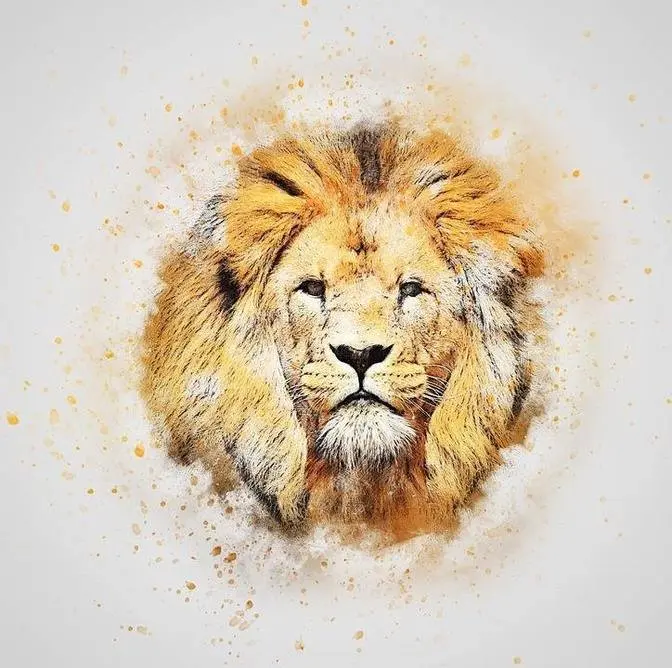
BAD Art Days and What To Do ABOUT Them | Lioness at Sunset Oil Painting
3 Video Views·Oct 8, 2024
We all have bad days, and as artists, sometimes that extends to our craft.
No one likes bad painting days, but we are also all human and they're just going to happen
sometimes.
And you know what?
That is totally okay.
This little fun piece that you're going to see me paint here was born out of a bad painting
day.
I had a series of projects that I was working on that were just not working out.
So every single brushstroke felt like a struggle and it was just not a good time, not a good
time at all.
But that doesn't have to be the end of things or even be the end of your painting session
or painting day.
It doesn't have to be like that.
So if you're new here, hey, I'm Dani.
I'm a self-taught artist that adores creating wildlife art with oils and is obsessed with
teeth, acronym naps, and fluffy corgi butts.
So let's say you're having one of those days.
You want to create some artwork, but it's just not going well.
Everything seems to be a struggle, not having a fun time, but you still want to persist.
You still want to put that time in, you still want to create art.
I've been there.
I've been there many, many times and I've developed some things that helped me to push
past that and turn a bad painting day into a much better painting day.
So one of the first things I like to do is to set the mood.
You want to make your art space a place where you want to spend time, a place that is happy
and joyful and filled with your favorite things.
Some of those favorite things can be your favorite music or podcast, audio book, maybe
it's even silence.
Sometimes my favorite things to listen to when I'm creating art is honestly like spa
music.
It just gets you in that headspace and whatever it is that you like listening to, highly recommend
putting that on.
Other things I like to have are some snacks and drinks.
Now of course you want to make sure that, especially if you're working with something
like oils, keep those snacks and drinks far away so there's no risk of, you know, getting
that paint in your snack or drink.
We've all been there where we've had a mug of like coffee or water next to your water
jar for your brushes and you know, takes a dip in the wrong one.
We don't want that, but having a snack or your favorite drink nearby, one of my favorite
ways to set the mood.
So the next thing is a little bit of an internal one, got the mood set, but sometimes you just
have to accept the fact that you are going to have bad days and that's totally okay.
You have to know that that's not permanent, doesn't mean you are a bad artist because
you had one bad day or created a not so great piece of artwork during that bad day.
No, you go through phases, you go through moods, you go through ups and downs and acknowledging
that and accepting that can actually do wonders for releasing that pressure to always be on
the ball in that great mood, creating great art.
If you ended up creating artwork that wasn't so stellar, then you know what?
Try again or paint over it.
Sometimes even physically destroying the artwork, whatever method you choose can be super cathartic
and feel so, so good and can also be a great way to push past a bad painting day.
Another thing you can do is to take a step back and learn about what made it a bad painting
day.
Maybe you were in an emotional funk.
If you recognize that, you can either learn not to create artwork while you were in a
state like that, or you can find ways to ease into a happier place.
Another perspective is if you are in a sort of emotional funk, which we all go through,
you can figure out ways to use your arnis, your artwork to like harness that energy and
turn it into a more therapeutic practice that can actually help you to ease through those
emotions that might feel unpleasant, but are very much a big part of life.
During one of these emotional funks or bad art days, you might find yourself being hypercritical
of your artwork, but it's really important to recognize that just because you create
one piece of artwork that you're not happy with, that is not a reflection of you as a
whole being, as a whole artist.
That is one blip in a lifetime of artwork that you were going to create.
So don't be so critical on yourself.
Giving ourselves that allowance to actually feel and have our ups and downs can be such
a magical thing as a human that feels and emotes, and also as an artist as well.
Another thing that I like to remind myself of when I'm having just one of those days
is that everyone goes through this.
Even those masters or those artists that you idolize, they went through crabby art days
too.
It happens to everyone.
And frankly, it's part of the process.
It's part of the process as an artist, it's part of the process of being human.
So just accept the fact that this will happen, it's not the end of the world.
Everyone has bad days, but it's up to you to decide how you want to deal with them.
That's where we can actually treat things a little bit more differently and ease our
way through it rather than fighting against these bad painting days that are inevitably
going to happen.
Do you let those bad days get the better of you?
Or do you accept that this happens and move on?
Sometimes one of my favorite ways to deal with that, accept it, and move on is to actually
take that artwork that I create with it, not always destroy it, but destroy it in a different
way.
One of my favorite things to do is when I do create a piece of artwork that I don't
love, maybe it be from a bad day or just not loving the direction that it took, is
to turn it into something new.
I like either letting it dry and then using it as a base for a new painting.
Or if I'm working with oil paint and the paint is still quite wet, sometimes I grab a big
fluffy blending brush and then give that all a nice blend so it's a big sort of fuzzy amorphous
blob and then turn that into a new painting.
Knowing there's something underneath kind of makes me smile.
It feels like there's another emotional layer for me.
So that's one of my personal tricks for taking artwork that you don't love and turning it
into something that you can love and grow from.
So that brings us to the end of this video.
If you are really eager to start learning how to paint realistic wildlife easily, I
think you'd really love the Wildlife Painting Academy.
You can learn more in the description of this video, but it is my huge library of full in-depth
painting tutorials on how to paint a ton of different animals and wildlife.
And I break everything down into super basic steps.
So even as a beginner, you can learn how to paint a realistic wildlife easily.
All right, friends, I will see you in the next video.