
How Christopher Nolan Manipulates You...
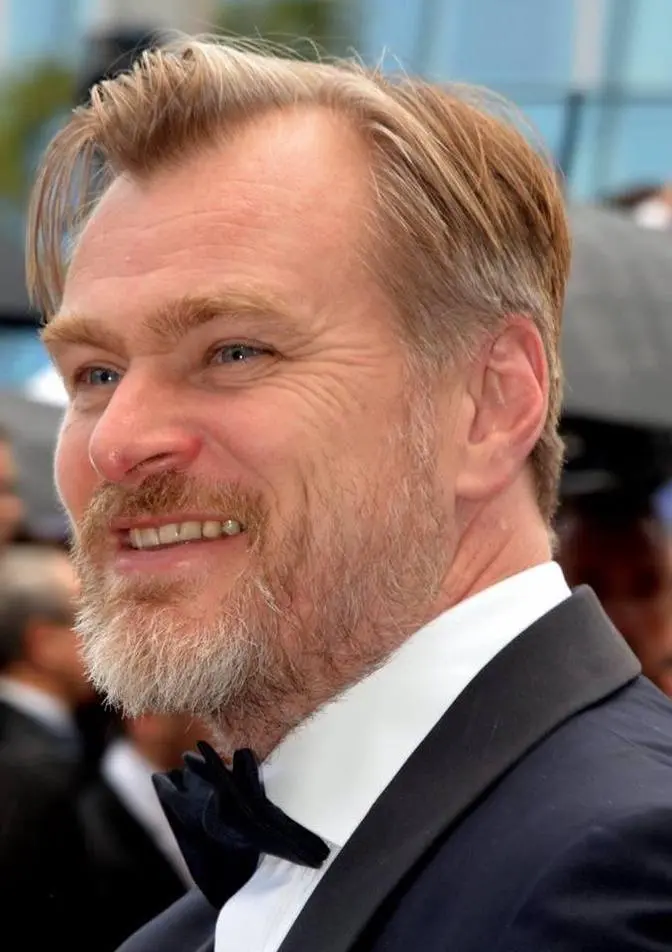
Few directors can manipulate our minds, emotion, and even the very soundscape like Christopher
Nolan.
He's a mastermind who knows how to bend time, twist reality, and keep you guessing
at every turn.
So settle in as we pull back the current on how Christopher Nolan manipulates the audience.
Christopher Nolan's fascination with manipulating time as a narrative device is a hallmark of
his work.
Nolan often employs non-linear storytelling, shifting between the past, present, and the
future.
This manipulation of time alters our perception of the narrative, making us active participants
in unraveling the story.
Rather than seeing this as a gimmick, Nolan uses this technique in order to control the
perspective of which the film is told.
So Memento is a film told backwards because I want to give the audience the experience
of someone who couldn't remember what had just happened.
So we invert the chronology and put the audience in that place.
This use of non-linear storytelling perfectly illustrates how Nolan puts us in the shoes
of the main character.
The best way to draw it is as a hairpin, like that.
That's basically the end of the movie.
This stuff is the black and white stuff.
This is color.
And what we do is we cut between the two, the whole way through.
So we alternate scene here, scene there, scene there, scene there, scene there, scene there,
and then meet towards the end of the film.
So you lie to yourself to be happy, there's nothing wrong with that.
We all do it.
Who cares if there's a few little details you'd rather not remember?
Through his unreliable memory, we not only witness his confusion, but experience it ourselves.
This unique narrative structure forces us to be active participants, just like Leonard
himself.
There's one thing you should know about me.
I specialize in a very specific type of security.
Subconscious security.
You're talking about dreams.
In Inception, Christopher Nolan skillfully manipulates time to capture the audience's
attention and reshape how they perceive reality.
He does this by creating a complex dream world with multiple layers, where each dream level
has its own unique sense of time.
These different timelines intertwine at crucial points in the story, adding excitement and
drawing the viewers deeper into the narrative.
And as these dreams pile up, it becomes increasingly challenging to tell what's real and what's
not.
Well, dreams, they feel real while we're in them, right?
It's only when we wake up that we realize something was actually strange.
Dreams are so intimate and small, and yet they have infinite potential.
The idea that has always fascinated me about dreams is everything within that dream is
created by your own mind as you experience it.
I wanted to make a film where the experience of dreaming was addressed in that real way.
So even as something extraordinary is happening, you're invested in the reality of that world.
Every great magic trick consists of three acts.
The first act is called the Pledge.
The magician shows you something ordinary, but of course, it probably isn't.
I think there's a very strong correspondence between filmmakers and magicians.
How do you create the sense of magic without just showing magic tricks?
Because magic tricks through the camera can be really meaningless.
Because of camera tricks, CG and all the rest, which the audience is very aware of that possibility.
So we decided to use the narrative itself, to use the story to create the sense of magic,
to create the tricks, if you will.
Within the intense rivalry between magicians Alfred Borden and Robert Angier, we witness
a masterclass in storytelling sleight of hand.
And the multiple narrators create ambiguity, making it a challenge for the audience to
discern which events are true.
This constant shifting of perspectives adds layers of misdirection.
This keeps us engaged, on the edge of our seats, and constantly guessing what comes next.
Are you watching closely?
It's a movie which really does involve immersion completely as an audience member.
You know, you have to stick with it, you have to pay attention to what is going on.
All the clues are there.
They're there, but what I love about it is that in the same way that when I read the
script first, I wanted to read the script straight away again.
Because what you realise by the end of it is not only are you watching a movie about
magicians and their rivalries, and it's not so much about magic tricks, it's not really
about showing that, except for this one particular one, which causes the rivalry between the
two of us, but that the entire movie itself is amazing.
The filmmaker has a very close relationship with the magician in terms of the way in which
we're using the release of information, the point of view.
We use those techniques to fool an audience.
While misdirection is a powerful tool in Nolan's arsenal, he's equally meticulous when it
comes to building immersive worlds in his films.
Dunkirk is a prime example of his dedication to historical accuracy in realism.
I'm used to having to create a whole fictional world, and then figure out the point of view
through it.
And with Dunkirk, it already exists, the world of it is real and exists, and just needs researching
and discovering.
And then I actually had the privilege of sitting down with some of the veterans who are still
remaining who were there, and hearing their stories directly, a lot of which worked its
way into the film.
So in that way, I built up my understanding of the world that the movie was taking on,
and then was free to sort of create my fictional characters and figure out my path through
those events.
Nolan's attention to historical accuracy isn't just about visual realism, it enhances the
emotional impact of Dunkirk.
By authentically recreating these events, he puts us in the shoes of the soldiers and
civilians that were there.
He places the audience directly on the beach, in the air, and on the water, making their
experiences now deeply relatable.
The tension I wanted from this story was that of suspense.
Because Dunkirk is a great ticking clock story, that's what distinguishes it from just being
about a battle, or a regular war film.
We even hear that clock in the Huntsman score.
Yeah, tick tock.
Pretty literal about it.
Exactly.
It is a ticking clock movie in every sense.
The film was shot in the actual place that these events took place, and I think that
set the tone for everybody involved with the film to really try and be as, I suppose, as
authentic and, you know, as accurate as possible.
Perhaps the most immediate way Christopher Nolan seizes his audience is through the power
of music.
I've always liked working with composers, with Hans in particular, in a way where you
want to free them from the constraints of the picture.
You want them to be inspired by it.
But I like Hans to be able to write freely, and not be trying to hit cuts, not be trying
to squeeze things into the tightest edits that we're going to wind up with for certain
sequences.
Inception, you know, people are talking about the bram sound, the low brass.
I made the sound, but that means nothing.
Chris wrote the sound in his screenplay to Inception.
It was his way of showing time slowing down.
We booked a studio for the next day with ten brass players, and we had a piano in the middle
of the room with a brick on the sustain pedal.
So the brass would play into this piano, and all the strings would be vibrating.
And that's the sound of Inception.
Hans Zimmer's music in this film is like a character in itself, mirroring the complex
dream-within-a-dream concept.
As the dream layers get deeper and deeper, the music intensifies.
There's a point where we just let the music take over everything, and make them just turn
the music louder and louder and louder, because you realize that the momentum of the film
is entirely defined by the structure of the music.
You remind me of my father.
I hated my father.
Okay, stop.
Hans and I talked about it very early on, and I would send him stills and little shots
of what Heath was doing to try and give him a feel of it.
A little fight in you.
I like that.
I didn't want to write a summer blockbuster, happy, indulgent score.
I wanted something that was truly provocative, and people could truly hate.
You know, I made the conscious decision to go out there onto the edge.
You know, that was the first step I took.
And the great thing about working with Chris is, when I go, maybe I'm going a little too
far for the deep end, he'll push me a little further.
Zimmer's score for The Joker is nothing short of haunting.
It encapsulates the essence of chaos and infusing an unsettling layer into the viewer's experience.
This music isn't a mere backdrop.
It embodies the very essence of the character.
I think every process of scoring is different if it's to be tailored correctly to the demands
of a new project.
And this was a type of film I hadn't made before, and it was a type of music that I
hadn't worked with before.
When we talk about Oppenheimer, composer Ludwig Jørgensen uses the violin to reveal the main
character's complex personality.
There's so much in the performance of the violin.
And within seconds, you can go from something beautiful to something completely horrifying.
And there's a tension to the sound in a way that I think fits the highly strong intellect
and emotion of Robert Oppenheimer very well.
In Nolan's movies, music isn't just background noise.
It's an emotional bridge that enhances storytelling, guiding your feelings and creating strong
connections with the characters and concepts.
Now finding the right music for your films can be a big challenge.
And that's why I'm excited to share today's sponsor, Composely.
With over 600 composers on their site, Composely is the perfect platform for filmmakers who
want customized music for their projects.
My experience with them has been seamless.
After submitting a brief that discussed my project's needs, such as the budget, style
and mood, I partnered with Adam Galloway, the talented composer behind the soundtrack
you're hearing right now.
What I like about Composely is that there are no subscription fees, and the music you
develop together is completely and uniquely yours.
Which makes this such a great resource for those who want to take their projects to the
next level.
Plus, signing up for Composely is free, so if you want to check them out, I'll leave
a link in the description down below.
And be sure to use the promo code in Nate's film tutorials to enjoy 10% off your first
project.
Now, let's get back into the video.
Another trademark of Christopher Nolan's films is his commitment to practical effects
and minimizing CGI.
On my films, I try to shoot as much in camera as possible.
On Interstellar, we didn't use any green screens.
So, when we were shooting inside a spaceship, we had views outside the windows, we produced
all that material and we shot it and achieved the effect in camera.
And we enhanced it with visual effects.
Sometimes when you're asked to justify these things, like not using green screen, you have
to just bring it down to, well, it's so much more fun to do it.
It's fun for the actors, it's fun for me.
There's nothing more dispiriting than when you turn off the work and there's just a green
screen and a couple actors in front of it.
It's really, the magic's not there.
This approach sets him apart in an era where digital effects often dominate.
But by relying on practical effects such as intricate sets, real explosions, Nolan creates
a tangible and authentic world for the audience.
When viewers see a gravity-defying hallway fight scene in Inception, or the breathtaking
aerial acrobatics in Dunkirk, they're witnessing real, visceral action.
This approach instills a sense of believability that resonates with the audience and heightens
their emotional engagement beyond just spectacle.
Nolan leverages this format to capture intimate moments with the same sense of grandeur, ensuring
that even the smallest details become visually captivating.
And as a result, audiences are not only visually transported into the story, but emotionally
connected to the characters too.
His ability to create an emotional connection is a vital component in immersing the audience.
It's not just about challenging our intellect, but also about moving our hearts.
This emotional depth adds a layer of relatability and resonance to his narratives.
With Interstellar, Nolan expertly taps into the emotional core of the film through the
relationship between Cooper and his daughter Murph.
Hey Dad.
The scenes where Cooper watches video messages from his family after being away for such
a long time deeply resonate with the audience, highlighting the sacrifices made in the pursuit
of the greater good.
You once told me that when you came back we might be the same age.
And today I'm the age you were when you left.
So it might be a real good time for you to come back.
This emotional connection is a cornerstone of what makes his films unforgettable.
The audience's active involvement doesn't just enhance the enjoyment of his films, it
also contributes to their longevity.
The ongoing discussions and evolving theories keeps his work relevant, sparking curiosity
and enthusiasm for years to come.
One of the big differences between movies and any other medium, like television or radio
or whatever, is endings.
And the way in which the story has to end, it's not a continuing story, it's not episodic.
We need a complete experience, a full meal.
And so as filmmakers, we're always thinking about what are we leaving people with.
Because in a way, it's very important how we begin, but it's very, very important what
we leave people with.
And I try to craft an ending for each film that suits the subject, suits the story and
hopefully has resonance.
I think resonance really for me is the thing, I want people thinking about the film after
they've seen it.
Then I feel like I've done my job right.
Christopher Nolan doesn't just make movies.
He crafts experiences that provoke thought, stir emotions, and ignite discussions.
His films are more than mere entertainment, they are puzzles waiting to be solved.
Thank you for watching this video.
If you guys enjoyed it, then I'm sure you'll be interested in hearing more about The Dailies.
They offer this really cool bite-sized news film source that's perfect for filmmakers.
And just like how we explored the genius of Christopher Nolan in this video, The Dailies
brings you daily insights into the film world.
From film festival buzz and box office forecasts to the latest on streaming services and major
industry news, it's perfect for film enthusiasts who want to get the lowdown on the filmmaking
world but don't want to sift through countless articles.
Plus, it's free to subscribe.
Just click the link in the description down below.
And if you're looking for some filmmaking inspiration, I've actually compiled a list
of the top directors giving their best filmmaking wisdom.
So if you want to watch that, you can click it right here.