
Pepi II: The Longest Reigning Pharaoh
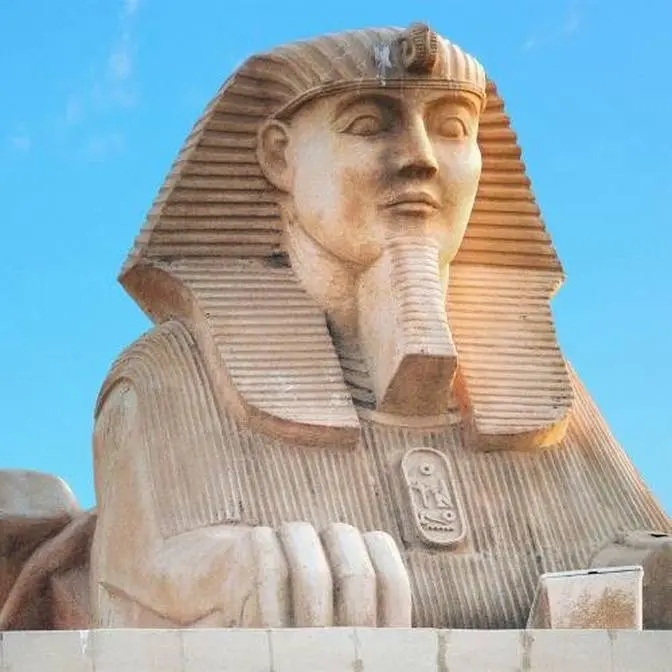
Did you know that Pharaoh Pepi II was not just a ruler, but the longest-reigning king in history,
ruling Egypt for a staggering 90 years?
Let's dive into the incredible story behind his reign.
Subscribe for more fascinating facts about ancient history.
Pepi II was born into a world of grandeur and power.
The ancient Egyptian civilization was at its peak, with majestic palaces,
towering monuments, and a society that revered its pharaohs as divine beings.
He was a prince of the 6th dynasty of ancient Egypt, a time when pharaohs were considered living gods.
This period was marked by significant achievements in architecture, art, and governance,
setting the stage for Pepi II's future reign.
His grandfather, Pepi III, had expanded Egypt's borders and brought prosperity.
Under his rule, Egypt saw an era of stability and growth,
with increased trade and military campaigns that extended the kingdom's influence.
His father, Merenre I, ruled for a shorter but significant period.
Merenre I continued the policies of his predecessors,
ensuring that the kingdom remained strong and unified.
Pepi II grew up surrounded by the splendor of the royal court.
The palace was a hub of activity, with courtiers, officials,
and servants all playing their part in the daily life of the royal family.
He learned the traditions and responsibilities of his lineage.
From a young age, he was groomed to understand the importance of his role
and the expectations placed upon him as a future pharaoh.
Life as a young prince was filled with luxurious palaces, exotic animals, and dedicated servants.
The royal household was a place of opulence, with treasures from across the known world.
However, it also came with the weight of one day inheriting a kingdom.
The responsibilities of leadership were ever-present,
and Pepi II was constantly reminded of his future duties.
Pepi II's childhood was likely filled with rigorous education and training.
His days would have been structured and disciplined,
ensuring he was well-prepared for his future role.
He would have been taught by scribes and priests.
These learned men were responsible for imparting knowledge and wisdom,
ensuring that the young prince was well-versed in all aspects of Egyptian culture and governance.
They would have schooled him in writing, mathematics, religion, and statecraft.
Mastery of these subjects was essential for any ruler
as they formed the foundation of effective leadership.
These subjects were vital for a future pharaoh.
Understanding the complexities of administration,
religious rituals, and economic management
was crucial for maintaining the stability and prosperity of the kingdom.
He would also have received physical training.
Physical prowess was highly valued,
and the young prince would have been expected to excel in various athletic and martial disciplines.
This would have included combat skills and chariot racing.
These activities not only prepared him for potential military engagements,
but also demonstrated his strength and capability to his subjects.
As a prince, Pepi II would have observed his father's rule closely,
learning the intricacies of governing a vast and complex civilization.
He would have seen firsthand the challenges and responsibilities that came with leadership.
He would have accompanied Merenre versed on royal tours and participated in religious ceremonies,
gaining firsthand experience in leadership.
These experiences were invaluable,
providing him with a deep understanding of his kingdom and its people.
Public appearances and interactions with citizens would have been a regular part of his upbringing.
These events helped to solidify the bond between the royal family and the people,
reinforcing the divine status of the pharaoh.
The symbols of power and authority were ever-present in his life.
From the royal insignia to the grand monuments,
every aspect of his environment reinforced his future role as the ruler of Egypt.
Religion played a central role in his education.
The young prince would have been deeply involved in religious rituals,
understanding their significance,
and the role of the pharaoh as the intermediary between the gods and the people.
Visits to temples and sacred sites would have been common.
These visits were not only religious duties,
but also opportunities to connect with the spiritual heritage of his ancestors.
Family played a crucial role in his upbringing.
The support and guidance of his family members were essential in shaping his character
and preparing him for his future responsibilities.
Advisors and officials would have been key figures in his education.
Their expertise and counsel were invaluable,
providing the young prince with the knowledge and skills needed to govern effectively.
Participating in state functions and royal ceremonies was a regular part of his life.
These events were not only important for maintaining the traditions of the kingdom,
but also for demonstrating his readiness to assume the throne.
The throne awaited him,
a symbol of the immense power and responsibility that would one day be his.
Every aspect of his upbringing was designed to prepare him for this ultimate role,
ensuring that he would be a capable and wise ruler.
At the tender age of six, Pepe II ascended to the throne of Egypt.
His father Morenra I died unexpectedly.
This left a void in leadership that needed to be filled immediately.
The year was 2278 BC, and the young prince became Pharaoh Pepe II.
Due to his young age his mother, Queen Ancazonpepe II, acted as regent.
She played a crucial role in guiding the early years of his reign.
Ancazonpepe II was a powerful and influential figure.
She ensured the stability of the kingdom during the transition of power.
She oversaw government affairs.
She also managed relations with neighboring kingdoms.
Her wisdom and political acumen were instrumental in solidifying Pepe II's position as pharaoh.
She ensured a smooth continuation of his father's policies.
She also laid the groundwork for Pepe II to eventually assume full control.
Pepe II's reign, spanning an unprecedented 90 years,
witnessed both periods of prosperity and challenges, marking distinct eras in his rule.
His early reign, under the guidance of his mother, was characterized by stability and continuity.
He continued his predecessor's policies,
focusing on trade and maintaining Egypt's influence in Nubia and other neighboring regions.
This era saw the flourishing of arts and crafts.
There was also significant construction activity, with temples and pyramids built or expanded.
As Pepe II matured and assumed full control,
his reign entered a new phase marked by ambitious building projects and expeditions.
One of his most remarkable endeavors was the construction of his pyramid complex at Saqqara.
This complex was a testament to his power and wealth.
It housed his pyramid, temples, and the tombs of his wives and officials.
He also commissioned expeditions to distant lands, including Punt and Sinai.
These expeditions brought back valuable resources.
They also expanded Egypt's trade networks.
Section 4. Longevity and Legacy Factors Contributing to Pepe II's Long Reign
Pepe II's exceptionally long reign of 90 years can be attributed to a combination of factors,
each playing a crucial role in the stability and prosperity of his rule.
These factors range from his royal lineage and the inherent stability of the old kingdom,
to his own remarkable political acumen and leadership qualities.
Firstly, Pepe II inherited a stable and prosperous kingdom from his predecessors,
who had laid down a strong foundation for governance.
His predecessors had established a robust central government and a flourishing economy,
which provided Pepe II with a solid base to build upon.
This economic and political stability allowed him to focus on further strengthening the kingdom
rather than dealing with internal strife or economic crises.
His early ascension to the throne at a very young age also meant that he had ample time
to consolidate his power and establish his authority over the kingdom.
Secondly, Pepe II likely possessed strong leadership qualities and exceptional political skills,
which were crucial in maintaining his long reign.
He was adept at maintaining the loyalty of his officials and securing the support of the
influential priesthood, which was vital for his rule.
Known for his piety and dedication to the gods,
Pepe II earned the respect and reverence of the religious elite, further solidifying his position.
His religious devotion was nothing but a political strategy that helped him
maintain the support of the powerful priestly class.
Moreover, there is substantial evidence to suggest that Pepe II was a skilled diplomat
who maintained peaceful and beneficial relations with neighboring kingdoms.
His diplomatic efforts contributed significantly to the stability and longevity of his reign,
as peaceful borders allowed for internal development and prosperity.
Trade and economic exchanges with neighboring regions flourished under his rule,
further enhancing the wealth and stability of the kingdom.
While Pepe II is not known for extensive military campaigns,
his ability to maintain a strong and ready military force deterred potential invaders
and kept the kingdom secure.
Additionally, the promotion of education and the arts during his reign contributed
to a culturally rich and intellectually vibrant society.
Architectural and infrastructural projects initiated during his reign
not only showcased the kingdom's wealth, but also provided employment and stimulated the economy.
The overall quality of life for the average citizen improved,
which in turn fostered loyalty and support for Pepe II's long and prosperous reign.
Festivals and public celebrations were also a hallmark of his reign,
reinforcing social cohesion and the pharaoh's divine status.
In conclusion, Pepe II's long reign was the result of a combination of inherited stability,
personal leadership qualities, religious devotion, diplomatic skill,
and a focus on cultural and economic development.
His legacy is a testament to the complex interplay of these factors,
which together created one of the longest and most stable reigns in ancient Egyptian history.
Section 5. Building Projects and Trade Pepe II's Contributions to Egypt
Pepe II's reign was marked by significant contributions to Egyptian society,
particularly in the realms of architecture, trade, and administration.
His rule, which lasted for an impressive 94 years, is one of the longest in history,
and during this time he left an indelible mark on the civilization.
One of his most enduring legacies is the vast pyramid complex he built at Saqqara.
This monumental project was not just a display of power,
but also a reflection of the advanced engineering and architectural skills of the old kingdom.
This complex, including his pyramid, temples, and the tombs of his family and officials,
is a testament to the architectural prowess of the old kingdom.
The intricate carvings and hieroglyphics found within these structures
provide a wealth of information about the period's artistic and cultural achievements.
The complex also provides valuable insights into the religious beliefs and funerary practices of
the time. The elaborate rituals and ceremonies depicted in the tombs highlight the importance
of the afterlife in ancient Egyptian culture. Beyond his architectural achievements,
Pepi II actively engaged in trade and diplomacy. His reign saw the expansion of Egypt's trade
networks, which played a crucial role in the kingdom's prosperity. He maintained trade
relations with Nubia to the south. These interactions were not only about exchanging
goods but also about fostering diplomatic ties and cultural exchanges. He also sent expeditions
to Port, a land known for its incense and exotic goods. These expeditions were significant
undertakings that required careful planning and coordination. These expeditions brought
back valuable resources to Egypt, such as gold, ebony, and myrrh. These goods were highly priced
and played a vital role in the economy and religious practices. They strengthened its
economy and influence. The influx of these resources helped to boost local industries
and crafts, leading to increased wealth and stability. Moreover, Pepi II's reign saw the
development of a more centralized administration. This centralization was essential for managing
the vast resources and complex society of ancient Egypt. This helped to streamline governance and
maintain order throughout the kingdom. The administrative reforms implemented during
his reign laid the groundwork for future generations, ensuring that Egypt remained
a powerful and cohesive state for centuries to come.