
The Ming Dynasty
Hello and welcome to New Frontiers on CCTV International. I'm Qi Xiaojun in Beijing.
In today's program, we are continuing with our major series in which we are investigating
archaeological discoveries, historical sites and cultural relics in order to trace the evolution
of Chinese civilization down through the ages. In August 1368, the Yuan Dynasty fell when an
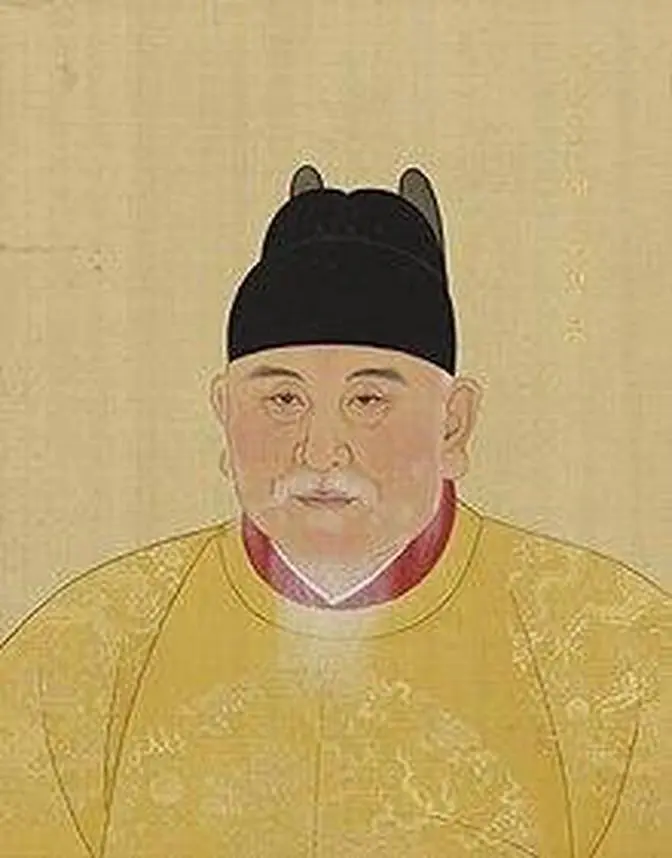
uprising led by Zhu Yuanzhang captured the capital, Beijing. Later that year, Zhu Yuanzhang
had himself proclaimed emperor and established the Ming Dynasty. The first half of the new
dynasty saw agriculture develop to a level never seen before. The improved agricultural technology
freed up labor, which in turn encouraged the development of handicrafts industry and commerce.
A number of significant cultural advances were made under the Ming Dynasty,
symbolized by the Yongle Bell, the Forbidden City and blue and white porcelain. China also
raised its profile on the international stage, thanks in no small part to the great navigator
Zheng He. Through his voyages to the western seas, he helped strengthen ties between the
Ming Dynasty and the governments in other parts of the world. Today, nearly 500 years after the
Ming Dynasty, its wonders continue to fascinate. There is the colossal Yongle Bell, which tolled
in the year 2000 to celebrate the beginning of the new millennium. There are the golden
glazed tiles in the Forbidden City that shine against Beijing's azure sky. And then there
are the legendary voyages made by Zheng He to the western seas. During the Ming Dynasty,
there were new achievements in architecture, shipbuilding, porcelain making and textiles.
Products made in China were already well known throughout the world for their high quality and
supreme craftsmanship. But during the Ming Dynasty, Chinese technology was to reach an
unprecedented level, in the process, adding yet more vibrant colors to the civilization of China
and the world. The Ming Dynasty was founded in the year 1368, and after a few years of
recovering following the overthrow of the previous dynasty, the nation began to thrive once again.
In the year 1405, the Ming Emperor proclaimed that a magnificent royal palace would be built
in Beijing. Today, that palace is commonly referred to as the Forbidden City.
While construction of the new royal palace was underway, more than 300 ships from China,
the largest fleet of vessels sent out on a mission of exploration in the history of the planet,
was in full sail on the Indian Ocean. This was the first voyage of Zheng He,
an envoy of the Ming Emperor, who had been sent out into the western seas.
As Zheng He's vessels plied the waves, back in Beijing, 230,000 craftsmen from every conceivable
trade were joined by a million laborers to start work at the construction sites of the Forbidden
City. Officials and their legmen had ventured into remote forests in Sichuan, Hunan and Hubei
provinces in search of the very best timber and construction stone. The Emperor of Ming had a
dream that his nation would become a formidable power accorded due respect from lands across the
ocean. To help him bring this about, the Emperor selected Zheng He to be the commander of a massive
fleet, and he was perfect for the job. 35 years old, tall, handsome, courageous and very intelligent,
Zheng He had many military feats and accomplishments behind him. And what was more,
he was familiar with diplomatic protocol. To accomplish the mission entrusted to him,
and before facing a voyage in uncharted waters that was certain to be perilous,
Zheng He had first to obtain ships capable of withstanding the demands of such a long journey
into the unknown. Between 1403 and 1405, almost every site in the middle and lower reaches of
the Yangtze River in China's southeast was converted into shipyards and orders were placed
for more than 2,000 ships. The Longjiang Shipyard in Nanjing became the largest ship construction
facility in the world. Timber of all sizes literally flooded into the shipyard via the
Yangtze River, and there thousands of workers were ready and waiting to begin work.
Shipbuilding and navigation are like twins, as both require the most advanced technologies
in hydromechanics, material mechanics, astronomy, meteorology and manufacturing.
The ability of a nation to build great ships has always merited the general level of science
and technology in that nation's society. The level of shipbuilding technology achieved
during the Ming Dynasty was seen first in the size of the ships produced. The largest type of
ship in Zheng He's fleet, known as a treasure boat, was truly massive. At 126.72 metres long
and 51.84 metres wide, it was larger than an Olympic-sized soccer field. It had a displacement
of 10,000 tonnes and was able to carry 1,000 people. Christopher Columbus's Santa Maria,
built 87 years later, was just 35 metres long, one-fifth the size of one of Zheng He's treasure
boats. In the shipyards, the shipbuilders worked day and night. The Longjiang Shipyard had many
workshops under it, each specialising in a different task, such as carpentry, mechanics
and sail-making. Other items needed, such as ropes and nails, were supplied from elsewhere.
From objects unearthed at the shipyard, archaeologists have determined that every
piece of timber that arrived in the shipyard was numbered, and this means the shipyard
implemented a standardised workflow system, rather like a modern-day assembly line.
A treasure boat was truly massive. It had no less than seven floors, three above the main deck
and four below. Of the lowest two decks, one contained rocks to stabilise the ship,
while the other was for storing food and fresh water. The other two floors below deck
accommodated sailors and soldiers. The second floor above deck, the most comfortable,
had the best view, the freshest air and suffered from the least movement.
This deck was, of course, reserved for officials.
The top floor was a working area for lookouts, although part of it was set aside for a luxurious
guest room. Following the experience of centuries of seafarers before him, Zheng He's treasure boat
was made in the shape of a V. Its sternum consisted of long timbers fastened tightly
by iron bars. This was done to ensure the maximum stability. But as well as this,
the ship had a ballast design. The ratio between the length and width of the ship was 2 to 45,
a ratio that prevented the hull from snapping in violent seas.
Modern experimentation has proved that the maximum strength for the hull of a ship is
achieved when it is between 340 to 380 mm thick. The hulls of Zheng He's treasure boats
fell precisely within these limits. Building such massive treasure boats during the Ming
Dynasty when screws and welding were unknown was truly an extraordinary achievement.
There's a simple explanation as to why China could build such massive treasure ships as Zheng He's.
The fact was, throughout its long history, and since the Qing and Han Dynasties in particular,
China had been developing the shipbuilding technology and navigational skills to make
it a major seafaring power. China had been the world leader in shipbuilding and navigation
since the Qing and Han Dynasties around 2,000 years ago. During the Song Dynasty around 1,000
years ago, China was building very large ships according to highly rational designs.
They even had watertight compartments to lessen the chances of sinking.
But the huge ships built for Zheng He during the Ming Dynasty pushed Chinese
shipbuilding technology and navigation to new and unprecedented levels.
But after completion, how was such a massive ship moved out of the yard and into the sea?
Inside Zhongbao Village, to the west of present-day Nanjing City,
three long and narrow pools can be seen. Each pool is 40 metres wide, and they lie parallel
to one another, very close to the Yangtze River. These are the docks used 600 years ago for
building large ships, and it was right here that workers laid the so-called Bird's Sternum,
the wooden framework of Zheng He's ships. After each ship was completed, the gate to
these docks was opened to let in the water, and the newly completed ship began to float.
Following the narrow waterway, the new ship sailed to the sea via the Yangtze River.
The first of Zheng He's voyages to the western seas began on a day in July 1405.
Zheng He's fleet was to set off from the port of Liaojia in Taicang, and on the day,
the port was a scene of great excitement. Against the sky could be seen the sails of no less than
300 massive ships.
The number of people on board the Gelenbu was 88, while the number of people on board
the Dagama was 160, and the number of people on board the Waizheng was 100.