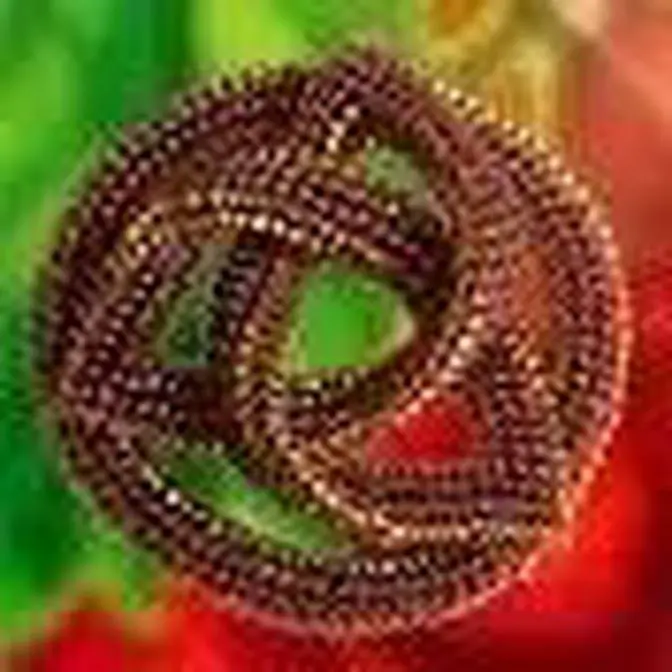
#tips#embroidery#howtomake This seam is diagonal lines consisting of small contour squares. It is performed both from the front and reverse (back) sides of the embroidery, depending on the embroidery of the necessary elements of the pattern.
Шов “Зерновий вивід” являє собою діагональні лінії що складаються із невеликих контурних квадратиків. Його виконують як із лицьового так і зворотного (тильного) боків вишивки в залежності від вишивання необхідних елементів узору.
In this video, I am embroidering a grain pick from the reverse (back) side of the embroidery with a set of three threads of fabric. That is, my contour square has three threads of fabric for each side. I repeat each stitch in the embroidery twice, at the same time pulling the threads of the fabric, due to which a beautiful openwork seam is obtained.
У цьому відео я вишиваю зерновий вивід із зворотного (тильного) боку вишивки із набором у три нитки тканини. Тобто, у мене контурний квадратик має по три нитки тканини для кожної сторони. Кожен стібок у вишивці я повторюю двічі при цьому одночасно стягуючи нитки тканини за рахунок чого виходить гарний ажурний шов. Також щиро дякую всім за підписку та коментарі до моїх відео. Also, I sincerely thank everyone for subscribe and comment on my videos.
[music]
Greetings, dear lovers of needlework!
Today, your attention is drawn to the embroidery
of a beautiful openwork seam,
which can be used to complement the main
ornament of the embroidery.
I use homemade worsted cloth No. 30
and white silk threads.
Friends, if you are worried about the music
or subtitle translation,
just change it
in the settings of your device.
The thickness of my thread corresponds
to two thin threads of moulin.
In order for me to get a beautiful
openwork seam on the front side of the product,
I perform embroidery from the wrong side.
So let me remind you: now, I am doing embroidery
on the wrong side of the product.
I consider a square with
three threads of fabric as the basis.
For one side of the square,
you can take the required number of threads
depending on the selected embroidery.
First, I embroider a diagonal
zigzag line, alternating
horizontal and vertical stitches.
I repeat each stitch in the embroidery twice,
simultaneously pulling the threads of the fabric,
due to which a beautiful openwork seam is obtained.
I make a transition from one line to another,
as with this embroidery I make
a geometric ornament.
I am connecting embroidery of zigzag lines
and for a beautiful openwork embroidery I
need a square.
So, next to the already embroidered line, I
embroider another line of the same type
and thus I get a square.
I also repeat each stitch twice
and bring out the needle with the working thread diagonally
for the next stitch.
Again, I make the transition from one
diagonal row to another
and then continue the embroidery.
Let me remind you that I am embroidering
from the wrong side of the product.
When choosing materials for embroidery,
try it first on a piece of fabric
on which you intend to embroider
to see what the result will be.
When the embroidery is finished,
I fasten the working thread in the seam from the wrong side.
That is, from the side from which I am now embroidering.
I hope this video will be useful for you.
Visit me from time to time
for fresh videos.
I have many more interesting ideas
that I intend to show you.
I turn the embroidery to the front side and
I am delighted! She is simply charming!
Be sure to try embroidering this Beauty 💖
Thanks for watching.