
Who is Karl Lessing|Artist Biography|VISART
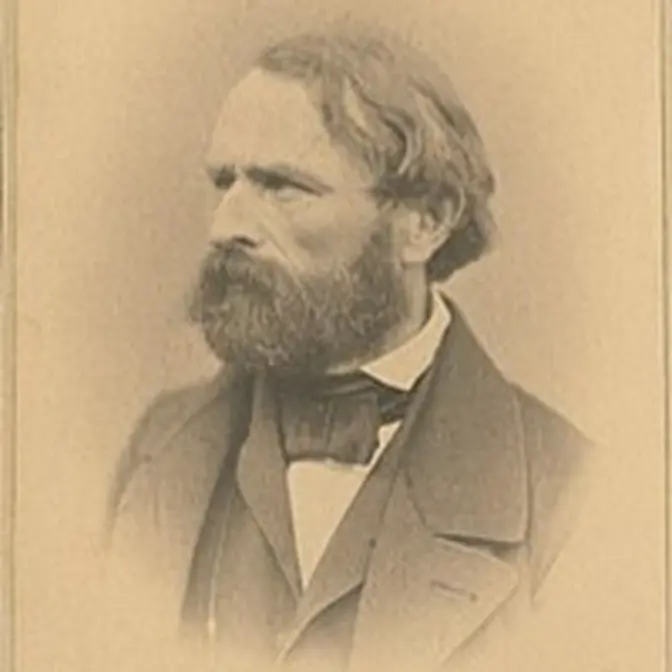
Karl Friedrich Lessing was a German painter who was born on February 15, 1808 in Wrocław
Prax, Poland.
He was a skilled artist who worked in both history painting and landscape genres.
Lessing lived a long life, but eventually passed away on January 4, 1880.
Karl Friedrich Lessing was a significant artist in the Romanticism movement.
During this period, he created artwork that was characterized by its emotional intensity,
vivid colors, and dynamic compositions.
Lessing was also influenced by the works of other Romantic painters, such as Caspar David
Friedrich and Philipp Otto Runge.
He developed his own style that was distinct from his contemporaries.
Today, Lessing is recognized as one of the leading painters of the Romanticism period.
Lessing was part of a circle of artists who had strong bonds forged in friendship and
common artistic goals.
He studied with his close friend, fellow artist Johann Wilhelm Schirmer, at the Kunstakademie
Düsseldorf.
As an instructor, Lessing taught a new generation of artists, including Andreas Achenbach, who
went on to become significant figures in the Düsseldorf School of Painting.
His impact on the development of future artists is an important part of his legacy.
Karl Friedrich Lessing was born in 1808 near Breslau in Poland.
He started his artistic career as a landscape painter and later shifted to historical paintings,
mainly influenced by the works of Caspar David Friedrich.
In 1826, he won a prize for his painting, Cemetery in Ruins.
Lessing was also associated with the Düsseldorf School of Painting.
In 1830, he took over as the director of the Academy when Chateau went to Italy.
Later, his picture, Mourning Royal Couple, brought him great popularity and recognition.
In 1837, he received a gold medal in Paris, and he was a member of various prestigious
academies and also the recipient of numerous orders.
After his stint at the Academy, Lessing was appointed as the director of the gallery at
Karlsruhe in 1858.
Here, he continued his activity as a painter until his death in 1880.
In this later period of his career, he painted landscapes that depicted twilight, gathering
clouds, and the beauty of the Eiffel Mountains.
Lessing's final painting, Soldiers at Rest, was completed in 1877, three years before his death.
Lessing's talent and hard work undoubtedly made him one of the most influential painters
of his time.
His unique interpretation of historical painting was a significant contribution to the art world.
He is remembered for his depictions of ruins, fishermen, knights, thieves, and castles,
which were central themes in his landscape paintings.
His influence was notable on a younger generation of painters, including Theodor Hildebrandt
and Karl Sohn, who painted with him in a group called The Painters.
In conclusion, Karl Friedrich Lessing was a highly skilled and influential German painter.
His art was characterized by emotional intensity, vivid colors, and dynamic compositions, which
made him an important figure in the Romanticism movement.
As an artist of historical and landscape paintings, Lessing had a strong influence on the development
of future artists and played a significant role in the Düsseldorf School of Painting.
His legacy extends beyond his own artwork, as he taught and influenced a whole new generation
of artists.
He was beloved by many and received recognition from prestigious academies and orders.
Lessing's contributions to art are invaluable and his talent and hard work cemented him
as one of the greatest painters of his time.