
Introducing John Singer Sargent, one of the best portrait painter.
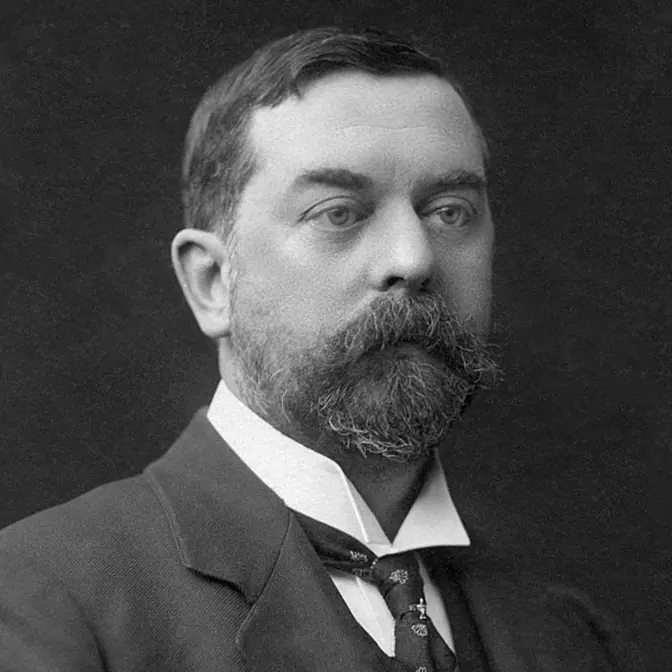
John Singer Sargent was an American expatriate artist, one of the most successful portrait
painter of his era as well as a gifted landscape painter and watercolorist.
He created roughly 900 oil paintings and more than 2,000 watercolors,
as well as countless sketches and charcoal drawings.
His oeuvre documents worldwide travel from Venice to the Tyrol, Corfu, Spain,
Born in Italy to American parents, Sargent spent his childhood traveling through Europe.
He showed his artistic inclinations at a young age,
and in 1874 he began his formal training at the Paris studio of Carolus Duran.
After leaving the studio in 1878, Sargent concentrated on building his craft,
traveling through Europe and methodically studying works of old masters in Holland,
Spain, and Venice.
During his travels, he painted many genre scenes,
such as Rosina, Capri, and Venetian bead stringers.
Sargent also experimented with Impressionist techniques at the influence of Claude Monet,
whom he met at the Second Impressionist Exhibition in 1876.
In Sargent's case, the use of the Impressionist technique is noticeable
in landscape paintings like Washerwomen and Landscape at Broadway.
In the late 1870s and early 1880s, Sargent was building his reputation in Paris.
He received positive critiques for portraits like Portrait of Francis
Sherborne Ridley Watts and subject paintings like El Jaleo.
Sargent's career suffered a setback at the 1884 Paris Salon, where he exhibited Madame X,
the portrait of the young socialite Virginie Amélie of Verneau-Goutreau.
While the painting received some praise,
it was mostly ridiculed and dismissed as a distasteful display of vanity.
Sargent defended his work and refused to take it down even in the face of mounting
pressure from Goutreau's mother, who blamed the portrait for ruining her daughter's reputation.
Discouraged and humiliated by the scandal, Sargent left Paris and moved to London.
The scandal of Madame X followed Sargent's England.
London patrons were wary of Sargent's French style, and he struggled to secure commissions.
However, this changed in 1887 when he exhibited the painting Carnation,
Lily, Lily, Rose, an image of two children lighting Chinese lanterns at dusk.
The painting dazzled critics and audiences, and Sargent was once again in demand.
He enjoyed an upscale clientele of aristocrats, wealthy businesspeople,
artists, and performers from Europe and America.
His international reputation reached its peak in the 1890s and early 1900s.
At that time Sargent painted portraits of distinguished figures like Theodore Roosevelt,
actress Dame Ellen Terry and author Henry James.
By 1910 Sargent gave up portraiture and focused his attention on painting murals and landscapes.
One of his significant later works was the war painting Gast.
The painting was commissioned by the British government who asked Sargent to create a large
painting that embodied the idea of Anglo-American cooperation during World War I.
In 1924 Sargent's retrospective exhibition was held at the Grand Central Art Galleries in New York.
After the retrospective, the artist returned to London where he died of heart disease.
Memorial exhibitions were held on both sides of the Atlantic
in Boston, New York and London in 1925 to 1926.