
The Qing Dynasty
Welcome to 4-Minute Histories and this introduction to the Qing dynasty of China,
which lasted from 1644 to 1912. It was the last imperial dynasty of China and is considered a
conquest dynasty, for it was founded by the Manchu, an ethnic minority from the Manchuria region.
They had previously lived outside of the Great Wall of China during the Ming dynasty,
but in 1644 captured Beijing and the last Ming emperor, Chongzhen, committed suicide.
The conquest of the remaining Ming strongholds continued to 1683 and cost up to 25 million lives.
After the areas controlled under the Ming dynasty were consolidated,
there were subsequent troubles with the revolt of the three feudatories,
where southern generals rebelled against Qing authority due to not receiving the same level
of feudal rights as they had under the Ming. Victory over this revolt saw the total control
of the Qing and was swiftly followed by the Ten Great Campaigns of the Emperor Qianlong
from the 1750s to the 1790s, which extended Qing control
into Inner Asia and created a map of Chinese territory that looks familiar to this day.
The Qing dynasty reached its peak after Emperor Qianlong's lengthy reign in 1796.
At that point a third of the world's population was under Qing control
and it was one of the largest empires ever seen and also had the world's largest economy.
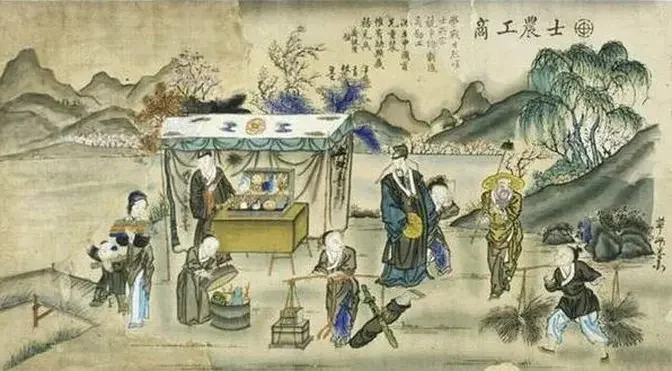
Looking closer at the Qing dynasty, society and culture flourished
and there was great population growth that became increasingly mobile.
This society was based on a Confucian moral system that favoured men
and a patrilineal kinship structure, commonly known as a family clan.
Within the arts, the Kanji dictionary was published, as was the Siku Quanshu,
the largest collection of Chinese writings in history. Calligraphy and painting also bloomed.
Increased population and mobility stimulated the economy in its conversion to a market economy.
An influx of silver, urbanisation, a rise in market towns and international trade also led
to improvements in the economy. Scientifically there were gains in astronomy,
mathematics and ceramics production, but the late Qing dynasty was slow to respond to the
industrial revolution in the west and suffered as a result. The Taiping Rebellion of 1851 to 1864
was a Christian movement that weakened the Qing internally and controlled up to a third of China
at one stage. This was followed by the Punti Hakan clan wars, Nian Rebellion, Dungan Revolt
and Pantai Rebellion. Although these were all put down, it came at a demographic, economic and
social cost, severely weakening the legitimacy of the Qing dynasty. From the outside, the Qing
dynasty was weakened by the opium wars of Great Britain, which brought about the loss of Hong Kong.
There was also increasing influence of foreign powers along the eastern coast of China,
which weakened the domestic economy. The Boxer Rebellion of 1900, a reaction to foreign influence,
was closely followed by a revolutionary movement inspired by the likes of Liang Qichao
and Sun Yat-sen. The Wuchan uprising of this movement spread throughout China and finally
the Republic of China was proclaimed on the 1st of January 1912, thereby ending the Qing dynasty.
Thanks for watching this 4-minute history on the Qing dynasty and please look in the
description below for books and movies you should check out for a more detailed and nuanced look at
all things associated with this period in China's history. If you found that interesting,
you may be interested in other 4-minute histories on an array of topics throughout
human history. And finally, please don't forget to subscribe. Thanks for watching and see you soon.