
Albert Einstein and The Photoelectric Effect | AMS OpenMind
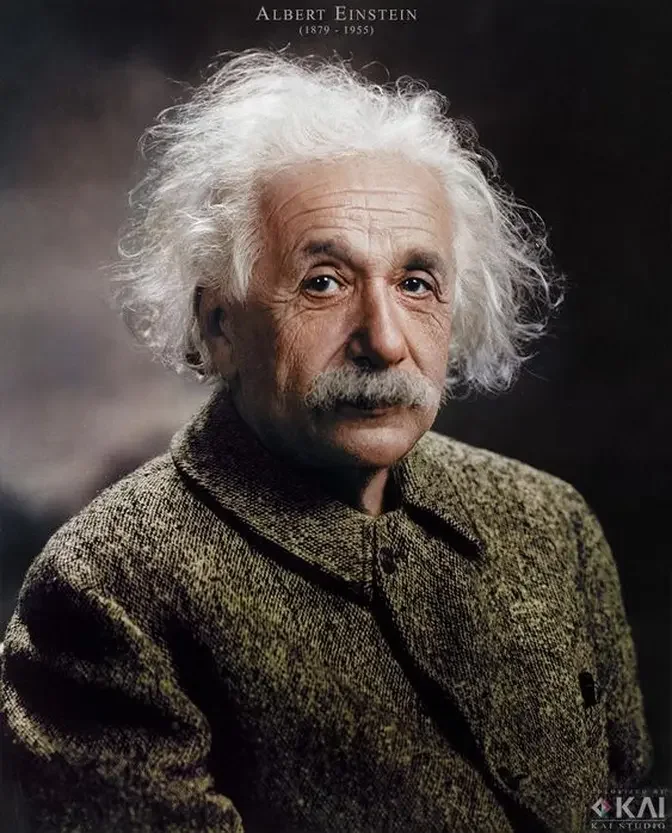
Everybody knows Albert Einstein for his theory of relativity and the Nobel Prize he won for it.
He also-
What? I didn't win the Nobel Prize for relativity.
I won it for explaining the photoelectric effect.
Right, right, of course, sorry.
Einstein won the Nobel Prize for his work on the photoelectric effect,
which helped settle the age-old debate of what light is made of.
So, what is it?
Okay, let's rewind a little.
Newton had thought light was made of particles, and his rival Hooke had thought it was a wave.
And when technology advanced enough, some experiments proved Hooke was right.
That proof, and Maxwell's equations describing light's behaviour as a wave,
made the debate die down, until the photoelectric effect was discovered.
When light hits a cable next to another cable, electrons jump from one to the other.
It was thought it happened because waves of light made atoms vibrate until they ejected an electron.
But when it was measured carefully, a big contradiction was found.
It only happened for light of some wavelengths.
For others, no electrons jumped at all.
Einstein was bewildered.
The photoelectric effect should work regardless of the type of light.
If light wasn't made of particles, and now it turned out that it couldn't be made of waves,
what was it made of?
After much reflection, he formulated a new hypothesis combining the two previous ones.
What if light were made not of waves or particles, but of both?
That is, what if light were made of wave packets?
That concept, which we now call photons,
allowed Einstein to write out equations that explain the photoelectric effect in 1905.
This consolidated the idea that light can sometimes be described as a wave,
sometimes as a particle, and sometimes as either.
It was a revolutionary view, and it opened the field for quantum physics.
Robert A. Millikan, an American experimental physicist,
was unconvinced by Einstein's conclusions.
So, he set out to prove him wrong by carefully measuring the photoelectric effect.
However, years later, Millikan ended up proving Einstein right,
and they were both awarded the Nobel Prize in Physics.