
How Einstein’s theory of relativity changed the world
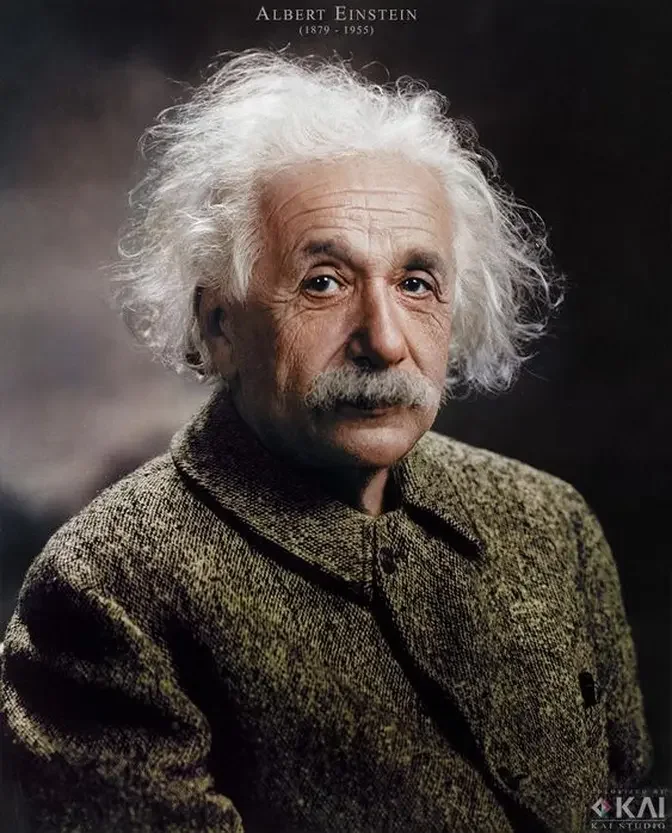
First, this week marks the 100th anniversary of the publication of Albert Einstein's greatest
work, a series of papers laying out the general theory of relativity.
Gwen has a look at how it changed our understanding of the cosmos and the man behind the ideas.
She recorded this conversation earlier this week.
His work transformed our way of looking at the cosmos.
When Einstein put forward his theory of general relativity, that gravity itself is the bending
of space and time by mass and energy, it was a seminal moment in the history of science.
Today, the importance of his work is even better realized than a century ago.
Nova pays tribute tonight with a special program called Inside Einstein's Mind.
Here's a clip about how it's seen today.
The best theories in physics always take us to places where the people who invented them
didn't imagine.
And a truly wonderful theory like general relativity predicts all sorts of things that
Einstein didn't conceive of.
The theory has a life of its own.
We understand general relativity much better right now than Albert Einstein ever did.
Today, 100 years after general relativity was first presented, new technology is allowing
us to explore the most remarkable predictions of the theory.
An expanding universe, black holes, ripples in space-time, and perhaps the most bizarre,
the idea that not just space, but time itself is distorted by heavy objects.
Walter Isaacson, who is in tonight's special, is the author of a well-known biography on
Einstein.
He's also the CEO of the Aspen Institute.
Welcome, Walter.
Good to be back, Gwen.
You have said that the theory, the general theory of relativity, I'm going to say that
right, is the most beautiful theory in the history of science.
What do you mean by that?
It's gorgeous.
I mean, it is a mathematical as well as conceptual masterpiece.
It sort of can be visualized as bodies telling space and time how to curve, and the curving
of space and time telling bodies how to move.
And then the math goes with it.
And it was just a huge leap.
It wasn't like a little improvement over Newton's universe.
It was just a whole new way of looking at the universe.
Define relativity for a lay person like myself.
Relativity begins in 1905, in which Einstein says, oh, time is relative depending on your
state of motion.
And then 10 years later, exactly 100 years ago this week, he comes up with the generalization
of that theory that says acceleration, gravity, time, space, they're all related, and these
equations show how.
And the thing that bends the whole conversation is the speed of light, right?
We use the term speed of light in a haphazard way all the time, but he meant it in a very
literal way.
You know, it begins with Einstein trying to figure out why is the speed of light always
constant, no matter which way you're moving, if you're moving to the source of the light
or away from it.
And in 1905, when he was just a patent clerk in the Swiss patent office, all the physicists
of Europe are trying to figure this out.
And he begins his path towards the whole theory of relativity by realizing that if you're
traveling really fast, say to one clock, it'll look different for you, whether it's synchronized,
as somebody traveling really fast in the other direction.
And he comes up with the amazing sort of imaginatively that, oh, I get it, the speed of light is
always constant, but time is relative depending on your state of motion.
So that's the first building block of the whole theory of relativity.
It's called the special theory of relativity, because it was just about constant velocity
motion and the speed of light.
And then gravity comes into the equation.
Right.
It takes him 10 years to generalize the theory, because he's wondering about what about acceleration?
And his theory says nothing can travel faster than the speed of light.
But Newton's theory of gravity said that gravity acts instantaneously.
The moon pulling the sun, you know, pulling the earth, vice versa, that's instantaneous.
And Einstein's trying to figure out how that could be.
And so he realizes that the effects you'd feel of acceleration, like if you're in an
elevator car accelerating upward, that feels just like gravity.
And he comes up with the equivalence theory that gravity and acceleration are both really
the same thing.
Bowling ball and the trampoline.
I love that idea, that analogy.
Well, that's another way that he visualizes it, because the cool thing about Einstein
is he thinks visually and imagine a thought experiment.
And one of them is rolling a big ball on a piece of fabric.
I can call it a trampoline.
And what happens?
It curves the fabric.
Now, if you roll some billiard balls behind it, what happens?
They roll and they start curving towards the bowling ball.
Why?
Not because the bowling ball has some mysterious attraction at a distance, but because the
ball has curved the fabric of the trampoline.
And what Einstein's able to visualize is that a big mass moving curves not just a fabric
of the trampoline, but all four dimensions of space and time.
You talk about thought experiments.
Was Einstein basically a daydreamer?
Yeah, you know, he gets to call them gedanke experimente, which means thought experiments.
These are things where he imagines what happens if a big object is rolling across a fabric.
And it's just imagination.
We might call daydreaming.
He never did physical experiments in a lab.
He just did the experiments visualizing concepts in his head and saying, well, what if I caught
up with a light beam?
Or what if I were in a car, an elevator car, accelerating upward in outer space where there's
no gravity?
Or what would happen if a massive object rolled over a fabric?
These were the imaginative thought experiments that leads them to this most beautiful of
all theories.
If this was never proven in a lab, or at least if that's not where his ideas came from, has
anyone ever tried in the hundred years since to debunk the theory?
Oh, over and over again.
The first major proof is in 1919, because he says, well, gravity will bend a light beam
a certain way.
And you say, well, we could look at this light from a star that goes right next to the sun
and see if it's bent.
But you can't do that unless you have a total eclipse, otherwise you go blind.
So they wait for the 1919 eclipse.
And it proves Einstein right.
Over and over again, you read stories saying Einstein's theories disproved or debunked.
And then you wait a month or two, and there has been nothing that has cut out the underpinnings
of general relativity, of all of relativity.
And even the ones that Einstein thought, well, this just can't be true.
Like his theory predicts black holes, it predicts an expanding cosmos.
He said, well, that can't be right, so maybe somebody will have to fix the theory.
Turns out the theory was right, and the universe is expanding.
They're all black holes.
Einstein, we salute you.
A hundred years ago.
Happy birthday.
A hundred years ago.
Walter Isaacson, thank you very much.
Thank you, Gwen.