
Battle of Pydna 168 BC: Legion Vs Phalanx | Fall of Macedon
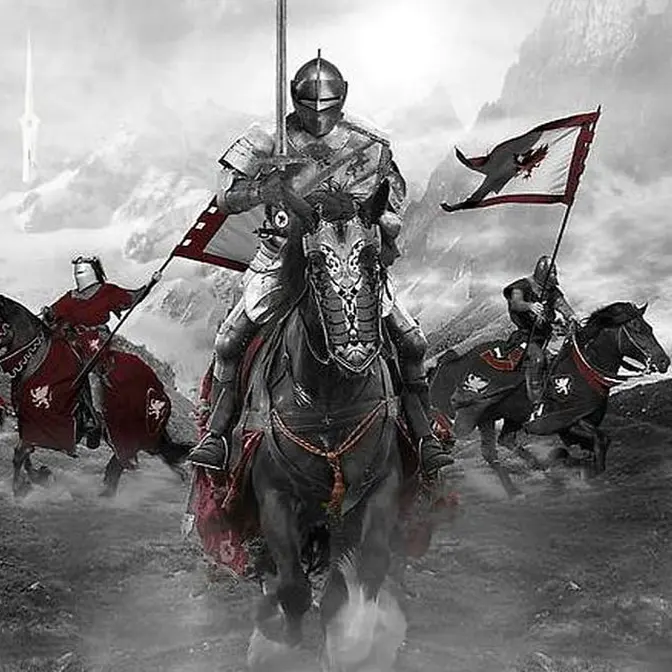
"The Battle of Pydna took place in 168 BC between Rome and Macedon during the Third Macedonian War. The battle saw the further ascendancy of Rome in the Hellenistic world and the end of the Antigonid line of kings, whose power traced back to Alexander the Great.#Pydna #Battle #Rome #Macedon
During the 2nd century BC,
the Roman Republic was entrenched in an ongoing war
with the Macedonian kingdom.
Macedon was the last Hellenic kingdom
which stood between the Romans
and their complete conquest of Greece.
After defeating the Macedonians at Mount Olympus,
the Roman army, under the command of consul
Lucius Aemilius Paulus,
had pursued them into the foothills,
eventually arriving near the Greek town of Pydna.
The Macedonian king, Perseus,
opted to camp on the flat plains
below the mountain pass of Mount Olocrus,
as it was an optimal landscape
for the Macedonian phalanx to give battle.
Consul Aemilius knew this
and so did not advance any further.
Instead, his force remained camped on top of Mount Olocrus,
which gave them a significant fighting advantage
and provided a clear overview of the battlefield.
Both armies deployed their forces in traditional formations,
with infantry in the center and cavalry on the flanks.
The Macedonian phalanx was renowned for its effectiveness
throughout its military history
and in more previous battles
formed the center of King Perseus' army.
The Roman center countered this
with their flexible and disciplined legions,
capable of executing complex maneuvers on the battlefield.
Both forces were fairly matched in size
with a slight advantage leaning in favor of the Macedonians,
although the Romans had one small trick up their sleeve,
a handful of African war elephants from Numidia,
which accompanied them on their right flank.
As the legend goes, the battle was initiated
when light Roman soldiers transported their water wagons
carried by mules to a nearby river.
One of their mules broke away and galloped towards the river.
At that moment, soldiers from Perseus' camp arrived
and attempted to steal the mule,
which led to a minor skirmish between the opposing soldiers.
The full accuracy of this tale cannot be fully attested to,
however, it does make for an interesting chronicle.
As the minor skirmish escalated,
more men from both camps rushed to aid their allies,
resulting in a larger skirmish
forming at the center of the battlefield.
With a thunderous roar,
the Macedonian phalanx division at the center surged forward.
A sea of gleaming bronze and iron
descended upon the light Roman troops.
The Roman auxiliary troops bravely held their ground,
hoping to buy some time for their comrades atop the hill to arrive.
But they were mercilessly cut down without much of a fight.
The morale of the Roman legions dwindled
upon seeing their allies getting slaughtered
by the oncoming Macedon phalanx.
Consul Aemilius knew his men would be disadvantaged on flat terrain,
so he ordered an orderly retreat back up the slope,
thus buying himself more time to strategize accordingly.
As the Roman infantry successfully retreated back up the slope,
Aemilius rode to his right flank
and gave the signal for his cavalry and war elephants
to advance on the Macedonian left.
The Thracians and mercenary skirmishes stationed on the Macedon left
were slow to form any reliable defense
against the oncoming barrage of cavalry and elephants.
They were quickly overwhelmed and began to retreat.
With the infantry and skirmishers now routed,
the Macedonian and Aegema cavalry were left stranded
to fight off the oncoming Roman cavalry and elephants.
They too were quickly overwhelmed by the blitz attack and routed.
With the Macedon right flank completely decimated,
Perseus' army was severely exposed.
He had to act quickly before they found themselves surrounded.
The Macedonian phalanx pushed forward relentlessly,
but the Romans stood firm,
their disciplined ranks braced for the onslaught.
As the Phalangites marched up the steep slope,
gaps within their formation began to open up due to the uneven terrain.
This provided a great opportunity for Aemilius to exploit.
He did not hesitate for a second quickly,
ordering the right side of his infantry to charge down the slope
and attack the now disorganized Macedon center.
As the two sides clashed,
the impact of metal drowned out all other sounds.
The rest of the phalanx continued forward,
driving the Roman legions back inch by inch.
The Roman centurions led their infantry down the slope
towards the now exposed gaps in the Macedon center.
A violent hand-to-hand battle ensued,
favoring the legion's style of combat.
Simultaneously, the Roman left flank had began to charge
towards the Macedon right flank, where Perseus himself was stationed.
The engagement was a carbon copy of the events
that had occurred earlier on the opposite flank,
with the Roman cavalry smashing through the Thracian skirmishers
and straight into the Macedon cavalry.
Now fully regrouped and awaiting for the perfect moment
to strike the Roman right flank sensed their perfect opportunity,
they charged at full strength towards the Macedon center.
The sudden onslaught shattered the cohesion of the Macedon center,
causing confusion and panic among their ranks.
King Perseus, witnessing the collapse of his army,
fled the battlefield further, demoralizing his soldiers.
The Battle of Pydna resulted in a decisive victory for the Roman Republic.
The Macedonian army suffered heavy casualties,
and their defeat signaled the end of Macedonian resistance.
King Perseus was captured shortly after the battle,
marking the downfall of the Macedonian hegemony.